Thinking about towing with your Highlander? Good news — it’s more capable than most people realize. But there’s also more to the Toyota Highlander tow package than just bolting on a hitch. Get this wrong, and you could damage your drivetrain or fall short of the 5,000-pound limit you’re counting on. Read to the end and you’ll know exactly what your Highlander needs to tow safely and confidently.
What’s the Toyota Highlander’s Actual Towing Capacity?
The gas-powered Highlander tows up to 5,000 pounds across all 2020–2025 model years. That number stays the same whether you’ve got the older V6 or the newer turbocharged four-cylinder. The Highlander Hybrid, however, is rated at 3,500 pounds — and that difference matters a lot if you’re shopping around.
Here’s how the powertrains break down:
| Model Year | Engine | Horsepower | Torque | Max Tow |
|---|---|---|---|---|
| 2020–2022 | 3.5L V6 | 295 hp | 263 lb-ft | 5,000 lbs |
| 2023–2025 | 2.4L Turbo 4-cyl | 265 hp | 310 lb-ft | 5,000 lbs |
| All Years (Hybrid) | 2.5L + Electric | 243 hp | N/A | 3,500 lbs |
The switch to the turbocharged four-cylinder in 2023 actually improved low-end torque significantly. You get 310 lb-ft compared to 263 lb-ft from the V6 — and that peak torque arrives at lower RPMs. That’s exactly what you want when pulling away from a boat ramp or climbing a steep grade.
Why the Hybrid Tops Out at 3,500 Pounds
It’s not a power problem. The Highlander Hybrid has plenty of torque from its electric motors. The 3,500-pound limit comes down to thermal management. The hybrid uses a continuously variable transmission, and its reverse function relies primarily on electric motor generators. Standardized towing tests require backing a trailer up a steep grade multiple times without overheating. Toyota set the limit at 3,500 pounds to keep those components within safe operating temperatures.
If you want hybrid efficiency but need the full 5,000-pound rating, the Grand Highlander Hybrid MAX is your answer. Its 2.4-liter turbo paired with a performance hybrid system produces 362 horsepower and 400 lb-ft of torque — and it’s rated for the full 5,000 pounds.
What’s Actually in the Toyota Highlander Tow Package?
Here’s where a lot of buyers get confused. The Toyota Highlander tow package isn’t just a hitch — it’s a complete set of thermal management upgrades built into the vehicle before the hitch ever gets attached.
Most gas-powered Highlanders come with the tow prep package standard. But “tow prep” and “ready to tow” aren’t the same thing. The prep package includes the internal hardware. You still need the hitch and wiring installed separately.
The Tow Prep Components
These are the upgrades that make the 5,000-pound rating possible:
- Heavy-duty radiator — Bigger cooling core, faster heat exchange for engine coolant
- Engine oil cooler — Keeps oil viscosity stable under load (part numbers 15710-31030 or 15710-31021)
- Transmission oil cooler — Located near the front bumper; this single component does more to extend transmission life than anything else when towing
- High-output alternator — Rated at 150 amps to handle trailer lighting without draining your battery
- Heavy-duty cooling fan — A 200-watt fan coupling that pushes more air through the cooling stack at low speeds
| Component | What It Does |
|---|---|
| Engine Oil Cooler | Prevents oil breakdown under sustained load |
| Transmission Cooler | Stops fluid oxidation and clutch wear |
| 150-Amp Alternator | Handles trailer electrical demand |
| Heavy-Duty Radiator | Dissipates engine heat faster |
Without these components, towing near 5,000 pounds risks real drivetrain damage. You can actually verify whether your Highlander has the transmission and oil coolers by looking through the lower front grille — they’re visible from outside the vehicle.
OEM Hitch vs. Aftermarket: Which Should You Choose?
Both options work. But they’re genuinely different in design philosophy, and your driveway matters more than you might think.
The OEM Toyota hitch integrates into the rear bumper. You remove the lower bumper trim and replace it with a piece that has a cutout for the receiver. That design keeps the hitch higher off the ground — better ground clearance, cleaner look.
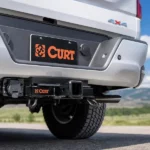
Aftermarket hitches from brands like Curt or Draw-Tite bolt underneath the existing bumper. They’re cheaper and faster to install, but they sit lower. That reduces your departure angle and can cause scraping on steep driveways. Professional installation of the OEM hitch typically runs $800 to $1,500 at a dealership. Aftermarket installs cost significantly less.
The Kick Sensor Problem You Need to Know About
If you own a Highlander Limited or Platinum, pay close attention here. The hands-free liftgate uses a kick sensor mounted in the center of the rear bumper — right where the hitch has to go.
You need a relocation kit. Specific part numbers apply:
| Part | Part Number | Purpose |
|---|---|---|
| Kick Sensor Bracket | PT413-48240-AA | Moves sensor left or right of hitch |
| Kick Sensor ECU Bracket | PT413-48201-02 | Required for Limited/Platinum trims |
| Replacement Clips | 75392-35220 | Bracket mounting (order 2) |
| OEM Hitch Receiver | PT228-48211 | Standard 4th-gen receiver |
Skip the relocation kit, and your hands-free liftgate stops working permanently. That’s not a soft warning — it’s a real consequence that catches a lot of Highlander owners off guard.
Wiring Your Highlander for a Trailer
The Highlander’s electrical system is already partially set up for trailer lights. You just need to make the final connection.
4-Pin Flat Connector
The standard factory wiring harness gives you a 4-pin flat connector that handles tail lights, turn signals, and brake lights. On 2020–2025 models, the connection point sits inside the rear cargo area — usually behind the driver’s side trim panel near the rear wheel well. The OEM wiring kit (part number PT725-48201) includes a converter and fusing to protect against electrical shorts.
Aftermarket plug-and-play options like Tekonsha’s T-One connector tap into those factory plugs without cutting or splicing any wires. Clean, easy, reversible.
7-Pin Connector and Brake Controllers
Trailers over 3,000 pounds typically have electric brakes. For those, you need a 7-pin round connector. The Highlander doesn’t come with one from the factory, so you’ll need a 4-to-7-pin conversion kit with a dedicated power wire running to the battery.
You’ll also need a brake controller — an electronic device that modulates the trailer’s electric brakes based on how hard you’re stopping. The good news: Toyota pre-wired a plug under the dashboard near the left kick panel. Power, ground, and brake signal wires are already there. Plug in a compatible controller and you’re set.
Trailer Sway Control: The Safety Net You’re Already Carrying
Every 2020–2025 Highlander includes Trailer Sway Control as a standard feature. It runs as part of the Electronic Stability Control system. When the system detects your trailer starting to snake, it:
- Cuts engine torque to slow the vehicle
- Applies individual brakes at specific wheels to counteract the sway
- Lights up a warning on the instrument cluster
Higher gas trims also get Dynamic Torque Vectoring AWD, which distributes up to 50% of power to the rear wheels and manages it between left and right. On a slippery boat ramp or a winding mountain road with a trailer attached, that makes a real difference.
TSC is effective — but it can’t override physics. An overloaded or improperly balanced trailer will overwhelm any system.
Weight Limits You Must Know Before You Tow
The owner’s manual is strict here, and these numbers aren’t suggestions.
| Weight Term | Gas Highlander | Hybrid Highlander |
|---|---|---|
| Max Gross Trailer Weight | 5,000 lbs | 3,500 lbs |
| Max Tongue Weight | 500 lbs | 350 lbs |
| Recommended Speed | 65 mph | 65 mph |
Tongue weight should be 10–15% of your total trailer weight. Too little tongue weight causes trailer sway. Too much overloads the rear axle and kills your steering feel.
For any trailer over 2,200 pounds, Toyota’s manual requires a weight-distributing hitch. Since the Highlander uses a unibody frame rather than a truck-style ladder frame, don’t over-tighten the WDH spring bars. Excessive tension stresses the chassis mounting points.
What Can the Highlander Actually Tow?
The 5,000-pound gas rating opens up a solid range of real-world use cases:
- Boats: Most 16–20 foot aluminum or fiberglass fishing boats, smaller ski boats on single-axle trailers
- Campers: Travel trailers up to 20 feet, teardrop campers, pop-up tent trailers
- Utility trailers: ATVs, motorcycles, jet skis, snowmobiles on flatbed trailers
- Cargo haulers: Small enclosed trailers for moving gear or equipment
Always add fuel, water, and gear weight to the trailer’s listed dry weight before comparing it to your limit. Manufacturers list dry weights, and a “4,200-pound” trailer with a full water tank and camping gear can easily push past 5,000 pounds.
The Hybrid’s 3,500-pound limit works well for jet skis, lightweight pop-up campers, and smaller utility loads.
How the Highlander Stacks Up Against Competitors
| Vehicle | Max Tow (Gas) | Transmission |
|---|---|---|
| Toyota Highlander | 5,000 lbs | 8-Speed Automatic |
| Honda Pilot | 5,000 lbs | 10-Speed Automatic |
| Ford Explorer | 5,600 lbs | 10-Speed Automatic |
| Kia Telluride | 5,000 lbs | 8-Speed Automatic |
| Subaru Ascent | 5,000 lbs | CVT (Chain-driven) |
The Ford Explorer edges ahead at 5,600 pounds. But for most families, the Highlander’s long-term reliability and traditional automatic transmission make it the safer long-term bet over CVT-based competitors.
Maintenance When You Tow Regularly
Toyota classifies towing as a severe operating condition. That means tighter service intervals if you haul regularly.
- Engine oil: Drop from 10,000-mile intervals to every 5,000 miles. Use 0W-20 API synthetic — critical for the turbo’s bearings.
- Transmission fluid: Plan for a fluid exchange every 30,000–60,000 miles, even if it’s labeled “lifetime.”
- Differential and transfer case oil: Check more frequently on AWD models for contamination or thermal breakdown.
- Brakes: Towing generates serious heat in pads and rotors. Inspect pad thickness and check for rotor glazing before every long towing trip.
- Tires: Inflate rear tires to the maximum pressure shown on the door placard when towing. Under-inflated sidewalls overheat under tongue weight.
The Toyota Highlander tow package is a serious system — and treating it seriously means it’ll perform reliably for years. Nail the prep package, the wiring, the weight numbers, and the maintenance schedule, and your Highlander will handle weekend trips to the lake and cross-country camper hauls without breaking a sweat.