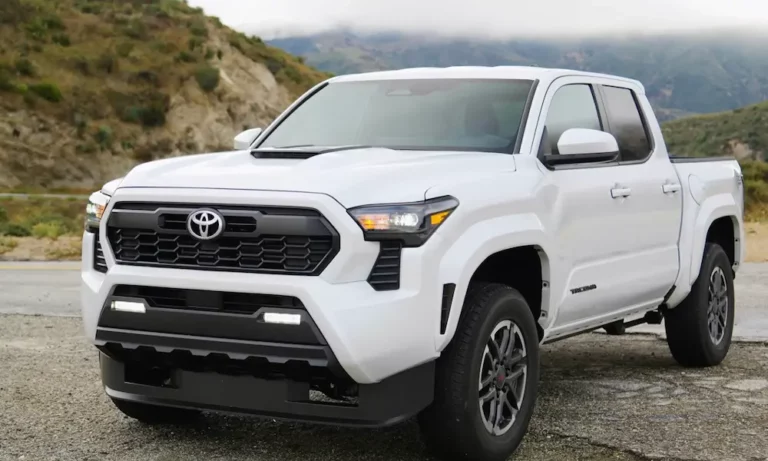
Thinking about upgrading your Tacoma but not sure where to start? Whether you’re running a 3rd gen or just picked up a 2024+, the right Toyota Tacoma modifications can completely transform how your truck performs on and off the road. This guide breaks down every major mod category — suspension, powertrain, armor, lighting, and more — so you can build smarter, not just bigger.
3rd Gen vs. 4th Gen: Why Your Generation Matters First
Before you spend a dollar on mods, you need to understand what you’re working with. The 3rd gen (2016–2023) and 4th gen (2024+) Tacomas are built on completely different platforms, and that changes everything about how you modify them.
The 3rd gen runs a partially boxed C-channel frame with leaf springs out back and a naturally aspirated 3.5L V6. It’s proven, reliable, and has a massive aftermarket behind it.
The 4th gen flips the script entirely. It’s built on the TNGA-F platform — the same architecture as the Tundra — with a fully boxed high-strength steel frame, turbocharged 2.4L I4, multi-link coil rear suspension, and Electronic Power Steering (EPS). Third-gen parts don’t cross over. Budget accordingly.
| Component | 3rd Gen (2016–2023) | 4th Gen (2024+) |
|---|---|---|
| Frame Type | Partially Boxed / C-Channel | Fully Boxed High-Strength Steel |
| Front Suspension | Double Wishbone | Double Wishbone (Revised) |
| Rear Suspension | Leaf Springs | Multi-Link Coil Spring |
| Steering | Hydraulic Power Steering | Electronic Power Steering (EPS) |
| Engine | 3.5L V6 (Naturally Aspirated) | 2.4L Turbo I4 / i-FORCE MAX Hybrid |
The EPS system on the 4th gen is worth a special mention. It enables advanced driver aids, but it also needs careful calibration when you add larger tires. Oversized rubber increases rotational mass, which can strain the electric motor and lead to premature failure if the software isn’t updated to match.
Suspension Modifications: The Foundation of Every Build
Suspension is the most popular category of Toyota Tacoma modifications — and for good reason. It affects ride quality, ground clearance, tire fitment, handling, and long-term reliability all at once.
Choosing the Right Shock for Your Use Case
Off-road performance comes down to one thing: how well your shocks manage heat. When you hammer rough terrain, the shock piston moves fast. The oil heats up. If it overheats, it foams — a condition called cavitation — and your damping collapses. That’s shock fade, and it’s a serious problem.
Upgrading to larger shock body diameters solves this. A 2.0-inch body handles light trails. Serious off-roaders step up to 2.5-inch or 3.0-inch bodies with remote reservoirs that hold more oil and dissipate heat faster.
Here’s how the major brands stack up:
| Brand | System Type | Body Diameter | Best For |
|---|---|---|---|
| Bilstein 5100 | Monotube | 46mm | Leveling / Daily Driver |
| Bilstein 6112 | Monotube | 60mm | Moderate Off-Road / Heavy Loads |
| Icon Stage 2 | Digressive Coilovers | 2.5″ | High-Speed Handling |
| Fox Factory Race | Internal Bypass | 2.5″ / 3.0″ | Desert Racing |
| King Shocks | Remote Reservoir | 2.5″ | Overlanding / Durability |
Valving style matters too. Digressive valving (Icon, Bilstein) feels firm on the road but softens over big hits. Progressive valving (King, Fox) starts soft for small bumps and firms up to prevent bottoming out at speed. Neither is wrong — it depends on how you drive.
Lift Methods: What’s Actually Worth It
Top-hat spacers are cheap and easy, but they let the suspension droop past its design limits. That kills factory shocks faster than trail use ever would.
For 4th gen owners, the Westcott Designs preload collar sits in the middle ground. It delivers 2.5 inches of lift up front by compressing the factory spring harder than stock, with no shock replacement needed. The catch? Preloading increases breakaway force, which translates to a noticeably stiffer ride.
The consensus among builders is clear: a full coilover replacement — proper spring rate, tuned shock, correct length — is the only way to gain height and improve ride quality simultaneously. Cutting corners here costs you twice later.
Upper Control Arms: Don’t Skip This Step
Lifting your Tacoma changes your suspension geometry. As ride height increases, the factory Upper Control Arms (UCAs) pull inward, reducing positive caster. Less caster means the truck feels nervous and darty at highway speeds.
Aftermarket UCAs from brands like Total Chaos, Icon, or SPC restore 2 to 4 degrees of caster and replace the factory ball joint — which has limited droop travel — with a heavy-duty uni-ball. If you’re lifting more than 2 inches, UCAs aren’t optional. They’re part of the job.
Powertrain Modifications: More Power, Less Frustration
ECU Tuning for the 3rd Gen
The 3rd gen’s Atkinson-cycle V6 is efficient, but it lacks low-end torque. The factory transmission constantly hunts between gears trying to find power. It’s annoying on the highway and a real problem when towing or carrying a loaded overland setup.
Software tunes from OTT (Overland Tailor Tuning) and KDMax fix this at the source. They reprogram both the ECU and TCU — adjusting throttle mapping, ignition timing, fuel delivery, and shift logic. These aren’t simple throttle controllers. They rewrite how the engine and transmission communicate.
| Tuning Objective | Mechanism | Outcome |
|---|---|---|
| Throttle Mapping | Linearizes pedal input | Eliminates “dead” pedal feel |
| Transmission Logic | Delays upshifts under load | Stops gear hunting |
| Torque Management | Optimizes VVT-i | More usable torque at 1,500–3,000 RPM |
| Speedometer Calibration | Adjusts for tire size | Fixes odometer and shift points |
Long-term data shows these tunes don’t hurt engine longevity. In fact, by keeping the engine out of lugging conditions, they may actually reduce internal stress over time.
JB4 Tuning for the 4th Gen Turbo
The 4th gen’s turbocharged I4 is a completely different animal. Power gains come from manipulating boost pressure — and the Burger Motorsports JB4 is the go-to tool for this. It’s a piggyback tuner that works alongside the factory ECU without permanently reflashing it, which matters if your truck is still under warranty.
| JB4 Map | Boost Change | Fuel Required | Estimated Gain |
|---|---|---|---|
| Map 0 | Stock | Any | 0 HP |
| Map 1 | +3.5 psi | 91+ Octane | ~40 HP |
| Map 2 | +4.5 psi | 93+ Octane | ~50 HP |
| Map 3 | +5.0 psi | 93 / E30 Blend | ~60 HP |
| Map 4 | +6.0 psi | E30+ Blend | Peak Performance |
If you’re running the i-FORCE MAX hybrid, slow down before you mod the powertrain. Any engine output change has to sync with the electric motor’s torque-fill and regenerative braking parameters. Getting this wrong can damage the hybrid inverter or battery pack — neither of which is a cheap fix.
Intake and Exhaust: The Classic Pair
A cold air intake pulls denser, cooler air into the engine. More oxygen means a more efficient combustion cycle and real gains of 5 to 10 horsepower when combined with proper tuning.
On the exhaust side, high-clearance systems are worth considering if you run technical terrain. They terminate before the rear axle so the tailpipe doesn’t get crushed on steep descents. Brands like Borla, MagnaFlow, and MBRP hit the sweet spot between aggressive sound and zero interior drone.
Re-Gearing: The Modification Most People Skip
Here’s a hard truth: putting 33-inch or 35-inch tires on your Tacoma without re-gearing effectively makes the truck slower, thirstier, and harder on the drivetrain. The factory gearing is calibrated for 30.5 to 31.5-inch tires. Bigger tires change the mechanical advantage equation entirely.
- 33-inch tires: 4.88:1 ring and pinion gears
- 35-inch tires or heavy overland builds: 5.29:1 gears recommended
Re-gearing restores low-end torque, reduces transmission heat, and brings fuel economy back closer to stock. The cost runs $2,000 to $3,500 including labor, but for a truck with big tires and armor, it’s consistently cited as the single best drivability improvement available.
Exterior Armor: Protecting What Matters
Skid Plates and Rock Sliders
Factory skid plates on non-TRD trims are basically splash guards. Aftermarket units in 3/16-inch steel or 1/4-inch aluminum actually protect the oil pan, transmission, and transfer case. Steel handles repeated hits without deforming. Aluminum saves weight. Pick based on your priorities.
Rock sliders are not running boards. They’re heavy-wall steel tubing bolted directly to the frame, built to support the truck’s full weight and let it slide over rocks without shredding the rocker panels. Running boards crush. Rock sliders don’t.
Bumpers and Winches
Aftermarket bumpers improve approach and departure angles and give you a solid platform to mount a recovery winch. Minimum recommendation for a Tacoma: 9,500-lb capacity. Synthetic rope beats steel cable — it’s lighter, safer when it snaps, and easier to handle with gloves on.
For 4th gen owners, covert-style bumpers let you run a winch while keeping the factory look and keeping the front radar and sensors functional. That’s not a small thing on a truck loaded with driver-assist tech.
Lighting Upgrades: See More, Go Faster
Factory halogens are dim, yellow, and have a poor beam pattern. On a technical trail at night, that’s a safety problem.
| Lighting Type | Purpose | Key Brands |
|---|---|---|
| Projector Headlights | Primary forward visibility | Morimoto XB, AlphaRex |
| LED Fog Lights | Wide-angle, low-elevation light | Baja Designs, Diode Dynamics |
| Ditch Lights | 45° peripheral illumination | Baja Designs, KC HiLiTES |
| Light Bars | Maximum distance coverage | Rigid, Baja Designs |
| Rock Lights | Underbody terrain visibility | Cali Raised LED, KC HiLiTES |
Ditch lights mount near the base of the windshield and angle outward to catch obstacles and wildlife on the sides of the trail. They’re one of the most practical auxiliary lighting options for overlanders.
As your electrical accessories add up — lights, winch, fridge, air compressor — consider a digital switch controller like the Switch-Pros SP9100 or sPod Bantam. These centralize all accessory wiring into one under-hood module with built-in circuit protection, low-voltage cutoff, and dimming. Clean, safe, and serviceable.
Interior Mods That Actually Improve Your Drive
The “legs-out” seating position is a real complaint in the Tacoma. Seat Jackers — small blocks that lift the front of the driver’s seat about an inch — fix the thigh support issue and reduce lower back fatigue on long drives. It’s a $30 fix for a problem that annoys owners daily.
For gear management, MOLLE panels on the center console or seat backs let you keep tools, pouches, and communication gear within reach without digging through the back seat. Combine that with a console organizer to stop small items from rattling around, and your cab becomes an organized workspace instead of a junk drawer.
Warranty, Legality, and What Modifications Actually Cost
The Magnuson-Moss Act: Your Legal Protection
Installing aftermarket parts doesn’t automatically void your warranty. The Magnuson-Moss Warranty Act of 1975 prevents Toyota from voiding your entire warranty because you added a lift kit. However, if a dealer can prove a specific mod caused a specific failure, they can deny that particular claim.
| Scenario | Warranty Outcome | Why |
|---|---|---|
| Lift kit installed, power window fails | Covered | No causal link |
| ECU tune installed, turbo fails | Likely Denied | Tune altered boost/heat parameters |
| Aftermarket exhaust, wheel bearing fails | Covered | No causal link |
| Winch installed, alternator fails | Potentially Denied | Winch strains the electrical system |
TRD Pro accessories are OEM-certified and often carry their own warranty when dealer-installed — worth considering for owners who want to mod without risking coverage.
Real Build Costs
A basic leveling and tire upgrade runs $2,000 to $4,000. A comprehensive Stage 3 build can easily clear $15,000. Here’s the uncomfortable truth: most modifications return only 20% to 50% of their cost on the used market. Some buyers see a heavily modified truck as a red flag. Build for yourself, not resale value.
Also factor in fuel economy. A lifted Tacoma with 33-inch tires and armor typically loses 3 to 5 MPG compared to stock. Re-gearing helps recover some of that, but it won’t get you all the way back.
Keeping a Modified Tacoma Running Long-Term
Modified trucks need more attention than stock ones. The added stress of larger tires, heavier armor, and off-road use accelerates wear across the board.
Critical maintenance checkpoints:
- Alignment — Mandatory after any suspension change. Skipping it destroys tires fast.
- Re-torque suspension bolts — Check aftermarket UCA and U-bolts at 500 miles, then every oil change.
- Differential and transmission fluid — Change every 30,000 miles (not 60,000 or 100,000) if you tow or wheel regularly.
- Brake inspection — Bigger tires mean more rotational inertia. If your truck is over 5,500 lbs, consider slotted rotors and performance pads.
The Tacoma platform holds up extremely well when modified correctly. The key word is correctly. A lift without UCAs, big tires without re-gearing, or a winch without upgraded electrical — these half-measures create problems that full builds don’t. Every modification you make changes something else. The best Tacoma builds treat the truck as a system, not a checklist.