Ever gotten a text claiming to be from EZ Pass and wondered if it’s real? You’re not alone. With toll payment scams on the rise, it’s getting harder to tell which messages you can trust. The short answer is yes, EZ Pass does send some text messages—but only in specific situations.
Let’s break down when EZ Pass legitimately reaches out via text, how to spot dangerous scams, and what to do if you receive a suspicious message.
When EZ Pass Actually Sends Text Messages
EZ Pass does send text messages, but only under certain conditions that vary by region. Here’s what you should know:
Opt-In Only Communication
EZ Pass only sends texts to customers who have specifically signed up for this service. According to EZ Pass Virginia, text notifications are strictly opt-in. If you haven’t enrolled in text alerts through your account settings, you shouldn’t be receiving any texts from them.
This opt-in requirement is your first clue when determining if a message is legitimate. Never received a text before? That’s a red flag.
Account Balance Notifications
When EZ Pass does send legitimate texts, they’re typically about your account balance. These messages notify you when your balance is running low so you can add funds before hitting the road again.
Real EZ Pass texts come from specific phone numbers designated for official communications. For example, EZ Pass Virginia recently updated their notification number to 1-844-548-0707.
Regional Differences
What complicates matters is that different regional EZ Pass organizations have varying communication policies. Some regions might emphasize text communications while others rarely use them or don’t use them at all.
This inconsistency makes it even more important to verify communication methods directly with your specific EZ Pass service provider through their official website or customer service line.
Red Flags: How to Spot EZ Pass Text Scams
The surge in EZ Pass text scams has become so widespread that multiple Reddit communities have posted warnings, and news outlets have reported on the phenomenon. Here’s how to spot these scams:
International Phone Numbers
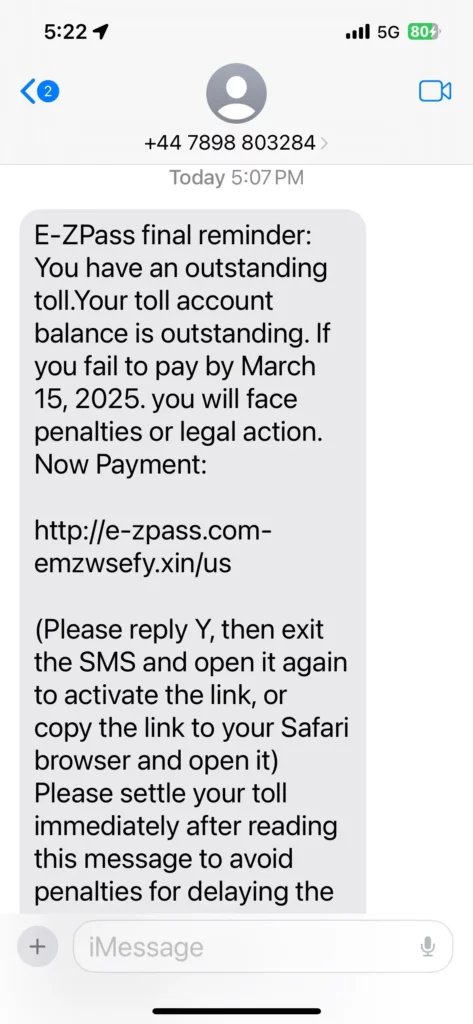
One of the most obvious signs of a scam is the originating phone number. Many users report receiving fraudulent texts from international numbers, particularly those with the +63 country code (Philippines) or +44 country code (United Kingdom).
Legitimate EZ Pass communications come from US-based numbers, not international ones. If you see a foreign country code, that’s almost certainly a scam.
Suspicious Links and Domains
Scam texts typically include links with unusual domain extensions. Instead of directing to official .gov or .com domains associated with legitimate toll authorities, these links often use strange top-level domains like “.xin” that lead to phishing websites designed to steal your personal and financial information.
Real EZ Pass communications will only refer you to official websites such as EZPassNY.com and TollsByMailNY.com.
Urgent Payment Demands
Scam messages create artificial urgency, claiming you need to make an immediate payment for outstanding tolls or that your account requires immediate attention. Some even specify short timeframes, like “payment required within 12 hours.”
Legitimate government organizations, including toll authorities, generally don’t pressure you into making immediate payments through text messages. They provide reasonable timeframes and multiple secure payment methods.
Recipients Without EZ Pass Accounts
Perhaps the most telling aspect of these scams is their indiscriminate targeting. Many people receive these fraudulent texts despite:
- Not having an EZ Pass account
- Not owning a vehicle
- Not having driven on toll roads recently
This reveals that scammers aren’t working from actual EZ Pass customer data but are sending messages to as many phone numbers as possible, hoping to catch unsuspecting victims.
How to Verify Legitimate EZ Pass Communications
When you receive a text that claims to be from EZ Pass, follow these steps to verify its legitimacy:
Check Your Account Directly
The safest approach is to avoid interacting with any links or phone numbers in the message. Instead, independently access your EZ Pass account through the official website by manually typing the URL or using a previously bookmarked link.
Several Reddit users have shared stories of receiving suspicious texts but then checking their accounts directly and discovering legitimate issues. This approach allows you to address any actual account matters while avoiding potential phishing attempts.
Know the Official Channels
Familiarize yourself with how EZ Pass officially communicates with customers in your region. For instance, real communications from EZ Pass New York only refer customers to official websites such as EZPassNY.com and TollsByMailNY.com.
If you’re unsure about your region’s communication policies, call the customer service number listed on the back of your EZ Pass transponder or visit the official website.
| Region | Text Message Policy | Official Website |
|---|---|---|
| EZ Pass Virginia | Sends texts only to opt-in customers | ezpassva.com |
| EZ Pass New York | Limited text communications | e-zpassny.com |
| EZ Pass New Jersey | Varies by account settings | ezpassnj.com |
Protecting Yourself From EZ Pass Text Scams
With these scams becoming increasingly sophisticated, taking proactive steps to protect yourself is essential:
Universal Text Message Precautions
Security experts advise against clicking on any links received through text messages, regardless of their apparent legitimacy. This applies not only to EZ Pass communications but to any service that scammers might impersonate, including banks, credit card companies, and government agencies.
Use Official Contact Methods
For legitimate concerns about your EZ Pass account, always contact the service directly through official channels:
- Call the customer service number listed on your transponder
- Visit the official website by typing the URL directly in your browser
- Use the official EZ Pass mobile application
Report Suspicious Messages
If you receive what appears to be a scam text:
- Report the message as spam through your phone’s messaging application
- Forward suspicious texts to 7726 (SPAM)
- Report to the FBI’s Internet Crime Complaint Center at www.ic3.gov
Don’t engage with suspicious messages in any way, even to reply “STOP” or with nonsense responses. This confirms to scammers that your number is active, potentially leading to more scam attempts.
Recent Examples of EZ Pass Text Scams
These scams continue to evolve in sophistication. Recent examples reported on Reddit and other platforms include:
The Unpaid Toll Alert Scam
Many users report receiving texts claiming they have an “UNPAID TOLL ALERT” with a link to make a payment. These messages often claim to be from “E-ZPass Services” and include specific dollar amounts to seem legitimate.
The Account Suspension Threat
Another common variation threatens imminent account suspension, claiming: “Your E-ZPass account will be suspended in 12 hours due to missed toll payments. Pay now to avoid additional fees.” The message includes a phishing link designed to steal your information.
The Traffic Violation Fake Notice
Some scammers have become more creative, sending texts claiming you’ve incurred a traffic violation while passing through a toll, requiring immediate payment to avoid license suspension.
The Scale of the Problem
The EZ Pass text scam issue has become so widespread that state transportation departments in New York, New Jersey, Virginia, and others have issued official warnings. The Governor of New York even released a consumer alert about these scams, demonstrating the seriousness of the threat.
These scams operate on volume—if even a small percentage of recipients fall for the scam, the operation can be profitable for the perpetrators. This explains why the scams persist despite their often obvious nature.
What To Do If You’ve Already Clicked a Link
If you’ve already clicked a link in a suspicious text:
- Don’t enter any personal information
- Close the browser immediately
- Run a security scan on your device
- Monitor your financial accounts for suspicious activity
- Consider changing passwords for any accounts that might be compromised
- Contact your bank or credit card company if you shared payment information
Tips for General Text Message Security
Beyond EZ Pass scams, protect yourself from text-based phishing (smishing) with these habits:
- Be suspicious of any message creating urgency or fear
- Never click links from unknown senders
- Verify messages through official channels
- Keep your phone’s software updated
- Consider using a spam-filtering app
- Be wary of messages with misspellings or grammar errors
When to Trust EZ Pass Communications
You can trust communications from EZ Pass when:
- You’ve opted into text notifications through your official account settings
- The message comes from a recognized official number
- The message doesn’t ask for immediate payment or personal information
- You can verify the information by logging into your account independently
Remember that legitimate EZ Pass texts typically serve to notify customers about low account balances or similar account-related matters. They provide basic information without requesting immediate payment actions or personal information through embedded links.
The next time you receive a text claiming to be from EZ Pass, take a moment to verify its legitimacy before taking any action. By understanding the limited circumstances when EZ Pass sends legitimate texts and recognizing the warning signs of scams, you can protect yourself from these increasingly common fraud attempts.
When in doubt, bypass the text entirely and log into your account directly through the official website. That extra minute of caution could save you from identity theft and financial fraud.