Ever wonder why your neighbor from New Jersey complains about their E-ZPass fees while your Pennsylvania aunt seems perfectly happy with hers? You’re not alone. The E-ZPass system spans 19 states, but what you’ll pay depends entirely on where you get it.
Let’s break down the real costs of E-ZPass across different states, so you can make the smartest choice for your wallet. Whether you’re a daily commuter or occasional traveler, understanding these fees could save you hundreds each year.
What Is E-ZPass and How Does It Work?
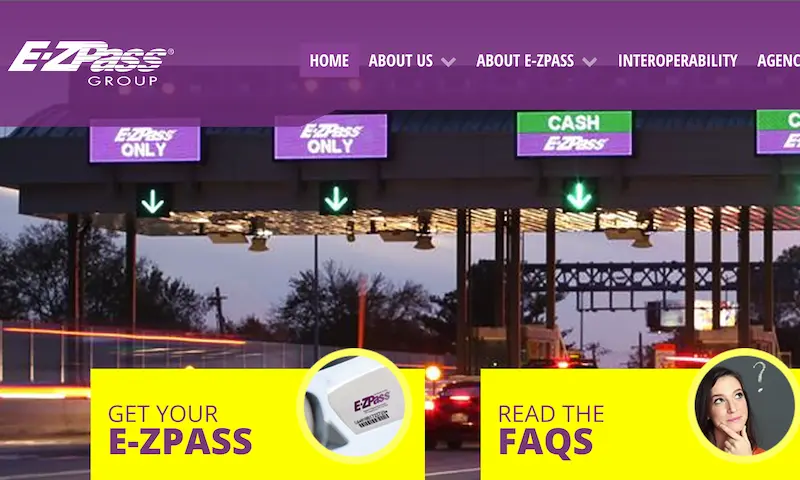
E-ZPass is an electronic toll collection system that lets you zip through toll booths without stopping to fumble for cash. A small transponder mounted on your windshield communicates with sensors at toll plazas, automatically deducting the toll amount from your prepaid account.
The system works across 19 states from Maine to Illinois and down to Florida, making it incredibly convenient for interstate travel. But here’s where things get tricky: each state sets its own fees, policies, and discount structures.
E-ZPass Initial Costs: A State-by-State Comparison
The upfront cost of getting an E-ZPass varies dramatically depending which state issues your transponder. Here’s what you’ll pay to get started:
| State | Transponder Fee | Minimum Initial Balance | Annual/Monthly Fees |
|---|---|---|---|
| Pennsylvania | $10 (refundable deposit) | $35 | $3/year (waived with auto-replenishment) |
| New Jersey | $25 | $25 | $18/year |
| New York | $25 (Port Authority) or $0 (MTA) | $25 | $1/month (Port Authority only) |
| Massachusetts | $0 | $20 | $0 |
| Virginia | $0 ($35 goes entirely to toll balance) | $35 | $0 |
| Maine | $10.55 | $20 | $0 |
| Florida | $29.70 (includes initial toll balance) | Included in starter kit | $0 |
| Ohio | $25 | $25 | $0.75/month (if under 30 trips/year) |
These numbers reveal something interesting: some states prioritize getting transponders in as many hands as possible (Massachusetts, Virginia), while others use E-ZPass as a revenue stream (New Jersey, New York Port Authority).
The Hidden Costs of E-ZPass
The sticker price isn’t the whole story. Here are some less obvious costs to watch for:
Replenishment Thresholds
When your account balance falls below a certain amount, the system automatically adds more money from your linked payment method. These thresholds vary:
- Pennsylvania: Adds $35 when your balance drops below $10
- New Jersey: Adds $25 when your balance drops below $15
- Maine: Adds $20 when your balance drops below $15
- West Virginia: Adds $20 when your balance drops below $10
Higher thresholds mean more of your money is tied up in the system at any given time—essentially an interest-free loan to the toll authority.
Account Maintenance Fees
Some states charge you just for having an E-ZPass:
- Pennsylvania: $3 annual fee (waived with automatic replenishment)
- New Jersey: $18 annual fee
- New York (Port Authority): $1 monthly fee ($12/year)
- Ohio: $0.75 monthly fee for drivers making fewer than 30 trips per year
These fees might seem small, but they add up—especially if you’re not a frequent traveler.
Penalty Structures
What happens if your account runs out of money? The consequences vary widely:
- New York: Red lights and gate blocks at toll plazas, requiring immediate cash payment plus fees
- Virginia: 10-day grace period to replenish before higher toll-by-plate rates kick in
- Pennsylvania: Invalidates transponders below $10, forcing toll-by-plate billing at 58% higher rates
Best Value E-ZPass: Which State Offers the Best Deal?
Based on the data, here’s how the states rank for different types of drivers:
For Daily Commuters
Best Choice: Pennsylvania or Massachusetts
Pennsylvania offers a massive 58% discount compared to toll-by-plate rates. For a commuter making 200 annual Turnpike trips, that’s about $700 in savings per year. The $3 annual fee is negligible and even waived with automatic replenishment.
Massachusetts charges no fees whatsoever and even waives minimum balance requirements for accounts exceeding 17 monthly trips, making it ideal for regular commuters.
For Occasional Travelers
Best Choice: Virginia
Virginia’s model is beautifully simple: $35 gets you a transponder with the entire amount applied to your toll balance. There are no annual fees, no monthly charges, and a generous 10-day grace period if your account runs low.
For Multi-State Travelers
Best Choice: Pennsylvania or Virginia
Both states offer transponders that work seamlessly across all 19 E-ZPass states. Pennsylvania’s provides substantial discounts throughout the Northeast Corridor, while Virginia’s fee-free approach minimizes ongoing costs.
How to Save Money on E-ZPass Costs
Smart drivers can optimize their E-ZPass experience:
1. Choose Your State Strategically
If you live near a state border, consider getting your E-ZPass from the state with the best fee structure rather than your home state. For example, New York residents can save $12 annually by getting an MTA-issued transponder instead of a Port Authority one.
2. Opt for Automatic Replenishment
Many states waive or reduce fees for accounts set up with automatic replenishment. Pennsylvania waives its $3 annual fee, while Maryland converts its $1.50 monthly fee to a toll credit with just three monthly uses.
3. Monitor Your Balance Thresholds
Each state has different low-balance thresholds that trigger automatic replenishment:
- Maine: $0.60 (extremely tight monitoring required)
- Pennsylvania: $10 (more forgiving)
- New Jersey: $15 (requires keeping more funds in the system)
Setting calendar reminders to check your balance can help avoid unnecessary replenishments.
E-ZPass Discounts: The Real Money-Saver
The true value of E-ZPass isn’t just convenience—it’s the toll discounts:
- Pennsylvania: 58% discount compared to toll-by-plate rates
- New York: 40-60% discount depending on facility
- New Jersey: 30-50% discount
- Massachusetts: 25% discount
These discounts dwarf any fees you might pay. For example, a Pennsylvania commuter paying $3 annually for E-ZPass but saving 58% on $1,200 worth of tolls will save nearly $700 per year.
Replenishment Methods: Which Is Best?
How you add money to your account affects your bottom line:
Bank Draft/ACH
- Pros: Often waives fees (like Pennsylvania’s $3 annual fee)
- Cons: Less control over exactly when money leaves your account
Credit Card
- Pros: Potential to earn rewards/points
- Cons: May incur fees in some states (like Ohio’s $0.75 monthly fee)
Manual Replenishment
- Pros: Complete control over when you add funds
- Cons: Higher minimum balance requirements in some states, risk of insufficient funds
State-Specific E-ZPass Quirks Worth Knowing
Pennsylvania
The Pennsylvania Turnpike Commission offers one of the best values with a 58% discount off cash/toll-by-plate rates. The $3 annual fee is waived with automatic replenishment, making it essentially free for most users.
New York
New York has a peculiar dual system. Transponders issued by the MTA (Metropolitan Transportation Authority) have no monthly fee, while those from the Port Authority charge $1 monthly. The transponders are functionally identical but cost $12 more per year from one agency than the other.
Virginia
Virginia’s E-ZPass stands out with its consumer-friendly approach. The $35 “On-the-Go” program allocates the entire amount to your toll balance with no hardware fees. They’re also pioneering license plate linking that could eventually eliminate the need for physical transponders.
Massachusetts
Massachusetts offers completely free transponders subsidized through its $20 minimum replenishment requirement. High-frequency users (17+ trips monthly) enjoy reduced minimum balance requirements.
E-ZPass for Different Types of Vehicles
Your vehicle type affects your E-ZPass costs and requirements:
Passenger Cars
Standard transponders work for most passenger vehicles with typical toll rates.
Commercial Vehicles
Commercial accounts often require higher minimum balances and may have different fee structures. Some states like Ohio are exploring tiered account systems for different vehicle classes.
Motorcycles
Special mounting instructions apply, but fees are typically the same as passenger vehicles.
Recreational Vehicles
RVs and vehicles towing trailers may be classified differently by various toll authorities, potentially affecting toll rates but not typically the E-ZPass fees themselves.
Future Trends in E-ZPass Pricing
The E-ZPass system continues to evolve:
Dynamic Pricing
Maryland has implemented congestion-based pricing that varies E-ZPass rates during peak hours, increasing costs by 20-50%. This trend is likely to spread to other urban corridors.
Technology Integration
Virginia’s license plate recognition system may eventually render physical transponders obsolete, potentially eliminating hardware fees altogether while introducing new usage-based pricing models.
Regional Harmonization
While still fragmented, there’s growing pressure for standardized fee structures across the E-ZPass network to simplify interstate travel.
Is E-ZPass Worth It?
For the vast majority of drivers who use toll roads even occasionally, E-ZPass is worth the investment. The convenience alone—no stopping, no fumbling for cash, no waiting in toll lines—justifies the minimal costs in most states.
When you factor in the substantial discounts (25-58% depending on state), E-ZPass becomes a no-brainer. Even with New Jersey’s relatively high $18 annual fee, most commuters will recoup that cost within just a few trips.
How to Get the Most Value from Your E-ZPass
- Choose the right state: If you live near a state border, compare fee structures
- Set up automatic replenishment: Often waives fees and prevents accidental low balances
- Link multiple vehicles: Many states allow multiple vehicles per transponder (when not used simultaneously)
- Mount properly: Incorrect mounting can lead to missed readings and higher toll-by-plate rates
- Monitor your account: Check for unexpected charges or fees periodically
The E-ZPass system may seem complicated with its patchwork of fees and policies, but the savings and convenience make it worthwhile for most drivers. By understanding the fee structures and choosing the right state’s program, you can maximize your savings while enjoying smoother travels.
Remember, the best E-ZPass for you depends on your specific travel patterns and which toll facilities you use most frequently. Take the time to calculate your potential savings based on your typical routes before deciding which state’s program to join.