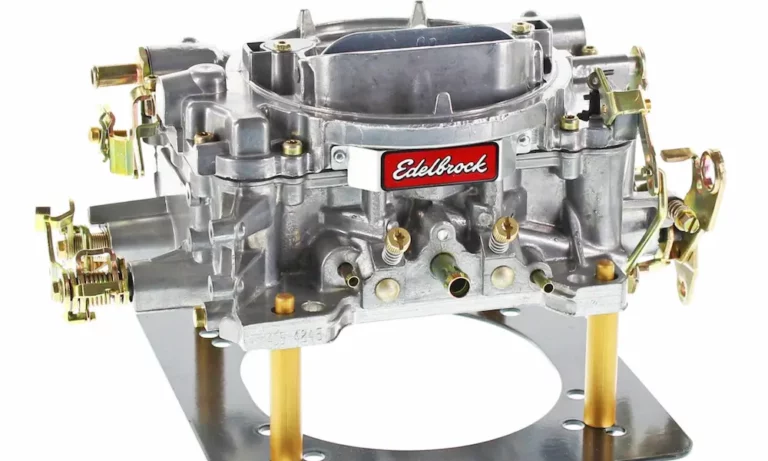
Picking between an Edelbrock vs Holley carburetor feels like choosing sides in a bar fight. Both camps swear their choice wins. But here’s the truth — neither carburetor is universally better. The right answer depends entirely on your engine, your driving style, and how much wrenching you’re willing to do. Read to the end and you’ll know exactly which one fits your build.
They’re Built Completely Differently — and That Changes Everything
Most people compare CFM ratings and call it a day. That’s the wrong move. The real difference between Edelbrock and Holley starts with how they’re physically built — and those structural choices ripple through every aspect of how they run, tune, and leak.
Edelbrock’s Integrated Aluminum Body
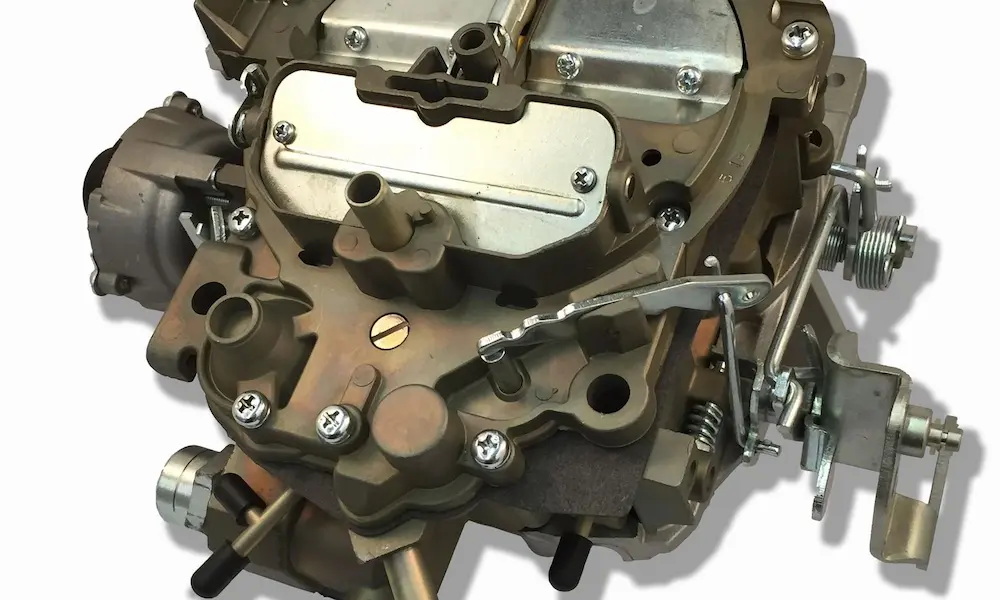
Edelbrock carburetors use a two-piece cast-aluminum body. The fuel bowls are cast directly into the lower main body — no separate bowl bolted on, no vertical gaskets sitting in raw fuel. This one design decision is why Edelbrocks almost never develop external fuel leaks.
But that integrated design comes with real trade-offs:
- Small fuel bowl volume — the bowls wrap tightly around the venturis, limiting capacity
- Restricted manifold bolt access — the wide, short footprint blocks your wrench from reaching intake bolts
- Sediment sensitivity — fine grit settles at the bottom of the bowls and clogs idle circuits, causing off-idle stumbles that require removing the entire air horn to fix
One more thing worth knowing: Edelbrock didn’t design this platform. Carter engineered it. Weber cast it. Edelbrock markets it and supplies calibration components.
Holley’s Modular Assembly
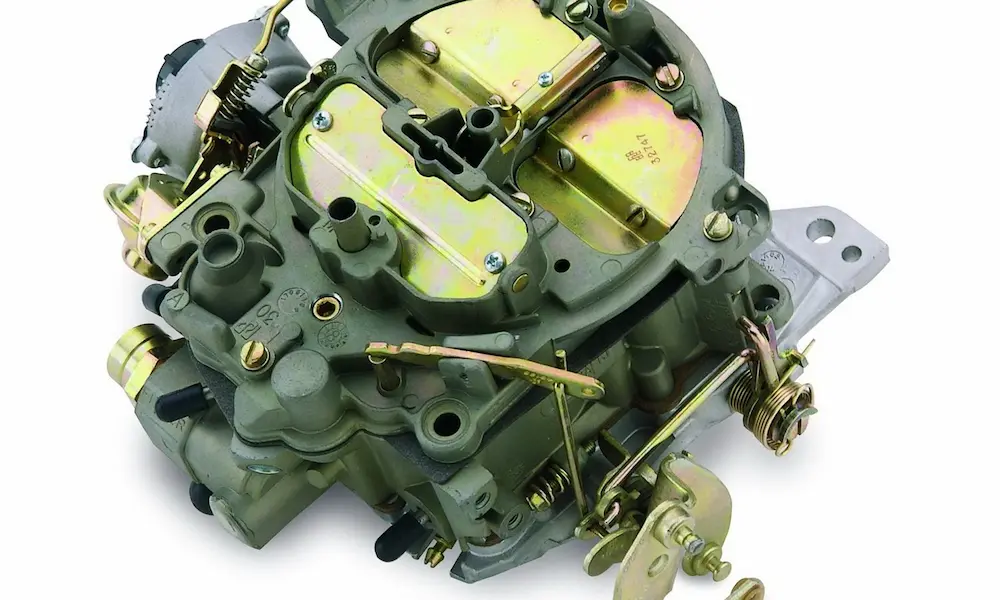
Holley takes the opposite approach. A typical Holley 4150-style carburetor is built from five separate pieces: a throttle baseplate, a central main body, two independent external fuel bowls, and metering blocks between them.
Those external bowls give Holley some clear advantages:
- Massive fuel bowl capacity — stable fuel supply at wide-open throttle
- Easy manifold bolt access — the central sides of the carb stay open
- External float adjustment — turn a screw on top of the bowl, no disassembly needed
- Sediment tolerance — debris settles away from idle circuits
The catch? Long bowl bolts compress vertical gaskets that sit below the fuel line. Those gaskets need regular inspection. Skip maintenance, and you’re looking at fuel weeping from the bowl seams.
How Each Carb Handles Fuel Enrichment
When you stomp the gas, both carbs need to instantly dump more fuel into the engine. They just do it through completely different mechanisms.
Edelbrock: Metering Rods and Step-Up Pistons
The Edelbrock uses vacuum-operated metering rods suspended from spring-loaded pistons. At idle and cruise, high manifold vacuum pulls the pistons down, inserting the thick step of the rod into the jet. Less fuel flows. Fuel economy improves.
Mash the throttle. Vacuum drops. The spring pushes the piston up, pulling the thin step out of the jet. More fuel flows. The engine pulls hard.
Tuning this system is genuinely easy. You lift a small cover plate on the air horn, swap the metering rods or step-up springs, and you’re done. No fuel spills. No gaskets to replace. It takes minutes.
Holley: Power Valves and Main Jets
Holley uses a stationary jet paired with a vacuum-operated power valve inside the metering block. At idle, manifold vacuum holds the power valve shut. The engine runs on the primary jets alone.
When load increases and vacuum drops below the valve’s rated threshold — typically 6.5 inches of mercury — the valve opens and adds fuel through an auxiliary passage. The mixture enriches for hard acceleration.
Changing jets or swapping a power valve means pulling the entire fuel bowl and metering block. Fuel drains out. Gaskets usually need replacing. It works perfectly, but it’s a wet job every time you tune.
Secondary Stage: Three Different Ways to Open the Back Barrels
This is where things get genuinely interesting — and where a lot of people bolt on the wrong carb.
Holley Vacuum Secondaries
Vacuum secondary carburetors use a pneumatic diaphragm driven by venturi air velocity — not manifold vacuum. As air speed through the primary barrels increases, a pressure drop at a sensing port pulls the diaphragm up against a spring, progressively opening the secondary throttle plates.
The secondaries only open as fast as the engine can pull air. That prevents velocity stalls and fuel delivery dropout. No secondary accelerator pump is needed. This makes vacuum secondary carbs ideal for:
- Heavy street cars
- Automatic transmissions with stock torque converters
- Low-axle-ratio towing trucks
- Anyone prioritizing fuel economy
Holley Mechanical Secondaries (Double Pumpers)
Double pumpers link all four throttle plates mechanically. Nail the gas and everything opens at once. That sudden opening drops air velocity instantly, which would starve the boosters — so double pumpers run two accelerator pumps that shoot raw fuel into all four bores to bridge the gap.
They’re built for:
- Manual transmissions
- Lightweight cars
- Loose aftermarket torque converters
- Drag racing
Put a double pumper on a heavy street car with a stock converter and you’ll feel a nasty bog every time you accelerate from a stop.
Edelbrock Air-Valve Secondaries
Edelbrock uses a physical air-valve flap above mechanically linked secondary throttle blades. The throttle blades open mechanically past a certain pedal position, but fuel doesn’t flow from the secondary boosters until air velocity lifts the air valve flap.
The AVS2 makes this adjustable — an external screw changes the spring tension on the air valve, letting you dial in the opening rate for your vehicle’s weight and gearing without touching a secondary accelerator pump.
The Heat Problem — Especially with E10 Fuel
Modern pump gas contains up to 10% ethanol. Light-end hydrocarbons in E10 start vaporizing around 96°F. That’s a problem for any aluminum carburetor sitting on a hot intake manifold after shutdown.
Edelbrock’s fully aluminum body conducts heat fast — and because the fuel bowls wrap around the hot throttle bores, fuel temperatures spike quickly when the engine stops and airflow disappears. The result is fuel percolation: boiling fuel spills out of the boosters into the intake, flooding the engine. The symptom is a hard hot-restart that takes heavy cranking and manual throttle clearing.
Two fixes work well:
- Phenolic spacer — a half-inch to one-inch thick four-hole spacer between the carb and intake manifold blocks heat transfer effectively. Tight hood clearance? Use a thin wood-fiber insulator gasket at 0.032 inches thick instead.
- Fuel return line — a three-port regulator and return-style fuel system continuously bleeds hot fuel back to the tank and replaces it with cooler fuel. Note that Edelbrock fuel inlets use a unique 5/8″-20 thread on the banjo fittings — you’ll likely need to drill and tap for a 1/8″ NPT elbow to plumb the return line.
Street vs Race: Head-to-Head Specs
Street-Class Comparison
| Feature | Edelbrock Performer 1406 | Edelbrock AVS2 1906 | Holley 1850 |
|---|---|---|---|
| CFM Rating | 600 | 600 | 600 |
| Enrichment Style | Metering Rods | Metering Rods | Power Valve |
| Primary Booster | Down-leg | Annular | Straight-leg |
| Secondary Actuation | Weighted Air Valve | Adjustable Spring Air Valve | Vacuum Diaphragm |
| Tuning Method | Dry — top cover | Dry — top cover | Wet — bowl removal |
| Out-of-Box Calibration | Lean | Standard Street | Standard Street |
High-Performance Comparison
| Feature | Holley 4150 Double Pumper | Edelbrock VRS-4150 |
|---|---|---|
| CFM Offerings | 650, 750, 850 | 650, 750, 850, 950 |
| Body Height | Standard (3.25 in) | Tall (3.75 in) |
| Booster Type | Down-leg / Straight-leg | Annular (750+ CFM) |
| Fuel Bowl Capacity | Standard | 20% larger with anti-foam baffles |
| TPS Integration | Aftermarket bracket required | Built-in GM 3-wire mount |
| Float Construction | Brass or Nitrophyl | Corner-chamfered Nitrophyl |
The Edelbrock VRS-4150 represents a clean break from the old Carter AFB lineage. It runs billet metering blocks on both sides, 20% larger fuel bowls with anti-sloshing baffles, and chamfered floats that won’t jam during hard cornering. It even includes a built-in TPS mount for electronic transmission control — something you’d need an aftermarket bracket to accomplish on a standard Holley.
Which One Should You Actually Buy?
Street cruisers and restorations: Go with the Edelbrock AVS2. Annular boosters improve low-speed throttle response over the original Performer, the dry tuning process is genuinely beginner-friendly, and you won’t chase fuel leaks on a weekend drive.
Drag racing and high-horsepower builds: The Holley 4150 modular platform or the Edelbrock VRS-4150 both deliver. Holley rewards experienced tuners who want maximum adjustability over every air bleed and idle circuit. The VRS-4150 gives you annular boosters, bigger bowls, and modern TPS integration without rebuilding the whole platform.
Heavy vehicles and automatic transmissions: Pick a vacuum secondary carburetor. The progressive secondary opening prevents the low-speed bog that kills drivability in heavy street rigs.
Off-road and trail trucks: Skip both standard Edelbrock AFB/AVS designs entirely. The internal side-hung float bowls slosh at extreme angles, and the floats can’t control the needle valves over rough terrain. A Holley Truck Avenger or an EFI swap handles the job properly.
The edelbrock vs holley carburetor debate doesn’t have a single winner — it has a right answer for each specific situation. Match the carb to the job, not the brand loyalty.