Your transmission is quietly doing one of the hardest jobs in your car. Skip its maintenance, and you’re looking at a repair bill that starts at $3,000. So before you book a service, here’s exactly what a transmission fluid change at Valvoline costs, what you actually get for your money, and how to avoid overpaying.
What Does Valvoline Charge for a Transmission Fluid Change?
The short answer: it depends on your vehicle and what type of service you need.
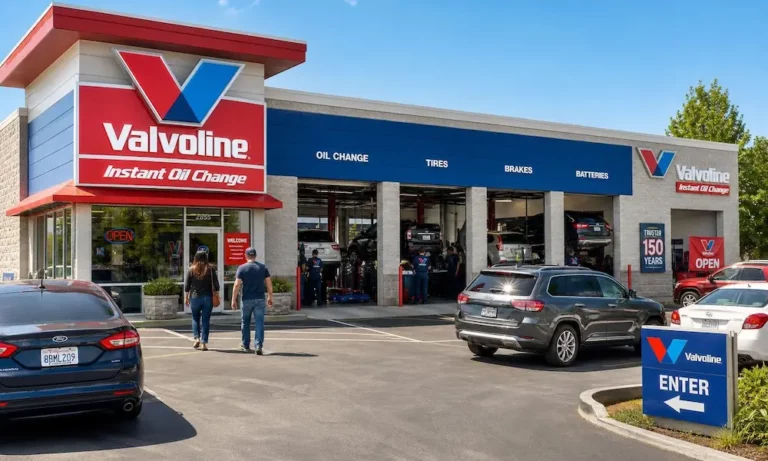
Valvoline Instant Oil Change offers two main transmission services — a standard fluid exchange and a complete machine flush. These are very different procedures, and the price gap between them is significant.
Here’s what you’re looking at in 2026:
- Manual transmission fluid exchange: Starting around $89.99
- Automatic transmission fluid exchange (drain-and-fill): Starting around $149.99
- Standard fluid exchange range: $119 to $179
- Complete machine-assisted transmission flush: $175 to $350
Real drivers confirm these numbers. Reddit users report paying around $178 for a compact car like a Kia Soul and $200 for a Ford F150 Powerboost. That lines up with Valvoline’s published service menu.
Keep in mind — prices shift based on where you live. Labor rates in New York City are higher than rural Tennessee. Your final bill reflects that reality.
How Does Valvoline Compare to Other Shops?
Valvoline markets itself as saving you 30% to 50% compared to dealerships. That’s not just marketing spin — the numbers back it up.
| Service Provider | Drain-and-Fill Cost | Full Flush Cost | Key Notes |
|---|---|---|---|
| Valvoline Instant Oil Change | $119–$179 | $175–$350 | Drive-through; ~20-min wait |
| Jiffy Lube | $80–$250 | $125–$250 | Price varies heavily by fluid type |
| Independent Shops | $150–$250 | $150–$300 | Often includes pan drop, filter, gasket |
| Franchise Dealerships | $260–$460 | $350–$577 | OEM fluids; long diagnostic waits |
| DIY | $50–$75 | Not recommended | You buy fluid only; handle disposal yourself |
Dealerships regularly charge $260 to $378 for a basic drain-and-fill — sometimes more. For a complete flush, some shops push past $577. Valvoline’s pricing sits comfortably below that ceiling for most vehicles.
The trade-off? Independent shops often do more thorough work on older vehicles — dropping the pan, cleaning the magnet, and replacing the filter. Valvoline’s drive-through model skips most of that.
Fluid Exchange vs. Full Flush — What’s the Real Difference?
This is where most people get confused. These two services aren’t interchangeable.
Standard Fluid Exchange (Drain-and-Fill)
A drain-and-fill uses gravity or light suction to pull old fluid from the transmission pan. It’s fast and affordable — but it only replaces 20% to 40% of your total fluid volume. The rest stays trapped in the torque converter, valve body, and cooling lines.
At many Valvoline locations, technicians use pneumatic evacuation tools to pull old fluid through the dipstick tube — no pan removal required. You’re using about 5 to 7 quarts of new fluid. That keeps the material cost low.
Complete Machine Flush
A full flush connects directly to your transmission’s cooling lines. The machine uses your vehicle’s own pump pressure — or external pressure — to push fresh fluid through the entire system, including the torque converter and cooler.
This process requires 12 to 22 quarts of fluid. More fluid equals a higher bill. But you get a much more complete replacement of the degraded fluid throughout the whole system.
One catch — Valvoline’s flush doesn’t include a pan drop or filter replacement unless your vehicle has an external, easily accessible filter canister. If you want that level of service, an independent transmission shop is a better fit.
Why Your Fluid Type Changes the Price
Not every car takes the same transmission fluid. Modern gearboxes — especially CVTs and dual-clutch automatics — need specific formulas with precise friction modifiers. Using the wrong fluid can cause slipping, shuddering, or total failure.
Here’s what Valvoline’s primary fluid lineup costs at retail:
| Valvoline Fluid | Per Quart | Per Gallon | Fits These Vehicles |
|---|---|---|---|
| MaxLife Multi-Vehicle Full Synthetic ATF | $6.64–$7.29 | $22.99–$35.99 | Ford, GM, Toyota, Honda, Nissan |
| Dexron VI / Mercon LV Full Synthetic ATF | $6.88 | $38.49 | Modern GM and Ford gearboxes |
| ATF +4 Full Synthetic | $9.74 | $33.99 | Chrysler, Dodge, Jeep, Ram |
| CVT Full Synthetic Fluid | $10.43–$10.99 | $41.99 | Belt and chain CVT systems |
| Hybrid Vehicle Full Synthetic ATF | $7.97 | N/A | Hybrid drivetrains |
CVT fluid costs noticeably more per quart. That’s the main reason CVT services run higher at quick-lube shops. If your Nissan Rogue or Honda CR-V uses a CVT, expect a higher service price than a standard automatic.
What About Sealed Transmissions?
Many newer vehicles don’t have a dipstick. They use a sealed transmission with a check plug on the bottom or side of the casing. Servicing these requires lifting the car, pumping fluid upward with specialized adapters, and monitoring temperature to confirm correct fill level.
If your vehicle has a sealed transmission, Valvoline may refer you to a dealership or charge a separate labor fee. Ask before you drive in.
How to Pay Less at Valvoline
You don’t have to pay full price. Valvoline runs regular promotions through mail campaigns, digital platforms, and its own loyalty programs.
Active promo codes worth checking:
- ABVPD19 — $15 off a transmission fluid exchange
- DVWEB13 — 15% off your total invoice (max $25 savings)
- DVWEB12 — $15 off a full-service oil change
- ABWBVPN — Extra $5 off adjacent maintenance services
Stacking DVWEB13 with a transmission service and an oil change on the same visit squeezes the most value out of that 15% discount. Check Valpak for location-specific deals, and visit Valvoline’s promotions page before every appointment.
Loyalty programs to sign up for:
- VPerks — Tracks your service history and gives tiered discounts on return visits
- Team Valvoline Rewards — Upload receipts to earn points redeemable for gear and merchandise
- Rakuten cashback — Get up to 10% back on eligible in-store purchases when you pay by credit card (no debit PIN)
These aren’t huge windfalls, but they add up over a year of regular maintenance.
Should You Actually Get a Flush at High Mileage?
Here’s something Valvoline’s upsell pitch won’t always mention.
Quick-lube technicians check your transmission fluid during standard inspections and may flag it for a flush based on minor darkening or small metallic particles. But fine metal dust and slight fluid discoloration are normal — internal magnets catch most of it, and it doesn’t automatically signal a crisis.
More importantly — if your vehicle has over 100,000 miles and has never had a transmission service, a pressurized machine flush can actually cause damage. Here’s why:
Old, neglected fluid carries microscopic friction material shed by the clutches. That suspended material helps worn parts engage smoothly. When you run a high-pressure flush through a neglected gearbox, it can dislodge heavy sludge from the pan and push it into the narrow passages of the valve body — clogging internal valves and triggering rough shifts or complete failure.
For high-mileage vehicles with no service history, a simple drain-and-fill is the safer move. Replace a portion of the fluid at a time. Let the transmission adjust gradually rather than flushing everything at once under pressure.
Smart rules before you authorize any transmission service:
- Check your owner’s manual first. Manufacturer intervals vary widely. Severe driving conditions — towing, heavy city traffic — can cut intervals to every 30,000 to 50,000 miles
- Ask what fluid they’ll use. Honda and Acura transmissions are notoriously sensitive to aftermarket fluids. For these vehicles, stick with OEM fluid and a drain-and-fill only
- Confirm technician familiarity. Valvoline technicians complete up to 270 hours of training, but make sure the team knows your specific transmission type before they start
- Skip the flush on high-mileage neglected vehicles. A conservative drain-and-fill protects aging internal components better than a full machine flush
For sealed transmissions, CVT gearboxes, or vehicles with a complicated service history, an authorized dealership or dedicated transmission specialty shop gives you the most controlled service environment.
The Bottom Line on What You’ll Pay
A transmission fluid change at Valvoline runs $119 to $179 for a standard exchange and $175 to $350 for a complete flush. Your vehicle type, transmission design, fluid specification, and ZIP code all move that number up or down.
Apply a promo code, combine services on one visit, and sign up for VPerks — and you’ll consistently pay less than the sticker price. Just make sure you know what your car actually needs before you let anyone run a machine through it.