Your car’s idling rough. Maybe it stalls at red lights, or the accelerator feels sluggish. After cleaning or replacing your throttle body, you’re now stuck with weird engine behavior. Good news? You don’t need a $300 scanner to fix it. This guide walks you through proven manual relearning methods that’ll get your throttle body back on track.
What’s Really Happening When You Relearn a Throttle Body
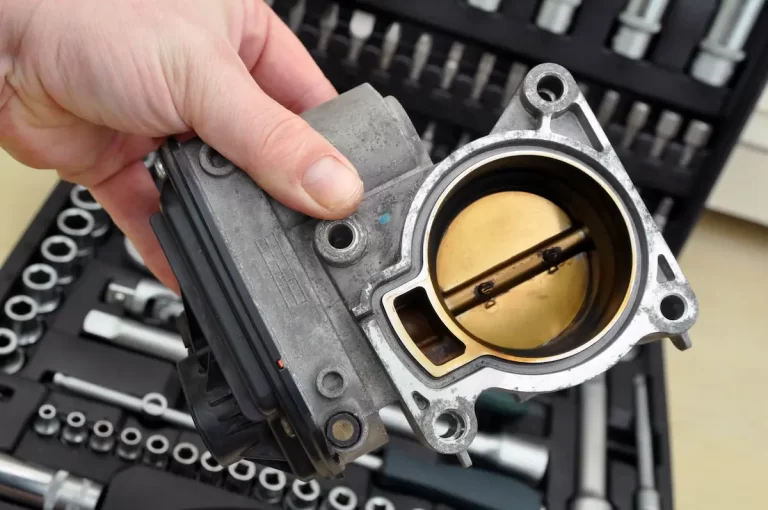
Your throttle body controls how much air flows into your engine. In modern cars, it’s all electronic—no cables connecting your gas pedal to anything. The engine control unit (ECU) tells the throttle body exactly how far to open based on what you’re doing with the pedal.
Here’s the catch: your ECU remembers the throttle body’s fully closed and fully open positions. When you clean off carbon buildup or install a new throttle body, those old measurements don’t match anymore. The ECU gets confused, and that’s when problems start.
Without relearning, you’ll notice:
- Rough or bouncing idle speed
- Engine stalling when you stop
- Hesitation when you press the gas
- Higher-than-normal idle RPM
- Check engine light with throttle-related codes
The relearn process basically tells your ECU, “Hey, forget what you knew. Here’s the new normal.”
The Universal Key Method (Works on Most Cars)
This method works on tons of vehicles with electronic throttle control. It’s your first move when you don’t know the manufacturer-specific procedure.
Here’s what you do:
Turn off everything electrical—AC, radio, lights. You want minimal electrical noise interfering with the relearn process.
Insert your key and turn it to “ON” without starting the engine. Your dashboard lights up, but the engine stays off.
Wait 10 seconds. You might hear clicking from the throttle body or fuel pump. That’s normal—it’s the ECU waking up.
Slowly press the accelerator all the way down. Take 2-3 seconds to reach the floor. Hold it there for 2-3 seconds, then slowly release it back up. Again, take your time—no quick movements.
Repeat that pedal press three times total. Slow down, hold, slow up. The ECU’s learning the full range of motion.
Turn the key off and wait at least 2 minutes. The ECU saves everything during this time.
Start your engine and let it idle for 10-15 minutes. Don’t touch the gas pedal. The ECU’s making fine adjustments to nail the idle speed.
Take a test drive. Normal acceleration, some highway speed, a few stops. This helps the ECU learn how the throttle behaves in real conditions.
| Step | Duration | What’s Happening |
|---|---|---|
| Key ON (no start) | 10 seconds | ECU initializes |
| Pedal press & release | 2-3 seconds each way (repeat 3x) | Learning full range |
| Key OFF wait | 2+ minutes | Saving new values |
| Idle period | 10-15 minutes | Calibrating idle control |
Battery Disconnect Method (The Nuclear Option)
When the basic method doesn’t cut it, disconnecting your battery forces a complete ECU memory reset. Everything gets wiped—not just throttle position, but all short-term memory.
Step-by-step:
Pop your hood and find the battery. Make sure the engine’s completely off and cool.
Grab a wrench and loosen the negative (-) terminal. Remove it completely and keep it away from the battery post. You don’t want accidental contact.
Wait 10-15 minutes. This drains residual electricity from the system. Some people wait longer, but 10 minutes usually does it.
Reconnect the negative terminal. Tighten it down—loose connections cause all sorts of electrical gremlins.
Turn the key to “ON” (no start) for 30 seconds. The ECU runs system checks and starts gathering fresh sensor data.
Start the engine and let it idle for 10-15 minutes. Hands off the pedal. The ECU’s relearning throttle position from scratch.
Drive normally for 15-20 minutes. Mix it up—city streets, highway speeds, gentle and firm acceleration.
Quick warning: You’ll lose radio presets and clock settings. Some cars need the windows recalibrated (just roll them all the way down, then all the way up). Worth it for a properly working throttle body.
GM and Chevrolet: The Easiest Relearn Ever
GM makes this almost too simple. If you’ve got a Chevy, GMC, Buick, or Cadillac, this manufacturer-specific procedure usually works perfectly.
The GM way:
Start your engine. Put it in Park. Don’t touch the gas pedal for exactly 3 minutes.
Your RPMs might be all over the place at first—maybe 1200, maybe 1500. That’s the ECM (GM calls it ECM instead of ECU) starting its learning cycle. Just let it do its thing.
Turn the engine off. Wait at least 60 seconds.
Start it again. Another 3 minutes in Park, hands off the pedal.
After this second idle period, your engine should settle to normal idle speed—usually around 600-700 RPM.
Still not right? Drive above 45 MPH, then slow down without braking hard. Do this a few times. After your drive, let it idle for 5 minutes.
If problems persist, turn everything off for 60 seconds and run through the whole procedure again.
Why this works so well: GM’s idle control system actively adjusts during those 3-minute periods. You’re literally watching it learn in real-time as the RPMs stabilize.
Ford’s Throttle Reset (Slightly Trickier)
Ford vehicles need a more hands-on approach. This battery terminal trick drains the ECU’s capacitors, forcing a complete reset.
Ford procedure:
Disconnect the negative battery cable. Don’t let it touch the battery post—use a towel or cardboard to keep it isolated.
Here’s the weird part: use a jumper wire to connect the negative terminal to the positive terminal. Leave it connected for exactly 2 minutes.
What’s happening? You’re draining stored electrical charge from the ECU’s capacitors. This wipes all stored throttle values.
Remove the jumper wire carefully. Positive side first, then negative. Don’t let the wire touch both posts at once.
Reconnect the negative battery cable. Make it tight.
Turn the key to “ON” without starting. Wait for all the dashboard warning lights to cycle off.
Once the lights go out, start the vehicle. Let it idle for 15 minutes without touching the gas.
Safety note: When you’re jumping those terminals together, you’re creating a short circuit—but a controlled one. The battery’s disconnected from the car, so you’re not frying anything. Still, don’t skip any steps here.
Nissan and Infiniti: The Complex Dance
Nissan and Infiniti models from 2002-2009 use the most complicated manual procedure out there. You need good timing and patience.
The full Nissan sequence:
Disconnect the negative battery terminal for 30 seconds minimum. Reconnect it.
Start the engine and let it warm up completely. Turn off AC, radio, everything. Keep the steering wheel straight.
Turn the key to “ON” for 2 seconds, then “OFF” for 10 seconds. Do this twice. Leave it in “OFF” after the second cycle.
Turn the key to “ON” (don’t start). Wait 3 seconds.
Press the accelerator pedal fully down and release it completely. Do this 5 times in 5 seconds. You need to move fast here—fully down, fully up, repeat.
Wait exactly 7 seconds. Count them.
Press and hold the accelerator to the floor. Keep it there for about 20 seconds until the check engine light (malfunction indicator lamp) stops flashing and stays solid.
This part’s critical: within 3 seconds after the light stops flashing, release the pedal and immediately start the engine.
Let it idle for 20 seconds, then rev it 2-3 times to check everything’s working.
Timing’s everything: If you mess up the 3-second window in that second-to-last step, you’ll need to start over from the beginning.
BMW and MINI: Two Methods to Try
BMW and MINI vehicles use throttle body adaptation that can be reset with extended key positions. You’ve got two options.
Method 1 (Extended timing):
Turn your key to “ON” without starting. Leave it there for exactly 90 seconds.
If you can access them, clear any stored trouble codes now.
Turn the key “OFF” and wait 90 seconds.
Turn it back to “ON” (still not starting) for another 90 seconds.
Start the engine normally.
Method 2 (Pedal-down method):
Turn the key “OFF” and wait 90 seconds.
Press the accelerator all the way down and hold it there.
While holding the pedal, turn the key to “ON.” Keep the pedal down for 90 seconds.
Turn the key “OFF” and release the pedal. Wait 90 seconds.
Start the vehicle.
Both methods work, but Method 1’s usually sufficient unless you’re dealing with sluggish throttle response that won’t quit.
Chrysler, Dodge, and Jeep: Keep It Simple
FCA products use one of the most straightforward relearn procedures around. Works on most Chrysler, Dodge, Jeep, and Ram vehicles.
Quick Chrysler reset:
Turn the key to “ON”—dashboard lights up, engine stays off.
Wait 10 seconds. You might hear humming or clicking from the throttle body. That’s the initialization sequence running.
Slowly press the accelerator all the way down, then slowly release it back up.
Turn the key “OFF.” Wait at least 10 seconds.
Start the engine and let it idle for several minutes. Don’t touch the gas pedal. Idle speed might bounce around at first while the ECM relearns.
Test drive it. You should feel smooth, consistent throttle response.
Why it’s so easy: Chrysler’s electronic throttle control system doesn’t need multiple cycles or complex timing. One good cycle usually nails it.
Hyundai and Kia: The Listening Method
Hyundai and Kia use a repetitive cycling procedure where you actually listen to the throttle body learning its positions.
Hyundai/Kia steps:
Make sure your engine’s at operating temperature (above 41°F outside) and battery voltage is good (above 10V). Turn off AC and fan.
Turn the key to the second position—”ON” without starting. For push-button start, press the button twice without touching the brake.
Wait 15 seconds. Listen for mechanical movement sounds from the throttle body. That’s it working.
Turn the key to “OFF” (or press the button once for push-start). Wait 5 seconds. Listen again for throttle movement.
Repeat this ON-OFF sequence 4 more times. Five complete cycles total.
That’s it. No confirmation, no lights, nothing. The system learns passively.
The trick: You’re giving the throttle body five chances to mechanically move through its full range while the ECU watches and records the positions.
Mercedes-Benz: Three Minutes of Patience
Mercedes vehicles use an extended key-on procedure that lets the throttle body perform comprehensive position learning.
Mercedes process:
Turn the key to position 2—that’s “ON,” one click before starting the engine.
Leave it there for exactly 3 minutes. Set a timer.
You’ll hear the throttle body doing its thing. Sounds like mechanical movement or what some people call “music.” That’s normal and good.
After 3 minutes, turn off the ignition, remove the key, and start the engine normally.
Test drive to evaluate throttle response and idle quality.
Why 3 minutes? Mercedes throttle bodies run through multiple calibration sequences. They need time to hit every position and record the data.
When You Need to Do This
You don’t randomly relearn your throttle body. Specific situations trigger the need.
Definite relearn situations:
- After cleaning carbon from the throttle body
- Installing a new throttle body
- Replacing or disconnecting the battery
- ECU replacement or software updates
- Long-term vehicle storage (months without driving)
Warning signs you need a relearn:
Your idle’s all over the place—RPMs bouncing between 500 and 1200 when they should sit steady around 700.
The throttle feels dead for a second after you press it, then suddenly kicks in.
Your car stalls at stoplights or when you shift into gear.
Idle RPM sits way higher than normal—maybe 1200 when it should be 700.
The check engine light’s on with codes like P0505 (idle control), P0121 (throttle position sensor), or similar throttle-related codes.
You’re getting terrible gas mileage because the air-fuel mixture’s off.
Acceleration feels jerky or uneven, especially from a stop.
| Problem | What It Means | Relearn Priority |
|---|---|---|
| Bouncing idle | ECU can’t maintain target RPM | High |
| Stalling at stops | Idle control out of calibration | High |
| Sluggish throttle | Position sensor not calibrated | Medium |
| High idle speed | Minimum position unknown | High |
| Check engine light | Stored fault codes | High (after fixing root cause) |
What to Do When Relearning Fails
Sometimes you follow every step perfectly and… nothing changes. Here’s how to troubleshoot.
Check these first:
Grab a basic code reader—even a $20 Bluetooth one works. Look for stored codes related to throttle position sensor, mass airflow sensor, or intake system. These can block successful relearning.
Actually inspect your throttle body. Is it truly clean? Even a thin film of carbon can throw off the relearn. Pull it off and check inside with a flashlight.
Wiggle all electrical connectors on the throttle body. Loose or corroded connections cause intermittent problems that no relearn can fix.
Check for vacuum leaks. Spray some brake cleaner around intake hoses while the engine idles. If RPMs change, you’ve got a leak stealing air the ECU doesn’t know about.
Try the procedure again. Seriously. Sometimes the second or third attempt works when the first didn’t.
Signs you need professional help:
You’ve tried multiple procedures multiple times—nothing changes.
Your car’s too new or too fancy. Some vehicles absolutely require bi-directional scan tool commands that manually command the throttle body through test cycles.
The throttle body itself might be damaged. Worn gears, bad motors, or failing position sensors need replacement, not relearning.
Your ECU might have hardware problems. This is rare but possible, especially after electrical issues or water damage.
You keep getting NHTSA safety recall notifications about throttle control issues. Some problems require official dealer fixes.
Why This Works (The Technical Bit)
Modern throttle bodies contain position sensors that constantly report angle to the ECU. Over time and through use, the ECU builds a map of minimum position (fully closed), maximum position (fully open), and everything in between.
When you clean or replace the throttle body, those physical positions change slightly. Maybe the minimum position is now 0.5 degrees different. Doesn’t sound like much, but at idle, the throttle plate is barely open—less than 5 degrees on many cars. A half-degree error means 10% off, and that causes rough idle.
The relearn procedures force the ECU to abandon its old position map and build a new one. The key-on cycles power up the throttle body and let it physically move through its range. The pedal presses give the ECU reference points. The idle periods let the ECU find the sweet spot for stable idle speed.
Different manufacturers use different approaches because their throttle body designs vary. GM’s throttle bodies actively adjust during idle, so they can learn on the fly. Nissan’s need more structured input sequences. BMW’s store adaptation values that need specific conditions to reset.
The battery disconnect method works because the ECU stores learned values in volatile memory that dies without power. It’s the nuclear option—you lose everything, not just throttle position. The ECU then has to relearn everything from scratch as you drive.
Bottom line: You’re teaching your car’s computer what “normal” looks like for your specific throttle body. Once it knows, everything else falls into place.
These procedures save you $100+ in shop fees for something you can do in your driveway in 20 minutes. Most throttle body problems after cleaning or replacement come down to skipping the relearn—not mechanical issues. Now you’ve got the knowledge to handle it yourself, no scan tool required.