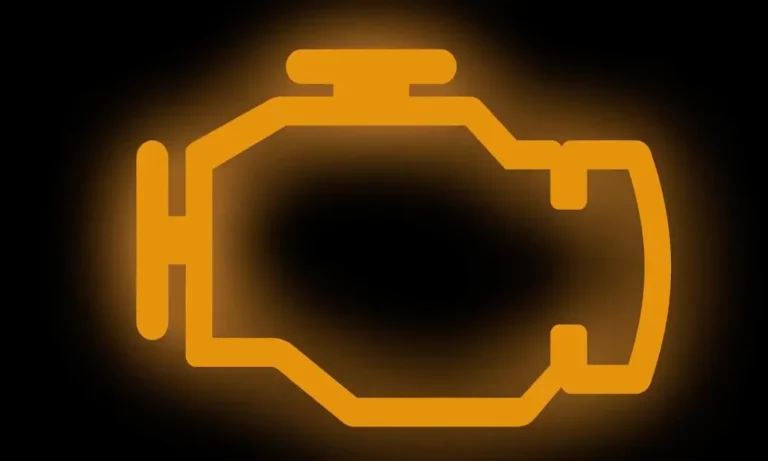
That little amber light just popped on, and you don’t have a scanner handy. Good news — you’ve got options. This guide walks you through every proven method to reset your check engine light without a scanner, what happens after you reset it, and one critical thing you need to know before an emissions test.
What’s Actually Happening When That Light Comes On
Your car’s Engine Control Unit (ECU) watches hundreds of sensors constantly. When one reading falls outside its normal range, it stores a Diagnostic Trouble Code (DTC) and switches on the Malfunction Indicator Light (MIL) — the formal name for your check engine light.
The OBD-II standard made all of this uniform. Since 1996, every gas-powered car sold in the US uses the same diagnostic framework. That’s why these reset methods work across most makes and models.
Here’s something important to understand upfront: resetting the light doesn’t fix the problem. If the fault is still there, the light comes back. These methods work best after you’ve already fixed the issue or when a minor glitch triggered a false alarm.
Method 1: Disconnect the Battery (The Hard Reset)
This is the most reliable scanner-free reset method. It cuts power to the ECU and clears its volatile memory — the temporary storage where active fault codes live.
Why It Works
Your ECU stores active fault data in RAM. Pull the power, and that data disappears. But there’s a catch: the ECU has capacitors that hold a small charge even after you disconnect the battery. You need to wait long enough for those capacitors to fully drain — usually 15 to 30 minutes.
Step-by-Step
| Step | Action | Why It Matters |
|---|---|---|
| 1. Turn ignition OFF | Remove the key completely | Prevents electrical surges during disconnection |
| 2. Put on safety glasses | Optional but smart | Battery acid and sparks aren’t fun |
| 3. Disconnect the negative terminal | Loosen the nut, pull off the black cable | Breaks the electrical ground circuit |
| 4. Secure the cable | Tuck it away from the battery post | Stops accidental reconnection mid-reset |
| 5. Wait 15–30 minutes | Sit tight | Lets capacitors fully discharge |
| 6. Speed up the drain (optional) | Press the horn or brake pedal for 60 seconds | Pulls remaining charge out faster |
| 7. Reconnect the terminal | Tighten the negative cable back on | Restores full system power |
| 8. Let it idle | Run the engine for 5–10 minutes | Helps the ECU relearn baseline settings |
What You’ll Lose
A global battery disconnect wipes more than just fault codes. Expect to re-enter:
- Radio presets and security codes
- Clock settings
- Saved seat and mirror positions (on equipped vehicles)
Some anti-theft systems lock out after a power loss. Check your owner’s manual for a radio unlock code before you disconnect anything.
Method 2: Pull the ECU Fuse (The Surgical Reset)
Want to reset the ECU without losing all your settings? This is your method. Instead of cutting all power, you remove just the fuse that feeds the ECU or PCM.
How to Find the Right Fuse
- Open your owner’s manual and find the fuse diagram
- Look for a fuse labeled ECU, ECM, PCM, or EFI
- Check both fuse boxes — one’s usually under the hood, one’s inside the cabin under the dash
- The ECU fuse is typically a blade-type rated between 15 and 30 amps
Pull it out with the fuse puller tool stored in the fuse box (most cars include one). Wait 5 to 15 minutes, then push it back in.
Heads up: This method works best on older or simpler vehicles. Modern cars often use integrated power modules that distribute power across multiple circuits. On those, pulling one fuse might not be enough to fully clear the ECU memory.
Method 3: Brand-Specific Key and Pedal Sequences
Several automakers programmed reset sequences directly into their ECU firmware. No tools, no disconnecting anything — just a specific series of key turns or pedal presses.
Nissan and Infiniti: The Pedal Dance
This one’s precise. A slight timing error means starting over. Use a stopwatch.
- Fully release the accelerator pedal
- Turn the ignition to ON (don’t start the engine)
- Wait exactly 3 seconds
- Fully press and release the gas pedal 5 times within 5 seconds
- Wait exactly 7 seconds
- Press the gas pedal all the way down and hold it for 10–11 seconds — the check engine light should start blinking
- Release the pedal, wait 10 seconds, then press it again for another 10+ seconds
- Release the pedal and turn the ignition OFF
Start the car. If the light is gone, it worked. If not, your timing was off — try again.
Chrysler, Dodge, Jeep, and RAM: The Key Dance
This sequence reads stored codes right on your odometer display — useful for diagnosis before a reset.
- Turn the key: OFF → ON → OFF → ON → OFF → ON (don’t crank the engine)
- Watch the odometer — it’ll show codes like “P0442” followed by “Done”
On push-button start models, press the start button without your foot on the brake to cycle through ACC and ON positions in the same pattern.
Important: On newer RAM and Jeep models, this key dance reads codes but doesn’t always clear them. You may still need a battery disconnect or a scanner for a full reset.
Volkswagen: Throttle Body Reset
VW’s pedal sequence focuses on recalibrating the electronic throttle body:
- Turn ignition to ON (engine off)
- Press the gas pedal fully to the floor and hold it for 30 seconds
- Turn the ignition to OFF
- Release the pedal
This clears minor ECU glitches and resets throttle position calibration.
Toyota and Honda: Ignition Cycling
Cycling the ignition key from OFF to ON 3 to 5 times without starting the engine can clear pending or minor temporary codes before they become active faults. This works best as a preventive step, not after a fully active code appears.
Method 4: Just Drive It (The Natural Reset)
Fix the actual problem, then drive normally. The ECU runs continuous self-checks called readiness monitors. If the same fault doesn’t show up on two consecutive trips, the ECU automatically turns the light off.
Most emissions-critical codes use two-trip detection logic: the fault shows as “pending” after the first detection, then the light triggers on the second trip. Reverse that process — fix the issue, drive two or three clean trips — and the light clears itself.
For stubborn monitors like the EVAP system, you may need to run a structured drive cycle:
| Drive Phase | Conditions | What It Tests |
|---|---|---|
| Cold start | Engine coolant below 122°F | O2 sensor heater circuits |
| Idle (2–3 minutes) | A/C and defroster on | Misfire detection, fuel trim |
| Moderate acceleration | Half-throttle to 55 mph | Purge flow, secondary air |
| Steady cruise (3–5 min) | Constant 55 mph, no cruise control | Catalytic converter efficiency |
| Gradual deceleration | Coast to 20 mph, no brakes | EGR flow, purge closure |
The One Thing That Will Stop You From Passing Emissions
Here’s what most guides skip: resetting the check engine light doesn’t just clear codes — it wipes all your readiness monitors back to “Incomplete.”
States with emissions testing check these monitors. If too many show “Not Ready,” your car fails automatically — even if the check engine light is off.
The rules vary by vehicle age:
| Vehicle Type | Model Years | Incomplete Monitors Allowed |
|---|---|---|
| Gas-powered | 1996–1999 | Any one monitor |
| Gas-powered | 2000 and newer | EVAP monitor only |
| Diesel (light duty) | 1998–2006 | Zero — all must be ready |
| Diesel (light duty) | 2007 and newer | Particulate filter and NMHC catalyst |
California is tightening this further — new regulations taking effect October 2025 push toward requiring all monitors to show “Ready” for most vehicles. If you’re in California, don’t reset your light right before a smog check.
What Happens to Your Car After a Reset
Resetting the ECU isn’t free. The computer loses its learned adaptations — fuel trim adjustments, idle compensation, transmission shift patterns — all of it goes back to factory default.
For the first 50 to 100 miles, you might notice:
- Rough idle or fluctuating RPMs — the ECU is relearning fuel trim
- Harsh or firm transmission shifts — the TCM is rebuilding its shift map
- Slight hesitation on acceleration — throttle response calibration takes time
This is normal. It smooths out as the ECU relearns your driving patterns and engine condition.
Permanent Codes: When Manual Resets Don’t Work
If your car was made after 2010, it may store Permanent Diagnostic Trouble Codes (PDTCs) — fault codes saved in non-volatile memory that survives a battery disconnect.
Disconnecting the battery won’t touch a PDTC. Neither will a scanner’s “clear codes” command. The only way to remove a PDTC is to fix the underlying problem and complete the relevant drive cycle until the ECU confirms the repair is valid.
California’s Bureau of Automotive Repair has a provision called the 15/200 rule for this situation: if your car has completed at least 15 warm-up cycles and been driven 200 miles since the last reset, it may still pass a smog check even with an active PDTC. This protects drivers from failing inspections simply because a monitor is taking a long time to cycle through.
Is It Worth Resetting Without Fixing the Problem?
Honestly? Only if you’re troubleshooting a known glitch or confirming a repair worked.
Ignoring a fault that keeps triggering the light carries real risk. A persistent misfire or a failing oxygen sensor can destroy your catalytic converter — a repair that runs into the thousands. Fixing the root cause first is always the smarter move.
The check engine light is also an automatic emissions test failure in nearly every state. You can’t legally register a car in most places with a lit MIL. So even if you reset it, make sure it stays off for a reason.