Got an engine that’s seen better days? Lucas Oil Stabilizer might be your wallet’s best friend. This guide shows you exactly how to use it properly, what ratios work best, and which mistakes to avoid. Let’s get your engine running smoother without emptying your bank account.
What Lucas Oil Stabilizer Actually Does
Think of Lucas Oil Stabilizer as a bodyguard for your engine’s moving parts. It’s a 100% petroleum-based additive that creates a super-protective film between metal surfaces. This film reduces friction, cuts down wear, and extends how long your oil stays effective.
Here’s what it actually does inside your engine: It thickens your oil slightly, helping worn bearings maintain proper oil pressure. It sticks to metal surfaces better than regular oil, protecting your engine during cold starts when most wear happens. And it reduces metal-to-metal contact that causes those annoying ticking sounds.
The stabilizer doesn’t replace your oil. It works alongside it, boosting its protective qualities. For high-mileage engines burning oil or losing pressure, it’s like giving your engine a second chance.
Choosing the Right Lucas Product for Your Engine
Lucas makes three different stabilizers, and picking the wrong one wastes money. Here’s how to choose.
Heavy Duty Oil Stabilizer is the original formula. Use this for older engines, high-mileage vehicles, or anything showing wear. It’s thick, protective, and works with any oil type. If your engine has over 100,000 miles or burns oil, this is your pick.
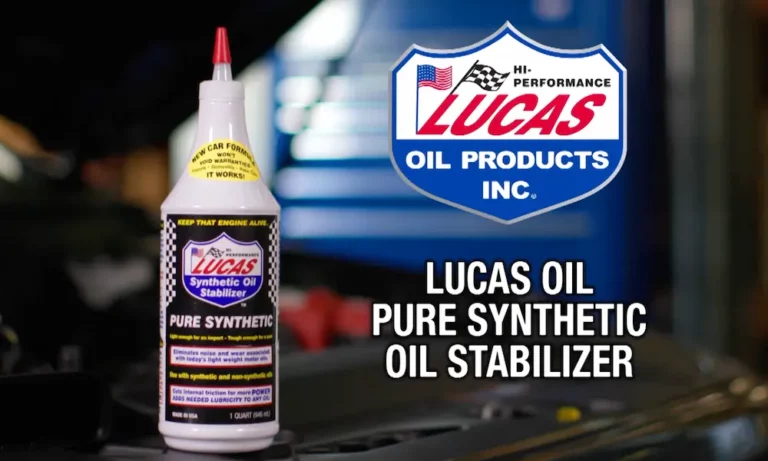
Pure Synthetic Oil Stabilizer targets newer engines requiring lighter oils like 5W-20 or 5W-30. Modern cars with tight tolerances need this thinner version. It won’t mess with your warranty and works perfectly with synthetic oils. Got a newer import or performance car? Use this one.
High Mileage Oil Stabilizer is built for vehicles past 75,000 miles. It includes seal conditioners that help stop leaks and reduce oil consumption. If you’re topping off oil between changes, this variant addresses that specific problem.
The Perfect Mixing Ratios That Actually Work
Getting the ratio right makes the difference between helping your engine and creating new problems.
Standard Engines: The 20% Rule
For most engines, stick with one quart of stabilizer per gallon of oil. That’s 20% stabilizer to 80% regular oil. In practical terms, if your engine holds five quarts, use four quarts of oil plus one quart of stabilizer.
This ratio provides serious protection without making your oil too thick. It maintains proper flow through your engine’s oil passages and filter. You’ll see benefits without risking damage.
High-Mileage Engines: When to Use More
Engines with significant wear can handle higher ratios—up to 60-80% in extreme cases. But here’s the catch: only use these high concentrations temporarily. If your engine desperately needs 80% stabilizer just to run, you’re delaying the inevitable rebuild.
Use higher ratios for short-term fixes while you save for proper repairs. Monitor your oil pressure and temperature closely. If either goes wonky, back off the ratio.
New or Low-Mileage Engines: Keep It Conservative
Newer engines with minimal wear should stick to 10-20% maximum. These engines don’t need heavy protection, and too much stabilizer can actually create problems. It’s like wearing a winter coat in summer—unnecessary and uncomfortable.
How to Add Lucas Oil Stabilizer the Right Way
Timing matters. Add stabilizer during oil changes, not randomly whenever you feel like it. Here’s the step-by-step process.
Before You Start
Warm your engine to normal operating temperature, then shut it off. Let it cool for 5-10 minutes. This ensures old oil drains completely without burning your hands off. Gather your new oil, stabilizer, and filter.
The Installation Process
Drain your old oil completely. Install a new filter if you’re due for one. Now here’s where people mess up: calculate your total capacity first, then figure out how much oil and stabilizer you need.
For a five-quart system using the standard 20% ratio, add four quarts of fresh oil first. Then pour in one quart of stabilizer. Adding oil first helps the thicker stabilizer mix properly.
Start your engine and let it idle for 2-3 minutes. This circulates the mixture through your entire system. Shut it off, wait five minutes, then check your oil level. Top off if needed.
Creating the Perfect Mix
| Engine Capacity | Regular Oil | Lucas Stabilizer | Final Ratio |
|---|---|---|---|
| 4 quarts | 3 quarts | 1 quart | 25% |
| 5 quarts | 4 quarts | 1 quart | 20% |
| 6 quarts | 5 quarts | 1 quart | 17% |
| 7 quarts | 6 quarts | 1 quart | 14% |
Beyond Engine Oil: Other Smart Uses
Lucas Oil Stabilizer isn’t just for engines. It works magic in other applications too.
Manual Transmissions and Differentials
Use 25-50% stabilizer in manual transmissions and transfer cases. For differentials, the same ratio applies. Got a whining diff? Try 50-100% stabilizer to quiet it down and extend its life. The product works in any gear oil application where you need extra protection.
Industrial gearboxes benefit from 25-50% for preventative maintenance. If your gearbox is leaking or overheating, increase to 100% temporarily while planning proper repairs.
Engine Break-In and Assembly
Rebuilding an engine? Lucas Oil Stabilizer makes an excellent assembly lube. Its thick consistency sticks to parts, protecting them during that critical first startup when oil pressure hasn’t built yet.
For break-in procedures, especially with flat-tappet camshafts, the extra protection prevents premature wear. New parts need time to mate properly, and stabilizer gives them that cushion.
Long-Term Storage Protection
Storing a vehicle for months or years? Run your engine with 100% stabilizer before parking it. This coats every internal surface, preventing rust and corrosion. Regular oil drains down over time, but stabilizer’s adhesive properties keep surfaces protected indefinitely.
Mistakes That’ll Cost You Money
Don’t learn these lessons the expensive way. Avoid these common screw-ups.
The Winter Overuse Disaster
Using too much stabilizer in cold weather creates a nightmare scenario. When temperatures drop, oil naturally thickens. Add excessive stabilizer, and your oil becomes so thick it creates dangerous pressure spikes. This pressure blows out seals and creates leaks you didn’t have before.
Keep winter ratios at 20% maximum. If you live somewhere truly cold, drop to 10-15%. Your oil pressure gauge will thank you.
The Replacement Oil Myth
Some folks think adding stabilizer means they can skip oil changes. Wrong. Dead wrong. One Reddit user ran three quarts of oil plus one quart of stabilizer in a four-quart system. That’s running a quart low on actual oil—a fast track to engine damage.
Stabilizer supplements oil, it doesn’t replace it. Maintain your proper oil capacity. If your engine holds five quarts total, that’s five quarts of combined oil and stabilizer, not four quarts plus extra stabilizer on top.
Ignoring Your Specific Engine Needs
Not all engines benefit equally from stabilizer. A brand-new Toyota with 15,000 miles doesn’t need it. A 200,000-mile Chevy pickup burning oil does. Match the product and ratio to your actual situation.
Modern engines with variable valve timing or sophisticated oil control systems might react poorly to thickened oil. Check your owner’s manual and consider your warranty before adding anything to factory-spec oil.
Safety Stuff You Should Actually Know
Lucas Oil Stabilizer isn’t hazardous, but handle it smart. The product has high flash points—425°F for synthetic, 470°F for heavy duty—so fire risk is minimal under normal conditions.
Wear gloves and safety glasses when handling it. Work in a ventilated area. If you get it on your skin, wash with soap and water. Eye contact? Flush with clean water for several minutes. If irritation continues, see a doctor.
Dispose of used oil and stabilizer properly. Most auto parts stores accept used oil for recycling. Don’t dump it down drains or in your backyard. That’s illegal and damages the environment.
Warranty Considerations
Lucas blends safely with all petroleum and synthetic oils without voiding most warranties. The 100% petroleum formulation ensures compatibility across all automotive lubricants. But some manufacturers get picky about aftermarket additives.
Check your specific warranty terms before adding stabilizer to a newer vehicle. Most won’t care, but document your maintenance in case questions arise later.
What Results Actually Look Like
Don’t expect miracles overnight. Here’s what realistic results look like.
Immediate Changes
You’ll probably notice quieter engine operation within a few miles. That annoying valve tick often disappears or decreases significantly. Oil pressure typically increases, especially at idle. These changes happen because the thicker oil film protects worn surfaces better.
Some engines run slightly cooler because reduced friction creates less heat. Don’t expect dramatic temperature drops, but a few degrees isn’t unusual.
Long-Term Benefits
Consistent use with every oil change provides the best results. The protective film builds up over time, creating better protection with each use. Oil consumption often decreases as worn rings and valve guides seal better.
Fuel economy might improve slightly due to reduced internal friction. Don’t expect 5 mpg gains—realistic improvements run 0.5-1 mpg. Some users see no change at all, depending on engine condition and driving habits.
Monitoring Your Results
| Metric | Before Stabilizer | After Stabilizer | What It Means |
|---|---|---|---|
| Idle Oil Pressure | 15 psi | 25 psi | Better bearing protection |
| Oil Consumption | 1 qt/1000 mi | 1 qt/3000 mi | Improved sealing |
| Engine Noise | Loud ticking | Minimal noise | Reduced wear |
| Oil Change Interval | 3,000 miles | 5,000 miles | Extended oil life |
Check your oil pressure regularly. Improvements, particularly at idle, indicate successful treatment of worn bearings. Reduced oil consumption means better ring sealing. Decreased noise shows improved lubrication.
Want objective data? Oil analysis tells the real story. Professional analysis reveals changes in wear metals, viscosity, and additive levels. This shows whether stabilizer actually helps your specific engine or just makes you feel better.
Making It Work for Your Situation
Lucas Oil Stabilizer isn’t magic, but it’s genuinely useful when applied correctly. High-mileage engines with wear issues benefit most. New engines rarely need it.
Use the right product variant for your engine type. Follow proper mixing ratios based on engine condition and climate. Add it during oil changes for proper mixing. Monitor results to verify it’s actually helping.
Don’t treat stabilizer as a replacement for proper maintenance. Change your oil regularly. Fix actual problems instead of masking them indefinitely. Use stabilizer as part of a comprehensive maintenance program, not as a miracle cure.
For engines with serious wear, stabilizer buys time while you save for proper repairs. It’s not permanent, but it’s a lot cheaper than a rebuild. Just be honest about what it can and can’t do.
Your engine’s condition determines whether stabilizer makes sense. A well-maintained engine with proper oil pressure and minimal consumption doesn’t need it. An engine burning oil and losing pressure benefits significantly. Match the solution to the actual problem, and you’ll get your money’s worth.