Trying to protect your car’s interior? Picking between Husky Liners and WeatherTech can honestly feel like a bit much. Both brands make solid floor mats and cargo liners, but they’re not quite the same when it comes to materials, fit, or price.
WeatherTech usually costs more and gives you that stiff, rigid protection, while Husky Liners go for a softer, more flexible feel at a friendlier price. Knowing what sets them apart can really help you figure out what works best for your car and your wallet.
This comparison digs into everything from how each mat is built to how they actually perform day-to-day, so you can hopefully land on the right choice for your ride.
Husky Liners vs WeatherTech: Key Differences
WeatherTech’s got the bigger name, but Husky Liners brings pretty much equal protection for less cash. Both brands cover most cars, trucks, and SUVs, although their materials and how much of your floor they shield can be pretty different.
Brand Overview and Reputation
WeatherTech has really carved out its spot as the “big name” in floor mats. You’ll see their ads everywhere, and a lot of car dealers push their products too.
Husky Liners, on the other hand, is a bit more under the radar but has a loyal following. Plenty of folks say their Husky liners have lasted 14 years and are still going strong in older vehicles.
Both brands back their mats with lifetime warranties, which is always nice. It shows they trust their stuff to hold up, and it’s a little peace of mind for you.
WeatherTech throws a lot at marketing and keeping their name out there. Husky Liners seems to focus more on keeping prices competitive without cutting corners on quality.
Product Range and Compatibility
Honestly, you’ll find floor mats for just about any car, truck, or SUV from either brand. Both offer options for front, rear, and cargo areas.
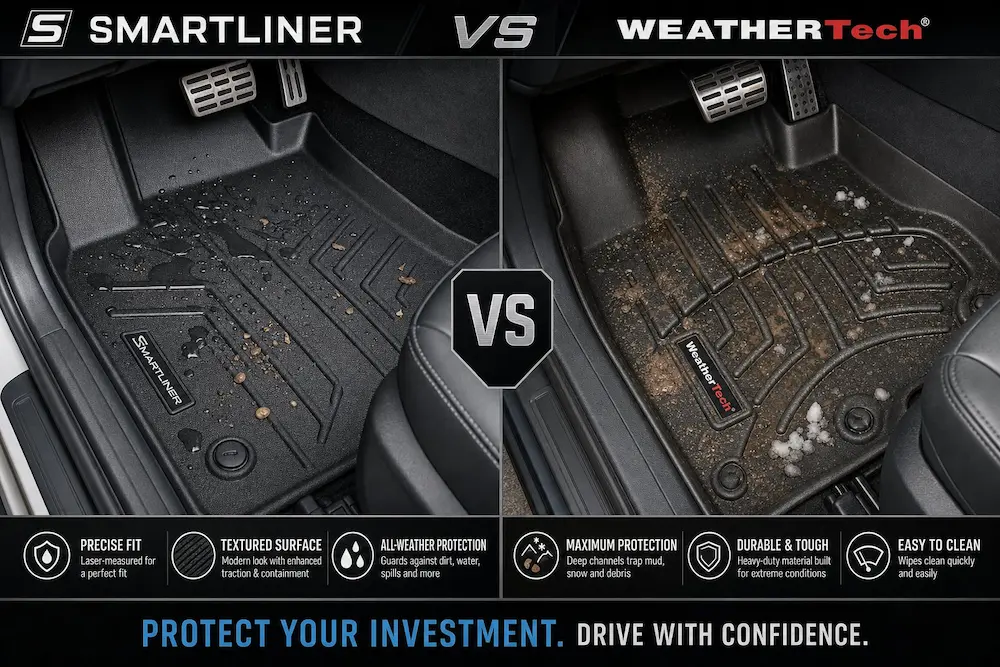
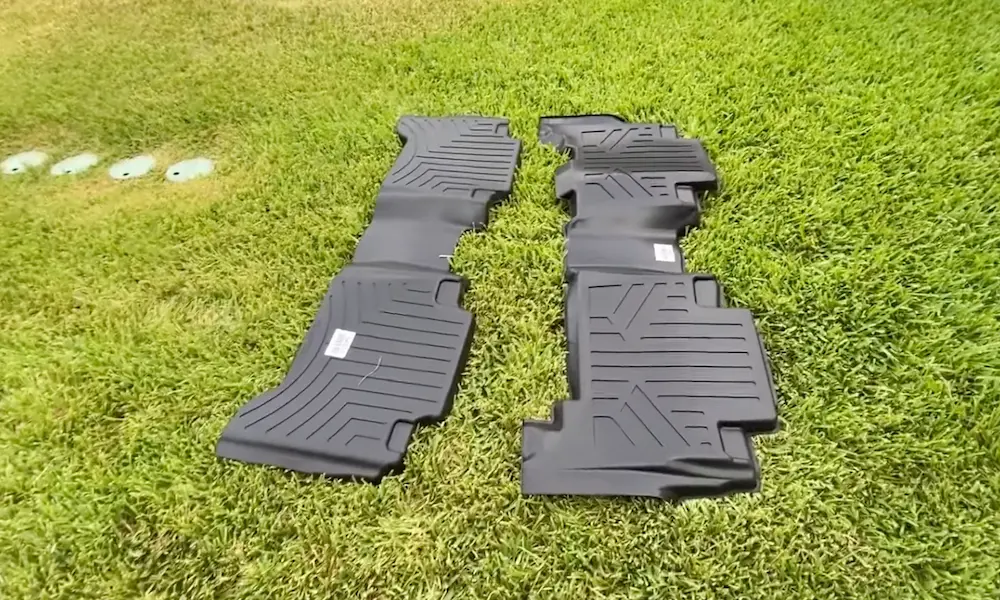
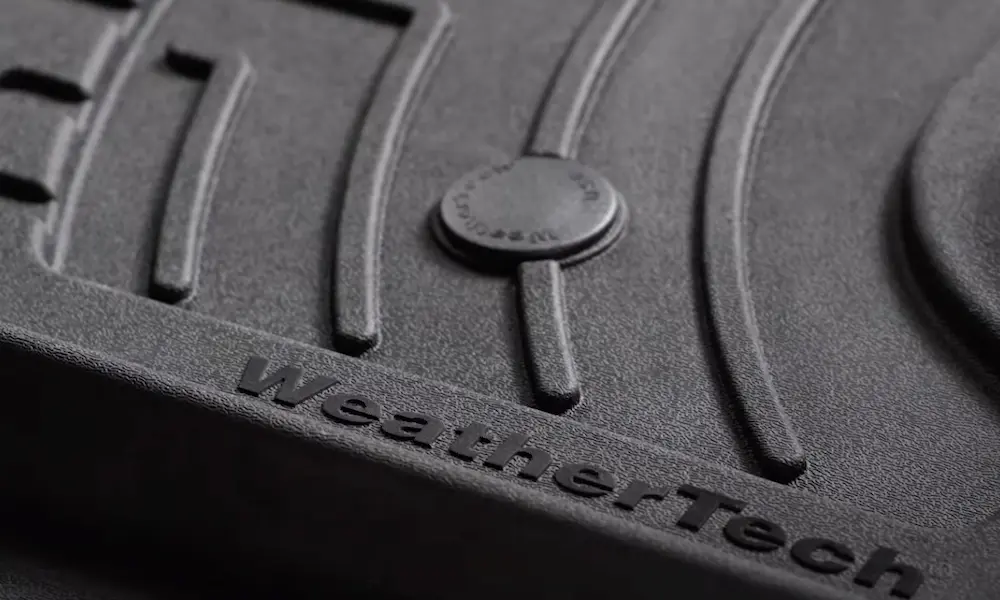
WeatherTech uses a pretty stiff thermoplastic for their DigitalFit mats. Husky Liners goes with a more bendable, elastomeric material and rubberized thermoplastic that feels a bit thinner in your hand.
Coverage is where things start to stand out. Husky mats usually reach further, covering the dead pedal and climbing up higher on the sides to shield more carpet.
Fit can vary by vehicle. Sometimes Husky liners even go over the door sill plates, while WeatherTech stops flush with them.
Price Comparison
Husky Liners are almost always cheaper than WeatherTech. You’re getting similar quality and protection for less compared to WeatherTech’s options.
WeatherTech charges more mostly because of that brand recognition and all the marketing. You’re paying for the name—and maybe the fact that dealers stock them everywhere.
Price Range Comparison:
- Husky Liners: $80-150 for a full set
- WeatherTech: $120-200 for something comparable
The price gap only gets bigger if you’re buying mats for the whole car. Choosing Husky Liners could save you anywhere from $50 to $100 for full coverage.
Materials and Construction
WeatherTech uses rigid HDTE thermoplastic, while Husky goes for flexible elastomeric compounds and rubberized thermoplastic. These choices really change how the mats feel, how they perform, and how long they’ll last in your car.
Rubberized Thermoplastic Material
Both brands lean on rubberized thermoplastic as their main material. Husky’s WeatherBeater mats use a premium version that’s grippy and flexible.
This gives the mats that rubbery, tactile feel and helps them stick to your floor. The surface is pretty slip-resistant, too, so your feet won’t slide around while driving.
WeatherTech also uses thermoplastic, but theirs comes out a lot stiffer than Husky’s softer approach.
Either way, this material shrugs off chemicals, temperature swings, and daily abuse. Both companies design it to handle everything from muddy boots to spilled coffee without falling apart.
Key benefits of rubberized thermoplastic:
- Stays put on your vehicle’s floor
- Handles chemicals and temperature changes
- Super easy to clean
- Flexible enough to avoid cracking
Thermoplastic Elastomer vs HDTE
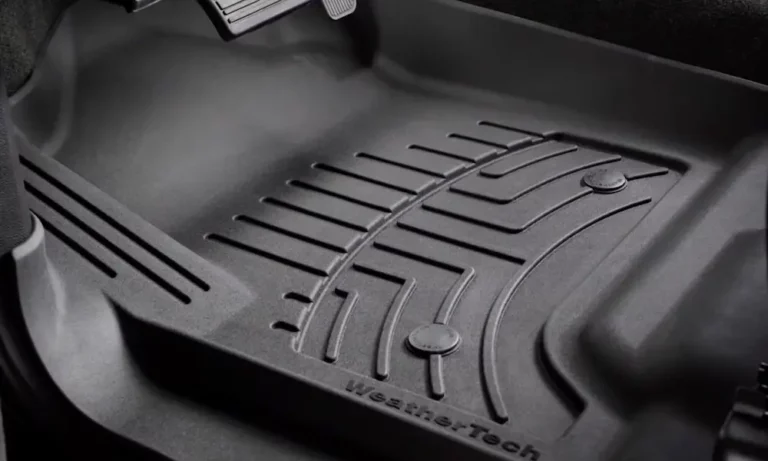
WeatherTech’s DigitalFit mats use High-Density Tri-Extruded (HDTE) material that’s impressively stiff. The three-layer design keeps them firm and structured.
Husky’s X-Act Contour mats are made from elastomeric compounds that are much softer and bendy. You can basically twist and flex them without trouble.
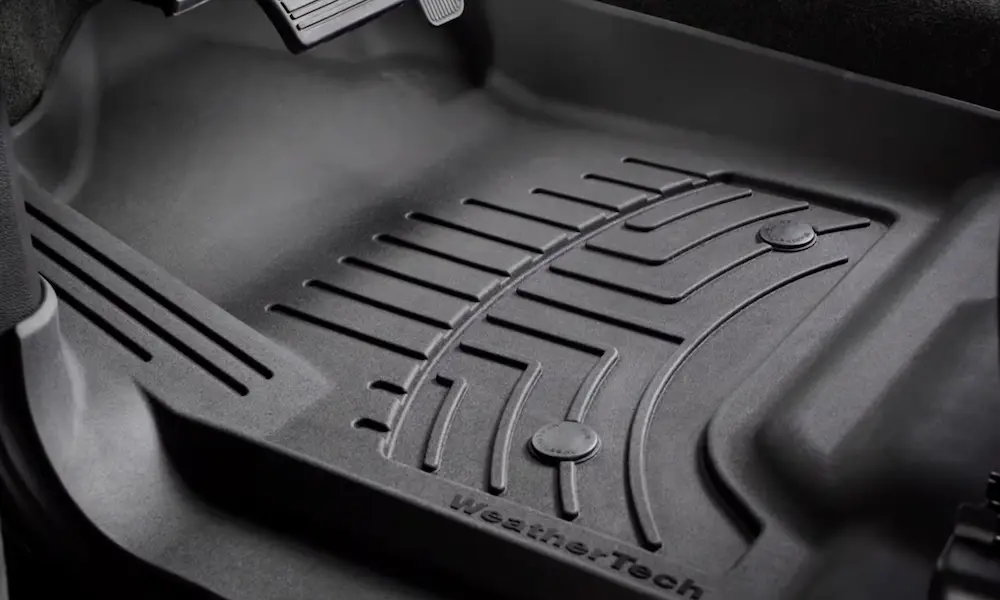
The HDTE in WeatherTech mats means deeper grooves and sharper ridges. That rigid shape is great for channeling water and debris.
Husky’s elastomeric material hugs your car’s floor better. That flexibility helps it wrap around curves and odd angles.
Material comparison:
| Feature | WeatherTech HDTE | Husky Elastomeric |
|---|---|---|
| Flexibility | Rigid | Very flexible |
| Feel | Hard plastic | Soft rubber |
| Conformity | Less adaptable | Highly adaptable |
Durability and Longevity
WeatherTech’s thermoplastic is tough and shrugs off impacts. The stiff build helps it resist warping or getting permanently dented from heavy use.
HDTE also stands up to stains and harsh chemicals better than the softer stuff. If you’re always hauling messy or caustic materials, WeatherTech might be the safer bet.
Husky’s elastomeric material is durable in a different way. Its flexibility stops it from cracking or splitting, which can sometimes happen with really rigid mats over the years.
Both types do fine in extreme temperatures. That said, Husky’s rubber can sometimes give off an odor in hot weather, while WeatherTech’s thermoplastic stays pretty much scent-free.
Durability factors:
- WeatherTech: Best for stain resistance, keeps its shape
- Husky: Less likely to crack, handles temperature swings better
- Both: Resist chemicals, UV, and daily wear
How the mats are made definitely impacts how long they’ll keep looking good and doing their job.
Design, Fit, and Coverage
Each brand uses high-tech scanning to nail the fit, but their materials and surface designs go in different directions. WeatherTech is all about that rigid build, while Husky leans into flexibility and grip.
Custom Fit Technology
WeatherTech DigitalFit liners rely on laser measurements for a super-precise fit. The rigid thermoplastic keeps its shape, but sometimes you’ll notice little gaps around the edges.
Husky Liners uses FormFit design tech that molds itself to your car’s curves. Their elastomeric material is a lot more forgiving than WeatherTech’s hard plastic.
That flexibility means Husky mats can squeeze into tight spots, even under pedals where WeatherTech sometimes falls short. It’s a small thing, but it does mean better protection from water or gunk sneaking underneath.
Key Differences:
- WeatherTech: Laser-measured, rigid fit
- Husky: FormFit, flexible molding
Edge and Surface Protection
WeatherTech’s all-weather mats have deep grooves and tall sidewalls to trap spills. The smooth surface is easy to wipe down, but you don’t always get great coverage near the door sills or pedals.
Husky Weatherbeater mats feature raised, form-fit edges that hug your floorboard. The diamond-plate look and grooved channels help direct water away from your carpet.
Coverage-wise, the difference can be pretty noticeable. Husky tends to fit better around door sills and unique features like fuel door levers. WeatherTech’s rigid plastic can curl at the edges, which sometimes leaves little gaps.
Both brands do well with sidewall protection, but Husky’s flexible material just adapts better to weird floor shapes.
Traction and Anti-Slip Features
WeatherTech mats have a smooth bottom, making them easy to install. But, honestly, that can mean they slide around a bit, especially if things get wet.
Husky Liners adds StayPut nibs underneath. These little grippy bumps stop sliding and keep the mats right where you want them.
The rubberized top of Husky mats also gives your shoes more traction, especially when wet. No more slipping around as you get in or out.
It does take a bit more elbow grease to install Husky’s StayPut system—you have to press the nibs into the carpet. But once they’re in, those mats aren’t going anywhere.
Product Options and Features
Both brands have three main lines, each with their own materials and price tags. Husky splits between flexible and rigid, while WeatherTech is all about precision fit and their advanced materials.
Husky Liners: Uni-Fit, Weatherbeater, and X-Act Contour
Uni-Fit mats are Husky’s most budget-friendly pick. You trim these universal mats to fit your car. They’re good for basic coverage, but you won’t get that glove-like fit of the pricier models.
Weatherbeater mats use rigid thermoplastic with a rubberized surface. They’re sturdy, resist wear, and have raised edges and deep grooves for traction and spill control.
X-Act Contour is the top-tier Husky line. These mats use flexible elastomeric material that bends with your feet and just feels softer overall.
Every Husky model comes with STA-Put nibs underneath to grip your carpet and stop sliding. You can pick from black, tan, or gray—nothing wild, but it covers the basics.
WeatherTech: DigitalFit, FloorLiner HP, and All-Weather Mats
DigitalFit FloorLiner is where WeatherTech really flexes its tech muscle. They actually laser-scan every vehicle to nail down exact dimensions—pretty cool, right? These mats are built from High Density Tri-Extruded material with a rigid core, so they feel solid and substantial in your hands.
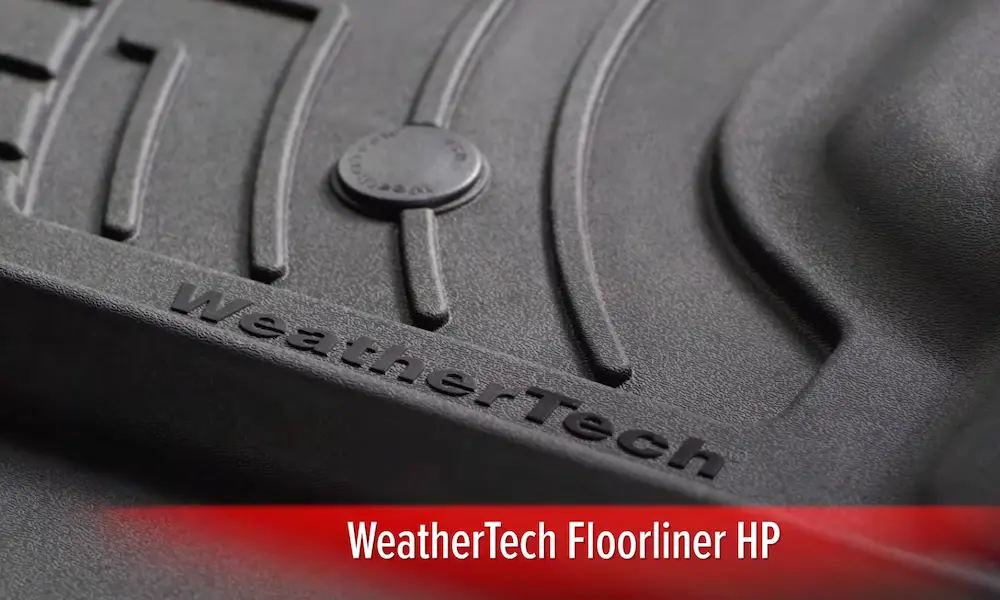
FloorLiner HP is a close sibling, just made with a different material mix. They’re tough but manage to stay flexible, which is a nice touch if you’re not into stiff mats. You still get those classic WeatherTech raised edges and the little reservoir system for catching spills.
All-Weather Mats are more of a “get the job done” option. They’re made from flexible thermoplastic material and stick to the tried-and-true channel pattern. They’re easier on the wallet, but honestly, they still protect your floors way better than the cheap generic stuff.
WeatherTech mats come in four colors: black, tan, gray, and cocoa. Instead of making generic, one-size-fits-all mats, they focus on custom fits for each vehicle—makes sense if you care about coverage.
Performance and User Experience
Both brands hold their own out in the real world, but WeatherTech edges out a bit when it comes to keeping spills in check. Husky’s no slouch either, especially considering you’ll usually spend less. Husky floor mats tend to cover more spots, like the footrest, while WeatherTech seems obsessed (in a good way?) with tight fits around the accelerator area.
Weather Resistance and Spill Protection
WeatherTech’s all-weather mats are champs at trapping liquids, thanks to their deep channels and those signature raised edges. The laser-measured fit means there’s barely a gap for anything to sneak through in your footwell.
Husky Liners don’t lag far behind for weather protection. Their FormFit Edge design grabs spills and debris so cleanup is pretty painless. The rubberized thermoplastic holds up against nasty chemicals and road salt too.
Either way, snow, mud, and water don’t stand much of a chance. WeatherTech’s deeper ridges seem to catch more gunk at first, but Husky’s bigger coverage sometimes means less mess ends up on your carpet at all.
Key Weather Performance Differences:
- WeatherTech: Deeper channels, holds more liquid
- Husky: Wider coverage, covers the footrest fully
- Both: Tough against chemicals, built to last
Noise Insulation and Comfort
Both brands cut down on road noise a bit, which is always welcome. WeatherTech’s mats are a little thicker, so you might notice a tad more sound dampening.
Husky mats have this softer, springier feel because of their flexible material. The DuraGrip surface isn’t slippery but doesn’t feel harsh either—kind of the best of both worlds.
WeatherTech’s liners are firmer, which some people actually prefer for that “premium” vibe. The textured surface keeps your feet from sliding around, even if your shoes are wet, and they’re still comfy on long drives.
Honestly, neither brand is uncomfortable. It’s more about whether you want a softer step (Husky) or a firmer, more structured feel (WeatherTech).
Cargo Liners Comparison
WeatherTech cargo liners are all about thick, rugged material and a fit that leaves no gaps, while Husky’s liners are softer and usually cost less. It really comes down to whether you want max durability or a bit more cushion for your cargo area.
Fit and Functionality for Cargo Areas
WeatherTech cargo liners use laser measurements for a just-right, edge-to-edge fit. That precision keeps dirt and spills from slipping through any cracks.
The material is thick and stays put, so it won’t bunch up or slide around when you’re loading stuff. Those deep grooves and raised edges do a great job at containing messes—honestly, it’s hard to beat.
Husky’s cargo liners are custom-fit too, but the softer, bendier material can sometimes curl or shift if you’re hauling heavy things a lot.
Key Fit Differences:
- WeatherTech: Stiff edges, stays in place, total coverage
- Husky: Softer, might move around, still covers the basics
The non-slip surface on WeatherTech is handy for keeping your pet’s crate or a cargo box from sliding. That said, some folks aren’t as impressed with Husky’s cargo liners for total protection.
Cleaning and Maintenance
WeatherTech cargo liners are smooth and waterproof, so cleaning is usually a breeze. Just hose them off or wipe them down—no need to scrub forever.
The surface doesn’t hold onto pet hair or dirt, so stains come off with barely any effort or cleaning spray.
Husky’s liners, on the other hand, have a textured, rubbery feel that can grab onto debris and pet fur. You might have to put in a bit more elbow grease to get them spotless.
Cleaning Comparison:
- WeatherTech: Wipe or hose off, resists stains
- Husky: Needs scrubbing, debris clings
If you’ve got pets or kids and don’t want to spend ages cleaning, WeatherTech’s easy-to-clean design is a real time-saver. Plus, the rigid surface shrugs off scratches from claws better than the softer stuff.