Picking the wrong oil can kill your engine fast. Whether you’re out of SAE 30 or just trying to find a better option, this guide breaks down every real equivalent — by equipment type, temperature, and use case. Stick around, because the answer isn’t always the same.
What SAE 30 Actually Means
SAE 30 is a single-grade oil rated for high-temperature performance. The “30” tells you how thick the oil is at 212°F — nothing more, nothing less.
It doesn’t carry a “W” (winter) rating because it’s not built for cold starts. Below 40°F, SAE 30 thickens up and flows like cold honey. That strains your starter and delays oil delivery to the parts that need it most.
You’ll find SAE 30 recommended most often for:
- Walk-behind lawn mowers
- Riding mowers
- Portable generators
- Pressure washers
- Air-cooled small engines in general
These engines run hot, run hard, and often have no oil filter. SAE 30 keeps things simple and stable.
Why Air-Cooled Engines Are Different
Your car runs a liquid cooling loop that keeps engine temps in check. Your lawn mower doesn’t have that luxury.
Air-cooled small engines regularly hit 280–350°F during peak summer use. That’s 50–75°F hotter than most automotive engines. On top of that, many small engines hold as little as 15–20 ounces of oil, so that fluid cycles through fast with almost no time to cool down.
This matters when choosing an SAE 30 oil equivalent because:
- Oils with weak additive packages break down faster under extreme heat
- Multi-grade oils use long-chain polymers that can shear apart in high-heat, high-stress environments
- Aerated oil (oil with air bubbles) doesn’t protect surfaces — and splash lubrication systems create lots of agitation
SAE 30 sidesteps the shearing problem because it doesn’t rely on those polymers. Its viscosity is naturally stable.
The Closest SAE 30 Oil Equivalent: 10W-30
The “30” in 10W-30 means the same thing as SAE 30 at operating temperature. When your engine is fully warmed up, both oils perform at the same viscosity level.
So yes, 10W-30 is a valid SAE 30 equivalent in most warm-weather situations.
The difference is cold behavior. The “10W” means the oil flows like a 10-weight when cold, which makes cold starts easier and gets oil to critical parts faster. In fact, roughly 80% of engine wear happens during cold starts — so that faster flow-up matters.
The catch? Multi-grade oils are thinner during warm-up and may slip past worn piston rings or valve seals more easily than SAE 30. Briggs & Stratton acknowledges that 10W-30 can lead to higher oil consumption in hot conditions. Check your dipstick more often if you make this switch.
| Oil Grade | Cold Behavior | Hot Behavior (212°F) | Best For |
|---|---|---|---|
| SAE 30 | Thick, slow flow | 30-weight film | Summer-only equipment |
| 10W-30 | Thin, fast flow | 30-weight film | All-season versatility |
| 5W-30 | Very thin flow | 30-weight film | Cold climates, spring/fall |
| Synthetic 5W-30 | Best cold flow | 30-weight+ stability | Year-round, commercial use |
Synthetic 5W-30: The Premium Equivalent
Full synthetic oils don’t rely on the same shear-prone polymers as conventional multi-grades. Their molecular structure is engineered for uniform stability across a wide temperature range.
Briggs & Stratton officially lists synthetic 5W-30 as a premium alternative for all temperature ranges. Here’s why it earns that status:
- Less volatility — it won’t burn off as easily at high temps
- Lower oil consumption — addresses the main concern with conventional 10W-30
- Better oxidation resistance — fights sludge and varnish longer
- Wider cold-start range — critical for snow blowers and spring startups
Briggs & Stratton also notes their synthetic formulations can potentially double the oil’s service life compared to standard mineral grades. That’s a meaningful claim for equipment that often goes unchecked between seasons.
Industrial Equivalent: ISO VG 100
If you work in manufacturing, agriculture, or facilities maintenance, you don’t shop by SAE grades. You shop by ISO Viscosity Grade (ISO VG).
The SAE 30 oil equivalent on the ISO scale is ISO VG 100.
| SAE Grade | ISO VG | AGMA Grade | Typical Equipment |
|---|---|---|---|
| SAE 20 | ISO 46–68 | AGMA 1–2 | Light gearboxes, bearings |
| SAE 30 | ISO VG 100 | AGMA 3 | Reciprocating compressors |
| SAE 40 | ISO 150 | AGMA 4 | Heavy bearings, gear drives |
| SAE 50 | ISO 220 | AGMA 5 | High-pressure industrial gears |
For air compressors, the right call is usually a non-detergent SAE 30 or ISO VG 100 equivalent. Detergent additives keep contaminants suspended — that’s great for engines, but problematic for compressors where you want moisture and particles to settle out and drain. Detergents can also cause foaming in compressed air systems, which reduces lubrication effectiveness fast.
What to Use for Antique and Classic Engines
Owners of pre-1954 vehicles face a unique problem. These engines were designed when non-detergent oil was the standard. Using a modern detergent oil in an unrestored engine can loosen decades of accumulated sludge, which then circulates and clogs oil passages — often leading to catastrophic bearing failure.
For flat-tappet camshaft engines from the 1960s muscle car era, the issue shifts to zinc and phosphorus levels. Modern oils reduced these anti-wear additives to protect catalytic converters. But older engines need them. Without adequate zinc, cam lobes wear down fast.
| Vehicle Era | Key Concern | Best Strategy |
|---|---|---|
| Unrestored pre-1954 | Sludge circulation risk | Stick with non-detergent oil |
| Fully rebuilt antique | Cleanliness + cam wear | High-zinc detergent oil |
| 1960s muscle car | Flat-tappet cam protection | 15W-40 diesel oil or high-zinc SAE 30 |
| Ford Model T | Magneto/clutch compatibility | Avoid friction modifiers and magnetic additives |
Many classic car collectors use heavy-duty diesel oils like 15W-40 (Shell Rotella T1, for example) because they carry a more robust additive package than standard passenger car motor oils. That extra anti-wear chemistry fills the gap that modern automotive oils leave behind.
Regional Recommendations Across the US
The US is a big country with wildly different climates. Your best SAE 30 oil equivalent depends heavily on where you live and what season you’re in.
Southeast and Southwest: Temps rarely drop below freezing during the mowing season. SAE 30 or 10W-30 both work well here, and conventional oil is cost-effective for large landscaping fleets doing frequent changes.
Northeast and Midwest: You might fire up a mower on a frosty spring morning — or run a snow blower at sub-zero temps. Snow blowers should never use SAE 30. Go synthetic 5W-30 for year-round coverage.
Pacific Northwest: Cooler, damp mornings call for 10W-30 to handle those cold starts without stressing the engine.
Central Plains: Heavy agricultural equipment and high-torque applications benefit from a 15W-40 diesel-grade oil that handles both heat and pressure.
How to Pick the Right Product at the Store
Walk into any Tractor Supply or Home Depot and you’ll see a wall of options. Here’s how to cut through the noise fast.
Step 1: Look for “4-Cycle” or “4-Stroke” on the label. Never use 2-cycle oil in a crankcase — it’s designed to mix with gas and burn, not to lubricate.
Step 2: Check the API service rating. For four-stroke small engines, look for ratings like SF, SG, SH, SJ, SL, or SN. SN is the most current and most protective.
Step 3: Match the viscosity to your climate and engine type (see the table above).
Some reliable options you’ll actually find on shelves:
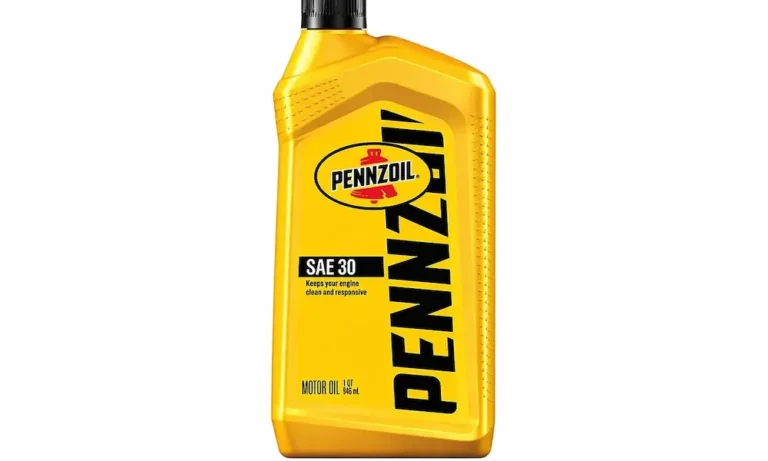
- Briggs & Stratton SAE 30 — the OEM standard for walk-behind and riding mowers
- CountyLine SAE 30 — solid value pick for summer-only use
- Shell Rotella T1 SAE 30 — heavy-duty diesel grade, good for commercial and classic engines
- Mobil 1 Full Synthetic 5W-30 — strong choice for year-round or high-performance small engines
- Kohler Universal Synthetic Blend 10W-30 — premium all-season pick for Kohler engines
Don’t Skip the Oil Change
No matter which SAE 30 equivalent you choose, it won’t last forever. Without a filter, your small engine oil collects metal particles, carbon soot, and dust with every hour of operation.
Over time, the oil first thins out — often from fuel dilution — then thickens as it oxidizes under heat. Both extremes cause accelerated wear.
The general rule:
- Walk-behind mowers: Change every 50 hours or once a season
- Riding mowers: Every 50–100 hours depending on conditions
- Generators: Every 20–50 hours
- Dusty or extreme heat conditions: Cut that interval in half
A simple hour meter or a seasonal calendar works fine for tracking. Many homeowners mow about one hour per week, which means a 50-hour interval lines up neatly with one full season. Start fresh each spring, and your engine won’t argue with you.