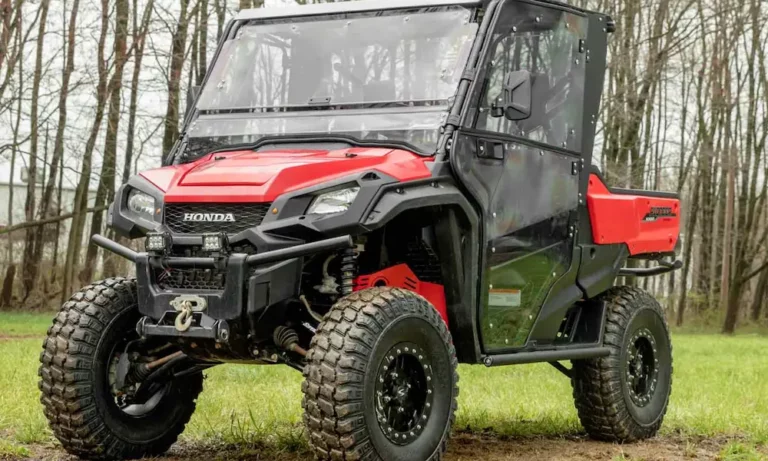
Getting the oil capacity wrong on a Honda Pioneer 1000 isn’t just annoying — it can wreck your transmission. This machine’s DCT uses engine oil as hydraulic fluid, so the stakes are higher than your average UTV. This guide covers every capacity, every fluid, and every service tip you need to keep your Pioneer running strong. Read it before you touch that drain bolt.
Why the Pioneer 1000 Is Different From Every Other UTV
Most side-by-sides use a CVT belt transmission. The Pioneer 1000 doesn’t. It runs a six-speed Dual-Clutch Transmission (DCT), and that changes everything about how you approach oil service.
Here’s the thing: the engine oil in this machine does three jobs at once.
- It lubricates the 999cc Unicam parallel-twin engine
- It cools the dual wet-clutch packs inside the DCT
- It acts as the hydraulic fluid that controls gear shifts
Skip a quart, use the wrong oil, or forget a drain bolt — and you could be looking at a very expensive transmission repair. The Pioneer 1000 rewards owners who take lubrication seriously.
Honda Pioneer 1000 Oil Capacity: 2016–2021 Models
The first-generation Pioneer 1000 holds more oil than most people expect. That’s because the oil circulates through the DCT actuators, oil cooler lines, and internal galleries — all at the same time.
Here’s what you need to know for a standard service on 2016–2021 models:
| Service Type | US Quarts | Liters |
|---|---|---|
| Drain only (no filter change) | 6.1 qt | 5.8 L |
| Drain + engine oil filter | 6.2 qt | 5.9 L |
| Drain + engine filter + DCT filter | 6.3 qt | 6.0 L |
| Full disassembly (dry fill) | 7.6 qt | 7.2 L |
The gap between 6.3 quarts for a service fill and 7.6 quarts for a dry fill tells you how much oil stays trapped in the system during a standard drain. Some sources put the filter-change fill as high as 6.8 quarts. Always use the dipstick as your final check — never just pour in a set amount and call it done.
Honda Pioneer 1000 Oil Capacity: 2022–2025 Models
Honda refined how they categorize oil capacity in the newer models. The 2025 service manual separates “engine oil” from the total drivetrain lubricant volume.
| Service Type | US Quarts | Liters |
|---|---|---|
| Drain only | 3.4 qt | 3.2 L |
| Drain + filter change | 3.6 qt | 3.4 L |
| Full disassembly (dry fill) | 4.3 qt | 4.1 L |
Don’t let the lower number fool you. The 2025 Pioneer 1000 total system capacity — including transmission and sub-transmission — still lands between 6.08 and 6.13 quarts across all trim levels, including the 1000-6 Deluxe Crew.
Sub-Transmission Oil Capacity
This is the part most owners forget — and it’s a separate system with its own drain bolt and dipstick.
The sub-transmission sits behind the engine and handles high/low range selection plus reverse. It uses the same 10W-30 JASO MA oil as the engine, but it has its own reservoir. Checking the engine oil level tells you nothing about the sub-transmission level.
| Model Year | Standard Drain Fill | Dry Fill |
|---|---|---|
| 2016–2021 | 1.27 qt (1.2 L) | 1.5 qt (1.4 L) |
| 2022–2025 | 1.22 qt (1.15 L) | 1.4 qt (1.3 L) |
The sub-transmission dipstick lives under the front seat, not under the cargo bed. Pull the seat, fold back the rubber dust cover, and wipe the dipstick clean. Insert it until it seats — don’t screw it in — then read the level.
Front and Rear Final Drive Oil Capacities
The front and rear differentials run on a completely different fluid — hypoid gear oil, not engine oil. Capacities vary depending on your trim level.
| Component | Trim Level | Capacity (oz) | Capacity (cm³) |
|---|---|---|---|
| Front Final Gear | Standard / EPS / Deluxe | 11.5 oz | 340 cm³ |
| Front Final Gear | Trail / Forest / LE / I-4WD | 13.2 oz | 390 cm³ |
| Rear Final Gear | Standard / EPS / Deluxe | 15.9 oz | 470 cm³ |
| Rear Final Gear | Trail / Forest / LE / I-4WD | 18.6 oz | 550 cm³ |
The Trail and Forest models use larger differentials because of the extra hardware required for the I-4WD electronic traction control system. Use SAE 80/90 hypoid gear oil in both front and rear units.
What Oil Does the Pioneer 1000 Actually Need?
This is where people get into trouble. You can’t just grab any 10W-30 off the shelf and call it a day.
The non-negotiable specs:
- Viscosity: SAE 10W-30 (10W-40 works for extreme heat or heavy towing)
- API Classification: SG or higher
- JASO T 903 Standard: MA — this is critical for wet clutch compatibility
What to avoid:
Watch for oils labeled “Energy Conserving” or “Resource Conserving” on the API service label. Those oils contain friction modifiers like molybdenum or graphite. In a car engine, those additives reduce friction and improve fuel economy. In the Pioneer 1000, they cause the DCT clutches to slip. That leads to erratic shifting, overheating, and eventual transmission failure. Avoid them entirely.
Honda recommends Pro Honda GN4 4-stroke oil as the baseline. Many owners upgrade to full synthetics like AMSOIL 10W-30 Synthetic ATV/UTV Motor Oil. Synthetic oils resist shear breakdown better — important here because the transmission gears mechanically degrade oil molecules over time. A sheared oil loses viscosity, and the DCT needs consistent viscosity to maintain correct hydraulic shifting pressure.
The Two-Filter System You Can’t Ignore
The Pioneer 1000 runs two separate oil filters, and replacing one without the other is a mistake.
Filter 1 — Engine Oil Filter (Part No. 15412-HP7-A01): Handles the primary circuit for the crankshaft, valvetrain, and pistons.
Filter 2 — DCT Oil Filter (Part No. 15412-MGS-D21): Sits on the right side of the engine case. It protects the sensitive DCT hydraulic solenoids from microscopic metallic particles from clutch plate wear.
The DCT solenoids are precise components. A single stuck valve can send the transmission into limp mode. Maintenance kits that bundle both filters, the correct oil volume, and fresh crush washers are worth the convenience — they eliminate the risk of forgetting the DCT filter entirely.
How to Drain the Engine Oil Correctly
The Pioneer 1000 has a semi-dry sump system. That means two drain bolts — not one. Miss the second bolt and you leave over a quart of old oil trapped in the scavenging tank.
- Drain Bolt 1 (Oil Pan): Located on the bottom of the engine case
- Drain Bolt 2 (Oil Tank): Located near the pan bolt, drains the secondary scavenging tank
Warm the engine to operating temperature before draining. Thin, hot oil carries suspended contaminants out with it. Cold oil leaves more behind.
Torque specs for reassembly (aluminum cases strip easily if you over-torque):
| Fastener | Torque (lbf·ft) | Torque (N·m) |
|---|---|---|
| Engine Oil Pan Drain Bolt | 22 lbf·ft | 30 N·m |
| Engine Oil Tank Drain Bolt | 22 lbf·ft | 30 N·m |
| Sub-Transmission Drain Bolt | 22 lbf·ft | 29–30 N·m |
| Front Final Gear Drain Bolt | 9 lbf·ft | 12 N·m |
| Rear Final Gear Drain Bolt | 9 lbf·ft | 12 N·m |
Always use new crush washers. Honda uses 12mm and 14mm washers on these bolts. Reusing old ones is the most common cause of slow oil drips after a service.
Service Intervals: When to Change Your Oil
Honda’s standard maintenance schedule covers normal operating conditions — which rarely describes real off-road use.
Standard intervals:
- Break-in service: 100 miles (150 km) or 20 hours — don’t skip this one. It removes metallic particles from the break-in process before they damage anything
- Regular oil changes: Every 600 miles (1,000 km), 100 hours, or 12 months
- DCT filter: Every 1,200 miles (2,000 km) or 200 hours — many owners just swap it at every engine oil change for simplicity
Severe duty conditions:
| Condition | Recommended Interval |
|---|---|
| Dusty / Sandy trails | Every 300–500 miles |
| Frequent deep water / mud | Check after every ride; flush immediately if milky |
| Heavy towing at or near 2,500 lbs | Shorten intervals — heat depletes the oil’s additive package faster |
Model-to-Model Differences: 2016 to 2025
The core 999cc engine and DCT have stayed consistent across the Pioneer 1000 lineup. The peripheral specs have shifted in a few meaningful ways.
The 2022 refresh introduced the Trail and Forest editions with I-4WD — these need slightly larger front and rear differential fills due to the electronic locking hardware.
For 2025, the Pioneer 1000-6 Deluxe Crew adds a sixth seat but uses the exact same engine and DCT. At 1,936 lbs wet versus 1,720 lbs for the 1000-5, the drivetrain runs under a higher base load even when empty. Oil changes should come more frequently in this model, especially if it’s doing regular hauling or passenger loads.
| Spec | Pioneer 1000-5 | Pioneer 1000-6 Crew |
|---|---|---|
| Engine | 999cc Unicam Twin | 999cc Unicam Twin |
| Transmission | 6-Speed DCT | 6-Speed DCT |
| Wet Weight | 1,720 lbs | 1,936 lbs |
| Engine Oil Capacity | 6.08 qt / 3.6 qt (2025 ref) | 6.1 qt |
| Towing Capacity | 2,500 lbs | 2,500 lbs |
Diagnosing Oil Problems Before They Get Expensive
Milky or frothy oil means water got in — usually from a stall in deep water or submerged breather tubes. Water destroys the DCT clutches and hydraulic solenoids fast. Flush the system multiple times with fresh oil until there’s no trace of contamination left.
Dark, burnt-smelling oil after short intervals points to clutch slippage or overheating. This often happens when owners use high range under heavy loads instead of switching to low range. Overheated oil loses its film strength and accelerates cam lobe and cylinder wall wear.
Erratic shifting or limp mode is frequently an oil level problem. Drop even one quart low, and the hydraulic pump can suck air during steep climbs or aggressive cornering. The DCT throws a Diagnostic Trouble Code and limits power to protect itself. Keep the oil at the upper hash mark on the dipstick — that’s your first line of defense against electronic shift errors.
Other Fluids You Need to Track
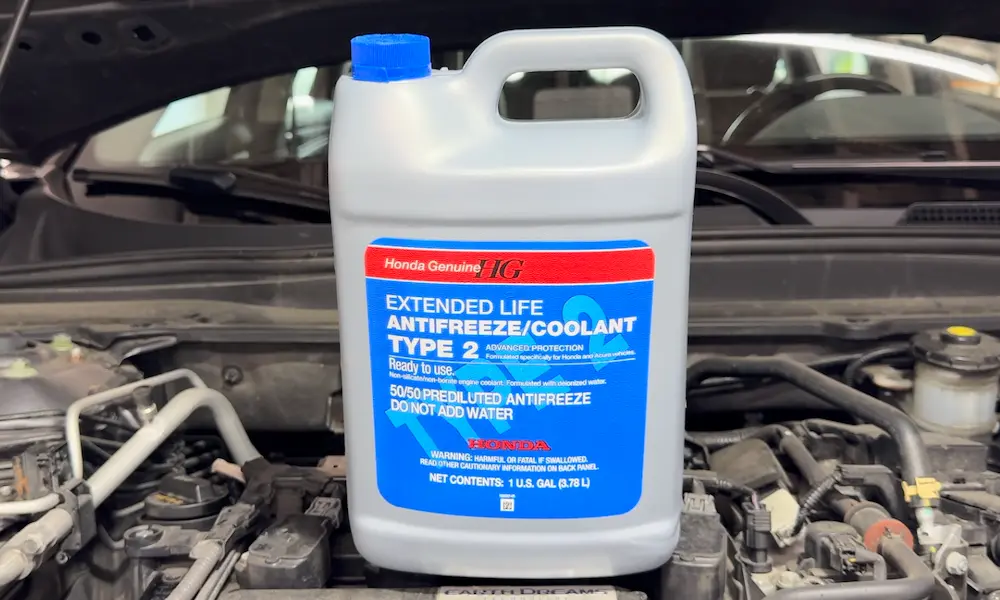
Cooling system: The parallel-twin engine needs a 50/50 mix of silicate-free antifreeze and distilled water. Capacity is 4.12 quarts on 2024 models and 4.97 to 5.0 quarts on 2025 models. Replace every two years to prevent radiator scale buildup.
Brake fluid: Honda specifies DOT 4 from a sealed container. Brake fluid absorbs moisture over time, which lowers its boiling point and causes fade on steep descents. Flush and replace every two years. Check the level monthly.