Your check engine light just came on, and your scanner pulled a Toyota P0500 code. Now your speedometer’s acting up, your transmission feels rough, and you’re wondering if this is a $50 fix or a $5,000 nightmare. This post breaks down exactly what P0500 means, why it happens, what it costs to fix, and how to diagnose it properly so you don’t waste money replacing parts you don’t need.
What Is the Toyota P0500 Code?
Toyota P0500 means your Engine Control Module (ECM) detected a problem with the Vehicle Speed Sensor (VSS) circuit — specifically “Sensor A.” In plain English? Your car’s brain isn’t getting a reliable speed signal, and it’s not happy about it.
The vehicle speed signal isn’t just for your speedometer. It feeds critical data to your transmission controller, ABS system, traction control, and cruise control. When that signal disappears or goes erratic, the whole system suffers.
Here’s something specific to Toyota that trips people up: on most Toyota models, the raw speed sensor signal doesn’t go straight to the ECM. It routes through the combination meter (your instrument cluster) first. The cluster cleans up the signal, shapes it into a neat square wave, and then sends it out to the ECM, TCM, and cruise control unit.
That means a bad instrument cluster can trigger Toyota P0500 even when your actual speed sensor is perfectly fine.
Symptoms of Toyota P0500
Don’t ignore these. They show up fast once the code sets:
- Speedometer drops to zero or jumps erratically while driving
- Odometer stops counting miles
- Harsh or delayed transmission shifts — the transmission can’t time gear changes without speed data
- ABS and TRAC warning lights illuminate on the dash
- Cruise control refuses to engage
- Worse fuel economy — the ECM falls back to open-loop fueling without speed feedback
- Inconsistent power steering feel — on EPS-equipped models, steering assist is speed-dependent, so it may feel too heavy or too light
If your transmission suddenly locks into one gear and won’t upshift, that’s the fail-safe mode activating. It’s protecting your clutch packs from a mis-timed shift. Drive slowly to a shop — don’t push it.
What Causes Toyota P0500?
There’s no single answer. Here are the most common culprits:
Bad Speed Sensor
The sensor itself can fail from heat cycling over time. More often though, it fails because it’s magnetic and attracts metallic particles from transmission fluid. That metallic sludge builds up on the sensor tip and blinds it to the passing reluctor wheel teeth. You won’t see it until you pull the sensor out.
Damaged Wiring or Harness
Toyota routes the VSS harness through high-heat zones near the exhaust and along exposed undercarriage areas. Rodent damage is a specific problem on Toyotas — small animals are attracted to the soy-based insulation on the wiring and chew right through it. One open circuit in the harness kills the signal entirely.
Corroded Connector Pins
Moisture sneaks into the sensor connector, especially in northern states or coastal areas. The resulting corrosion adds resistance to the circuit, which attenuates the low-voltage signal until the ECM can’t read it anymore.
Damaged Reluctor Ring
The reluctor ring is the toothed wheel the sensor reads. If a tooth chips or breaks off — usually from internal transmission wear — the ECM sees a gap in the signal and logs it as irrational data.
Non-Stock Tires
This one surprises people. Toyota’s VSS calibration maps to the exact OEM tire circumference. Install significantly larger or smaller tires and the speed reading can drift far enough outside the ECM’s expected range to trigger P0500 or its close cousin, P0501. If you recently swapped tires and the code showed up shortly after, start here.
Faulty Combination Meter
Because Toyota routes the signal through the cluster, a failed combination meter — even with a working speedometer needle — can break the signal path to the ECM. Cold solder joints on the cluster’s circuit board are a known failure mode, particularly on older Corollas.
Toyota P0500 by Model: What to Expect
Different Toyota models have different failure patterns. Knowing yours saves time.
Toyota Camry and Avalon
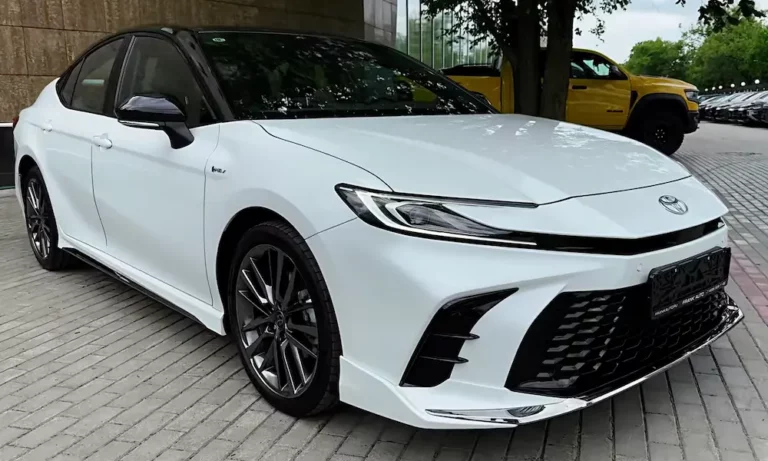
These two have a documented history of software-triggered false positives. Toyota issued Technical Service Bulletins (TSBs) — specifically TSB-0341-09 and TSB-0242-09 — directing dealers to reflash the ECM with updated calibration files before replacing any hardware. If you own a Camry or Avalon and the P0500 shows up during low-speed city driving, get the ECM checked for available updates before you buy any parts.
Toyota RAV4
On RAV4s built from 2006 onward, the vehicle speed signal comes from the four ABS wheel speed sensors, not a dedicated transmission sensor. That means a corroded or displaced wheel hub sensor can trigger Toyota P0500. In rust-belt states, the sensor housing corrodes, physically pushing the sensor away from the tone ring. Inspect all four wheel speed sensors before focusing on the transmission.
Older RAV4s (late 90s to early 2000s) use a traditional transmission-mounted VSS — simpler to diagnose and cheaper to fix.
Toyota Corolla and Matrix
Watch out for a specific mechanical trap here. The speed sensor is secured by a 10mm bolt that seizes constantly. Technicians snap that bolt during removal more often than you’d think, which turns a $200 fix into a drilling-and-tapping job that adds significant labor cost. Go slow on removal and apply penetrating oil well in advance.
Intermittent P0500 on a Corolla often traces back to the combination meter, not the sensor. Cold solder joints inside the cluster break the signal path at certain temperatures — often most noticeable on cold morning starts. If the code appears in winter and clears in summer, the cluster is a serious suspect.
Toyota Tacoma and Tundra
On 4WD configurations, Toyota may locate the VSS on the transmission tail-shaft or inside the rear differential housing, depending on the towing setup. Accessing the sensor on a Tacoma is generally straightforward, and parts are inexpensive. Labor stays low because access is easy compared to front-wheel-drive platforms.
How to Diagnose Toyota P0500 the Right Way
Don’t just throw a sensor at it. Follow this sequence:
Step 1: Pull the Code and Check Freeze Frame Data
Connect an OBD-II scanner and retrieve all stored codes. The freeze frame snapshot tells you exactly what the engine was doing when the fault triggered. A freeze frame showing high RPM but 0 km/h means total signal loss. A freeze frame showing speed jumping from 20 to 180 km/h suggests an intermittent electrical fault or a damaged reluctor tooth.
Step 2: Check Live Data During a Test Drive
With your scanner monitoring the “Vehicle Speed” parameter, drive at a known slow speed — say, 20 mph in a parking lot. Watch what the scanner shows:
- Scanner reads 0, speedometer moves → Fault is between the combination meter and the ECM
- Scanner reads 0, speedometer also reads 0 → Fault is at the sensor or the primary harness
- Speed signal is erratic and jumping → Intermittent electrical fault or mechanical reluctor damage
Step 3: Resistance and Voltage Testing
Use a digital multimeter to test the sensor directly:
- Variable reluctance sensors: Measure resistance across the two sensor pins. A healthy Toyota VSS reads 190–250 ohms. Infinite resistance means an internal open circuit — replace the sensor.
- Hall-effect sensors (3-wire): Check for 4.5V–5.0V reference voltage at the sensor connector with the ignition on.
- Signal voltage: Lift the drive wheels safely, run the engine, and check for AC voltage output as the wheels spin. You should see 0.5V–5V climbing with speed.
Step 4: Oscilloscope for Intermittent Cases
When the code comes and goes without a clear cause, a multimeter won’t catch it — it averages the readings. An oscilloscope shows the actual waveform. Missing pulses or inconsistent peak heights reveal a damaged reluctor tooth or bearing play that causes the reluctor to wobble past the sensor. This is the definitive test for intermittent Toyota P0500 codes.
| Test | Tool | Healthy Result | Sign of Failure |
|---|---|---|---|
| Live data monitoring | OBD-II scanner | Smooth, linear speed increase | 0 km/h or erratic jumping |
| Resistance test | Multimeter (Ohms) | 190–250 Ω | Infinite (open) or under 10 Ω (short) |
| Reference voltage | Multimeter (DC Volts) | 4.5V–5.0V | 0V or fluctuating |
| Signal waveform | Oscilloscope | Consistent pulse width | Irregular peaks or missing pulses |
What Does It Cost to Fix Toyota P0500?
Costs vary a lot by model, location, and root cause. Here’s what you’re realistically looking at for a professional VSS replacement in 2026:
| Toyota Model | Parts Cost | Labor Cost | Total Estimate |
|---|---|---|---|
| Camry | $185–$280 | $420–$617 | $605–$897 |
| Corolla | $140–$282 | $122–$179 | $262–$461 |
| RAV4 | $164–$222 | $292–$429 | $457–$651 |
| Tacoma | $120–$182 | $95–$180 | $215–$362 |
| Highlander | $200–$310 | $384–$482 | $584–$792 |
| Tundra | $130–$210 | $178–$230 | $308–$440 |
The Real Cost of Ignoring P0500
A $400 repair looks a lot better when you consider the alternative. Driving with erratic transmission shifts puts constant thermal and mechanical stress on the clutch packs inside your transmission. A Toyota automatic transmission replacement runs $4,000–$7,000 including labor. The P0500 code is your early warning — it’s telling you something’s wrong before the expensive damage happens.
The 2025 Toyota Digital Cluster Recall
There’s a newer, separate issue worth knowing about. In 2025, Toyota recalled nearly 600,000 vehicles — including the RAV4, Camry, Crown, and Highlander — equipped with the 12.3-inch digital instrument panel. A software glitch or hardware fault causes the entire dashboard to go blank while driving.
The result is total loss of speed data, plus every other warning light disappears with it. The NHTSA classified this as an urgent recall because drivers can’t see critical safety warnings when the display goes dark. If your Toyota has the 12.3-inch digital cluster, check your VIN at the NHTSA website to confirm if your vehicle is affected.
This recall shows how Toyota P0500-style symptoms are increasingly tied to software and digital display failures — not just sensor hardware.
How to Prevent Toyota P0500
A few simple habits during routine maintenance can keep this code from appearing:
- Clean the sensor tip every time you do a transmission fluid service — pull it out and wipe off any metallic debris that’s collected on the magnetic tip
- Inspect the harness for heat damage, cracked insulation, or signs of rodent activity — wrap exposed sections in heat-resistant loom
- Apply dielectric grease to the VSS and wheel speed sensor connectors, especially in coastal or high-salt regions
- Stick to OEM tire sizes — if you’re running larger all-terrain tires, have a dealer update the ECU speed mapping parameters to match
Toyota P0500 is a specific, diagnosable code with a clear fix once you know where to look. Work through the diagnostic steps in order, respect the Toyota-specific combination meter architecture, and you’ll find the root cause without guessing.