Looking to breathe new life into your 5.7 Vortec-powered vehicle? You’re sitting on a gold mine of untapped potential. The 5.7L Vortec engine has been the backbone of GM trucks and SUVs for decades, offering reliable power that can be significantly enhanced with the right modifications.
Why the 5.7 Vortec Engine Is Worth Upgrading
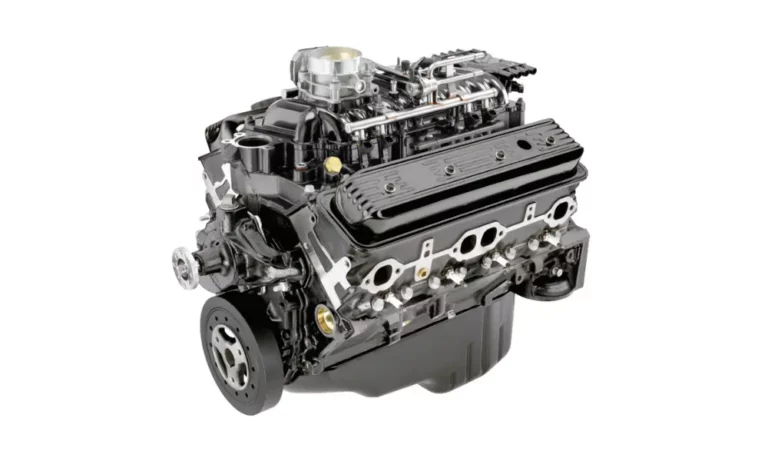
The 5.7 Vortec (L31) engine found in 1996-2002 GM trucks and SUVs offers a solid foundation for performance upgrades. With its cast iron block and heads, this workhorse can handle substantial power increases while maintaining the reliability that made these engines famous.
Before diving into specific upgrades, let’s understand what makes this engine special:
- Factory output of 255-290 horsepower (depending on application)
- 330-340 lb-ft of torque
- Proven durability even beyond 200,000 miles
- Widely available aftermarket support
- Responsive to even basic bolt-on modifications
Cold Air Intake: The First Step in Your Performance Journey
Starting with a cold air intake is the perfect first step for any 5.7 Vortec performance build. Factory intakes are restrictive and often pull in warm, power-robbing engine bay air.
The K&N 63-1007 series remains one of the most popular options, offering easy installation and immediate results. Users typically report:
- 8-12 horsepower gains
- Improved throttle response
- Better fuel economy (when driving conservatively)
- A more aggressive induction sound
Remember that exposed filter designs can be problematic in off-road applications where water or mud ingestion is a risk. For these scenarios, consider systems with proper shielding or maintain the stock airbox with a high-flow filter.
Exhaust System Upgrades: Let It Breathe
Factory exhaust systems on 5.7 Vortec trucks prioritize noise suppression over flow, creating a significant performance bottleneck. A complete exhaust overhaul from headers to tailpipe can unlock impressive power.
Headers: The Foundation of Exhaust Performance
Headers replace the restrictive cast iron exhaust manifolds, dramatically improving exhaust scavenging and flow.
BBK’s 1-5/8″ shorty headers (#4007) are an excellent option, offering:
- 10-14 horsepower increase over stock manifolds
- CARB compliance for emissions-conscious states
- Titanium ceramic coating reducing underhood temps by 15-20%
- Maintained ground clearance versus long-tube designs
For those seeking maximum performance and who aren’t concerned with emissions compliance, Hedman’s long-tube headers provide even greater flow benefits, particularly in the mid-range RPM band where trucks spend most of their time.
Cat-Back Systems: The Complete Package
Pairing headers with a performance cat-back system creates a synergistic effect. Options from Flowmaster, Magnaflow, and Gibson deliver:
- 18-22 lb-ft torque gains in the crucial 2,500-4,000 RPM range
- Deeper, more aggressive sound (with varying levels of interior drone)
- Improved fuel economy when matched with a proper tune
- Stainless steel construction for longevity
Tuning: Unlocking Hidden Potential
Perhaps no upgrade delivers more bang for your buck than proper engine tuning. The factory PCM (Powertrain Control Module) settings prioritize emissions and fuel economy over performance.
Handheld Programmers: Entry-Level Tuning
For beginners, handheld programmers offer an easy entry point into tuning:
- Hypertech Power Programmer III provides basic spark/fuel adjustments
- DiabloSport offers more aggressive options with multiple tune settings
- Pre-programmed settings require no tuning knowledge
These devices typically deliver 10-15 horsepower and improved throttle response by optimizing spark timing, air/fuel ratios, and shift points (for automatic transmissions).
Advanced Tuning Solutions
For serious performance, HP Tuners provides deeper parameter access. The community-driven approach allows for custom tuning that can:
- Accommodate aggressive camshafts
- Properly calibrate for forced induction
- Fine-tune for specific fuel types
- Remove speed limiters and other restrictions
Many enthusiasts recommend the 0411 PCM swap (from 2000-2002 Silverados) for expanded tuning capabilities and compatibility with modern wideband O2 sensors.
Camshaft Upgrades: Heart of the Power Curve
Changing the camshaft profoundly alters your Vortec’s performance character. This modification requires more mechanical knowledge but delivers substantial rewards.
The GM HOT Cam (part #88958613) provides an excellent balance for street-driven trucks:
- 0.525″/0.525″ lift profile works with stock Vortec springs
- Noticeable power increase without sacrificing drivability
- Compatible with factory EFI systems
- Distinctive, choppy idle for that muscle car feel
For more aggressive builds, Comp Cams XR269HR (0.480″/0.488″) delivers even more top-end power, though this requires upgraded valve springs to prevent valve float above 5,500 RPM.
When selecting a camshaft, consider these application-specific recommendations:
| Usage Type | Recommended Duration (@0.050″) | Lift | LSA | Expected Gains |
|---|---|---|---|---|
| Daily Driver/Towing | 198°-208° | 0.450″-0.500″ | 112°-114° | 20-30 HP |
| Street/Strip | 210°-220° | 0.500″-0.525″ | 110°-112° | 30-45 HP |
| Competition | 220°-230° | 0.525″+ | 108°-110° | 45+ HP |
Throttle Body and Intake Manifold Upgrades
The factory 75mm throttle body becomes a restriction at higher power levels. BBK’s 80mm throttle body (#1710) increases airflow by 18% while maintaining factory IAC (Idle Air Control) functionality.
For intake manifolds, options are more limited due to the Vortec’s specific port design. However, alternatives include:
- Edelbrock Performer Vortec
- Weiand Stealth
- Marine intake conversions for experienced builders
The right intake manifold can add 15-25 horsepower while reshaping the torque curve to better suit your driving needs.
Forced Induction: Breaking the 400HP Barrier
When naturally aspirated modifications reach their practical limit, forced induction systems offer the next level of performance.
Supercharger Systems
Superchargers provide immediate throttle response and low-end torque that suits truck applications perfectly.
Vortech’s V-3 Si-Trim centrifugal system offers:
- 6-8 PSI boost on stock internals
- 75-100 whp gains with proper intercooling
- Progressive power delivery that builds with RPM
For even more immediate torque, roots-style blowers like the Magnuson TVS2650 produce 8-10 PSI by 2,800 RPM, making them ideal for towing applications.
Critical supporting modifications for forced induction include:
- 30-36 lb/hr fuel injectors (Bosch 0280158279)
- Boost-referenced fuel pressure regulator
- 255 LPH in-tank fuel pump (Walbro GCA476-2)
- Upgraded PCM with 2-bar MAP sensor scaling
Ignition System Enhancements: The Spark of Power
Don’t overlook your ignition system when upgrading your 5.7 Vortec. The Performance Distributors Vortec Firepower Kit delivers impressive improvements:
- Their Screamin’ Demon coil increases spark energy by 40%
- Allows for wider 0.065″ plug gaps for improved combustion
- High-performance plug wires reduce electromagnetic interference
- Real-world testing showed 0-60 MPH improvements of nearly 1 second
Even simple upgrades like premium spark plugs and fresh ignition components can restore lost power and improve throttle response.
Reducing Parasitic Drag: The Power You Already Have
Your engine is constantly fighting against accessory components that steal power. BBK’s underdrive pulley kit (#1603) reduces this parasitic drag by 15%, freeing up 8-12 horsepower through properly sized pulleys for the alternator, water pump, and other accessories.
Be aware that extreme pulley downsizing can affect alternator output, so monitor your electrical system if you have high power demands from accessories.
Putting It All Together: Building Your Performance Plan
Rather than randomly adding parts, approach your 5.7 Vortec performance upgrades methodically for the best results. Here’s a strategic upgrade path:
Stage 1: The Foundation (~30-40 HP Gain)
- Cold air intake
- Performance exhaust (headers + cat-back)
- Handheld tuner
- Ignition upgrades
- Underdrive pulleys
Stage 2: Breaking 350 HP (~50-70 HP Gain over Stock)
- All Stage 1 modifications
- Upgraded camshaft (with proper valve springs)
- 80mm throttle body
- Advanced PCM tuning (HP Tuners or similar)
- Upgraded fuel pump and injectors
Stage 3: The 400+ HP Vortec
- All previous modifications
- Forced induction system (6-8 PSI)
- Intercooler system
- Professional dyno tuning
- Supporting driveline modifications (clutch, transmission, rear end)
Real-World Performance Expectations
To give you a realistic idea of what these upgrades can achieve, here’s a power progression table based on real-world builds:
| Modification Level | Expected Horsepower | Expected Torque | Notable Characteristics |
|---|---|---|---|
| Stock 5.7 Vortec | 255-290 HP | 330-340 lb-ft | Reliable, flat torque curve |
| Basic Bolt-ons | 290-320 HP | 350-370 lb-ft | Improved throttle response, better sound |
| Stage 1 Complete | 320-340 HP | 370-390 lb-ft | Noticeable seat-of-pants improvement |
| Stage 2 Complete | 350-380 HP | 400-425 lb-ft | Transforms vehicle character, strong pulling power |
| Stage 3 (Forced Induction) | 450-500+ HP | 450-500+ lb-ft | Dramatic performance increase, requires driveline upgrades |
Maintaining Reliability While Adding Power
As you upgrade your 5.7 Vortec, keep these tips in mind to maintain reliability:
- Use high-quality synthetic oils rated for performance applications
- Upgrade cooling systems when pushing beyond 350 HP
- Monitor air/fuel ratios carefully (ideally with wideband O2 sensors)
- Consider forged internals when exceeding 450 HP or using more than 8 PSI boost
- Address transmission cooling and strength for automatic-equipped vehicles
The 5.7 Vortec is incredibly durable, but proper supporting modifications will ensure your upgraded engine delivers years of trouble-free performance.
The Controversy of EGR Delete
Many modification lists include EGR (Exhaust Gas Recirculation) delete kits, but the benefits are questionable. Forum discussions indicate minimal gains (just 3-5 HP) while potentially increasing NOx emissions and part-throttle detonation.
Surprisingly, the EGR’s role in lowering combustion chamber temperatures can actually benefit timing advance in tuned applications. Unless you’re building a race-only vehicle, maintaining the EGR system is often the better choice.
Starting Your 5.7 Vortec Performance Journey
The 5.7 Vortec engine responds remarkably well to thoughtful modifications. Start with the basics—intake, exhaust, and tuning—and you’ll immediately feel the difference. As budget allows, progress through the stages outlined above, focusing on complete systems rather than random parts.
With the right combination of upgrades, your 5.7 Vortec can deliver performance that rivals much newer vehicles while maintaining the reliability that made these engines legendary. The key is taking a systematic approach that builds upon each modification to create a balanced, powerful package.
Remember that each truck responds differently to modifications based on its condition, altitude, fuel quality, and other factors. What works perfectly for one builder might need adjustment for another, so be prepared to fine-tune your combination for optimal results.