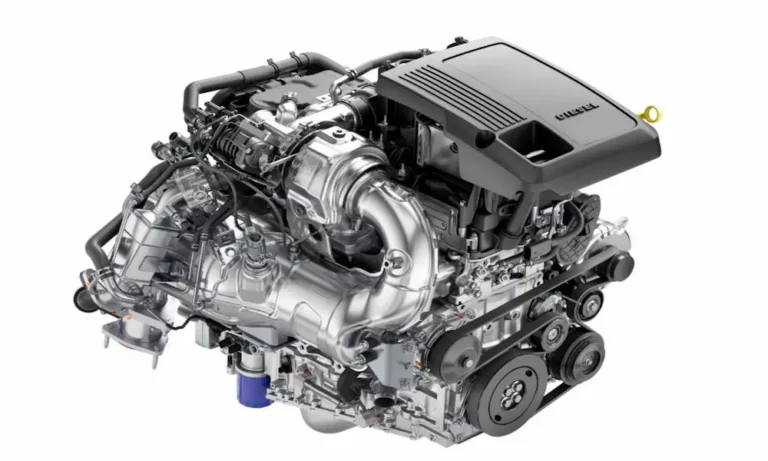
You’ve probably heard someone at a tailgate confidently declare that the 3.0 Duramax is “basically an Isuzu engine.” They’re wrong — but the confusion is completely understandable. This post breaks down who actually builds the 3.0 Duramax, why the Isuzu myth exists, and what makes this inline-six genuinely impressive. Stick around — the full picture might surprise you.
Where the Isuzu Myth Actually Comes From
The story starts in the late 1990s. GM was getting beaten badly in the heavy-duty diesel truck market. At the time, GM held roughly three percent of the heavy-duty diesel segment, while Ford and Dodge were eating its lunch with far more capable engines.
GM needed help — fast.
The company already had a long relationship with Isuzu, dating back to a partnership on compact trucks in the 1960s. Because Isuzu was globally respected for its diesel expertise, the two companies formalized a joint venture in September 1998 called DMAX Limited. The goal was simple: build a world-class heavy-duty diesel engine together.
Isuzu originally held 60% ownership and led the core engine architecture. GM focused on fuel injection calibration, electronics, and emissions compliance. The result was the legendary 6.6-liter Duramax V8 (LB7), which debuted in the 2001 Chevrolet Silverado and GMC Sierra HD trucks.
That engine worked spectacularly. GM’s heavy-duty diesel market share shot from three percent to thirty percent almost overnight. The Duramax name became synonymous with Isuzu engineering in the minds of American truck buyers — and that association never fully faded, even after everything changed.
How the Partnership Quietly Unraveled
The joint venture gradually shifted in GM’s favor. By 2002, GM had increased its DMAX stake to 60%. In 2006, GM sold its direct equity stake in Isuzu Motors entirely.
The final break came in May 2022, when Isuzu divested its remaining 40% stake in DMAX Limited, making the operation a wholly owned GM subsidiary. GM then announced a $920 million expansion to build a new 1.1 million-square-foot facility in Brookville, Ohio.
Today, the Duramax name belongs entirely to GM. It’s a registered GM trademark — and it now covers multiple engine families that Isuzu had absolutely nothing to do with.
So, Is the 3.0 Duramax Made by Isuzu?
No. Not even a little.
The 3.0-liter Duramax inline-six is a 100% General Motors engine. GM’s decision to build it started in 2014, when consumer demand for a fuel-efficient, high-torque half-ton diesel was growing fast. Instead of adapting an existing international engine — like Ram did with the VM Motori unit — GM chose a clean-sheet design built specifically for the North American market.
It Was Engineered in Turin, Italy
To design the new 3.0-liter engine, GM turned to its Global Propulsion Systems technical center in Turin, Italy. This wasn’t a random choice. Turin is a world-renowned center for advanced diesel engineering, and GM’s facility there had already developed the 2.8-liter Duramax four-cylinder for the Colorado and Canyon.
In 2020, GM sold the Turin facility to Belgium’s Punch Group. After a transitional engineering services agreement through 2021, all ongoing development of the 3.0 Duramax moved fully to GM’s US-based powertrain teams.
It’s Built in Flint, Michigan
The engine is assembled at GM’s Flint Engine Operations plant in Michigan. The aluminum engine blocks are cast domestically by specialized foundry partners, including the Defiance Foundry in Defiance, Ohio, and Saginaw Metal Casting Operations in Saginaw, Michigan. No Isuzu factories. No overseas supply chain for the core hardware.
The LM2 Generation: What Launched in 2020
The first 3.0 Duramax — the LM2 — debuted in the 2020 Chevrolet Silverado 1500 and GMC Sierra 1500. It immediately earned a reputation for being remarkably quiet and smooth for a diesel.
Here’s why that smoothness isn’t marketing spin — it’s physics.
Why Inline-Six Changes Everything
An inline-six engine has perfect primary and secondary mechanical balance. The forces from the rotating crankshaft and reciprocating pistons cancel each other out naturally. You don’t need heavy balance shafts to suppress vibration. The engine just… runs smoothly by design.
The LM2 block is cast aluminum — 30% lighter than a comparable iron block — with pressed-in iron cylinder liners for durability. The full dry weight lands at just 212 kilograms (467 pounds). That matters a lot on a half-ton truck where every pound over the front axle costs you payload capacity.
The Rear-Mounted Timing System
One of the most talked-about design choices in the LM2 is where GM put the timing chains — at the rear of the engine, adjacent to the transmission bellhousing. The variable-displacement oil pump is driven by a polymer “wet belt” that runs submerged in engine oil.
This configuration makes the engine physically shorter (better packaging up front), and the transmission mass dampens chain noise effectively. The trade-off? Replacing the timing system requires separating the engine and transmission. It’s a legitimate maintenance consideration worth knowing before you buy.
Turbocharger and Fuel Injection
The LM2 uses a liquid-cooled variable geometry turbocharger mounted close to the exhaust manifold to reduce turbo lag. A water-to-air intercooler sits directly on top of the engine, cooling the intake charge without eating into front-end packaging space.
The Denso common-rail injection system generates fuel rail pressures up to 36,250 psi (2,500 bar) — atomizing diesel fuel into an ultra-fine mist for cleaner, more complete combustion.
The LZ0 Generation: The Bigger Upgrade You Might Not Know About
For the 2023 model year, GM introduced the second-generation 3.0 Duramax — the LZ0. This wasn’t a minor refresh. About 25% of the engine’s components were revised.
Steel Pistons Replace Aluminum
The biggest change was swapping the hypereutectic cast aluminum pistons for high-strength forged steel pistons. Steel expands far less under heat, allowing tighter cylinder tolerances across all operating temperatures. This improves efficiency and long-term durability under sustained load.
Because the steel pistons required the wrist pin to sit higher, engineers lengthened the forged connecting rods to maintain the original 90mm stroke and preserve the 2,993cc displacement.
Redesigned Combustion and Revised Injectors
The combustion bowl geometry inside each piston was completely redesigned. The new stepped-bowl shape improves air turbulence during combustion, producing fewer nitrogen oxides at the source. The updated Denso injectors feature a revised spray pattern matched to this new bowl geometry — and importantly, LM2 and LZ0 injectors aren’t interchangeable.
The compression ratio ticked up slightly from 15.0:1 to 15.2:1.
Cooling and Service Improvements
The LZ0 gets a larger water pump, a bigger external oil cooler, and a simplified coolant control valve replacing the more complex rotary valve from the LM2. Fewer moving parts in the cooling system means better long-term reliability.
GM also validated the wet oil pump belt for a 200,000-mile replacement interval on the LZ0 — a significant confidence boost for buyers who were nervous about that belt.
LM2 vs LZ0: Side-by-Side Comparison
| Specification | LM2 (2020–2024) | LZ0 (2023–Present) |
|---|---|---|
| Cylinder Configuration | Inline-Six | Inline-Six |
| Block Material | Cast Aluminum | Cast Aluminum |
| Piston Material | Hypereutectic Cast Aluminum | Forged Steel |
| Compression Ratio | 15.0:1 | 15.2:1 |
| Peak Horsepower | 277 hp @ 3,750 rpm | 305 hp @ 3,750 rpm |
| Peak Torque | 460 lb-ft @ 1,500 rpm | 495 lb-ft @ 2,750 rpm |
| Coolant Control | Rotary Valve (Complex) | Simplified Control Valve |
| Wet Belt Service Interval | Not disclosed | 200,000 miles |
Production of the LM2 officially ended at Flint Engine Operations in Q3 2024. The LZ0 is now the only 3.0 Duramax GM offers.
The Actual Isuzu 3.0-Liter Engine Is Completely Different
Here’s the kicker for anyone still not convinced — Isuzu does make a 3.0-liter diesel. It’s called the 4JJ3-TCX. And it shares absolutely nothing with the Duramax.
Here’s what the 4JJ3-TCX actually is:
- Four cylinders, not six
- Cast-iron block, not aluminum
- 190 horsepower — compared to 305 hp from the LZ0
- 332 lb-ft of torque — compared to 495 lb-ft from the LZ0
- Sold in Australia, Southeast Asia, the Middle East, and Africa — not the US
The Isuzu engine is well-regarded for agricultural and fleet durability in rugged, remote conditions. But it’s a completely different tool built for a completely different market.
Direct Spec Comparison: GM Duramax vs. Isuzu
| Specification | GM Duramax LZ0 | Isuzu 4JJ3-TCX |
|---|---|---|
| Manufacturer | General Motors (USA/Italy) | Isuzu Motors (Japan/Thailand) |
| Cylinders | Inline-Six | Inline-Four |
| Block Material | Cast Aluminum | Cast Iron |
| Bore x Stroke | 84mm x 90mm | 95.4mm x 104.9mm |
| Displacement | 2,993cc | 2,999cc |
| Compression Ratio | 15.2:1 | 16.3:1 |
| Peak Horsepower | 305 hp | 190 hp |
| Peak Torque | 495 lb-ft | 332 lb-ft |
| Primary Market | North America | Australasia, Asia, Africa |
The only thing these two engines share is a marketing-friendly “3.0-liter” label.
What the 3.0 Duramax Actually Delivers on the Road
The numbers matter most in real-world use. A two-wheel-drive Chevrolet Tahoe with the 3.0 Duramax achieves an EPA-estimated 26 mpg highway and over 600 miles of range per tank. It does this while producing 495 lb-ft of torque — more than the 6.2-liter V8 offered in the same vehicle.
Because 94% of peak torque arrives at just 1,500 rpm, the engine pulls heavy loads confidently without revving hard. That keeps mechanical stress low and passengers comfortable.
Looking ahead, GM announced the 3.0 Duramax will be available in base Work Truck trims on the 2027 Silverado 1500 — a direct push into commercial fleet sales where total cost of ownership is everything. That’s a strong signal of confidence in the engine’s long-term commercial viability.
The engine already powers the Chevrolet Tahoe, Suburban, GMC Yukon, Yukon XL, Cadillac Escalade, and extreme off-road trucks like the GMC Sierra AT4X and Silverado ZR2 Bison. When GM puts a diesel in a Cadillac for the first time in history, they’re clearly not worried about refinement.
The 3.0 Duramax is GM’s engine, full stop. It carries the Duramax name because GM owns that name — not because Isuzu built it. The original 6.6-liter V8 absolutely had Isuzu DNA. This inline-six doesn’t share a single bolt with anything Isuzu makes today.