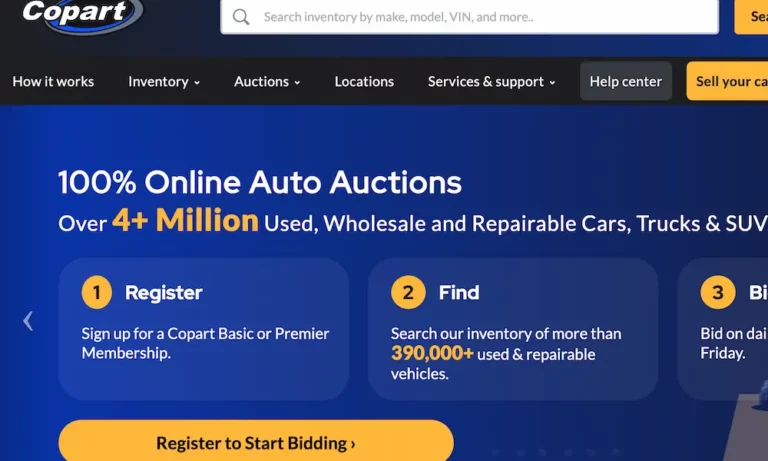
Ever stumbled across a luxury car listed at half its market value on Copart and wondered if it’s too good to be true? You’re not alone. With over 2 million vehicles sold annually across 200+ locations worldwide, Copart has become the largest online vehicle auction platform on the planet. But the question remains: is Copart actually worth it for the average buyer?
What Exactly Is Copart?
Copart is an online auction platform specializing in salvage, damaged, and insurance total-loss vehicles. Founded in 1982 by Willis Johnson, it’s grown from a single California salvage yard into a $53 billion publicly-traded company that’s revolutionized how damaged vehicles are bought and sold.
The platform primarily serves as a middleman between sellers (insurance companies, banks, and dealerships) and buyers (dismantlers, rebuilders, dealers, and occasionally regular consumers). While Copart mainly deals with damaged vehicles, you’ll also find clean-title cars, motorcycles, boats, and even exotic vehicles in their inventory.
The Real Cost of Buying from Copart
One of the biggest shocks for first-time Copart buyers isn’t the vehicles—it’s the fees. These additional costs can quickly transform a seemingly great deal into a financial headache.
Here’s what you’ll actually pay beyond your winning bid:
- Buyer’s Premium: 7.25% for clean titles with secured payment, jumping to 12.25% for salvage titles with unsecured payment
- Gate Fee: $79 for clean titles, $95 for salvage titles
- Virtual Bid Fee: Between $25-$160 depending on your bid amount
- Environmental Fee: $10 per vehicle
- Storage Fees: These accumulate daily if you don’t pick up your vehicle promptly
The impact of these fees varies dramatically by purchase price. For a $1,000 vehicle, fees can reach $269—that’s nearly 27% of your purchase price! Even on a $15,000 vehicle, you’ll pay around $1,316 in fees, adding 8.8% to your cost.
This fee structure clearly favors higher-priced purchases and punishes budget buyers looking for inexpensive vehicles.
What Real Customers Say About Copart
Copart’s customer reviews tell a complicated story. The platform maintains a dismal 2.0/5 star rating on Trustpilot, with most reviewers reporting negative experiences.
Common complaints include:
Customer Service Issues
- “I’ve called customer service five times and still haven’t received a straight answer about my title.”
- “It took three weeks and daily phone calls to get a refund for a vehicle that wasn’t as described.”
- “My account was suspended when I disputed charges for a vehicle I never received.”
Vehicle Condition Problems
- “The ‘runs and drives’ vehicle I purchased wouldn’t start when I picked it up.”
- “Major frame damage wasn’t disclosed in the listing photos or condition report.”
- “The car had clearly been roughly handled at the yard, with new dents and scratches not shown in the listing.”
That said, there are success stories too—particularly from buyers with automotive expertise who understand what they’re getting into. As one reviewer put it: “If you know what you’re doing and can spot the diamonds in the rough, Copart can be goldmine.”
Copart vs. Insurance Auto Auctions (IAA)
When comparing Copart to its main competitor, Insurance Auto Auctions (IAA), several key differences emerge:
Copart Strengths
- Larger inventory with more diverse vehicle types
- Global reach with buyers from over 190 countries
- More advanced technology platform and mobile app
- Stronger relationships with major insurance companies
IAA Advantages
- Generally lower fees (typically $100-200 less per transaction)
- Better vehicle handling and preservation
- More responsive customer service
- Clearer damage histories on insurance vehicles
Who Should Use Copart?
Copart makes sense for specific buyer profiles:
Ideal Candidates
- Automotive Professionals: Mechanics and body shop owners who can accurately assess damage and repair costs
- Parts Buyers: Those seeking specific components rather than complete vehicles
- Export Businesses: International buyers looking to ship vehicles to markets where repair costs are lower
- Experienced Flippers: Investors with proven track records in vehicle restoration
- Higher Budget Buyers: Those purchasing vehicles over $10,000 where fees represent smaller percentages
To succeed on Copart, you need:
- The ability to inspect vehicles in person before bidding
- A solid understanding of repair costs and market values
- Financial capacity to handle total costs including fees and repairs
- Patience for potential title and pickup delays
Who Should Avoid Copart?
Several buyer types should steer clear of Copart:
Poor Fit Scenarios
- Casual Buyers: Those seeking reliable daily drivers without repair needs
- Budget-Conscious Buyers: Purchasing vehicles under $5,000 where fees exceed 20%
- First-Time Buyers: Those without automotive expertise or repair connections
- Warranty Seekers: Buyers wanting guarantees or return policies
Remember, Copart’s “as-is, where-is” policy means all sales are final with zero warranties or guarantees. For inexperienced buyers, the combination of high fees, potential hidden damage, and lack of recourse creates substantial financial risk.
The Hidden Costs Nobody Tells You About
Beyond the advertised fees, several additional costs can impact your Copart experience:
Additional Expenses
- Transportation: Getting the vehicle from the auction yard to your location is entirely your responsibility, often costing $300-800+ depending on distance
- Storage Fees: Daily charges if pickup is delayed beyond the free period
- Broker Fees: Required in some states for non-dealers, adding $200+ per transaction
- Inspection Costs: Vehicle condition reports cost extra but provide limited value
- Repair Costs: Often exceed initial estimates due to hidden damage
Users report that Copart’s fees have increased approximately 75% over the past three years. As a publicly-traded company seeking profit growth, this trend suggests continued fee increases that may further erode value for buyers.
What Makes Copart So Dominant?
Copart’s market dominance stems from significant competitive advantages:
Business Strengths
- Land Ownership: They own rather than lease their facilities, reducing long-term costs
- Network Effects: Their large buyer base attracts more sellers, creating a virtuous cycle
- Technology Infrastructure: Advanced digital platform integrated with insurance systems
- Scale Economics: Processing over 175,000 auctions daily across 200+ locations
This market position allows Copart to maintain pricing power and continue fee increases, but also ensures inventory availability and platform reliability for serious buyers.
Case Study: The True Cost of a Copart Purchase
Let’s look at a real-world example of how Copart’s fees affect your bottom line:
| Cost Category | $5,000 Vehicle | $15,000 Vehicle |
|---|---|---|
| Winning Bid | $5,000 | $15,000 |
| Buyer’s Premium (12.25%) | $612.50 | $1,837.50 |
| Gate Fee | $95 | $95 |
| Virtual Bid Fee | $89 | $129 |
| Environmental Fee | $10 | $10 |
| Transportation | $350 | $350 |
| Estimated Repairs | $3,000 | $3,000 |
| Total Cost | $9,156.50 | $20,421.50 |
| % Above Winning Bid | 83.1% | 36.1% |
This table clearly illustrates why Copart makes more sense for higher-value purchases where the fees represent a smaller percentage of the total cost.
How to Make Copart Work for You
If you still want to try Copart despite the risks, here are proven strategies to improve your chances of success:
Smart Buying Tactics
- Do thorough research: Check vehicle history reports and market values before bidding
- Inspect in person whenever possible: Photos rarely tell the complete story about damage
- Calculate all fees before bidding: Use Copart’s fee calculator to understand your true cost
- Set hard bidding limits: Decide your maximum bid and stick to it
- Focus on higher-value vehicles: The fee structure penalizes low-cost purchases
- Use secured payment methods: This can reduce your buyer’s premium significantly
- Have repair connections ready: Know who will fix the vehicle and get estimates beforehand
Types of Vehicles to Target on Copart
Not all Copart vehicles are created equal. Here’s where experienced buyers find the best values:
Best Opportunities
- Hail-damaged vehicles: Often have minimal mechanical issues despite cosmetic damage
- Light front-end collisions: Can be surprisingly straightforward repairs for professionals
- Theft recoveries: Sometimes have minimal damage beyond ignition issues
- Water-damaged luxury vehicles: Can be parts goldmines even if not repairable
- Older exotic cars: Parts alone can be worth more than purchase price
Vehicles to Avoid
- Flood cars: Hidden electrical problems can plague these vehicles for years
- Major structural damage: Frame repairs are expensive and can compromise safety
- Vehicles with incomplete information: Missing photos of key areas often hide serious problems
- Fire-damaged vehicles: Smoke and heat damage often extends far beyond visible areas
Is Copart Worth It? The Bottom Line
For experienced automotive professionals with repair expertise, Copart can offer significant savings and profitable opportunities. The platform provides access to an unmatched inventory of vehicles that would otherwise be unavailable to the general public.
For casual car buyers, however, Copart is generally not worth the risk. The combination of high fees, “as-is” purchases, and the expertise required to assess damage makes traditional car-buying channels a safer bet for most consumers.
Your success on Copart depends entirely on your automotive knowledge, budget for additional fees, and tolerance for “as-is” purchases. Without these factors in your favor, what looks like a bargain can quickly turn into a costly mistake.
If you’re still interested in exploring Copart, start by browsing their inventory without bidding, researching vehicles thoroughly, and potentially partnering with someone who has previous Copart experience before making your first purchase.