Have you ever wondered if ditching your car for a car-sharing service like Zipcar makes financial sense? With rising car ownership costs and growing environmental concerns, alternatives like Zipcar are tempting. But the big question remains: is Zipcar actually worth it? Let’s break down the real costs, benefits, and limitations to help you decide if this car-sharing service fits your lifestyle.
What Is Zipcar and How Does It Work?
Zipcar is a membership-based car-sharing service that lets you rent vehicles by the hour or day. Unlike traditional rental companies, Zipcar positions its vehicles throughout urban neighborhoods, near transit hubs, and on college campuses.
The concept is simple:
- Join as a member
- Reserve a car through their app
- Unlock the car with your membership card or smartphone
- Return the car to its designated parking spot when done
Zipcar distinguishes itself by including gas, insurance, and maintenance in its rates—perks that traditional rentals typically charge extra for.
Zipcar Membership Plans and Pricing
Zipcar offers several membership tiers designed for different usage patterns:
Membership Tiers
| Plan | Monthly Fee | Hourly Rates | Daily Rates | Best For |
|---|---|---|---|---|
| Basic | None | From $9/hr | From $90/day | Very occasional users |
| Smart | $6/month* | From $7/hr | From $70/day | Monthly users (1-2 trips) |
| Plus | $15/month* | From $6/hr | From $60/day | Regular users |
*Monthly fees are credited back as driving credit
All plans include a one-time $15 application fee, gas, insurance with a damage fee waiver, and 180-200 miles per day.
Hidden Costs to Consider
While Zipcar’s pricing seems straightforward, be aware of these potential extra charges:
- Late return fees of $50 per hour
- Low fuel penalties ($30 if you return the car with less than ¼ tank)
- Mileage overages ($0.58-$0.67 per mile beyond daily allowance)
- Young driver fees (extra $10-15 per trip for drivers under 21)
For full transparency, check Zipcar’s complete fee schedule before signing up.
When Zipcar Makes Financial Sense
Perfect for Urban Dwellers
If you live in a dense urban area, Zipcar can be incredibly cost-effective. City living often means:
- Expensive parking (sometimes $200-400 monthly)
- Higher insurance rates
- Less frequent need for a vehicle
For example, if you take 2-3 Zipcar trips monthly at $60-90 each, you might spend $180-270—significantly less than the $500-1000 monthly cost of car ownership in cities like New York or San Francisco.
Short-Term, Multi-Stop Errands
Zipcar shines for errands requiring multiple stops or cargo space:
- Grocery shopping trips
- IKEA runs
- Moving small items
- Airport pickups
For these scenarios, Zipcar often proves cheaper than taking multiple Ubers and more convenient than public transit plus carrying heavy items.
According to user discussions, many find Zipcar more economical than ride-hailing services for trips lasting 2+ hours or involving multiple destinations.
Occasional Car Needs
If you need a car just 1-4 times monthly, Zipcar’s math works well. Let’s compare:
Monthly Car Ownership (Economy Car)
- Car payment: $300
- Insurance: $150
- Parking: $200 (urban)
- Gas/maintenance: $100
- Total: $750/month
Zipcar (4 uses per month)
- Membership: $6-15
- Four 5-hour trips: $140-180
- Total: $146-195/month
The savings are substantial—over $550 monthly or $6,600 annually.
When Zipcar Falls Short
Long-Distance Travel
Zipcar becomes less attractive for longer trips due to:
- Daily mileage limits (180-200 miles)
- Expensive overage fees
- Lack of weekly discount rates
For a weekend getaway of 400+ miles, traditional rental companies often offer better value with unlimited mileage and weekly rate discounts.
Very Frequent Usage
If you need a car multiple times weekly, Zipcar costs add up quickly. At 12+ trips monthly, traditional car ownership or leasing might be more economical.
A review notes that frequent users often find the transition point at around 3-4 trips weekly, when traditional ownership becomes more cost-effective.
Areas with Limited Availability
Zipcar’s value diminishes significantly in:
- Suburban areas with fewer cars
- Locations where the nearest Zipcar is a long walk or transit ride away
- Regions with inconsistent vehicle availability
In these scenarios, the inconvenience may outweigh the financial benefits.
User Experiences: The Good and Bad
What Users Love
Many members praise Zipcar for:
- Convenience: The ability to book instantly through the app
- Accessibility: Vehicles located in residential neighborhoods
- All-inclusive pricing: No surprise fuel or insurance costs
- Car variety: Access to different vehicle types for different needs
As one Reddit user shared: “It’s perfect for my monthly Costco runs—I book for 2 hours, get everything done, and it costs less than round-trip Ubers.”
Common Complaints
Recurring issues in user reviews include:
- Vehicle cleanliness: Previous renters sometimes leave cars messy
- Availability issues: Popular times often booked solid, especially weekends
- Last-minute cancellations: Reports of reserved cars suddenly unavailable
- Customer service challenges: Difficulty resolving issues quickly
One particularly concerning trend involves reliability: “Had my reservation canceled 30 minutes before pickup with no alternatives offered,” reported a Toronto user in a Consumer Affairs review.
Zipcar vs. Other Transportation Options
Traditional Car Rentals
| Feature | Zipcar | Traditional Rentals |
|---|---|---|
| Booking Process | App-based, instant | Often requires counter visit |
| Pickup/Return | 24/7 self-service | Limited business hours |
| Minimum Rental | 1 hour | Usually 1 day |
| Insurance | Included | Extra ($15-30 daily) |
| Fuel | Included | Return full or pay premium |
| Long Trips | Gets expensive | Better weekly rates |
For rentals under 24 hours, Zipcar typically offers better value. For multi-day trips, traditional rentals often win on price—especially when promotional rates are available.
Ride-Hailing (Uber/Lyft)
Ride-hailing makes more sense for:
- Single-destination trips under 10 miles
- Evening outings involving alcohol
- Areas with limited parking
- Times when you can’t or don’t want to drive
Zipcar becomes more economical for:
- Trips with multiple stops
- Journeys over 15 miles
- Full-day excursions
- When you need cargo space
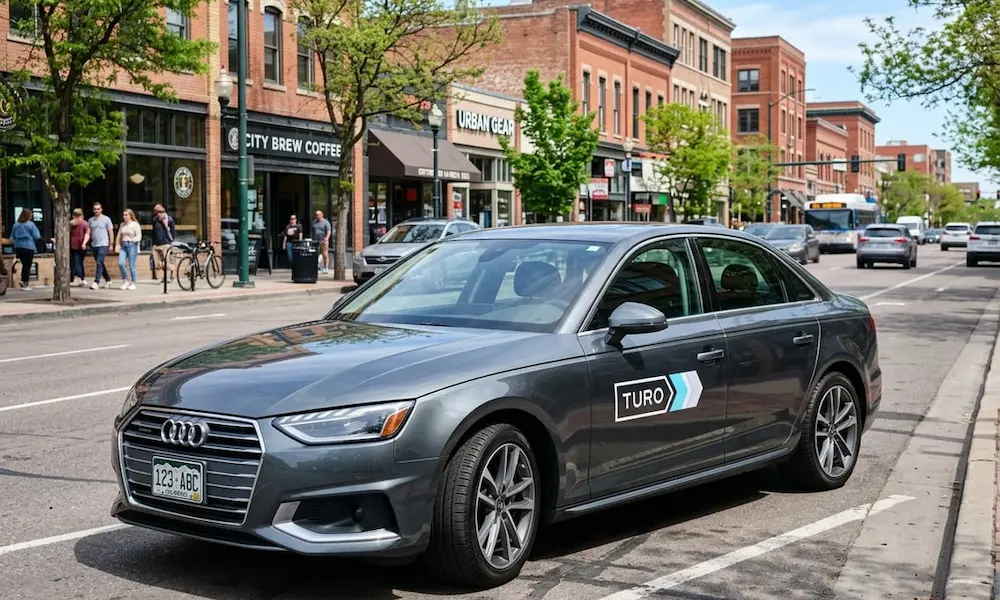
Peer-to-Peer Rentals (Turo)
Compared to peer-to-peer platforms like Turo:
- Zipcar offers more standardized, newer vehicles
- Turo often provides more unique car options (luxury, vintage)
- Zipcar includes fuel and insurance; Turo typically doesn’t
- Turo may offer better availability in suburban areas
- Zipcar’s pickup process is more streamlined
Environmental Impact: A Hidden Benefit
Beyond financial considerations, Zipcar claims significant environmental benefits:
- Each shared car replaces approximately 13 privately owned vehicles
- Members report reducing their driving by 40% after joining
- Average member reduces their carbon footprint by 1,600 pounds yearly
According to Zipcar’s impact report, the car-sharing model promotes more intentional driving—using cars only when truly needed rather than by default.
Car-sharing also supports reduced parking infrastructure, allowing cities to reclaim urban space for housing, parks, or bike lanes.
Who Should Consider Zipcar?
Zipcar makes the most sense for:
Urban Professionals
If you live and work in a city with good public transit but occasionally need a car for specific purposes.
Families Without Cars
Households that primarily rely on public transportation but need occasional access to a vehicle for family activities or bulk shopping.
College Students
Many universities have campus partnerships with Zipcar, offering discounted rates to students as young as 18 (versus the normal 21+ requirement).
Environmental Advocates
Those wanting to reduce their carbon footprint while maintaining occasional access to a vehicle.
Who Should Look Elsewhere?
Zipcar probably isn’t right for:
Daily Commuters
If you need a car for daily work commutes, traditional ownership or leasing will be more cost-effective.
Rural Residents
Limited availability makes Zipcar impractical in less densely populated areas.
Frequent Road Trippers
If you regularly take long-distance trips, traditional rentals offer better value with unlimited mileage.
Reliability-Dependent Users
Those who absolutely must have a car available at specific times with no flexibility.
Tips for Maximizing Zipcar Value
If you decide Zipcar is right for you:
- Book in advance for popular times (weekends, holidays)
- Look for promotions – Zipcar occasionally offers discounted membership or driving credits
- Check partnerships – Employers, universities, and organizations like the Freelancers Union often offer discounted rates
- Plan your trips carefully to avoid late fees and mileage overages
- Consider the Smart plan if you use Zipcar monthly, as the membership fee returns as driving credit
- Use the app’s map feature to find backup cars near your primary choice
- Check the fuel card works before departure to avoid out-of-pocket gas expenses
The Bottom Line: Is Zipcar Worth It?
Zipcar offers excellent value under specific circumstances:
- You live in a dense urban area
- You need a car only occasionally (1-4 times monthly)
- You primarily need short-term rentals (hours rather than days)
- Your trips are typically within the daily mileage allowance
- You have multiple Zipcar locations near you
In these scenarios, Zipcar can save you thousands annually compared to car ownership while providing the convenience of on-demand transportation.
However, if you need frequent, reliable car access or regularly take long trips, traditional ownership or rental options will likely serve you better.
The ultimate question isn’t whether Zipcar is worth it in general, but whether it’s worth it for your specific lifestyle, location, and transportation needs. By carefully assessing your usage patterns against the costs and benefits outlined here, you can make the smart choice for your situation.