Every Massachusetts driver needs a valid inspection sticker — but the rules around getting one (and what happens when you don’t) are surprisingly detailed. This guide covers everything from fees and the 14-point safety check to rejection stickers and consumer protection laws. Read to the end — there’s one rule change that catches drivers off guard every year.
What Is a Massachusetts Inspection Sticker?
Your Massachusetts inspection sticker proves your car passed the state’s annual vehicle safety and emissions inspection. The Massachusetts Registry of Motor Vehicles and the Department of Environmental Protection run the program together.
The goals are straightforward:
- Keep unsafe vehicles off public roads
- Reduce air pollution from failing emissions systems
About 1,800 privately owned, state-licensed inspection stations handle all testing. A central contractor, Opus Inspection Technologies, connects every station to a statewide database in real time.
Who Needs an Annual Inspection?
Every registered vehicle in Massachusetts needs an annual inspection — regardless of age, weight, or fuel type.
There are a few exceptions for emissions testing specifically:
Exempt from emissions testing:
- Electric vehicles
- Motorcycles and mopeds
- Military tactical vehicles
- Off-road equipment (ATVs, backhoes, loaders)
Standard passenger cars, light trucks, and SUVs need both a safety check and an emissions test if they fall within the most recent 15 model years. In 2025, that means model year 2011 and newer. In 2026, it shifts to 2012 and newer.
How Much Does a Massachusetts Car Inspection Cost?
The state caps the inspection fee — so every licensed station charges the same price.
| Vehicle Type | Fee | Frequency |
|---|---|---|
| Standard Passenger Car (Safety & Emissions) | $35 | Annual |
| Motorcycle (Class M Station) | $15 | Annual |
| 7D Vehicle (Student Transport) | $35 | Twice a Year |
| Commercial Vehicle / Heavy Duty | $35 + Shop Labor | Annual |
| Commercial Trailer (Over 3,000 lbs) | $35 + Shop Labor | Annual |
That $35 covers the entire inspection — visual check, mechanical assessment, and the emissions scan. Whether you’re in downtown Boston or a small town in the Berkshires, the price is identical. Compare that to Pennsylvania, where a combined inspection can run over $100.
One free re-inspection: If your car fails, you get one free re-test — but only at the same station and within 60 days of the failure date. Go somewhere else, and you pay another $35.
When Do You Need to Get Inspected?
New vehicles: Whether you buy from a dealership or a private seller, you must get inspected within 7 calendar days of your registration date. This applies to out-of-state purchases too.
Brand new cars: Massachusetts doesn’t give new vehicles a free pass. Even a car fresh off the lot needs an inspection within 7 days of registration.
Early inspections: You can get inspected up to 60 days before your sticker expires without losing time on your next annual cycle.
The 2022 Rule Change You Need to Know About
Before November 2022, drivers could delay their inspection and still get a full 12-month sticker. Someone with a March expiration could wait until June, pass in June, and get a sticker valid until the following June. That loophole is gone.
Under the new rules effective November 1, 2022, your new sticker is backdated to match your old sticker’s expiration month. Delay by three months, and your new sticker is only valid for nine months.
It gets worse if you let it lapse into a new calendar year. A vehicle due in November 2024 that gets inspected in May 2025 receives a sticker expiring in January 2026 — not May 2026. You lose nearly half a year of validity. Delaying your inspection gains you nothing.
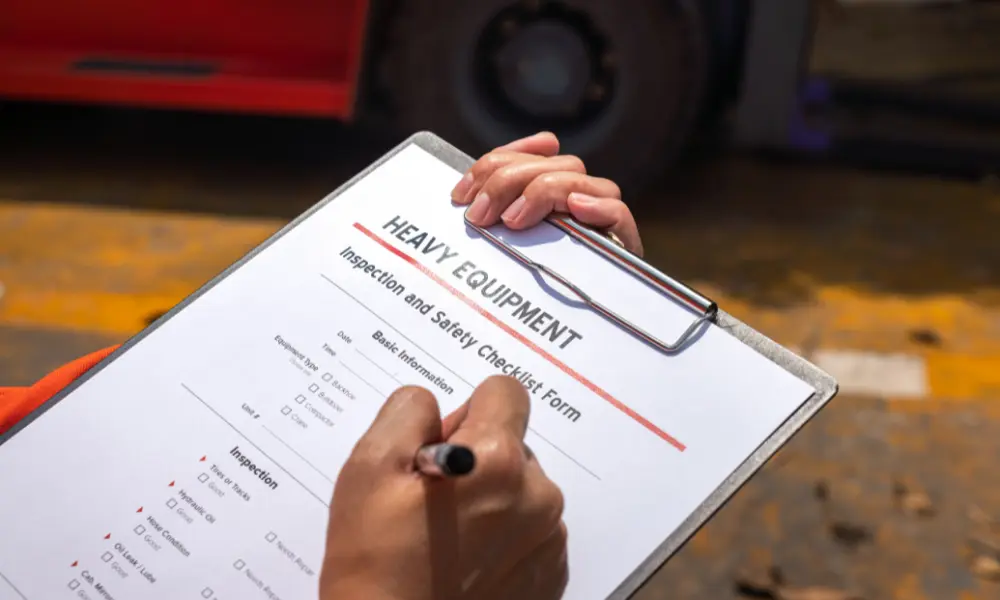
The 14-Point Safety Inspection: What Inspectors Check
The safety check covers 14 areas. The whole process takes about 12 minutes.
1. Visual Overview and ID Verification
The inspector checks for immediate hazards like fuel leaks, then verifies your license plates and VIN against your registration. Missing or badly damaged plates trigger a failure.
2. Braking Systems
Inspectors test your service brakes, check hydraulic lines for leaks, examine calipers and rotors, and verify pad thickness. The parking brake gets tested separately.
3. Exhaust System
The entire exhaust route gets inspected from the engine manifold to the tailpipe. Holes or loose components fail immediately — exhaust leaks can push toxic gases into the cabin. Excessive blue or black smoke from the tailpipe is also an automatic failure.
4. Steering and Suspension
With the car lifted, inspectors check for excessive steering play, inspect springs and struts, and look for worn ball joints or cracked components.
5. Horn
It must be securely mounted and produce a clear, continuous sound.
6. Glass and Wipers
Cracks that cross the driver’s line of sight fail. Windshield wipers get tested for tension and torn blades, and the washer pump must spray fluid.
7. Mirrors
The interior rear-view mirror and exterior side mirrors must be present, secure, and adjustable.
8. Lighting
All lights must work — headlamps, taillights, turn signals, hazard flashers, reverse lights, and the rear license plate light. Headlamp aim gets checked to prevent blinding oncoming traffic.
9. Tires and Wheels
Tires worn down to the wear bars fail immediately. Inspectors also check for sidewall bulges, dry rot, and exposed belts. Wheels are examined for cracks, deformities, and missing lug nuts.
10. Bumpers, Fenders, and Floor Pans
Bumpers must be secure and free of sharp edges. Rusted-through floor pans are an automatic failure — they weaken crash protection and let exhaust gases into the cabin. The fuel tank gets checked for leaks too.
11. Altered Vehicle Height
Vehicles with aftermarket lift or lowering kits must still fall within legal tolerances. Extreme modifications can affect braking dynamics and collision outcomes.
12. Seat Belts
Every belt across every seat position gets extended and retracted. Frayed or cut webbing fails. Clear out your back seats so inspectors can reach all belt mechanisms easily.
13. Airbags
Inspectors don’t deploy the airbags — they check the warning light. If the airbag light stays on after starting the car, that’s an automatic failure.
14. Fuel Cap
The gas cap must be present, thread properly, and seal tightly. A bad cap lets raw fuel vapors escape into the air, contributing to smog.
Emissions Testing: What Triggers a Failure
The emissions portion focuses on your car’s On-Board Diagnostics (OBD) system. The inspector plugs a cable into the port under your steering column and reads your car’s internal computer. This takes about three minutes.
Three common reasons cars fail emissions:
1. Check Engine Light is on
An illuminated Check Engine light is an automatic emissions failure. It means a component — often an oxygen sensor, EGR valve, or catalytic converter — has degraded beyond federal limits. The fault codes must be repaired and cleared before you can pass.
2. Readiness monitors incomplete
If you recently replaced your battery, lost power, or cleared your codes with a scan tool, your car’s computer resets. It needs about a week of normal mixed driving — city and highway — to complete its self-checks. A car in “not ready” status can’t pass emissions. For 2009 and newer non-diesel vehicles, one incomplete non-continuous monitor is allowed; more than that triggers a failure.
3. Non-communication
If the diagnostic port under your dash is damaged or lacks power, the state’s analyzer can’t connect. The vehicle fails automatically. An electrician or mechanic must fix the port before testing can resume.
Heavy-duty diesels (1984 and newer, over 10,001 lbs GVWR) undergo an opacity test instead — sensors measure particulate density from the exhaust during acceleration.
Red vs. Black Rejection Stickers
When your car fails, the inspector removes your old sticker and applies a rejection sticker marked with a bold “R.” The color tells you everything about what happens next.
Black “R” — Emissions Failure Only
Your car is mechanically safe but failed the emissions test. You have 60 days to fix the problem and return for a free re-inspection. Your car stays street-legal during those 60 days.
Red “R” — Safety Failure
Your car failed the mechanical safety check. There is no grace period. Driving it the moment you leave the inspection bay is a violation of Massachusetts law. Police can pull you over just for seeing the red sticker. Your options are to tow the vehicle to a repair shop and fix the problem before driving it again.
Either way, you have 60 days to return for the free re-inspection. Miss that window, and the RMV can suspend your registration.
Think you were failed unfairly? You can file a complaint — but the timeline is tight. Safety complaints must be filed within 30 days. Emissions complaints? Just 2 days.
Massachusetts Window Tint Laws and Inspection Failures
Window tint is one of the most common reasons cars fail inspection in Massachusetts. The state measures Visible Light Transmission (VLT) — the percentage of light that passes through the glass plus the film together.
| Window Location | Minimum VLT | Max Reflectivity |
|---|---|---|
| Windshield | Top 6 inches only | Non-reflective |
| Front Side Windows | 35% | 35% |
| Rear Side Windows | 35% | 35% |
| Rear Window | 35% | 35% |
Unlike many neighboring states, Massachusetts applies the 35% rule to all windows on all vehicle types — SUVs, minivans, pickups, sedans. There’s no special exemption for rear windows.
One important detail: factory glass already blocks some light. Add a film rated at exactly 35%, and the combined result might only let through 30-32% — which fails. If your car fails for tint, you must physically strip the film before your re-inspection.
Medical exemptions are available for conditions like lupus, albinism, or severe photosensitivity. You’ll need a certified physician’s statement. Even with an approved waiver, tinting the windshield below the AS-1 line (top 6 inches) is permanently prohibited for everyone.
The Massachusetts Lemon Aid Law
Here’s consumer protection that most drivers don’t know about. If you buy a used car — from a dealer or a private seller — and it fails a Massachusetts safety or emissions inspection within 7 days of the sale, you may have the right to a full refund.
The catch: repair costs must exceed 10% of the purchase price.
To use the Lemon Aid Law:
- Get a written failure notice and repair estimate from the inspection station
- Within 14 days of the sale, notify the seller by certified mail, regular mail, and email
- Return the vehicle with a neutral witness present
If the seller refuses to accept the return, document the refusal with a notary-signed statement. This law protects buyers from fraudulent vehicle sales and gives you real leverage when things go wrong.
What If You Can’t Afford the Emissions Repairs?
Massachusetts has two relief options for drivers facing steep repair bills.
Emissions Waiver
If you’ve spent the required minimum on repairs at a Registered Emissions Repair Facility but your car still fails, you may qualify for a waiver — a passing sticker valid until the next annual cycle. The spending thresholds are adjusted annually for inflation.
| Vehicle Age | Required Minimum Spend |
|---|---|
| 5 Model Years or Newer | ~$1,175 |
| 6–10 Model Years Old | ~$1,075 |
| Over 10 Model Years Old | ~$975 |
Figures are baseline examples subject to annual CPI adjustments.
After meeting the threshold, you contact the state’s Customer Service Center for an evaluation at a regional Motorist Assistance Center. A state technician reviews the work and issues the waiver if the effort checks out. DIY repairs or work by uncertified mechanics don’t count toward these thresholds.
Economic Hardship Extension
If a single major repair — like a full catalytic converter replacement or engine overhaul — is simply unaffordable right now, you may qualify for a one-year, non-renewable extension. The repair estimate must come from a Registered Emissions Repair Technician and hit these minimum thresholds:
| Vehicle Age | Required Minimum Estimate |
|---|---|
| 5 Model Years or Newer | ~$1,763 |
| 5–10 Model Years Old | ~$1,613 |
| Over 10 Model Years Old | ~$1,463 |
Figures subject to annual CPI adjustments.
Extensions are never granted for safety failures, commercial vehicles, or newly registered vehicles.
Out-of-State Vehicles and College Students
Your car is registered in Massachusetts but you’re living in another state? The RMV still expects an inspection by the end of your expiration month. Miss it, and your registration gets suspended automatically.
To avoid that, submit an Out-of-State Verification Inspection Form to MassDOT Vehicle Safety & Compliance Services.
- If your host state has inspections: Pass their inspection and attach the receipt to your form.
- If your host state has no inspection program: Certify that under penalty of perjury on the form.
When you return to Massachusetts:
- Coming from a state with inspections: 15 days to get a Massachusetts sticker
- Coming from a state without inspections: 3 days to get a Massachusetts sticker
That three-day window is tight. Don’t cross the state line and assume you have time to figure it out.