Wondering about Subaru extended warranty cost before signing anything at the dealership? Smart move. The finance office quote you get could be double what you should actually pay. This guide breaks down every plan, every price, and the negotiation trick that saves owners thousands.
What Subaru’s Factory Warranty Actually Covers
Before spending a dime on extra coverage, know exactly what you already have.
Every new Subaru comes with:
- 3 years / 36,000 miles – bumper-to-bumper limited warranty
- 5 years / 60,000 miles – powertrain limited warranty
Here’s the catch: the average American driver logs over 13,000 miles per year. That means your bumper-to-bumper coverage often expires by mileage before the three-year clock runs out. Once it’s gone, you’re on the hook for everything.
That gap is exactly why Subaru sells the Added Security program — and why dealers push it hard.
The Sneaky “Overlap” Rule Nobody Tells You About
Here’s something dealerships rarely explain upfront.
The Subaru Added Security term doesn’t start when your factory warranty expires. It counts backward from your original purchase date and zero miles.
So if you buy a 5-year extended warranty on a brand-new Subaru, you’re really only getting 2 extra years of coverage beyond the standard 3-year factory warranty.
That overlap matters enormously when calculating the real cost per year of actual added protection. Always do that math before agreeing to any quote.
The 3 Subaru Added Security Plans Explained
Subaru offers three main tiers of extended coverage:
Powertrain Plan
This is the entry-level option. It covers:
- Engine block and internal components
- Transmission and transaxle
- All-wheel-drive differentials
It’s fine if you’re purely worried about catastrophic, vehicle-stopping failures. But it skips everything electronic, which is increasingly where modern Subaru repairs get expensive.
Classic Plan
A solid middle ground. It covers roughly 1,000 parts across all major systems, including:
- Everything in the Powertrain Plan
- Front suspension and steering
- Brake components
- Electrical systems
- Cooling and fuel delivery
- Air conditioning
This plan works well for mid-term ownership when parts like AC compressors and water pumps start failing. An AC compressor replacement alone can run $803 to $1,282. The Classic Plan earns its keep.
Gold Plus Plan
This is the top-tier, bumper-to-bumper-style plan — and the one Subaru itself most strongly recommends.
Instead of listing what’s covered, it lists what’s not covered (routine maintenance, cosmetics, and upholstery). Everything else is in.
That includes:
- EyeSight Driver Assist Technology
- Blind-Spot Detection and Rear Cross-Traffic Alert systems
- DriverFocus Distraction Mitigation System
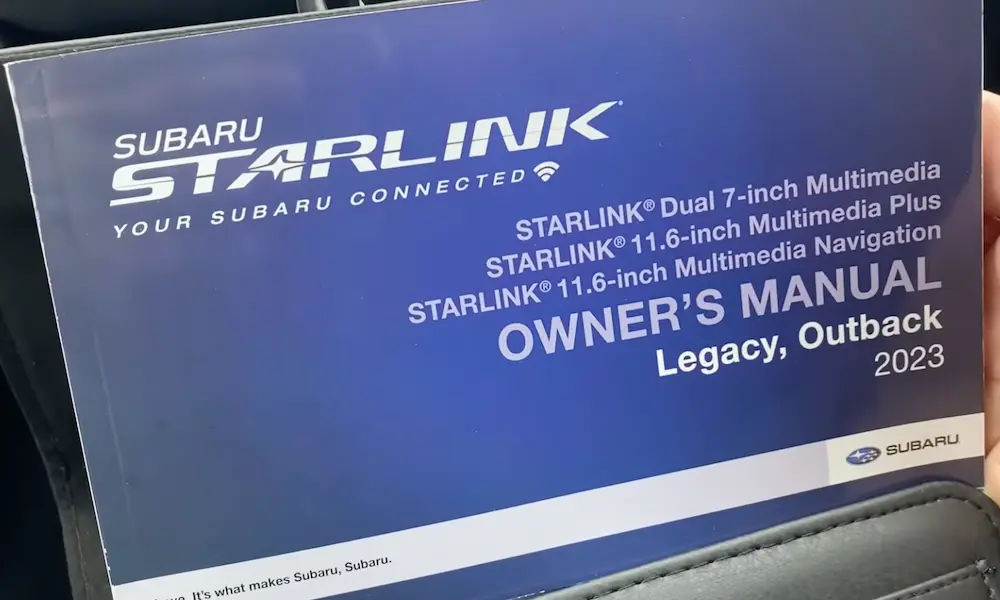
- STARLINK multimedia systems
- Onboard computers
These are the components most likely to fail expensively in modern Subarus. EyeSight camera recalibration alone involves specialized labor that isn’t cheap. The Gold Plus plan makes these repair bills disappear.
Two standout Gold Plus advantages worth knowing:
- Wear and tear coverage — Most third-party warranties deny claims by calling normal degradation “wear and tear.” Subaru’s Gold Plus explicitly covers it.
- Consequential damage coverage — If a non-covered part breaks and damages a covered part, Subaru still pays for the covered repair. Third-party providers frequently deny these claims entirely.
What Does Subaru Extended Warranty Cost?
Here’s where things get interesting.
The average Subaru extended warranty cost lands around $2,600, but the range is wide: $1,500 to $3,500 depending on the plan, term length, and deductible you choose.
Classic vs. Gold Plus Pricing ($100 Deductible)
| Term Length | Classic Plan | Gold Plus Plan |
|---|---|---|
| 4 years / 60,000 miles | $980 – $1,165 | $1,080 – $1,290 |
| 5 years / 60,000 miles | $1,010 – $1,200 | $1,260 – $1,410 |
| 6 years / 80,000 miles | $1,260 – $1,430 | $1,770 – $2,015 |
| 7 years / 100,000 miles | $1,970 – $2,265 | $2,420 – $2,895 |
| 8 years / 120,000 miles | $2,373 | $2,980 |
| 10 years / 100,000 miles | $2,186 – $2,370 | $2,690 – $3,300 |
Note: WRX models carry a $295 surcharge. STi models carry a $495 surcharge due to their higher mechanical risk profile.
How Your Deductible Changes the Price
Choosing a $0 deductible means no out-of-pocket costs at repair visits but a higher upfront premium. Here’s the difference for Gold Plus plans:
| Term Length | Gold Plus ($100 Deductible) | Gold Plus ($0 Deductible) | Difference |
|---|---|---|---|
| 4 years / 60,000 miles | $1,080 | $1,320 | $240 |
| 6 years / 80,000 miles | $1,770 | $2,140 | $370 |
| 7 years / 100,000 miles | $2,420 | $2,670 | $250 |
| 10 years / 100,000 miles | $2,690 | $2,870 | $180 |
If you plan to use the warranty for multiple smaller repairs, the $0 deductible option pays for itself quickly.
The Markup Game: Why You Should Never Accept the First Quote
This is the most important thing in this entire post.
Subaru dealerships buy Added Security contracts at wholesale, then mark them up — often by 100% or more.
Internal dealer cost data shows the actual wholesale price for a 10-year / 100,000-mile Gold Plus plan with a $0 deductible is approximately $1,750. The $100 deductible version costs dealers around $1,570.
Yet dealerships routinely quote $3,800 to $4,150 for that same plan. Some have gone as high as $5,270.
Subaru’s official MSRP for a 7-year / 100,000-mile Gold Plus plan is $3,170 — but dealers can and do sell it for $2,399 and still profit comfortably.
How to Actually Negotiate This
Any authorized Subaru dealer can sell you an Added Security plan, even if you didn’t buy your car there. That’s your leverage.
Here’s the playbook:
- Call multiple dealerships — not just your local one
- Ask specifically for Gold Plus pricing on your desired term
- Get competing written quotes via email
- Mention you’re shopping nationally — dealers in high-volume markets often price more aggressively
- Complete the transaction over the phone — paperwork gets mailed to you
Real-world buyers who shop aggressively report landing 10-year / 100,000-mile Gold Plus plans between $1,650 and $2,300 — a massive difference from that initial $4,000+ quote.
Don’t Miss the Purchase Window
You must buy Subaru Added Security before your factory 3-year / 36,000-mile warranty expires.
Once that window closes, you can no longer access the manufacturer-backed program. At that point, you’re stuck with third-party options — which, as you’ll see below, is not where you want to be.
Subaru Added Security vs. Third-Party Warranties
Companies like CarShield, Endurance, and CARCHEX advertise heavily. Here’s what the numbers actually show.
Endurance Warranty averages $4,215 total — an annualized cost of roughly $1,914. Toco Warranty averages $3,968. Omega Auto Care can hit $6,720 with a $200 deductible. CarShield charges $99–$299 per month, which adds up to $1,188–$3,588 annually.
Compare that to a negotiated Subaru Gold Plus plan at around $2,000 total over 7–10 years. The math isn’t close.
Beyond cost, the structural differences are significant:
Claims approval rates tell the real story:
- CoverageX: 89% approved
- Endurance: 83% approved
- Olive: 82% approved
- CARCHEX: 79% approved
- CarShield: 71% approved
Third-party administrators routinely deny “wear and tear” claims — the exact failures most common in aging vehicles. They also frequently approve repairs using aftermarket or salvaged parts rather than genuine Subaru components.
Subaru Added Security uses only genuine OEM parts installed by factory-trained technicians. Every time, regardless of mileage.
Consumer reviews for CarShield sit at 1.82 out of 5 stars on the BBB platform. CARCHEX scores 1.96. Much of the frustration stems from multi-hour hold times when dealerships try to get repair authorizations approved — leaving your car sitting in the service bay while everyone waits.
The Benefits Baked Into Your Contract
Beyond covering repairs, both Classic and Gold Plus plans include:
- $100 towing allowance per breakdown occurrence
- Rental car reimbursement — up to $35–$40 per day for 5 days
- Emergency roadside assistance — lockouts, flat tires, jump-starts, fuel delivery
- Trip interruption coverage (Gold Plus only) — up to $500 per occurrence if your car breaks down 50+ miles from home, covering hotel and meals
CarShield’s trip interruption benefit, by comparison, tops out at $150 total. Try booking a hotel room and two days of meals for $150.
Subaru Extended Warranty for EVs and Hybrids
Electric and hybrid Subarus — the Crosstrek Hybrid, Forester Hybrid, and fully electric Solterra — come with federally mandated battery warranties. But the surrounding infrastructure doesn’t.
Thermal management systems, power delivery modules, and digital interfaces that support the electric drivetrain are expensive to replace and not covered under the battery warranty. The Gold Plus plan’s exclusionary structure captures this entire ecosystem.
Given that the Solterra starts at $38,495 and complexity only grows with upcoming models like the Trailseeker, the Gold Plus plan becomes an even stronger argument for EV buyers.
Certified Pre-Owned Buyers: You Have an Upgrade Option
Every Subaru Certified Pre-Owned vehicle automatically includes a Powertrain Coverage Plan. But you can upgrade that to a Gold Plus Plan, extending coverage up to 10 years from the original in-service date.
For a used Subaru with an unknown maintenance history, that upgrade is worth a serious look. The higher-risk years of ownership sit squarely in that extended window.
Prepaid Maintenance Plans: A Separate Product Entirely
Extended warranties cover breakdowns. Subaru’s Added Security Maintenance Plans cover scheduled upkeep — oil changes, filter replacements, and other factory-prescribed service intervals.
You buy them separately, and they let you lock in today’s labor rates against future inflation. Options cover 2–3 years at 24,000, 36,000, or 45,000 miles.
For Subaru lessees, this makes particular sense. Roll the maintenance plan into your lease’s capitalized cost and your monthly payment absorbs the expense entirely. Some plans also include a $500 coupon toward your next new Subaru purchase.
Is Subaru Extended Warranty Worth It?
Statistically, the average consumer pays slightly more in premiums than they recover in claims. That’s how any warranty product works — the provider has to profit somewhere.
But that framing misses the point.
A failed Subaru CVT transmission can generate a single repair invoice exceeding $7,000. A head gasket job on a boxer engine runs $1,967 to $2,277 due to the labor complexity. These aren’t hypothetical risks — they’re documented failure points.
For households without a $5,000 emergency cushion sitting in savings, one major mechanical failure can spiral fast. A Gold Plus plan converts that unpredictable future liability into a fixed, known cost you can plan around.
The answer is yes — if you do three things:
- Buy the Gold Plus plan, not the Classic or Powertrain tiers. Modern Subaru failures increasingly happen in electronics, not engine blocks.
- Negotiate hard. Contact multiple dealers and don’t accept any quote above $2,300 for the 10-year plan.
- Buy before your factory warranty expires. That window closes permanently, and third-party alternatives don’t come close to matching what Subaru offers directly.
The Subaru extended warranty cost is negotiable, the coverage is genuinely strong, and the manufacturer backing eliminates the claims friction that makes third-party plans so frustrating. Do the legwork upfront, and it’s one of the easier financial decisions in your ownership journey.