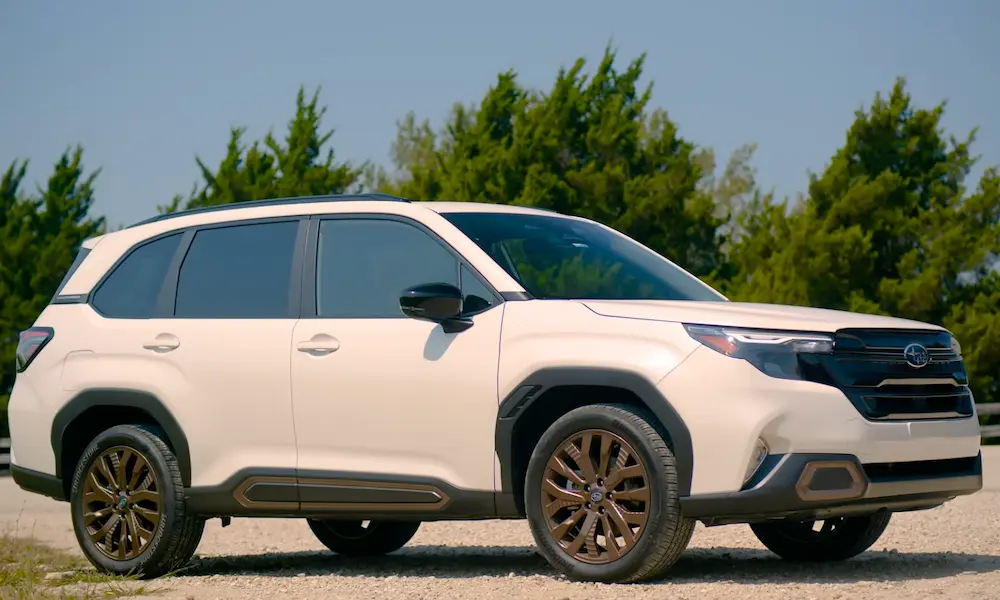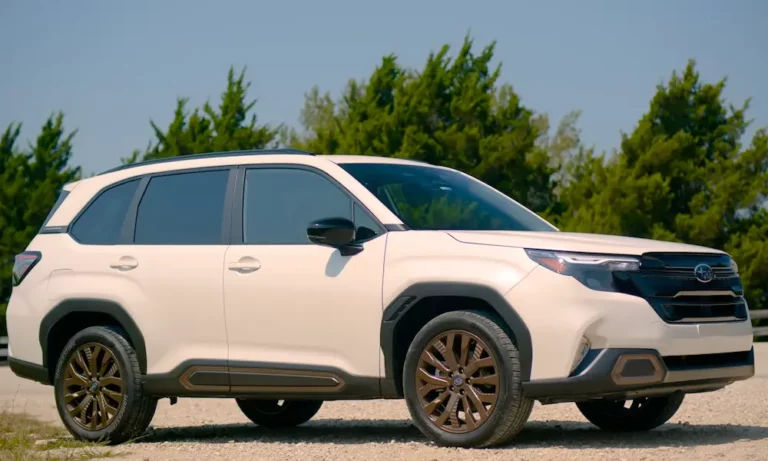
Got a Subaru Forester and want to keep it running past 200,000 miles? This guide covers everything — the right oil, the correct filter, drain plug specs, and the one mistake that destroys transmissions. Stick around. The details here will save you money and headaches.
Why the Boxer Engine Changes Everything
The Subaru Forester runs a horizontally opposed Boxer engine. That’s not just a marketing term — it actually changes how your oil behaves.
In a normal engine, oil drains straight down from the cylinder heads back into the crankcase. In a Boxer, the pistons travel sideways. That means gravity constantly pulls oil away from the cylinder walls, wrist pins, and piston rings.
The result? Your engine needs a full synthetic oil that builds a strong film fast — especially during cold starts when oil pressure hasn’t stabilized yet.
Modern Foresters also use direct injection systems that run under high pressure. This speeds up oil oxidation and raises the risk of low-speed pre-ignition. The right oil certification protects against both.
The Right Oil for Your Subaru Forester (By Year)
Don’t just grab whatever’s on the shelf. The wrong viscosity causes real damage. Here’s exactly what your Forester needs:
| Generation & Model Years | Engine | Oil Spec | Capacity (With Filter) | Drain Plug Torque |
|---|---|---|---|---|
| 6th Gen 2025–2026 | 2.5L FB25D | SAE 0W-20 Full Synthetic, API SP / ILSAC GF-6 | 4.6 qts | 31 ft-lbs |
| 6th Gen 2025–2026 | 2.0L Hybrid (S:HEV) | SAE 0W-16 Full Synthetic, API SP / ILSAC GF-6 | 4.6 qts | 31 ft-lbs |
| 5th Gen 2019–2024 | 2.5L Direct Injection FB25 | SAE 0W-20 Full Synthetic, API SN/SP | 4.7 qts (corrected spec) | 31 ft-lbs |
| 4th Gen 2014–2018 | 2.5L Naturally Aspirated | SAE 0W-20 Full Synthetic, API SN | 5.1 qts | 31 ft-lbs |
| 4th Gen 2014–2018 | 2.0L Turbo XT | SAE 5W-30 Full Synthetic, API SN | 5.4 qts | 31 ft-lbs |
| 3rd Gen 2011–2013 | 2.5L Naturally Aspirated | SAE 0W-20 Full Synthetic, API SN | 5.1 qts | 31 ft-lbs |
| 3rd Gen 2011–2013 | 2.5L Turbo XT | SAE 5W-30 Full Synthetic, API SN | 4.4 qts | 32.5 ft-lbs |
| 2nd Gen 2002–2010 | 2.5L Naturally Aspirated | SAE 5W-30 Conv./Synthetic | 4.4 qts | 31 ft-lbs |
| 2nd Gen 2002–2010 | 2.5L Turbo XT | SAE 5W-30 Conventional | 4.8 qts | 31 ft-lbs |
A few important callouts:
- 2019–2024 owners: Some quick-reference guides list 4.4 quarts, but that leaves your oil level in the lower half of the dipstick range. Subaru corrected the spec in the 2024 manual to 4.7 quarts. Use 4.7.
- 2025–2026 Hybrid owners: Your engine needs 0W-16. If 0W-16 is unavailable, you can top off with 0W-20 temporarily — but flush and replace it with 0W-16 at the very next service.
- Turbo XT owners (all years): Don’t use 0W-20. The turbocharger generates extreme heat and shear forces that require the thicker 5W-30.
- Pro tip: Buy a full 5-quart jug. Boxer engines consume a small amount of oil between changes, so you’ll want extra on hand for top-offs.
The Oil Filter Mistake That Destroys Boxer Engines
This is where most people get it wrong — and where cheap filters cause expensive damage.
Subaru’s Boxer oil pumps generate significantly higher oil pressure than most engines. Because of that, Subaru specifies an oil filter with a bypass valve rated at 23.2 PSI.
Most standard aftermarket filters use a 12–16 PSI bypass valve. Install one of those and the bypass valve opens prematurely during normal driving — sending unfiltered oil with abrasive particles straight through your engine bearings, cylinder walls, and VVT solenoids. The wear is invisible until it’s too late.
On modern FA and FB series Foresters, the oil filter mounts upside down on the top-front of the engine bay. That location is convenient — but it puts extra demand on the filter’s anti-drainback valve. A cheap nitrile rubber valve hardens under heat and lets air into the filter overnight. Every cold start then runs metal-on-metal for a few seconds before oil pressure builds. You’ll hear it as a brief engine knock on startup.
Use one of these filters — they’re all rated to 23.2 PSI:
| Filter | Manufacturer | Bypass PSI | Burst PSI | Fitment |
|---|---|---|---|---|
| 15208AA21A | Tokyo Roki (OEM) | 23.2 PSI | 250 PSI | FA/FB Engines |
| 15208AA100 | Tokyo Roki (OEM) | 23.2 PSI | 250 PSI | EJ Turbo / STI |
| 15208AA031 | Tokyo Roki (OEM) | 23.2 PSI | 250 PSI | Universal Subaru |
| WIX 57055-EA | WIX Filters | 23.2 PSI | 250 PSI | 2025–2026 2.5L |
Installing the filter correctly matters too. Lightly coat the rubber O-ring with clean oil before installation. Hand-tighten until the gasket touches the mounting pad, then turn it an additional ¾ to 1 full turn — by hand only. Never use a wrench to tighten it. You’ll deform the gasket and create a high-pressure leak.
The #1 Mistake That Ruins Subaru Transmissions
This one is well-documented across Subaru forums and has destroyed expensive CVT transmissions. It happens at quick-lube shops and during DIY oil changes.
The mistake: draining the transmission fluid instead of the engine oil.
Because the Boxer engine mounts longitudinally, the transmission sits directly in front of the engine. Both the engine oil pan and the transmission pan are visible from underneath, and on older models both drain plugs used the same size socket. It’s genuinely easy to drain the wrong one.
Subaru made two design changes to reduce this error:
- Newer models use a Torx T70 drive bolt on the transmission drain plug — a specialty tool most people don’t have lying around
- A redesigned engine drain plug with a 17mm head and a pilot point to prevent cross-threading, compared to the smaller 14mm transmission plug
Here’s what happens if you drain the transmission by mistake:
You drain roughly 4–7 quarts of CVT fluid from a system that holds 11.9 quarts. Then you pour 4–5 quarts of fresh engine oil into the engine fill neck — which was never drained. Your crankcase now holds nearly 10 quarts. When you start the engine, the crankshaft whips that oil into foam, pressure drops, and bearings starve. The CVT simultaneously runs dry and suffers immediate metal-on-metal failure.
You’ll notice severe shuddering, grinding or whining noises, and multiple warning lights. If you catch it before starting the engine, don’t start it. If it’s already running, shut it off immediately and have it flatbed towed to a Subaru dealer.
The fix requires draining the overfilled crankcase, replacing the filter, and refilling the CVT through its dedicated fill port on the left side of the transmission housing. CVT refilling requires a thermal sensor — the fluid goes in only when the transmission reaches 93–118°F internally. Only use Subaru-certified CVTF-II or CVTF24 fluid. Aftermarket CVT fluids lack the correct friction coefficients and void your warranty.
Drain Plug Specs and the Crush Washer You Can’t Skip
Every Subaru Forester oil change requires a new crush washer. Don’t reuse the old one.
Thread sizes by generation:
- Pre-2011 models: M20-1.50 thread
- 2011–2026 models: M16-1.50 thread
Torque spec: 30.8 ft-lbs (call it 31 ft-lbs) for both sizes. Don’t go higher. Overtightening strips the oil pan threads, and that repair requires a full oil pan replacement.
Crush washer orientation matters. The flat, smooth side faces up toward the bolt head. The rounded, convex side faces down toward the oil pan. The convex side deforms into microscopic surface imperfections on the pan to create a proper seal.
Watch out for the “invisible washer” trap. The black paint on the pan and plug can glue the old washer to the bolt head so it looks like there’s no washer at all. If you install a second washer over the old one, the stack-up won’t seal correctly and you’ll get a slow oil weep — or sudden pressure loss. Always pry the old washer off with a pick or knife before installing the new one.
If you want to eliminate crush washer replacements altogether, a Fumoto brass quick-drain valve replaces the drain plug with a ball valve. Just note: the Fumoto uses a soft fiber gasket instead of a crush washer, so its torque spec drops to 18 ft-lbs — not 31.
How Often to Change Your Subaru Forester’s Oil
Subaru’s standard interval is every 6,000 miles or 6 months — whichever comes first. Some third-party databases list 7,500–10,000 miles, but factory engineers warn against stretching past 6,000.
The time limit matters as much as the mileage. Even a parked car’s oil oxidizes, forming acids that break down additive packages over time.
If you drive under any of these conditions, drop to every 3,000 miles or 3 months:
- Short daily trips under 5 miles — the engine never reaches full operating temperature, so fuel and moisture contaminate the oil instead of burning off through the PCV system
- Freezing cold weather — cold starts require rich fuel mixtures that wash down cylinder walls and water-contaminate the oil
- Desert heat above 105°F — sustained heat accelerates oil oxidation and breaks down the additive package faster
- Stop-and-go commuting — low airflow and extended run time at low speeds stresses the oil without adding odometer miles
- Towing or mountain driving — high sustained load raises oil temperatures and depletes additives faster
- Dirt roads or dusty environments — micro-silica dust enters through the intake and turns your oil into a slow-acting abrasive paste
Forester Wilderness owners have additional intervals to track. Trail driving drops the engine air filter interval to 15,000 miles and requires differential fluid and CVT fluid replacement every 30,000 miles under severe conditions.
Here’s the full maintenance schedule with typical U.S. costs:
| Service | Standard Interval | Severe Interval | Fluid Spec | Typical Cost |
|---|---|---|---|---|
| Engine Oil & Filter | 6,000 mi / 6 mo | 3,000 mi / 3 mo | 0W-20 or 0W-16 Synthetic | $54–$69 |
| Tire Rotation | 6,000 mi | 6,000 mi | N/A | $50–$65 |
| Cabin Air Filter | 12,000 mi | 12,000–15,000 mi | OEM | $40–$60 |
| Engine Air Filter | 30,000 mi | 15,000–20,000 mi | OEM | $45–$65 |
| Brake Fluid Flush | 30,000 mi / 3 yrs | 30,000 mi / 3 yrs | DOT 3 or DOT 4 | $120–$160 |
| Front/Rear Differential | Inspect at 30k mi | Replace at 30k mi | API GL-5 75W-90 | $150–$200 |
| CVT Fluid | Inspect only | Replace at 30k mi | Subaru CVTF-II / CVTF24 | $280 |
| Spark Plugs | 60,000 mi | 60,000 mi | NGK DILKAR7Q8 | $250–$350 |
| Engine Coolant | 137,500 mi | 137,500 mi | Subaru Super Coolant | $150–$200 |
One more thing worth knowing: tire rotations at every 6,000-mile service aren’t just about tire wear. Significant height differences across all four tires cause your EyeSight system’s lane-keeping and pre-collision features to malfunction. On an EyeSight-equipped Forester, any windshield replacement also requires professional camera recalibration.
How to Do a Subaru Forester Oil Change Step by Step
Here’s the complete procedure, in order.
Before you start:
Park on a flat surface. Put the transmission in Park and set the parking brake. Start the engine and let it run for 3–5 minutes to warm the oil — this lowers its viscosity so it drains fully. Shut it off. If you just drove at highway speed, wait at least 15 minutes before touching the drain plug.
Step 1 — Remove the old oil filter
The filter sits on the top-front of the engine bay, inverted. Wrap a clean rag around the base to catch drips. Use a Lisle 63600 or three-prong filter wrench and turn counterclockwise. Pull it off and drop it straight into a disposal bag.
Check the filter mounting flange on the engine. Make sure the old O-ring came off with the filter and isn’t stuck to the metal pad. Wipe the pad clean with a lint-free cloth.
Step 2 — Drain the engine oil
Position a drain pan under the front of the engine oil pan — not the transmission pan. Use a 17mm socket and turn counterclockwise. Let it drain for at least 10 minutes.
Inspect the plug while it drains. Pry off any fused crush washer. Wipe the threads clean. Slide on a fresh crush washer, flat side against the bolt head, rounded side facing outward toward the pan.
Step 3 — Reinstall the drain plug
Hand-thread the plug clockwise first — this prevents cross-threading. Then torque it to exactly 31 ft-lbs with a calibrated torque wrench. Don’t eyeball it. Don’t go higher.
Step 4 — Install the new filter
Lightly coat the new filter’s rubber O-ring with clean engine oil. Thread it on clockwise by hand until the gasket touches the pad. Then turn it an additional ¾ to 1 full turn — by hand. The OEM Tokyo Roki filter has printed numbers on the casing to help you measure the rotation. Stop there.
Step 5 — Add fresh oil
Pull the yellow oil fill cap near the filter housing and place a clean funnel in the neck. Pour in the correct amount for your generation — 4.7 quarts of 0W-20 for a 2019–2024 naturally aspirated Forester, for example. Reinstall the cap.
Pull the dipstick, wipe it clean, reinsert fully, then pull it again. The level should sit between the two marks.
Step 6 — Start and inspect
Start the engine and let it idle for 2–3 minutes. Watch the base of the filter and the drain plug for any weeping or dripping. Shut it off. Wait 10 minutes for the oil to drain back into the pan. Check the dipstick once more and top off if needed to reach the upper dot.
Reset the maintenance monitor on your dashboard display to start the next 6,000-mile or 6-month countdown.
Drop the used oil and filter at any auto parts store or certified recycling center — most take them for free.
Watch for these warning signs between services:
- Dark, gritty oil or a burnt smell on the dipstick
- Rough idle or increased engine noise
- A sudden drop in fuel economy
- The low oil pressure warning light
Any of those? Check the lubrication system immediately before you drive another mile. Catching it early is cheap. Ignoring it isn’t.