Confused by that cryptic “B127” flashing on your dashboard? You’re probably wondering if your CR-V is about to explode or just needs an oil change. This guide breaks down your Honda CR-V maintenance schedule clearly, covering every service code, mileage milestone, and generation-specific quirk. Stick around — the generation section alone could save you thousands.
How Honda’s Maintenance Minder System Actually Works
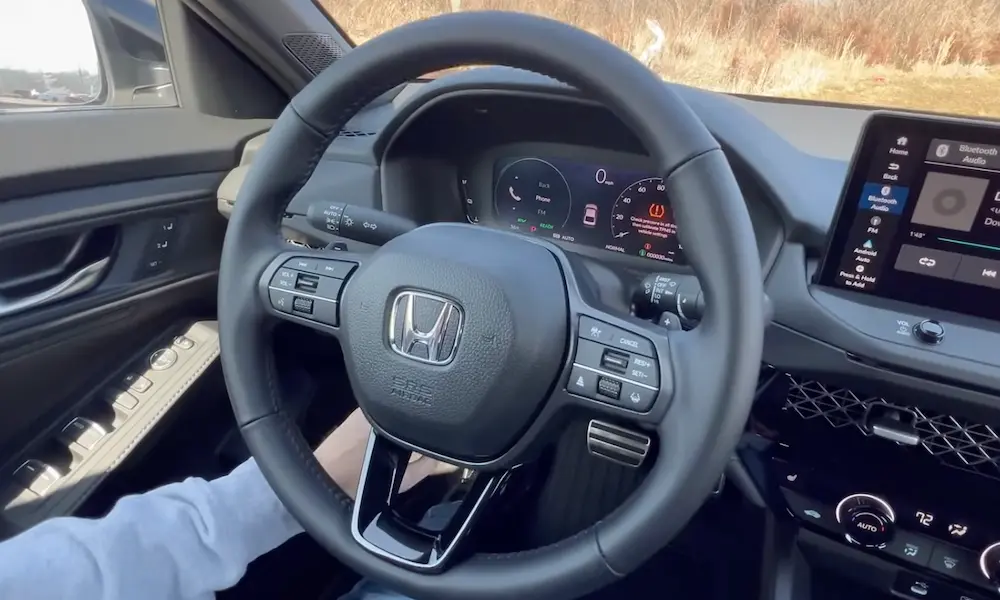
Honda ditched the old “change your oil every 3,000 miles” rule years ago. Instead, your CR-V runs a smart onboard algorithm that monitors real driving conditions — engine temperature, load, trip length, and rotational speed — to calculate exactly when your car needs service.
The result? A dashboard display showing your oil life as a percentage, dropping from 100% down as the system tracks wear in real time. This approach prevents both over-servicing (wasting money) and under-servicing (risking engine damage).
Here’s what those threshold warnings mean:
- 15% remaining → “Service Due Soon” appears with a yellow wrench icon
- 5% remaining → “Service Due Now” — get it booked immediately
- 0% remaining → “Service Past Due” — the engine is now at real risk
Don’t ignore the zero-percent warning. Running degraded oil accelerates friction, causes thermal scoring, and can permanently damage internal engine components.
How to Reset the Maintenance Minder
After every service, you must manually reset the system. Skip this step and your future service reminders will be completely wrong.
For push-button ignition models:
- Press the ignition button without pressing the brake (engine stays off)
- Navigate to “Maintenance Info” or “Oil Life” using the steering wheel controls
- Press and hold the selector button for about 10 seconds
- Reset individual items or clear everything at once
- Confirm the display returns to 100%
Decoding Your CR-V’s Service Codes
Your dashboard doesn’t just say “get an oil change.” It gives you a specific alphanumeric code. Here’s exactly what each one means.
Main Service Codes
| Main Code | What It Means | Action Required |
|---|---|---|
| A | Oil change only | Replace engine oil — filter still has life left |
| 0 | Oil + filter | Found on 2017+ models; replace both every time |
| B | Full inspection service | Oil, filter, plus brakes, suspension, driveshaft boots, exhaust, and fluid lines |
Sub-Codes (The Numbers After the Letter)
These numbers appear alongside your main code. A “B127” means you need everything in Code B, plus the tasks tied to sub-codes 1, 2, and 7.
| Sub-Code | Service Required | Why It Matters |
|---|---|---|
| 1 | Tire rotation + pressure check | Critical on AWD — uneven tires damage the rear differential |
| 2 | Engine air filter, cabin filter, drive belt inspection | Dirty filters kill fuel economy and AC performance |
| 3 | Transmission fluid replacement | Degraded fluid causes slippage and internal failure |
| 4 | Spark plugs + valve clearance inspection | Restores combustion efficiency |
| 5 | Engine coolant replacement | Depleted additives cause rust and water pump failure |
| 6 | Rear differential fluid (AWD only) | Prevents clutch pack shudder and gear wear |
| 7 | Brake fluid flush | Moisture-absorbed fluid causes brake fade |
| 9 | Full brake system service | Caliper cleaning, lubrication, and pad inspection |
Models from 2007-2016 use an A/B alternating schedule, while 2017+ models use the updated A/0 format with revised procedures for turbocharged engines.
Honda CR-V Maintenance Schedule by Mileage
The Maintenance Minder handles timing automatically, but knowing the traditional mileage benchmarks helps you budget ahead.
Every 7,500–10,000 Miles
This is your routine baseline. Expect an oil change and tire rotation at this interval. A multipoint inspection covering brake condition, fluid levels, and throttle linkage should happen here too. Consistent tire rotation dramatically extends tread life and keeps your AWD system working correctly.
Every 15,000–30,000 Miles
Time to replace your engine air filter and cabin air filter. A saturated cabin filter makes your AC work harder and produces that musty smell when you turn on the blower. AWD owners also typically need their first rear differential fluid change in this window to flush out initial wear metals.
Every 45,000–60,000 Miles
Transmission fluid is the star of this interval. Whether your CR-V has a traditional automatic, CVT, or hybrid e-CVT, the fluid has been through tens of thousands of heat cycles. Fresh fluid restores the precise friction modifiers needed for smooth operation.
Brake fluid replacement is also tied to this window — but it’s time-based, not mileage-based. Replace it every 36 months regardless of how many miles you’ve driven. Brake fluid absorbs moisture through rubber hose walls over time, which lowers its boiling point. On a steep downhill, that causes real brake fade.
Every 90,000–120,000 Miles
This is your major overhaul milestone. Replace the spark plugs — modern CR-Vs use iridium plugs rated for 100,000 miles. Push past that and you’re stressing your ignition coils toward misfires.
Engine coolant replacement also lands here. The factory fill lasts 10 years or 120,000 miles. Every subsequent flush uses a 5-year/60,000-mile schedule.
Fluid Specifications: Don’t Get This Wrong
Using the wrong fluid in a Honda CR-V isn’t just a minor mistake — it can destroy your transmission or corrode your engine block.
Engine Oil: Modern CR-Vs require full synthetic 0W-20. Capacity varies by engine:
- 1.5L turbocharged: 3.7 quarts
- 2.4L naturally aspirated: 4.4 quarts
- 2.0L hybrid: 3.6 quarts
High-mileage vehicles (75,000+ miles) benefit from synthetic formulations with zinc and phosphorus anti-wear additives, which help condition aging seals. Valvoline and Royal Purple’s high-mileage lines are specifically engineered for this.
Transmission Fluid: CVT models use HCF-2 fluid exclusively. Standard ATF will cause the steel belt to slip and destroy the unit. Hybrid models use a separate e-CVT fluid that also cools the electric motors. AWD rear differentials require Honda’s proprietary Dual Pump Fluid II — generic gear oil will ruin the clutch packs.
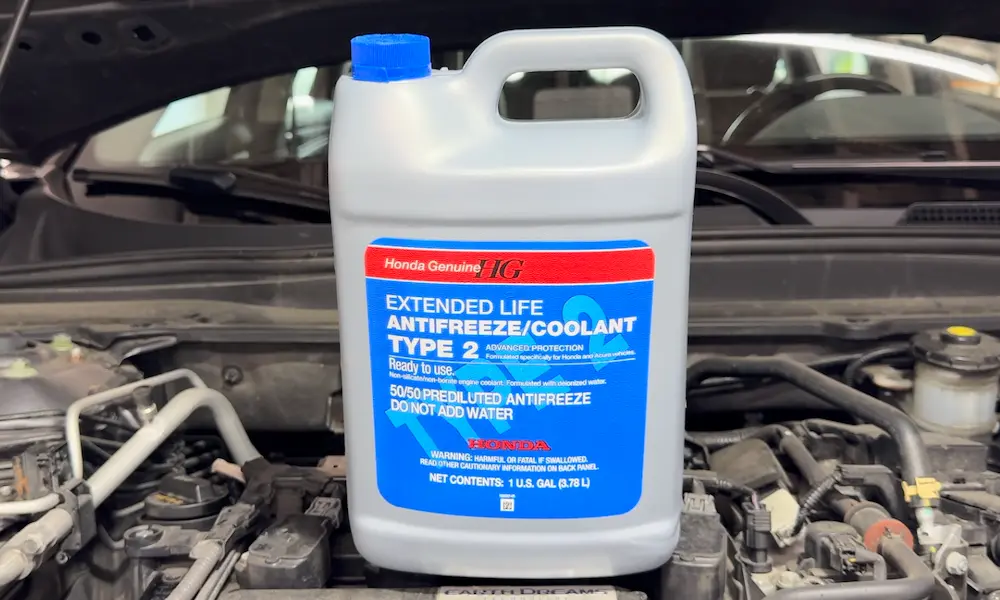
Engine Coolant: Use Honda Type 2 Long Life Coolant — a pre-mixed blue formula designed for aluminum engines. Never add plain water, even in an emergency. It dilutes the antifreeze concentration and, in cold northern states, risks freezing and cracking your engine block. This coolant protects down to -35°F.
Brake Fluid: DOT 3 only. Replace every 36 months. The hygroscopic nature of DOT 3 means it actively pulls moisture from the air, even in a sealed system. Corroded ABS valves from moisture-laden brake fluid are an expensive fix.
Generation-Specific Maintenance: What Changes by Model Year
This is where one-size-fits-all advice breaks down. Your CR-V’s generation determines some very specific — and very costly — maintenance requirements.
1st Gen (1997–2001): The Timing Belt You Can’t Ignore
This generation runs a rubber timing belt on an interference engine. If that belt snaps, pistons hit valves and you’re looking at a full engine replacement. Replace the timing belt, tensioner, and water pump at 105,000 miles or 7 years — whichever comes first. Budget $700–$1,000 for this service.
These engines also lack hydraulic valve lifters. Tight valves don’t make noise — they just burn. Inspect and adjust valve clearances every 30,000 miles to protect the cylinder head.
2nd Gen (2002–2006): Watch the A/C and Rear Differential
The 2002–2006 CR-V switched to a steel timing chain — no more belt replacement anxiety. But the A/C compressors on these models are notorious for internal failure. When one fails, metal shards contaminate the entire A/C system, requiring a full-system replacement. Watch for unusual noises from the compressor clutch.
The AWD dual-pump differential on these models also shudders badly during low-speed turns when fluid is overdue. Stick to the differential fluid schedule religiously.
3rd and 4th Gen (2007–2016): Mostly Routine
This era is where the Maintenance Minder became standard across all trims. Maintenance here is largely routine — oil changes, filter swaps, and transmission flushes per the dashboard codes. As these vehicles age, focus inspection effort on rubber suspension bushings, engine mounts, and catalytic converter condition.
5th Gen (2017–2022): The Oil Dilution Problem
The 1.5L turbocharged direct-injection engine in this generation has a documented oil dilution issue in cold climates. Unburned fuel washes past piston rings during cold short-trip driving and mixes with engine oil, thinning it out dangerously.
If you drive mostly short trips in a cold state, don’t wait for the dashboard. Change your oil every 5,000 miles manually. Check your dipstick regularly — if the oil level is above the FULL mark or smells like gasoline, change it immediately.
Also ask your dealer to confirm Technical Service Bulletin 18-089 has been applied. This software update adjusts fuel injection timing to reduce the dilution problem.
Direct injection also means your intake valves don’t get cleaned by fuel spray. Over time, carbon buildup on the intake valves can require walnut-blasting — a service that didn’t exist for older port-injected CR-Vs.
When replacing spark plugs on this generation, skip the anti-seize compound. The iridium plugs use a special trivalent plating. Adding compound causes over-torquing that strips the aluminum cylinder head threads.
6th Gen (2023–Present): Hybrid-Specific Maintenance
The current hybrid CR-V uses regenerative braking as its primary stopping method. That’s great for brake pad life — but it means brake rotors sit idle and rust in wet and salty conditions far faster than on gasoline models. Inspect your rotors frequently, especially if you live in a winter-salted state.
The hybrid battery pack also adds significant weight, which accelerates tire wear noticeably faster than gasoline CR-Vs. The 7,500-mile tire rotation interval isn’t optional on these models — skip it and you’ll replace tires far earlier than expected.
The high-voltage battery inverter runs its own separate cooling circuit. This loop needs its own inspection and fluid replacement schedule — it’s completely independent of the engine cooling system.
Severe Driving Conditions: When the Dashboard Isn’t Enough
Honda’s algorithm is smart, but it assumes baseline conditions. These real-world scenarios require you to take manual control of your schedule.
Short trips under 5 miles in normal weather (or under 10 miles in freezing temps) prevent the engine from reaching full operating temperature. Condensation and raw fuel accumulate in the oil, degrading it rapidly — much faster than the sensor calculates.
Stop-and-go urban commuting, mountain driving, towing, extreme heat, unpaved roads, and heavy dust all qualify as severe conditions. Drivers in states with heavy wildfire smoke or winter road salt should inspect air filters every 10,000–15,000 miles rather than waiting for the standard 30,000-mile prompt.
For severe conditions, a good rule of thumb: cut your standard fluid service intervals roughly in half and inspect your undercarriage components seasonally.
Keeping Your CR-V Running Past 100K
The Honda CR-V maintenance schedule isn’t just a checklist — it’s the system keeping your investment protected. Follow the Maintenance Minder, understand what those codes actually mean, use the correct fluids, and know the specific vulnerabilities of your generation.
Check your oil dipstick between services. Watch your tire pressures. Listen for anything new from the suspension or brakes. The algorithm handles most of the heavy lifting, but a two-minute visual check every few weeks catches the things sensors can’t.