Your car payment isn’t your only monthly bill. Insurance can quietly cost you more than the car itself. The good news? Choosing the right vehicle slashes that cost dramatically. This guide breaks down exactly what cars have cheap insurance — and why the answers might genuinely surprise you. Stick around, because the cheapest car at the dealership isn’t always the cheapest to own.
The Biggest Myth About Cheap Insurance
Most people assume a cheap car equals cheap insurance. That’s wrong.
Actuarial data consistently shows that some of the least expensive vehicles on the lot carry the highest premiums. Meanwhile, heavier, pricier crossovers and minivans cost far less to insure annually.
Why? Insurance carriers care about three things:
- How often claims get filed for your specific model
- How expensive those claims are to settle
- Who typically drives that vehicle
A $18,000 subcompact sedan can cost more to insure than a $35,000 minivan. That’s not a typo.
Why Small, Cheap Cars Actually Cost More to Insure
Physics Is Working Against Small Cars
When a subcompact vehicle hits something — or something hits it — the laws of physics are brutal. Lighter vehicles absorb more kinetic energy through the occupants rather than the structure. That means more injuries. More injuries mean bigger medical claims.
HLDI data makes this crystal clear. The Mitsubishi Mirage G4 logs Personal Injury Protection losses 182% above the national average. Its medical payment losses sit 197% above average. The Nissan Versa, Nissan Sentra, and Kia Forte follow similar patterns.
Insurers Use Your Car as a Demographic Signal
Insurance carriers factor in who typically buys a specific model. Subcompact sedans skew toward younger, less experienced drivers — a demographic with statistically higher claim rates, more moving violations, and more at-fault accidents.
The result? The Nissan Versa — the cheapest new car in America at around $18,330 — carries an average annual insurance premium of $2,011. That’s more than many midsize SUVs.
What Cars Have Cheap Insurance? Start Here
Minivans: The Undisputed Champion of Low Premiums
This one surprises everyone. Minivans consistently rank as the cheapest vehicle class to insure in the US.
Here’s why:
- The drivers: Minivan buyers are mostly families hauling kids. Actuarial models show these drivers speed less, make fewer erratic lane changes, and almost never drive impaired. Risk-averse behavior by definition.
- The structure: Most minivans weigh between 4,000 and 5,000 pounds. That mass absorbs collision energy effectively, drastically reducing injury severity.
- The engineering: Minivans aren’t built for performance. No sport-tuned suspension, no aggressive acceleration. Boring on paper. Brilliant for insurance costs.
| Vehicle Category | Average Annual Premium | Cheapest Model | Model-Specific Premium |
|---|---|---|---|
| Minivan | $1,842 | Dodge Grand Caravan | $1,786 |
| Crossover | $1,905 | Subaru Forester | $1,774 |
| SUV | $2,043 | Toyota Highlander | $1,978 |
| Pickup Truck | $2,113 | Toyota Tacoma | $1,989 |
| Sedan | $2,212 | Nissan Versa | $2,011 |
| Coupe | $2,392 | Toyota Prius | $2,076 |
The Dodge Grand Caravan averages just $1,786 per year. The Honda Odyssey, despite costing over $30,000, runs as low as $89 to $93 per month with certain carriers. The Kia Sedona averages roughly $107 per month.
Carriers compete hard for minivan drivers because they’re profitable, low-risk accounts. Here’s what major insurers charge:
| Insurance Provider | Monthly Minimum Coverage | Monthly Full Coverage |
|---|---|---|
| Geico | $46–$60 | $99–$130 |
| Travelers | $63–$77 | $116–$142 |
| State Farm | $65–$84 | $135–$175 |
| Kemper | $66–$86 | $131–$174 |
| Amica | $115 | $236 |
| Farmers | $135 | $237 |
Crossovers and Midsize SUVs: Best Balance of Cost and Practicality
If you don’t want a minivan, crossovers are your next best bet for cheap insurance. Models like the Honda CR-V, Subaru Forester, Ford Escape, and Mazda CX-5 dominate the rankings for lowest individual premiums.
The Honda CR-V: America’s Insurance Bargain
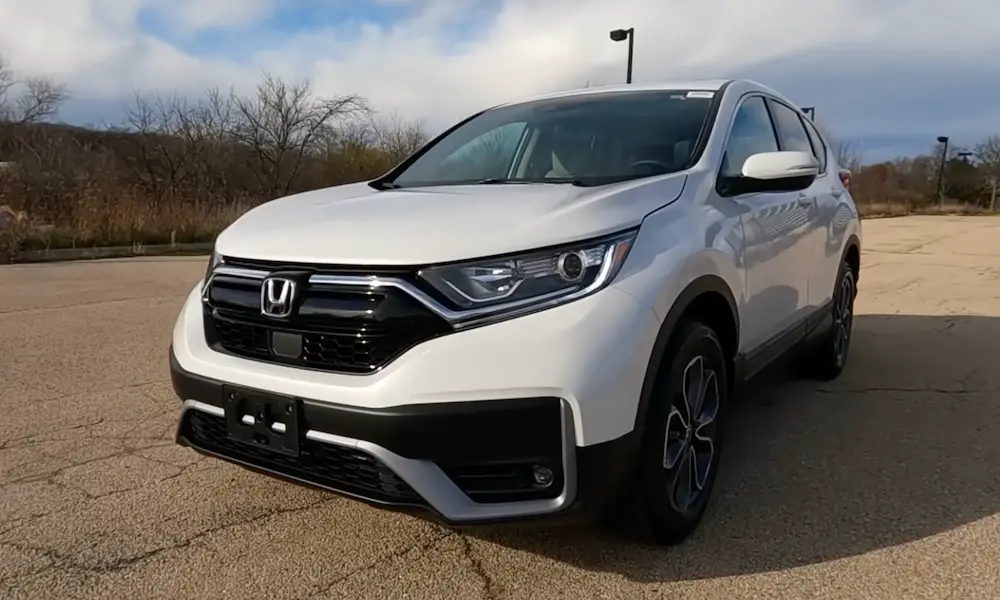
The Honda CR-V is the benchmark for affordable insurance in the compact crossover segment. Average annual premiums range from $1,574 to $1,932. Some analyses record base CR-V LX premiums as low as $1,574 annually.
Three reasons it wins:
- Parts are everywhere. The CR-V is one of North America’s top-selling vehicles. Body shops can source fenders, bumpers, and mechanical parts instantly and cheaply. Low parts cost = lower claim severity.
- Strong crash ratings. Top IIHS safety scores suppress medical payment claims significantly.
- Family-friendly demographic. CR-V buyers tend to be practical, safety-conscious drivers. That lowers claim frequency.
The Subaru Advantage: Technology Doing the Heavy Lifting
Subaru models punch above their weight class when it comes to insurance savings. HLDI data shows the Subaru Forester records overall insurance losses 30% below the national average. The Crosstrek sits 29% below average.
The reason? Subaru standardized advanced driver-assistance systems across nearly its entire lineup early. Automatic pre-collision braking, adaptive cruise control, and lane departure mitigation dramatically cut rear-end collisions and low-speed parking lot impacts — historically the most common and expensive claim types. The standard all-wheel-drive setup also reduces weather-related losses in snowy states.
Here’s how top crossovers compare:
| Make & Model | Key Advantage | Estimated Annual Premium |
|---|---|---|
| Honda CR-V | High repairability, low injury severity | $1,574–$1,932 |
| Subaru Forester | Collision avoidance tech, -30% loss vs avg | $1,613–$2,013 |
| Subaru Crosstrek | Safety ratings, weather mitigation | ~$1,606 |
| Ford Escape | Widespread parts, modest value | $1,663–$1,877 |
| Chevrolet Equinox | Moderate repair costs, solid structure | $1,661–$2,090 |
| Toyota RAV4 | Parts ubiquity, strong reliability | ~$1,704 |
| Kia Sportage | Favorable safety ratings | ~$1,705 |
| Mazda CX-5 | Low claim frequency, strong structure | Consistently top 10 cheapest |
Pickup Trucks: Surprisingly Cheap to Insure
Big trucks don’t mean big premiums. Heavy-duty and midsize pickups actually experience some of the lowest claim frequency and severity in the entire market.
HLDI data is stark here:
- GMC Sierra 2500: Collision claims 49% below average
- Chevrolet Colorado crew cab: 42% below average
- Ram 2500: 36% below average
- Chevrolet Silverado 3500: 35% below average
Body-on-frame construction handles low-speed impacts that would destroy a sedan’s crumple zones. Steel bumpers and frame rails absorb minor hits without expensive structural repairs. The elevated ride height and mass also protect occupants dramatically, cutting Personal Injury Protection costs.
Midsize trucks are the sweet spot. The GMC Canyon and Nissan Frontier each record losses roughly 32–33% below the national average. The Ford Ranger runs 28% below baseline. The Toyota Tacoma averages between $1,688 and $1,989 annually. The Ford F-150 XL — America’s best-selling vehicle — benefits from massive parts availability, averaging just $1,672 per year.
What Makes a Car Expensive to Insure
Understanding the high end clarifies why cheap-insurance cars win.
Luxury and Performance Vehicles
Exotic materials. Overseas parts. Specialized labor. When a luxury performance car gets hit, the repair bill is staggering — and insurers price that in upfront.
| Make & Model | Type | Average Annual Premium |
|---|---|---|
| Maserati Quattroporte | Ultra-luxury sedan | $7,090 |
| BMW M8 Gran Coupe | Performance GT | $6,744 |
| BMW M5 Touring | Performance wagon | $6,708 |
| Audi RS6 | Performance wagon | $5,516 |
| Porsche 911 Turbo | Sports coupe | $5,373 |
Electric Vehicles: The New Premium Penalty
Older, simpler EVs like early Nissan Leafs average just $1,130 to $2,338 annually — reasonable and affordable. But modern luxury EVs are a different story entirely.
Three specific reasons premiums spike on new EVs:
- Battery vulnerability. A minor undercarriage hit can compromise the entire battery pack, often forcing a total-loss declaration on a relatively minor collision.
- Proprietary repair networks. Tesla’s integrated manufacturing locks out aftermarket parts entirely, eliminating the cost competition that benefits CR-V owners.
- Extreme weight plus instant torque. The GMC Hummer EV weighs nearly 9,000 pounds and accelerates like a sports car. The damage it inflicts on other vehicles in a collision drives liability premiums sky-high.
The Tesla Model X and GMC Hummer EV carry average full-coverage premiums exceeding $288 to $293 per month. That’s roughly $3,500 per year just to insure one vehicle.
How Your Personal Profile Changes Everything
The car is only half the equation. Insurance carriers layer your demographic and driving profile directly on top of the vehicle’s baseline risk.
Age and Experience
Younger drivers under 25 statistically have more accidents, more speeding tickets, and more distracted driving incidents. Even the cheapest-to-insure Honda CR-V will cost a teenager significantly more than it costs a 40-year-old with a clean record. Forbes data shows average monthly costs for young drivers via Geico hover around $249, regardless of vehicle. Experienced drivers with clean records can find rates as low as $135 to $158 per month through carriers like Travelers.
Driving History and Credit Score
A single at-fault accident, speeding ticket, or DUI conviction acts as a massive premium multiplier. In states where it’s legally permitted, insurers also weight credit-based insurance scores heavily — consumers with poor credit pay more for the same vehicle as someone with excellent credit.
Annual Mileage
More miles driven = more exposure to risk. Carriers reward low-mileage drivers with meaningful discounts. Low-mileage drivers can reach average costs around $135 per month via Travelers. High-mileage drivers can still find competitive rates around $147 per month through Geico.
Smart Strategies to Pay Less — Starting Today
Drop Collision and Comprehensive on Older Cars
Financial analysts at NerdWallet and Apple Auto Agency consistently recommend this move. If your car is worth less than a few thousand dollars, collision and comprehensive coverage likely costs more annually than the car’s actual cash value. Dropping those coverages and carrying only liability can cut your total premium by over 50%.
These older models offer a solid starting point for a liability-only strategy:
| Category | Model | Years | Estimated Used Price |
|---|---|---|---|
| Small Car | Nissan Sentra | 2015–2025 | $4,700 |
| Small Car | Chevrolet Sonic | 2015–2019 | $5,300 |
| Midsize Car | Subaru Legacy | 2020–2025 | $16,500 |
| Midsize Car | Nissan Maxima | 2020–2023 | $15,200 |
Shop a Used Crossover Instead of a New Subcompact
The math is clear. A slightly pricier used Honda CR-V or Subaru Crosstrek beats a brand-new Nissan Versa on total ownership cost. The higher purchase price is quickly recovered through lower Personal Injury Protection and liability premiums over multi-year ownership.
Prioritize IIHS Top Safety Pick Models
Insurers apply direct premium discounts to vehicles earning Top Safety Pick or Top Safety Pick+ designations from the Insurance Institute for Highway Safety. Before buying, look up the model’s IIHS rating. It’s free, fast, and could save you hundreds annually.
Compare Carriers Aggressively — Location Changes Everything
Experian data shows that the same vehicle insured in South Carolina can cost nearly $1,000 more per year than in Utah, purely due to geography. Carriers like Mercury, Liberty Mutual, Safeco, and Root offer competitive low-income annual rates ranging from $1,141 to $1,605 depending on your profile. Always get at least three to four quotes before committing.
The Bottom Line on What Cars Have Cheap Insurance
The vehicles with the cheapest insurance share a clear pattern: adequate mass to protect occupants, widespread availability of replacement parts, strong crash safety ratings, and drivers who statistically avoid risky behavior.
Minivans win the category outright. Midsize crossovers like the Honda CR-V and Subaru Forester are the best all-around choice for most drivers. Midsize pickup trucks offer a surprisingly affordable alternative. And if you’re driving an older, fully depreciated vehicle, dropping physical damage coverage entirely can make almost any car cheap to insure.
The sticker price gets you into the car. The insurance premium is what you live with every single month. Choose wisely.