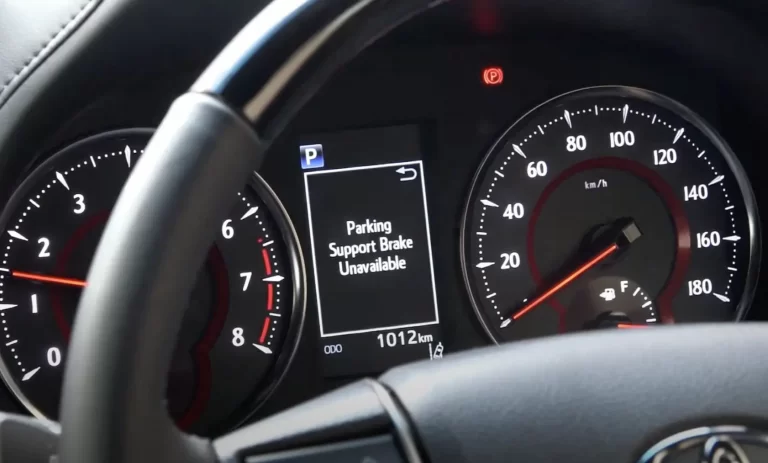
When your Toyota displays a “PKSB Malfunction” warning, it’s not just an annoying dashboard light – it’s your vehicle telling you something’s wrong with its Parking Support Brake system. This advanced safety feature helps prevent low-speed collisions during parking, but when it fails, you’re left wondering what happened and how to fix it. Let’s dive into what causes these issues and how to get your system back up and running.
What Is the Toyota PKSB System?
The Parking Support Brake (PKSB) system is Toyota’s collision avoidance technology that automatically applies your brakes when it detects obstacles during parking maneuvers. It’s designed to prevent those frustrating (and expensive) low-speed bumps and scrapes.
How the System Works
The PKSB system uses a network of ultrasonic sensors positioned strategically around your vehicle:
- Four sensors in the front bumper
- Four sensors in the rear bumper
- Center sensors typically calibrated at 3-degree angles
- Corner sensors usually set at 4-degree angles
These sensors constantly monitor your surroundings when you’re driving under 9 mph in Drive or Reverse. They communicate through a daisy-chain configuration, where each sensor passes information to the next until all data reaches the main control module.
What makes this system unique is its integration with other safety features like:
- Anti-lock Braking System (ABS)
- Electronic Stability Control (ESC)
- Wheel speed sensors
This interconnectivity means that when one system has issues, it can trigger problems in the PKSB too.
Common PKSB Malfunction Causes
If you’re seeing that dreaded warning message, several culprits might be responsible. Here’s what typically goes wrong:
Sensor Contamination (35% of Cases)
The most frequent cause of PKSB failures is simply dirty sensors. Your ultrasonic sensors can get covered with:
- Dirt and road grime
- Snow and ice
- Water droplets (especially after a car wash)
- Mud splatter
When sensors get covered, they either can’t “see” properly or they interpret the contamination as a permanent obstacle. This is why PKSB malfunctions often happen during winter or after washing your car.
Electrical Problems (25% of Cases)
Since the PKSB system is integrated with your vehicle’s other safety systems, electrical issues can cause cascading failures. Common electrical problems include:
- Wheel speed sensor malfunctions
- ABS sensor failures
- Low battery voltage
- Damaged wiring
- Corroded connectors
These issues prevent proper system initialization and communication, shutting down your PKSB as a safety precaution.
Wiring and Connector Issues (20% of Cases)
The sophisticated sensor network requires perfect communication to function correctly. Problems often stem from:
- Physical damage during previous repairs
- Rodent damage to wiring harnesses
- Natural wear and corrosion
- Environmental damage from road salt
One broken connection in the daisy chain can disable the entire system.
Common Error Codes
When diagnosed professionally, PKSB malfunctions often show specific diagnostic trouble codes:
- C1AE1 through C1AE9: Individual sensor failures
- C1AEC: Front sensor communication failure
- C1AED: Rear sensor communication failure
- U0100, U0101, U0142, U0155: Communication failures between modules
DIY Diagnosis and Fixes
Before heading to the dealership, try these steps to diagnose and potentially fix your PKSB malfunction:
Visual Inspection and Cleaning
- Check all sensors for visible dirt, debris, or damage
- Clean sensors with a soft, damp cloth
- Remove any aftermarket accessories like bike racks or custom license plate frames that might interfere with sensors
- Inspect for any obvious damage to sensors or surrounding areas
Basic Reset Procedures
Many PKSB malfunctions can be resolved with a simple system reset:
Battery Disconnect Reset:
- Disconnect both battery terminals
- Touch the cable ends together for 15 seconds (away from the battery) to discharge capacitors
- Reconnect cables, positive terminal first
- Start the vehicle and check if the warning is gone
Alternative Reset Method:
- Disconnect only the negative terminal
- Leave disconnected for at least 3 hours (overnight is better)
- Reconnect and test
Parking Brake Reset Procedure:
- Start the vehicle
- Drive forward several meters
- Shift to Park gently
- Wait 5-10 seconds
- Turn off the vehicle
- Manually engage the parking brake
- Restart while pressing the brake pedal
- Test if the warning is cleared
When Simple Fixes Don’t Work
If the above steps don’t resolve your PKSB malfunction, check these potential issues:
Check Your Battery Health:
Low voltage conditions can prevent proper PKSB operation. Have your battery tested, especially in hybrid vehicles where the 12V battery is crucial for systems operation.
Look for Related Warning Lights:
PKSB malfunctions rarely occur in isolation. Check if you also have:
- Check engine light
- ABS warning light
- Hybrid system warnings
Addressing these primary issues might automatically resolve your PKSB malfunction.
Professional Diagnosis and Repair
When DIY methods don’t fix the problem, it’s time for professional help:
Diagnostic Equipment Used
Toyota technicians use specialized tools to diagnose PKSB issues:
- Toyota Techstream software
- Manufacturer-specific diagnostic scanners
- Calibration equipment for sensor positioning
Sensor Replacement and Calibration
If sensors need replacement, precise calibration is critical:
- New sensors must be installed at exact factory angles
- Calibration requires inputting specific angle values (typically 3° for center sensors, 4° for corner sensors)
- System verification confirms proper operation
Wiring Repairs
For wiring issues, professionals will:
- Use Toyota-specific wiring diagrams
- Test continuity through the daisy-chain configuration
- Repair or replace damaged sections
- Ensure proper sealing of all connections
Repair Costs and Coverage Options
The cost to fix PKSB malfunctions varies widely depending on the underlying cause:
Typical Repair Costs
| Repair Type | Estimated Cost |
|---|---|
| Sensor cleaning/reset | $0-50 (DIY possible) |
| Single sensor replacement | $250-500 plus labor |
| Complete system calibration | $400-500 |
| Wiring harness repair/replacement | $600-12,000 (extreme cases) |
Warranty Coverage
Toyota’s warranty coverage for PKSB components includes:
- Basic warranty: 36 months/36,000 miles
- Powertrain coverage: 60 months/60,000 miles for related components
- Toyota Extra Care extended warranties ($2,200-4,000)
Additionally, check for Technical Service Bulletins (TSBs) that might cover your specific issue. Some PKSB problems are recognized by Toyota and may be repaired under special coverage terms, even outside normal warranty periods.
Preventing Future PKSB Malfunctions
Keep your system running smoothly with these preventive measures:
Regular Maintenance
- Clean sensors monthly using mild soap solution
- Visually inspect for physical damage
- Avoid high-pressure car washes that might force water into sensor housings
- Maintain your battery with regular testing and terminal cleaning
Seasonal Considerations
PKSB performance is affected by environmental conditions:
- Clear snow and ice from sensors in winter
- Be aware that heavy rain can temporarily reduce system effectiveness
- In areas with heavy road salt use, consider undercoating treatments to protect electrical components
- Increase inspection frequency during harsh weather seasons
The PKSB System’s Limitations
Even when working perfectly, the PKSB system has inherent limitations you should understand:
Environmental Factors
The system may not function optimally in these conditions:
- Heavy rain or fog
- Extreme temperatures
- Direct sunlight on sensors
- Uneven road surfaces
Physical Limitations
Sensors have detection limits:
- Very low objects (under 15cm tall)
- Narrow posts or poles
- Soft objects like fabric or snow
- Objects at the edge of detection range
Understanding these limitations helps set realistic expectations for your PKSB system.
Making the Most of Your PKSB System
When functioning correctly, the PKSB system provides valuable protection during parking maneuvers. To maximize its effectiveness:
- Keep sensors clean and unobstructed
- Be aware of system limitations
- Don’t rely solely on the system – always check your surroundings
- Address warning messages promptly
- Follow manufacturer recommendations for system use
The PKSB system is designed as a backup to your own awareness, not a replacement for careful driving.