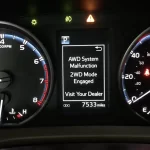
Ever been running late, only to find your Toyota won’t recognize your key? That dreaded “Smart Key System Malfunction” message can stop you in your tracks. But don’t worry – most issues have straightforward fixes you can handle yourself. Let’s dig into why this happens and how to get back on the road fast.
What Causes Toyota Smart Key System Malfunctions?
Dead or Dying Key Fob Battery
Your key fob’s battery is often the culprit behind smart key problems. When it’s losing power, you’ll notice:
- The fob works only when you’re super close to the car
- Buttons need multiple presses to work
- The car occasionally fails to detect the key
- Complete failure to unlock doors or start the engine
The tiny CR2032 battery inside your fob typically lasts 1-2 years before needing replacement. If your key stopped working suddenly, this is the first thing to check.
Vehicle’s 12V Battery Issues
Here’s something that surprises many Toyota owners: a weak car battery often triggers “Smart Key System Malfunction” warnings. This is especially common in Toyota hybrids, where the 12V auxiliary battery powers the smart key components rather than the main hybrid battery.
When your vehicle’s 12V battery is struggling, you might experience:
- Inconsistent electrical system behavior
- Key detection problems (even with a fresh fob battery)
- Difficulty starting the vehicle
- Dashboard warning lights
Many dealership visits for smart key issues end with a simple 12V battery replacement.
Key Fob Programming Loss
Sometimes your key can “forget” it belongs to your car, particularly after a battery change. This programming loss prevents normal communication between the key and vehicle.
This desynchronization is frustrating but usually fixable without dealer help.
Environmental Interference
Your Toyota’s smart key system uses radio frequency signals that can be disrupted by:
- Other electronic devices
- Nearby cell towers
- Metal objects blocking the signal
- Extreme weather conditions
Many Toyota owners report temporary key malfunctions when near certain electronics or structures.
Emergency Solutions When Your Smart Key Fails
When Your Key Fob Battery Dies
Even with a completely dead key fob, you can still access and start your Toyota:
- Look for a small button on your key fob
- Press it to release the hidden physical key
- Use this emergency key to unlock the driver’s door manually
- Once inside, place the dead key fob directly against the start button
- Press the brake pedal and push the start button while holding the key fob there
This method works because your key contains a passive RFID chip that can be read at very close range, as demonstrated in this helpful video.
For Complete System Failure
If you see the “Smart Key System Malfunction” message and nothing seems to work:
- Try the physical key method above first
- Check and potentially jump-start your car’s 12V battery
- Perform a system reset: Disconnect the 12V battery for at least 45 minutes
- Inspect related fuses: Check your owner’s manual for fuse locations related to the smart key system
According to multiple owner reports, the 12V battery solution resolves approximately 70% of persistent smart key malfunctions.
DIY Diagnostic Steps
Basic Key Fob Troubleshooting
Start with these simple checks:
- Replace the key fob battery with a fresh CR2032
- Clean the battery contacts inside the fob using rubbing alcohol on a cotton swab
- Test both key fobs if you have them – if both fail, it’s likely a vehicle issue
- Move away from potential interference like electronic devices or metal structures
Testing Your Vehicle’s Smart Key Sensors
Toyota vehicles have multiple sensors that detect your key:
| Sensor Location | Function | Testing Method |
|---|---|---|
| Door handles | Proximity detection | Touch handle to see if it responds |
| Center console | Interior key detection | Place key inside vehicle to see if start button works |
| Rear bumper (some models) | Hands-free trunk access | Wave foot under bumper with key present |
For a thorough test, you can use an AM radio as described in this diagnostic video. Set it to a low frequency and hold it near the sensors – you’ll hear interference when the sensors are actively searching for keys.
Vehicle Battery Testing
Since the 12V battery is a common culprit:
- Check battery terminals for corrosion
- Measure voltage (should be 12.4-12.7V when engine is off)
- Try a brief drive to recharge if the battery seems weak
- Consider replacing batteries older than 3-5 years
Reprogramming Your Toyota Smart Key
Key Fob Resynchronization
If your key lost its programming after a battery change, you might be able to resync it:
For traditional key fobs:
- Sit inside your vehicle with doors closed
- Insert key into ignition (or press start button) and turn to “ON” position
- Press and hold the lock button on your remote for 1-2 seconds
- Turn ignition to “OFF”
- Repeat steps 2-4 at least three times, ending with the key in “OFF” position
- Your doors should lock and unlock, indicating successful programming
Professional Reprogramming Options
For newer Toyota models with more complex smart key systems:
| Service Provider | Average Cost | Turnaround Time |
|---|---|---|
| Toyota Dealership | $75-150 | Same day |
| Locksmith | $50-100 | Same day |
| Mobile Key Service | $75-125 | 1-2 hours |
According to Toyota’s support documentation, some advanced smart keys can only be programmed using dealer-specific equipment.
Preventing Future Smart Key Problems
Avoid future headaches with these preventive measures:
Regular Maintenance
- Replace your key fob battery every 1-2 years before it fails
- Have your vehicle’s 12V battery tested during regular service
- Keep spare pre-programmed keys in a safe place
- Clean key fob contacts occasionally with alcohol
Protection Tips
- Store keys away from electronic devices when not in use
- Avoid exposing keys to extreme temperatures or moisture
- Use a key fob protection case to prevent physical damage
- Learn your specific model’s battery-saving mode (typically holding lock while pressing unlock twice)
Know Your Backup Options
- Make sure all drivers know how to use the emergency physical key
- Keep a spare CR2032 battery in your glove compartment
- Save your dealership’s service number in your phone
- Consider keeping a portable jump starter in your vehicle
System-Specific Troubleshooting
Different Toyota models have slightly different smart key systems. Here are model-specific tips:
For Toyota Prius Owners
Prius models are particularly sensitive to 12V battery issues. As noted in PriusChat forums, the smart key system is often the first to fail when the 12V battery weakens – even before other electrical systems show problems.
If your Prius displays the smart key malfunction message:
- Check the 12V auxiliary battery first
- Look for the jump-start terminal under the hood
- After replacing or jumping the battery, drive for at least 30 minutes to ensure proper charging
For Toyota RAV4 and Highlander Models
These SUVs sometimes experience sensor issues in the door handles. Owner reports suggest:
- Checking for dirt or debris in door handle sensors
- Testing each door handle individually to identify which sensor might be faulty
- Performing the “door lock initialization” procedure:
- Close all doors
- Insert key in driver’s door and turn to unlock position twice
- Open and close driver’s door
- Repeat lock/unlock cycle several times
For Toyota Camry and Corolla Owners
Sedan owners report occasional smart key glitches after car washes or during heavy rain. According to owners, these steps help:
- Thoroughly dry door handles and key sensors
- Perform a simple system reset by locking/unlocking manually several times
- Temporarily disconnect the 12V battery for 10-15 minutes to reset electronics
The Toyota Smart Key System is generally reliable, but these troubleshooting tips should help you overcome most common issues. Remember that most problems have simple solutions, and you’ll be back on the road in no time.