Seeing “Toyota Parking Brake Unavailable” flash on your dashboard? You’re stuck between panic and confusion. Don’t worry—this alert isn’t always a sign of disaster. Sometimes it’s as simple as a door left ajar or a tired battery. Other times, it’s pointing to something deeper. We’ll break down what triggers this warning, what it means for your wallet, and how to fix it yourself (when that’s possible).
What Does “Parking Brake Unavailable” Actually Mean?
Here’s the thing: this message doesn’t always mean your parking brake is broken.
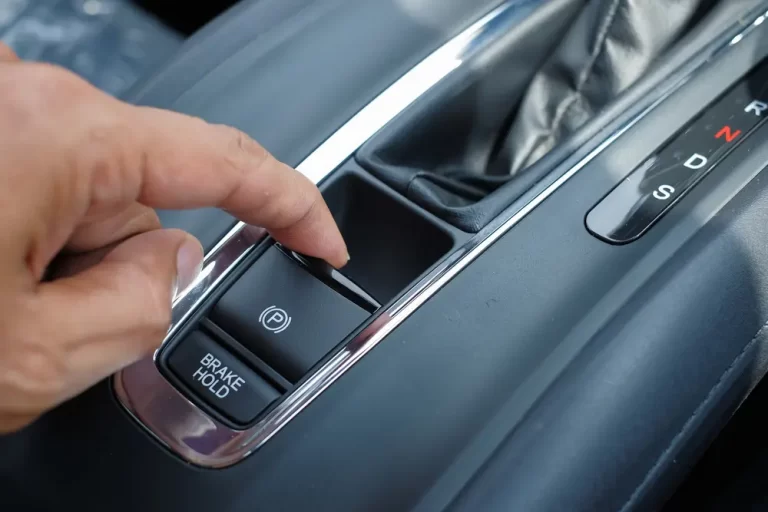
Modern Toyotas use an Electronic Parking Brake (EPB) instead of the old cable-and-lever setup. Two small motors on your rear brake calipers do the work. When the system says “unavailable,” it means the computer (called the Skid Control ECU) has decided it’s unsafe to engage the brake right now.
Think of it like your car saying “I could work, but I won’t until you fix this safety issue.”
“Unavailable” vs. “Malfunction”
These terms matter:
- Unavailable: The system works fine but conditions aren’t right (like your door being open or low battery voltage)
- Malfunction: Something’s actually broken—a motor, sensor, or wire
If you see “Malfunction,” you’re probably headed to a shop. “Unavailable” might just need a quick fix.
The Most Common Culprit: Your 12-Volt Battery
Before you spend a dime, check your battery. Seriously.
The EPB motors are power-hungry. When they engage, they can pull 20-30 amps. If your battery is weak, the voltage drops below what the computer needs (around 9.6V). The system freaks out and throws the “Toyota Parking Brake Unavailable” warning.
Why Hybrid Owners Get Fooled
Drive a RAV4 Hybrid or Camry Hybrid? You might think your battery is fine because the car starts easily. But here’s the catch: the high-voltage battery starts the engine. Your 12-volt battery runs everything else, including the parking brake.
A dead 12V battery often shows up first as parking brake errors—not starting problems.
Quick fix: Have AutoZone or O’Reilly’s load-test your battery (it’s free). If it’s weak, replace it. Many owners report the warning vanishes immediately.
Cold Weather and Frozen Actuators
Live somewhere cold? Winter is brutal on electronic parking brakes.
At 0°F, your battery loses half its power. Meanwhile, the grease inside the brake actuators turns to molasses. The motors struggle to move, draw excessive current, and trigger a timeout error.
Common symptoms:
- Warning appears only on freezing mornings
- Brake works fine once the car warms up
- Multiple errors pop up together (steering, pre-collision, parking brake)
Workaround: Disable “Automatic Mode” in your vehicle settings during winter. This prevents the brake from engaging overnight and potentially freezing in the locked position.
Door Open? Seatbelt Unbuckled? The System Won’t Play
Your Toyota is picky about safety interlocks. The automatic release function only works when:
- Driver’s door is closed
- Seatbelt is buckled
- Transmission is in Drive or Reverse
- Ignition is ON (not just Accessory mode)
Try to drive away with your door ajar or seatbelt undone? You’ll get the parking brake unavailable message.
This isn’t a malfunction—it’s the car doing its job. Shut the door, buckle up, and the warning should clear.
The RAV4 Hybrid “Cablegate” Problem
RAV4 Hybrid owners (2019-2022 especially) need to know about this one.
There’s a known defect where the high-voltage cable running to the rear motor corrodes. Road salt and water get into the connector, causing an isolation fault. When the hybrid system detects this, it goes into fail-safe mode and disables “non-essential” systems—including the parking brake.
How to Spot It
If you have “Toyota Parking Brake Unavailable” plus:
- Hybrid System Malfunction warning
- Check Engine light
- Pre-Collision System error
- Weird static on AM radio
…you’ve probably got cable corrosion, not a brake problem.
The good news: Toyota extended warranty coverage through Customer Support Program 22TE09 (8 years/100,000 miles). The repair involves replacing the entire under-floor harness.
Cost if you’re out of warranty: $4,000-$6,000 due to labor intensity.
Brake Service Done Wrong = Destroyed Actuator
Here’s a $1,000 mistake mechanics make all the time.
Unlike old-school brakes, you cannot push the EPB caliper piston back with a C-clamp. The piston has a threaded spindle inside connected to the motor. If you force it, you’ll strip the gears and shatter the actuator housing.
The Correct Way: Service Mode
Before changing rear brake pads on any Toyota with EPB, you must enter Service Mode. This tells the motors to retract the spindle electronically, creating space to compress the piston safely.
Manual Service Mode (without a scan tool):
| Step | Action |
|---|---|
| 1 | Park on level ground, chock the wheels |
| 2 | Turn ignition ON, engine OFF |
| 3 | Manually release parking brake |
| 4 | Hold brake pedal, push EPB switch DOWN and hold 5+ seconds |
| 5 | Listen for motors unwinding (whirring sound) |
| 6 | Dash light should slow-flash (confirms Service Mode) |
| 7 | Turn ignition OFF and proceed with brake work |
To exit Service Mode: Turn ignition ON, hold brake pedal, pull EPB switch UP and hold. Motors will wind back in.
Skip this step? You’ll see “Toyota Parking Brake Unavailable” and “Malfunction” warnings because the actuator is now trash.
Software Bugs and Recalls You Should Know About
Sometimes the problem is code, not hardware.
2018 C-HR Recall (H0W / NHTSA 17V-717)
The Skid Control ECU software was too sensitive. It mistook normal motor brush oxidation for a broken wire and disabled the brake.
Fix: Dealer updates the software to adjust detection thresholds.
2022-2023 Tundra Recall (22TA11)
A logic flaw caused false “overcurrent” readings. The system thought the motors were drawing too much power when they weren’t.
Fix: Software update to the Brake Actuator Assembly.
2020-2021 Corolla/RAV4 (TSB-0078-21)
Some models throw code C059746 (calibration memory failure). The ECU loses its brake position data.
Fix: Reprogram the Brake Control Module with updated firmware.
Check if your VIN is affected at your dealer’s service department.
Reading Trouble Codes: What They Really Mean
Generic OBD2 scanners won’t cut it. You need one that reads ABS/VSC modules.
Common DTCs and what they mean:
| Code | What It Means | Likely Fix |
|---|---|---|
| C13A8 | Tension sensor failed | Actuator replacement (stripped gears) |
| C0597 | ECU calibration lost | Software reflash or ECU replacement |
| P0AA6 | High-voltage isolation fault | Check rear motor cable (Hybrids) |
| C10CD | EPB switch failure | Replace center console switch |
| U0129 | Lost communication | Check battery, wiring, connectors |
If you’re DIY-ing diagnostics, scanners like the Innova 5610 or Autel can access these modules for under $200.
What It’ll Cost to Fix
Prices vary wildly depending on the root cause.
Battery
- New 12V battery: $150-$250 installed
- DIY: $100-$150
Actuator Replacement
- OEM part (46310-33010): $670-$1,012
- Aftermarket: $400-$500
- Labor: 1.5-2.5 hours ($150-$350)
- Total: $550-$1,362
Wiring Repair
- Connector pigtail: $20-$50
- Labor: 1 hour ($100-$150)
Hybrid Cable (RAV4 “Cablegate”)
- Under warranty (CSP 22TE09): Free
- Out of warranty: $4,000-$6,000
Software Update
- At dealer: $150-$200 (diagnostic fee)
- Independent shop with Techstream: $100-$150
DIY vs. Dealer: When to Do It Yourself
You can handle:
- Battery replacement
- Checking door/seatbelt switches
- Entering Service Mode for brake pad changes
- Clearing codes after fixing the issue
You need a pro for:
- Actuator replacement (requires calibration)
- Hybrid cable repairs (high-voltage safety)
- Software updates (requires factory tools)
- Complex electrical diagnosis
What to Check First (Your 5-Minute Troubleshooting)
Before scheduling a dealer visit:
- Load-test the 12V battery (free at most auto parts stores)
- Check if door/seatbelt warnings are on when you try to release the brake
- Look for other warnings (especially Hybrid System errors on RAV4s)
- Try a full power cycle: Turn the car completely off for 5 minutes
- Check recent work: Did you just have brakes done? Service Mode might not have been used
If none of that helps, you’re looking at a hardware fault or software issue that needs professional diagnosis.
The Bottom Line
“Toyota Parking Brake Unavailable” sounds scarier than it often is. Start with the simplest fixes—battery health, door switches, and proper operating conditions. For RAV4 Hybrid owners, check your warranty status for the cable issue before paying out of pocket.
If you’re doing brake work yourself, the Service Mode procedure is non-negotiable. Skip it and you’re buying a $700 actuator.
Most importantly, don’t ignore the warning. Even if the car seems to drive fine, a non-functional parking brake is a safety risk. Modern Toyotas rely on it for hill starts and automatic hold features. Get it sorted, and you’ll be back to worry-free driving.