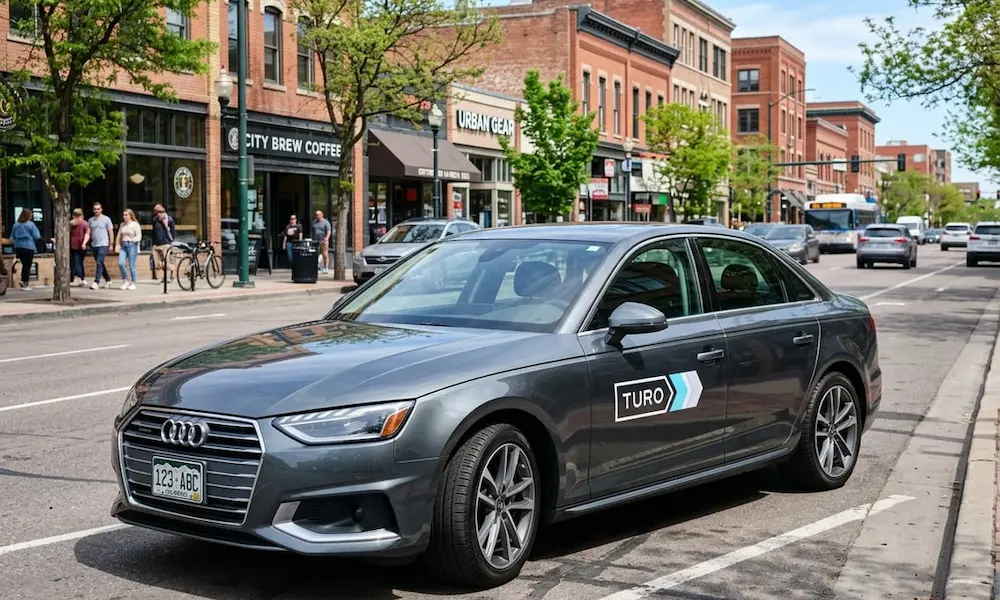
Picking between Turo vs Zipcar feels simple until you’re staring at a surprise fee or an empty parking spot. Both apps skip the rental counter drama, but they work very differently. This guide breaks down exactly how each platform works, what it costs, and which one fits your specific situation — so you don’t waste money on the wrong choice.
They’re Not the Same Type of Service
This is the biggest mistake people make. Turo and Zipcar aren’t direct competitors in the traditional sense. They target completely different travel needs.
Zipcar owns its entire fleet. It parks cars in fixed spots across cities, universities, and transit hubs. You book by the hour, tap your card, and drive. The car stays in its designated spot. You return it to that exact same spot when you’re done.
Turo owns zero cars. It’s a marketplace where private individuals and small fleet operators list their personal vehicles for rent. You browse specific cars, book one you like, and pick it up from wherever the host is located.
Zipcar runs like a utility — predictable, fast, and optimized for short trips. Turo runs like an Airbnb for cars — flexible, diverse, and better for longer trips.
How the Pricing Actually Works
Let’s get straight to the money part, because this is where people get burned.
Zipcar’s Membership Structure
Zipcar requires a paid membership before you can rent a single car. There’s also a one-time $25 non-refundable application fee. As of 2026, Zipcar runs three membership tiers:
- Lite Plan: $5/month — 50 miles per day included, 24-hour cancellation notice required
- Standard Plan: $9/month or $90/year — 200 miles per day, same-day cancellations allowed
- Plus Plan: $19/month — 250 miles per day, free extra driver, 15-minute early access, $10 monthly driving credit
The big win with Zipcar? The hourly rate covers fuel, insurance, and maintenance. No surprises at checkout for those items.
Turo’s Trip Fee Problem
Turo has no membership fee. You create a free account and pay per trip. Sounds cleaner, right? Not always.
Here’s the catch: Turo adds a dynamic “Trip Fee” on top of the host’s daily rate. This fee fluctuates based on booking timing, trip length, vehicle value, and location. Book last-minute? Expect a brutal trip fee. Community forums have documented sharp, unannounced increases heading into 2026, and the fee isn’t always clearly explained upfront.
Also, Turo charges by the full day even if you only need the car for four hours.
Quick Cost Comparison
| Metric | Zipcar | Turo |
|---|---|---|
| Membership Fee | $5–$19/month or $90/year | None |
| Application Fee | $25 (non-refundable) | None |
| Billing Unit | Hourly or daily | Daily only |
| Fuel | Included | You pay out of pocket |
| Daily Mileage | 50–250 miles (tier-dependent) | Host-defined |
| Mileage Overage | $0.67/mile | Varies by host |
| Platform Surcharge | None (standard taxes apply) | Yes — dynamic trip fee |
| Young Driver Fee (18–24) | $6–$17.50/day | $30–$50/day |
| Vehicle Guarantee | Vehicle class (e.g., sedan, SUV) | Exact make, model, and year |
Fuel and Mileage: A Major Difference
Zipcar handles fuel completely. Every car has a corporate fuel card in the visor. You must use it when the tank drops below 25%. Return the car with less than that, and you’ll get hit with a $30 fee. For electric vehicles, you start a charging session on return.
Turo works like a traditional rental. You return the car at the same fuel level you received it. Miss that mark, and the host charges you for the difference plus an admin convenience fee.
Mileage limits also differ. Zipcar gives you 180–250 miles daily depending on your tier. Turo’s limits are set by individual hosts — some offer unlimited mileage, others don’t. If you exceed a host’s cap without purchasing an unlimited add-on, you’ll pay a dynamically calculated overage fee that gets more punishing on premium vehicles.
Insurance: Who Covers What?
Zipcar’s Coverage
Zipcar keeps it simple. All members get secondary third-party auto liability insurance automatically. If you damage a Zipcar vehicle, your maximum out-of-pocket is $2,500. You can reduce that with optional waivers:
- Plus Protection: Caps damage at $375
- Premium Protection: Drops your liability to $0
Because Zipcar owns its fleet, the process is clean and standardized.
Turo’s Protection Plans
Turo is not an insurance company. It offers “Protection Plans” that limit your financial responsibility for vehicle damage. Your three options as a guest:
- Premier Plan: Starting at $14/day (often 65–100% of your daily rate) — $0 out of pocket for eligible damage
- Standard Plan: Starting at $12/day — $500 damage cap
- Minimum Plan: Starting at $10/day — $3,000 cap plus a $500 deposit hold
Critical note: None of these plans cover mechanical or interior damage. And your personal car insurance likely won’t cover peer-to-peer rentals either, so don’t assume you’re protected if you skip the plan.
How You Actually Get the Car
Zipcar uses a fully automated system. Find the car in its designated spot, unlock it with the app or your RFID Zipcard, and drive. Keys stay inside the car at all times. Return it to the same spot when you’re done. Simple and contactless every time.
Turo’s handoff depends on the host. Some hosts meet you in person. Most use contactless methods like:
- Manufacturer apps (FordPass, BlueLink, Mercedes me) to unlock remotely
- Lockboxes with a combo code
- Signal-blocking pouches for keyless entry vehicles stored in lockboxes
You also need to photograph the car extensively before you drive — a minimum of 15 exterior and 8 interior shots. This protects you from false damage claims later. Skip this, and you’re vulnerable.
Who Each Platform Actually Serves Best
Zipcar Is Built for Students and City Dwellers
Zipcar partners with over 500 universities across North America. Students as young as 18 can join through their school. University memberships often drop to $35/year (vs. $90 standard), and the $25 application fee gets waived. Zipcar even accepts provisional driver’s licenses for student applicants.
Young driver hourly surcharges on campus vehicles can be as low as $0.75/hour outside New York — compared to Turo’s $30–$50 flat daily fee for drivers aged 18–24. For a college student needing a car for three hours on a Tuesday, Zipcar wins every time.
Turo Is Built for Trips and Experiences
Turo’s inventory tops 360,000 vehicles spanning over 1,600 makes and models. Want a specific BMW 7 Series for a business trip? A Tesla for a weekend road trip? An off-road SUV for a camping run? Turo lets you pick the exact vehicle down to the trim level.
Turo also aggressively discounts longer bookings. The platform mandates minimum host discounts of 3% for three-day trips, 5% for weekly trips, and up to 20% for monthly rentals. In early 2026, Turo added a 10% non-refundable early booking discount for trips reserved four or more days ahead. Stack both discounts and you can dramatically undercut traditional rental agencies on multi-day trips.
For airport travel, Turo lets you bypass the rental counter entirely. The platform holds commercial delivery permits at over 100 airports.
Smoking, Cleaning, and Late Returns
Both platforms ban smoking. Turo enforces a $250 violation fee, but you need photographic evidence — ash, burns, or butts. The odor-only charge got eliminated in 2026 to reduce fraud claims. Still, some guests report fraudulent smoking accusations, so photograph the interior immediately before you drive.
For general mess, Turo removed routine post-trip cleaning fees for normal use. Genuinely abusive messes — deep stains, extraction-level dirt — can trigger a $150 cleaning fee. Zipcar charges $50 for a dirty car or pet hair and $150 for smoking, enforced by its own cleaning crews.
Late returns hit differently on each platform. Zipcar charges $50 per hour late, capped at $150, plus your ongoing usage rate — because another member booked that car right after you. Turo hosts charge for extra usage time and can escalate late fees through the platform’s support system.
The Verdict: Match the Tool to the Trip
Neither platform is objectively better. They solve different problems.
Choose Zipcar if you:
- Live in a city or on a campus without a car
- Need a vehicle for a few hours
- Want fuel, insurance, and maintenance bundled into one rate
- Are a student under 25 trying to avoid young driver fees
Choose Turo if you:
- Need a car for multiple days
- Want to pick a specific vehicle — exact make, model, and features
- Travel through airports frequently
- Are booking well in advance and can stack discounts
One quick note on the market context: Getaround shut down its entire US operation in early 2025 after years of financial strain. That left Turo as the clear dominant force in peer-to-peer car sharing. The competition is effectively settled — Zipcar owns short urban trips, and Turo owns everything else.
Know what you need before you book. That one decision saves you more money than any promo code ever will.