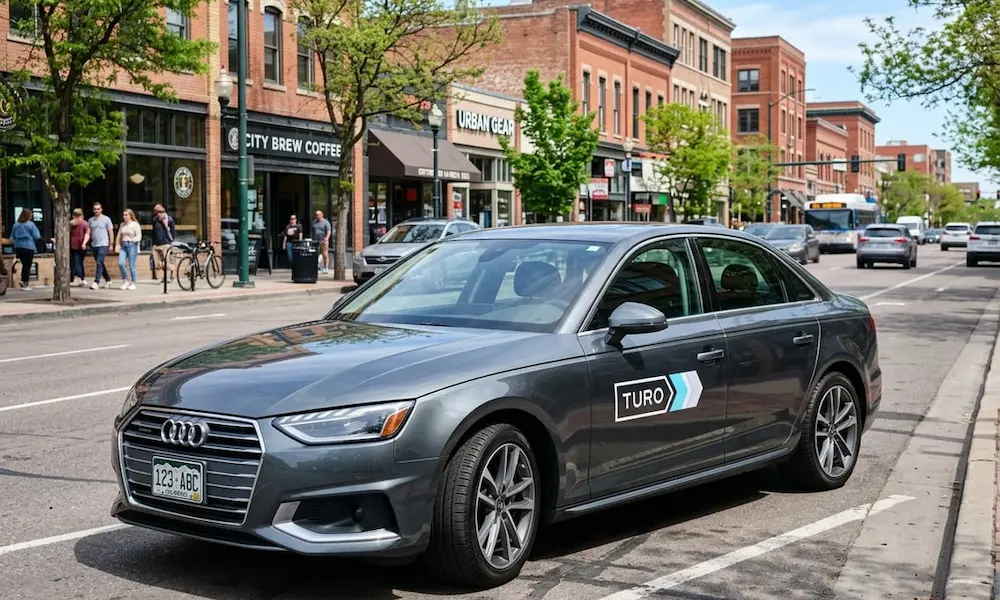
Choosing between Turo and a traditional rental car isn’t as simple as checking the daily rate. Hidden fees, insurance gaps, and airport logistics can turn a “great deal” into a costly surprise. This guide breaks down exactly what separates these two options — so you pick the right one before you book.
The Core Difference: Who Owns the Car?
This single fact changes everything.
Traditional rental companies like Enterprise, Hertz, and Avis own their entire fleet. They buy the cars, maintain them, and sell them when they’re done. That costs serious money — which is why their pricing includes airport concession fees, facility charges, and insurance upsells at the counter.
Turo owns nothing. It’s a digital marketplace connecting private car owners with renters. No lots. No counters. No corporate fleet. That lighter structure allows more vehicle variety and flexible pickup — but it also shifts more responsibility onto you.
Pricing: What You See vs. What You Pay
Traditional Rentals
The advertised rate is rarely the final rate. By the time you add:
- Customer facility charges
- Airport concession recovery fees
- Local tourism taxes
- Counter insurance upsells
…you can easily double the base price. That said, pricing is predictable. You know what category you’re getting, and the fees are consistent.
Turo’s Dynamic Pricing
Turo prices work differently. The host sets the base daily rate, but Turo adds a dynamic “trip fee” at checkout. This fee changes based on booking lead time, the car’s value, and perceived trip risk. Two people booking the same car on the same dates can pay different totals. That surprises a lot of first-timers.
The Insurance Gap Nobody Talks About
This is where Turo vs rental car comparisons get serious.
Traditional Rental Car Insurance
At a traditional agency, you can:
- Buy the Collision Damage Waiver (CDW) — runs $15–$30/day and drops your liability to zero
- Use your credit card — premium cards like Chase Sapphire Reserve offer primary collision coverage on traditional rentals, covering up to $75,000
Declining the counter insurance and leaning on your credit card is a smart, widely used strategy. It works because traditional agencies are legally classified as commercial rental businesses.
Turo’s Insurance Problem
Here’s the trap: your credit card won’t cover a Turo rental.
Major card networks explicitly exclude peer-to-peer car sharing from their rental car benefits. Turo isn’t a licensed commercial rental agency — so claims get denied automatically.
If you decline Turo’s protection plan thinking your card has you covered, you’re entirely exposed.
Turo’s own protection plans work like this:
- Premier — zero deductible; costs 65–100% of the base trip price
- Standard — caps your liability at $500
- Minimum — caps your liability at $3,000
And none of these plans cover interior damage, upholstery tears, or mechanical negligence. You’re fully liable for those no matter what plan you choose.
One solid workaround: independent insurers like Bonzah or Allianz offer standalone peer-to-peer rental policies for roughly $11–$26/day — often cheaper than Turo’s Premier plan and specifically designed to fill this gap.
| Insurance Factor | Traditional Rental | Turo |
|---|---|---|
| Credit card coverage | ✅ Accepted (often primary) | ❌ Explicitly excluded |
| Physical damage waiver | $15–$30/day, reduces liability to zero | Tiered: $0 / $500 / $3,000 deductible |
| Interior/mechanical damage | Covered under comprehensive waiver | Not covered under any plan |
| Personal auto policy impact | Often bypassed via credit card | May trigger rate increases |
Age Surcharges: Young Drivers Pay More Everywhere
Both options hit younger drivers with extra fees, but Turo’s are steeper.
| Driver Age | Traditional Rental | Turo |
|---|---|---|
| 18–20 | Restricted in most states | Permitted; +$50/day surcharge |
| 21–24 | Permitted; +$15–$36/day | Permitted; +$30/day surcharge |
| 25+ | Standard rates | Standard rates |
| Luxury/exotic vehicles | Banned under 25 | Age 25+ for Deluxe; Age 30+ for Super Deluxe |
Turo’s young driver fees are non-negotiable and algorithmically applied — no counter agent is waiving them as a courtesy.
Airport Pickups: Traditional Wins Here
If you’re flying in and need a car immediately, traditional agencies are the smoother experience. They’ve spent decades embedding themselves into airport infrastructure — dedicated facilities, shuttle systems, and consolidated return zones.
Turo hosts can’t do curbside terminal pickups at most airports. Where permits exist, hosts must drop the vehicle at a remote parking lot up to four hours before your arrival. You navigate there yourself — and often pay the parking exit fee out of pocket.
At airports without a Turo permit? The handoff happens off-airport entirely. Think hotel parking lots or strip malls nearby.
If you’re not flying, Turo’s flexibility actually wins. Many hosts deliver directly to your hotel, home, or preferred address — something no traditional agency offers.
Vehicle Selection: Turo Isn’t Even Close
Traditional agencies categorize cars into broad classes. You book a “midsize SUV” and get whatever’s on the lot. Upgrades happen when inventory is tight — not because you asked.
Turo lets you pick the exact car. Specific year, make, model, trim, and color. You see real photos of the actual vehicle before you book.
This matters for:
- Automotive enthusiasts who want to experience a specific car
- EV drivers who need a particular charging architecture
- Adventure travelers who need roof racks, tow packages, or camping setups
- Anyone doing a real-world test drive before buying a vehicle
That level of curation doesn’t exist in any traditional agency fleet.
Safety Recalls: Both Models Take This Seriously
The Raechel and Jacqueline Houck Safe Rental Car Act, passed as part of the FAST Act in 2015, requires traditional agencies with 35+ vehicles to ground any car with an active NHTSA safety recall within 24–48 hours of notification — no rentals until the fix is done.
Turo handles this differently but just as aggressively. The platform runs continuous automated VIN sweeps against the NHTSA recall database. The moment an active recall is detected, the listing gets blocked — no new bookings until the host repairs the vehicle. Hosts have 72 hours to comply, and in states like California and Hawaii, upcoming trips get automatically canceled.
Hosts who try to work around this lose all financial protection and face permanent removal from the platform. It’s strict — and that’s the point.
Tolls and Fuel: Small Details, Real Costs
Tolls
Traditional agencies equip vehicles with transponders (PlatePass or e-Toll). You can opt into a daily flat-rate for unlimited toll access, or pay per use plus an administrative convenience fee.
On Turo, toll management falls to the host. If a transponder isn’t compatible with your route’s toll system, you might cross without one — and the host absorbs any resulting evasion penalties, not you. That’s good for guests, messy for hosts in multi-state jurisdictions.
Fuel and EV Charging
Both models expect you to return the car at the same fuel level it started. Traditional agencies charge inflated per-gallon rates when you don’t — sometimes triple the market rate.
Turo hosts can only charge you the exact cost of missing fuel plus a $10 inconvenience fee. No markups allowed.
For electric vehicles, returning with less than 20% battery triggers a $20 low-battery penalty on top of recharging costs. Tesla Supercharger fees get invoiced separately, up to $500 maximum.
Additional Drivers: Turo Is More Generous
Traditional agencies charge $10–$15 per day per additional driver. Some states (California, Nevada) legally prohibit charging for a spouse or domestic partner — but you’re often on your own beyond that.
Turo adds extra drivers at no charge. They just need their own Turo account, identity verification, and platform approval. The host can’t approve anyone manually — it all flows through the app.
Cancellations: Know Before You Book
Traditional agencies: Free cancellation on pay-later bookings. Prepaid reservations? Cancel within 24 hours of pickup and you’re looking at a $200 penalty. No-show means losing everything.
Turo: Free cancellation up to 24 hours before the trip starts (or within 1 hour of booking for same-day trips). Late cancellations cost half to a full day’s rate.
Where Turo gets sharp: if a host cancels with less than 24 hours notice without a valid reason, they get hit with a $50 fine, a search ranking demotion, and an automatic negative review on their profile. Host reliability is baked into the penalty structure.
So Which One Should You Book?
Go with a traditional rental if:
- You’re flying in and need seamless airport pickup
- You want zero insurance surprises and your credit card covers the CDW
- You’re a frequent business traveler with loyalty status
- Predictability matters more than experience
Go with Turo if:
- You want a specific car — not a “class or similar”
- You need delivery to a non-airport location
- You’re a leisure traveler who sees the car as part of the trip
- You understand the insurance situation and have a plan for it
The Turo vs rental car debate doesn’t have a universal winner. It has a right answer for your specific trip — and now you’ve got what you need to find it.