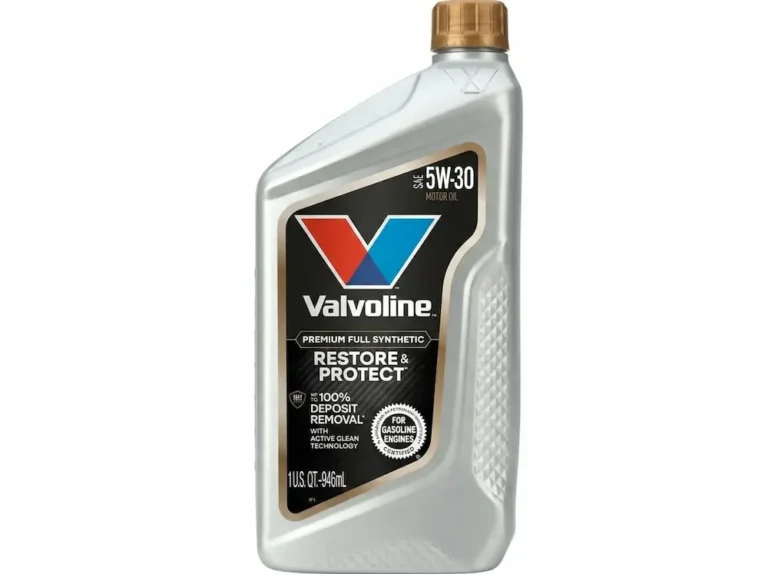
Your engine might be burning oil, ticking at idle, or losing power — and you’re wondering if a bottle of motor oil can really fix that. Valvoline Restore and Protect makes some bold claims. This post breaks down what the science says, what real users report, and exactly who should (and shouldn’t) use it.
What Is Valvoline Restore and Protect?
Valvoline Restore and Protect is a full synthetic motor oil built to do two things: remove existing engine deposits and stop new ones from forming. It’s not a flush. It’s not an additive. You pour it in like regular oil and drive.
Most motor oils just try to prevent deposits. This one actively dissolves the carbon and varnish already baked onto your piston rings, lifters, and valvetrain. That’s the big difference.
It uses two proprietary technologies:
- Active Clean — a boosted detergent and dispersant package that gradually dissolves hard carbon deposits
- Liqui-Shield — a protective barrier that bonds directly to clean metal surfaces once deposits are gone
The Core Problem It Solves: Stuck Piston Rings
Modern engines — especially turbocharged, direct-injected ones — run extremely hot. That heat bakes carbon into your piston ring grooves over time. When those rings get stuck, your engine:
- Burns oil faster
- Loses compression and power
- Increases emissions
- Risks low-speed pre-ignition, which can destroy pistons and bend connecting rods
Fixing stuck rings used to mean a full engine teardown or risky solvent flushes that could clog oil passages. Valvoline Restore and Protect targets this problem chemically — without tearing anything apart.
What the Lab Testing Actually Showed
Valvoline didn’t just make claims. They backed them with a serious test.
Starting in 2020, engineers mounted two 2020 Ford Explorer 2.3L EcoBoost engines on dynamometers and ran them through 500,000 simulated miles. The result? Severely stuck piston rings — exactly what happens to high-mileage engines in real life.
Then they filled those same engines with Restore and Protect and ran two complete oil change cycles.
After the second teardown, all eight previously seized piston rings were completely freed. No manual scraping. No harsh solvents. Just the oil doing its job.
That’s an industry first — and it’s a pretty compelling reason to take the Valvoline Restore and Protect reviews seriously.
Real-World Used Oil Analysis: What Independent Tests Show
Lab tests on a dynamometer are great. But how does it hold up in actual cars? Independent used oil analysis (UOA) from labs like Blackstone and SpeedDiagnostix tells a more complete story.
| Vehicle / Engine | Viscosity Grade | Key Finding |
|---|---|---|
| Jeep Wrangler (Pentastar 3.6L V6) | SAE 5W-30 | Iron wear at just 3 parts per million — exceptional |
| Nissan Z (VR30DDTT Twin-Turbo V6) | SAE 0W-20 | Sheared to 7.23 cSt after 1,600 miles — thicker grade recommended |
| Subaru WRX (FA24D Turbo Flat-Four) | SAE 5W-30 | Held protection at 241°F with E40 fuel dilution |
| Audi Q7 (3.0T Supercharged V6) | SAE 5W-30 | Oil consumption improved from 1 qt/800 miles to 1 qt/1,800 miles |
| Toyota Tacoma (2.7L Four-Cylinder) | SAE 0W-20 | Heavy brown varnish completely gone within 6,000 miles |
The wear numbers on the Jeep are particularly impressive. Three parts per million of iron is nearly nothing. That’s the kind of result that makes skeptics pay attention.
The Nissan Z result, however, comes with a lesson: if you’re running a high-output twin-turbo engine, step up to 5W-30. The 0W-20 stayed barely within grade limits — not ideal for aggressive driving.
Consumer Reviews: What Drivers Actually Notice
Beyond lab data, Valvoline Restore and Protect reviews from everyday drivers follow some consistent patterns.
Engine Noise Drops
Ford 5.0L Coyote V8 owners know the tick. Multiple forum reports describe a 50–75% reduction in that metallic idle ticking after switching to Restore and Protect. The likely cause? Dissolving thin varnish layers from hydraulic lifters and cam phasers lets them move freely again.
Oil Consumption Improves
As stuck rings free up and start sealing properly again, less oil gets pulled into the combustion chamber. Drivers of high-mileage vehicles regularly report fuel economy gains of 1–3 L/100km and dramatically reduced top-off frequency between oil changes.
Compression Feels Better
When all cylinders seal properly, the engine computer stops fighting an imbalance. Smoother idle and better throttle response show up within a few thousand miles for many users.
Viscosity Grades and Certifications
Restore and Protect currently comes in four viscosity grades:
| Viscosity Grade | Current Specs | Upcoming 2025 Specs | Key Approvals |
|---|---|---|---|
| SAE 0W-16 | API SP, ILSAC GF-6B | API SQ, ILSAC GF-7B | Ford WSS-M2C962, Chrysler MS-13340 |
| SAE 0W-20 | API SP, ILSAC GF-6A | API SQ, ILSAC GF-7A | Ford WSS-M2C962-A1, Chrysler MS-6395 |
| SAE 5W-20 | API SP, ILSAC GF-6A | API SQ, ILSAC GF-7A | Ford WSS-M2C960-A1, Chrysler MS-6395 |
| SAE 5W-30 | API SP, ILSAC GF-6A | API SQ, ILSAC GF-7A | Ford WSS-M2C961-A1, Chrysler MS-6395 |
The oil is also forward-compatible with the upcoming API SQ and ILSAC GF-7 standards scheduled for March 2025. That matters because GF-7 requires stronger timing chain protection and better low-speed pre-ignition resistance — areas where Restore and Protect already exceeds current limits.
Restore and Protect vs. High Mileage Oil: Not the Same Thing
This comparison comes up constantly in Valvoline Restore and Protect reviews, so let’s clear it up fast.
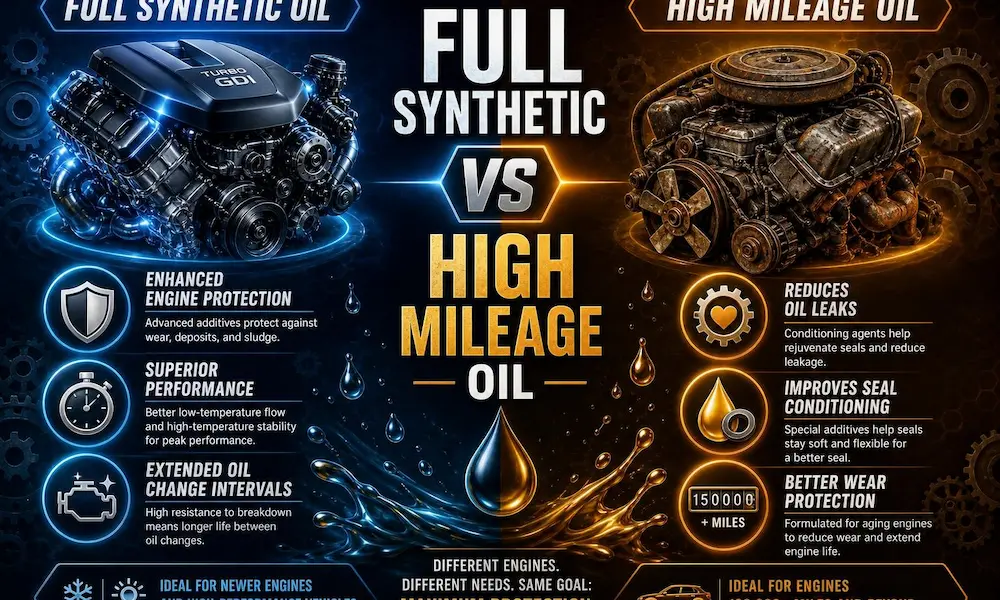
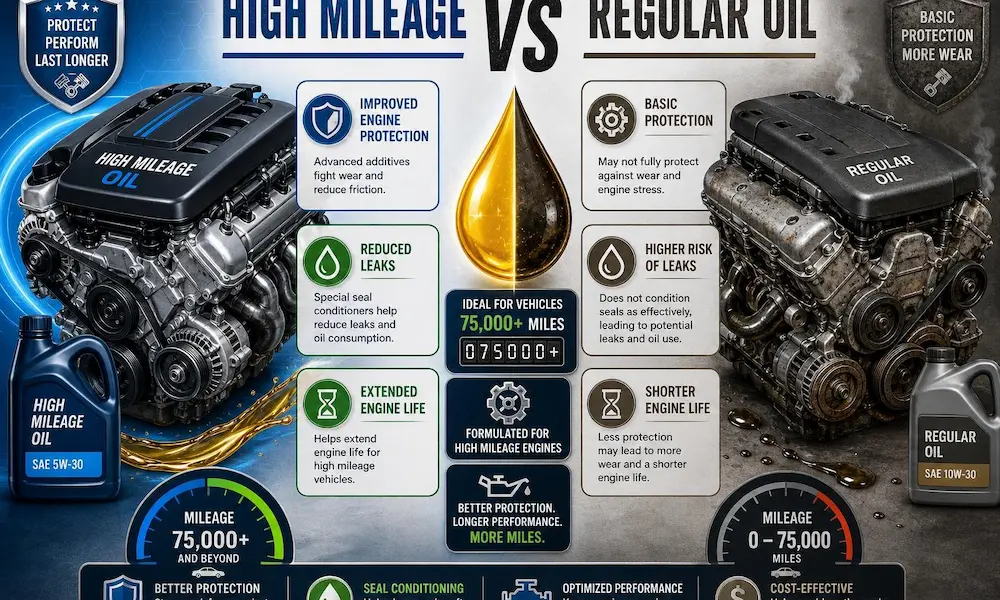
High mileage oils (like Valvoline MaxLife) focus on seal conditioners — chemicals that swell old rubber gaskets to stop external leaks.
Restore and Protect focuses on freeing stuck piston rings to stop internal oil burning.
The diagnostic is simple:
- Oil leaking onto the driveway? → High mileage oil
- Engine dry outside but burning oil out the exhaust? → Restore and Protect
They solve different problems. Using the wrong one won’t hurt your engine, but it won’t fix your actual issue either.
The Dexos Question: Will It Void My GM Warranty?
Restore and Protect doesn’t carry the General Motors Dexos1 Gen 3 certification. That’s intentional.
GM’s Dexos spec caps certain calcium detergents — the exact compounds Restore and Protect uses in higher concentrations to achieve its cleaning power. Reformulating to meet Dexos would gut the cleaning performance.
For new GM vehicles still under warranty: use Valvoline Advanced Full Synthetic with Dexos certification. Don’t risk it.
For out-of-warranty GM vehicles, Toyotas, Hondas, Fords, Hyundais — anything requiring API SP or ILSAC GF-6: Restore and Protect is fully compliant and poses zero warranty risk.
How to Use It Correctly (Especially on Neglected Engines)
Don’t just dump this in a sludge-filled engine and run it 7,500 miles. The active detergents dissolve deposits fast. If too much breaks loose at once, it can overwhelm your oil filter — and a clogged filter means unfiltered oil running through your bearings.
Follow this phased approach for severely neglected engines:
- Fresh start — Drain old oil, install a quality synthetic-media filter, fill with Restore and Protect
- Early filter swap — At 500–1,500 miles, replace the filter only and top off. Cut it open to check for carbon chunks
- Short first cycle — Do your first full oil and filter change at 3,000 miles
- Normal intervals from cycle two onward — Extend back to 5,000 miles as deposits clear
Also run a quick PCV valve check before you start. A clogged PCV pressurizes the crankcase and forces oil past the rings no matter how clean they are. Fix that first.
Who Should (and Shouldn’t) Use It
Good fit for:
- High-mileage vehicles burning oil internally
- Turbocharged or GDI engines with deposit buildup
- Engines with mysterious ticking or rough idle
- Hybrid vehicles prone to low-temperature sludge
Not the right fit for:
- BMW, Mercedes-Benz, Audi, or VW engines requiring specific European approvals (A3/B4, C3, BMW LL-01)
- New GM vehicles under active factory warranty requiring Dexos1 Gen 3
- Motorcycles with wet clutches (use Valvoline’s dedicated 4-Stroke Motorcycle version instead)
- Engines with physically scored cylinder walls or torn valve stem seals — no oil fixes mechanical damage
Frequently Asked Questions
Can Valvoline Restore and Protect be used in motorcycles?
Only if you use the right version. Standard automotive Restore and Protect contains friction modifiers that will cause wet clutch slippage and transmission failure in motorcycles. Valvoline makes a dedicated 4-Stroke Restore and Protect 10W-40 Motorcycle Oil specifically formulated for wet clutch compatibility. Use that one instead.
Is it compatible with European vehicles like BMW or Mercedes-Benz?
No. European luxury vehicles require specific ACEA standards (A3/B4, C3) and manufacturer approvals like BMW LL-01 or Mercedes-Benz 229.5. Standard Restore and Protect doesn’t carry those approvals. Use Valvoline’s European Full Synthetic line for those vehicles.
Will skipping Dexos void my GM warranty?
Under the federal Magnuson-Moss Warranty Act, a manufacturer can’t void your warranty just for using a third-party fluid — unless they provide that fluid free of charge. But if your GM owner’s manual explicitly requires Dexos1 Gen 3, using a non-certified oil gives the dealership grounds to deny engine-related warranty claims. For in-warranty GM vehicles, stick to Dexos-certified oil.
Does it work in hybrid vehicles?
Yes. Hybrids frequently run cold and short — which causes fuel dilution and low-temperature sludge buildup. Restore and Protect’s robust synthetic formula resists viscosity breakdown from fuel contamination and actively clears the sludge that commonly forms in hybrid engines running frequent cold-start cycles.
Do I need a specific oil filter?
No brand requirement, but use a quality synthetic-media filter. During the first cleaning cycle, the oil dissolves significant amounts of built-up deposits. A cheap cellulose filter can clog fast. A synthetic-media filter holds more debris and is far less likely to enter bypass mode — which is when unfiltered oil flows directly through your bearings.
Will it clean intake valves if I have a catch can installed?
Probably not. A catch can traps oil vapor before it reaches the intake manifold — which is great for preventing new carbon buildup on intake valves, but it also blocks the oil’s cleaning agents from reaching those valves. That said, the oil still cleans your piston rings, lifters, and crankcase components regardless of any PCV modifications.