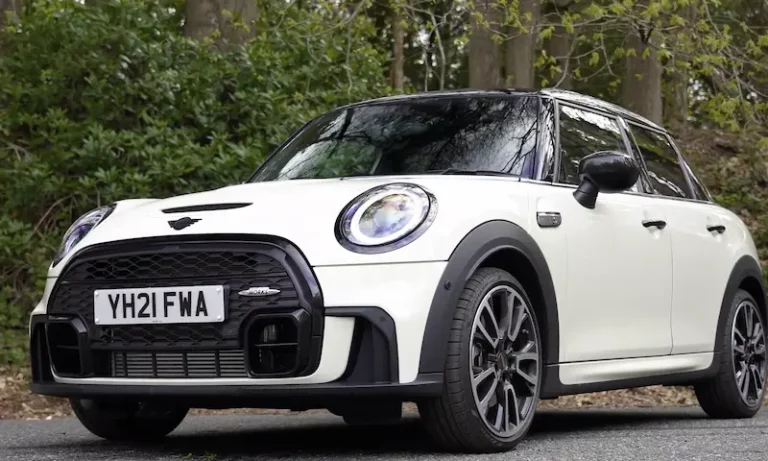
Wondering who actually builds the engine in your Mini Cooper? It’s not a simple answer — and that’s what makes it interesting. The story behind Mini Cooper engines spans six decades, four continents, and some surprising corporate partnerships. Stick around, because by the end of this post, you’ll know exactly what’s powering your Mini and where it came from.
The Original Engine: British Motor Corporation and the A-Series
The Mini’s engine story starts in 1956. The Suez Crisis caused fuel shortages across the UK, and British Motor Corporation chief Leonard Lord wanted a real small car — not a glorified scooter. He handed the job to engineer Alec Issigonis, who delivered something radical.
Issigonis didn’t design a new engine from scratch. He picked the existing A-series four-cylinder — already in production — and flipped it sideways. Mounting it transversely with the gearbox sitting directly beneath it freed up 80% of the car’s length for passengers. That layout is now standard on almost every compact car made today.
The first 1959 Mini ran an 848cc engine making just 34 horsepower. But in 1961, racing builder John Cooper got involved, and the Mini Cooper was born — with a 997cc engine and better brakes. By 1963, the Cooper S arrived with a 1,275cc unit that won the Monte Carlo Rally in 1964, 1965, and 1967.
The A-series engine stayed in production for four decades. British Leyland and later the Rover Group kept it alive, adding fuel injection in 1990 to push it to 63 horsepower. The classic Mini era ended in 2000.
Classic Era Engine Summary
| Year | Model | Displacement | Horsepower | Manufacturer |
|---|---|---|---|---|
| 1959 | Morris Mini-Minor | 848cc | 34 | British Motor Corporation |
| 1961 | Mini Cooper | 997cc | 55 | British Motor Corporation |
| 1963 | Mini Cooper S | 1,071cc | 70 | British Motor Corporation |
| 1964 | Mini Cooper S | 1,275cc | 76 | British Motor Corporation |
| 1969 | Mini 1275 GT | 1,275cc | 59 | British Leyland |
| 1990 | Rebirth Cooper | 1,275cc | 63 | Rover Group |
The Modern Era Begins: Who Made the Tritec Engine?
When BMW acquired the Rover Group in 1994, it kept the Mini name and started planning a premium relaunch. The new car needed a modern engine that already met US emissions standards — and BMW didn’t want to build one from zero.
The solution? A joint venture between Chrysler and Rover Group (then BMW-owned), called Tritec Motors, formed in 1997. Chrysler handled most of the design work in the US and UK. BMW provided the funding. And the factory? It went up in Campo Largo, Brazil. The name “Tritec” literally referenced the three countries involved: the UK, Germany, and Brazil.
The result was a 1.6-liter, four-cylinder engine with a cast-iron block — tough and durable. For the standard Cooper, it ran naturally aspirated and made 115 horsepower. The Cooper S got an Eaton supercharger bolted on, pushing output to 163 horsepower and eventually 170. John Cooper Works editions stretched that to 200–210 horsepower.
First-Gen Modern Mini Engines (2001–2006)
| Model | Engine | Aspiration | Power |
|---|---|---|---|
| Mini Cooper | Tritec W10 | Natural | 115 hp |
| Mini Cooper S | Tritec W11 | Supercharged | 163–170 hp |
| JCW Edition | Tritec W11 | Supercharged | 200–210 hp |
The Prince Engine: BMW Teams Up With Peugeot Citroën
By 2002, BMW was looking ahead. The Tritec partnership was winding down, and they needed something more advanced for the second-generation Mini. The answer was a 50-50 joint venture with PSA Peugeot Citroën to develop the Prince engine family.
Here’s how the work split: BMW engineered the cylinder head, integrating its Valvetronic variable valve lift system and Double VANOS variable valve timing. PSA handled the bottom-end design and manufacturing logistics. The engine went all-aluminum, dropping significant weight versus the old iron-block Tritec.
Introduced in 2007, the naturally aspirated version (N12/N16) made around 120 horsepower in the standard Cooper. The Cooper S dropped the supercharger and went turbocharged with the N14, then the refined N18 — making 172 to 181 horsepower with better fuel efficiency.
The Prince engine won International Engine of the Year in the 1.4-to-1.8-liter category eight years in a row, from 2007 to 2014. That’s not a fluke.
Prince Engine Variants (2007–2013)
| Engine Code | Model | Technology | Peak Power |
|---|---|---|---|
| N12 / N16 | Cooper | Valvetronic, NA | 118–121 hp |
| N14 | Cooper S | Direct Injection, Turbo | 172 hp |
| N18 | Cooper S (LCI) | Twin-Scroll Turbo | 181 hp |
| N14 / N18 | JCW | High-Boost Turbo | 208 hp |
Who Makes Mini Cooper Engines Today? BMW Does — Solo
Starting in 2014, BMW cut the partnerships and brought engine production fully in-house. The B-series modular family now powers every petrol Mini Cooper on sale today. The clever design uses a standard 500cc-per-cylinder displacement, so BMW can build three-cylinder, four-cylinder, and six-cylinder engines on the same production lines, sharing a huge percentage of components.
Two engines cover the current US Mini lineup:
- B38 — a 1.5-liter, three-cylinder turbo making 134 horsepower in the base Cooper
- B48 / B46 — a 2.0-liter, four-cylinder turbo for the Cooper S and John Cooper Works models
These B-series engines use a closed-deck block for strength and a semi-forged crankshaft to handle serious turbo boost. You’ll find the same engine family in the BMW 3 Series and even the Toyota Supra.
The B46 vs B48: What US Buyers Actually Get
Here’s a detail worth knowing if you’re shopping for a Mini in America. The Cooper S sold in the US doesn’t technically run the B48. It runs the B46 — a Super Ultra Low Emissions Vehicle variant built to satisfy EPA standards and California regulations.
The differences between the B46 and B48 are mostly in the hardware surrounding the engine:
- More sensitive oxygen sensors
- Modified air intake and air-box design
- More restrictive catalytic converters
Mechanically, the two engines are nearly identical. Power and torque figures are the same. You’re not losing anything driving the US-spec car.
For John Cooper Works models, the B48 gets reinforced internals — a stronger crankshaft, lower-compression pistons, and upgraded connecting rods — to handle the extra boost. The Countryman JCW in its highest-output form makes 312 horsepower from these same building blocks.
Current US-Market Mini Powertrains
| Engine | Config | Model | Output |
|---|---|---|---|
| B38 | 3-cyl Turbo | Cooper Hardtop | 134 hp |
| B46 | 4-cyl Turbo | Cooper S (US) | 189 hp |
| B48 | 4-cyl Turbo | John Cooper Works | 228 hp |
| B48 High Output | 4-cyl Turbo | Countryman JCW | 301–312 hp |
Where Are Mini Cooper Engines Built?
Most people assume BMW engines come from Germany. For Mini, the answer is actually England.
BMW Group Plant Hams Hall in North Warwickshire has been building petrol engines for Mini, BMW, and Rolls-Royce since 2001. Over 25 years, the plant has produced more than 7.6 million engines. It also machines critical components — crankshafts, cylinder blocks, cylinder heads — that it ships to BMW’s facility in Steyr, Austria.
From Hams Hall, completed engines travel to Plant Oxford — the historical home of Mini — where the cars are fully assembled. Body panels come from Plant Swindon. It’s a tight UK production triangle that keeps the brand’s British identity intact while running BMW-engineered hardware.
Mini’s Global Manufacturing Network
| Plant | Country | Role |
|---|---|---|
| Hams Hall | UK | Petrol engine production |
| Swindon | UK | Body panels and sub-assemblies |
| Oxford | UK | Final vehicle assembly |
| Steyr | Austria | Component machining |
| Dingolfing | Germany | EV batteries and electric motors |
| Leipzig | Germany | Countryman Electric production |
| Zhangjiagang | China | Electric Mini production (Spotlight JV) |
The Electric Future: Enter Great Wall Motor
Mini is targeting full electrification by 2030. To get there, BMW took a bold step in 2018 — forming a 50-50 joint venture with Chinese automaker Great Wall Motor, called Spotlight Automotive Limited, based in Zhangjiagang, China.
The new electric Mini Cooper (J01) runs on a dedicated skateboard EV platform developed jointly by BMW and Great Wall Motor. It’s a clean-sheet design — not a modified petrol car. The permanent magnet synchronous motor gives the new Cooper E 184 horsepower and the Cooper SE 215 horsepower.
For US buyers, the catch is trade tariffs on Chinese-made vehicles. BMW’s fix? A £600 million investment to retool Plant Oxford to build electric Minis starting in 2026. That will allow US-bound electric Minis to ship from the UK rather than China.
Who Supplies the Batteries?
The shift to electric means batteries matter more than pistons. BMW sources cells from three primary Chinese suppliers:
- SVOLT — spun off from Great Wall Motor, provides high-density prismatic cells with nickel-rich cathodes and silicon anodes
- CATL — the world’s largest battery maker, a major cell supplier across the lineup
- EVE Energy — a supporting cell provider for broader BMW Group needs
Cells arrive at BMW’s Competence Centre for e-drive production in Dingolfing, Germany, where they’re assembled into modules and packs. BMW controls the thermal management and battery management systems at that stage — keeping the safety-critical engineering in its own hands.
Electric Mini Powertrain Comparison
| Feature | Cooper SE (2020–2024) | New Cooper E (J01) | New Cooper SE (J01) |
|---|---|---|---|
| Motor Source | BMW i3 Tech | GWM/BMW Joint Platform | GWM/BMW Joint Platform |
| Peak Output | 181 hp | 184 hp | 215 hp |
| Battery Capacity | 32.6 kWh | 40.7 kWh | 54.2 kWh |
| Estimated Range | 110–114 miles | 185–190 miles | 247–250 miles |
| Primary Cell Supplier | CATL / Samsung | SVOLT / CATL | SVOLT / CATL |
Keeping Your Mini Engine Healthy
The engine in your Mini tells you a lot about what it needs.
If you drive a classic A-series or even a Tritec, maintenance is relatively straightforward — these are simpler mechanicals built before turbos and direct injection became standard.
Modern B-series owners need to pay attention to a few specifics:
- Cooling system: The B46 and B48 use plastic components in the cooling circuit — thermostat housings, water pumps — that can crack with age. Inspect them during every service visit.
- Oil quality: Direct injection means fuel never washes the intake valves. Regular oil changes with the correct spec prevent carbon buildup on intake ports. Don’t skip them.
- Turbo care: Let the engine warm up briefly before pushing it hard. Let it cool down briefly before switching off. It protects the turbo bearings.
Electric Mini owners have it easier — no oil, no exhaust system, no fuel delivery to maintain. But the high-voltage battery cooling system still needs attention, and brakes and tires wear just like any other car.
The Complete Picture: Who Makes Mini Cooper Engines by Era
Every generation of Mini has a different answer to “who makes the engine?” Here’s the clean summary:
- 1959–2000: British Motor Corporation, British Leyland, and Rover Group built the A-series engine in the UK
- 2001–2006: Tritec Motors — a BMW and Chrysler joint venture — built the engine in Brazil
- 2007–2013: BMW and PSA Peugeot Citroën jointly developed the Prince engine; PSA handled bottom-end production
- 2014–present: BMW Group exclusively manufactures the B38, B46, and B48 engines at Plant Hams Hall in England
- Electric models: Spotlight Automotive — BMW and Great Wall Motor’s joint venture — develops and builds the EV platform in China, with battery cells from SVOLT and CATL
The Mini has never had a single manufacturer building its engine in isolation. It’s always been a collaborative effort — shaped by fuel crises, corporate mergers, international trade deals, and the constant push for cleaner, faster, more efficient powertrains. That global story is half the reason the car remains so fascinating six decades after Issigonis flipped that A-series engine sideways.