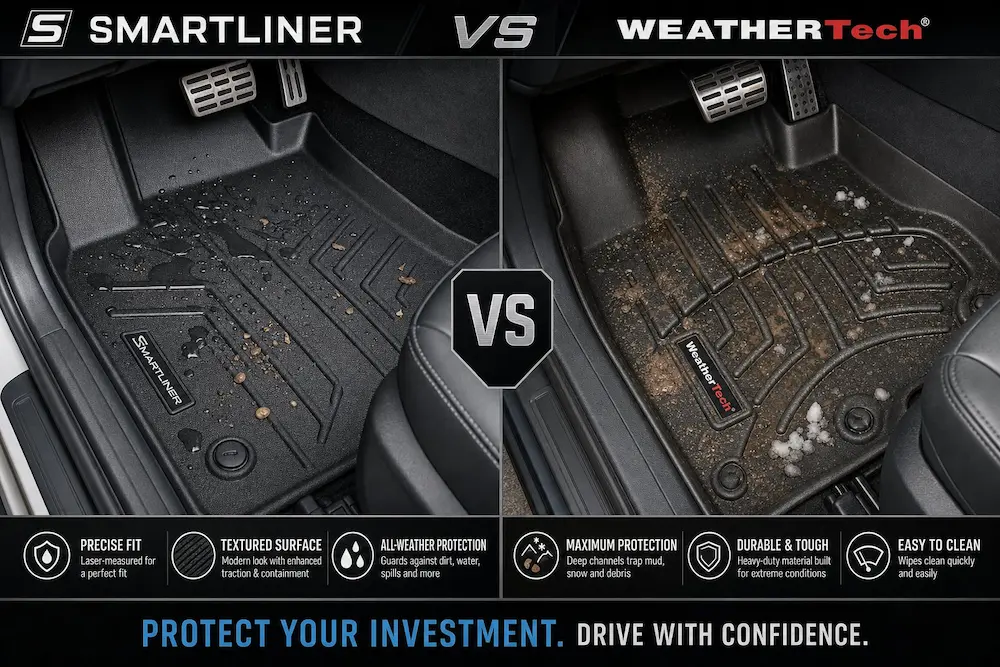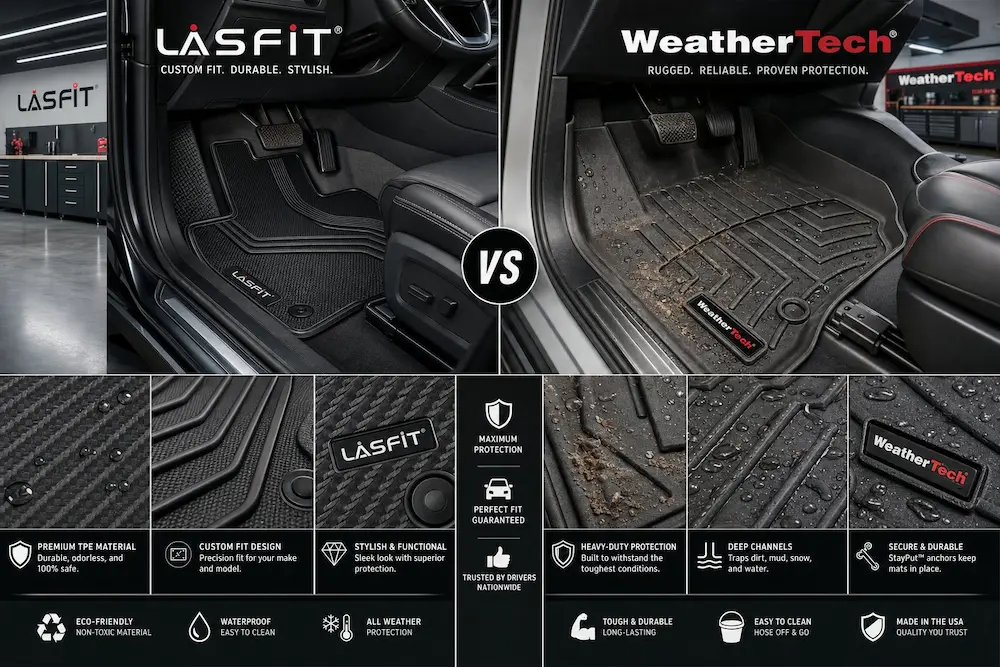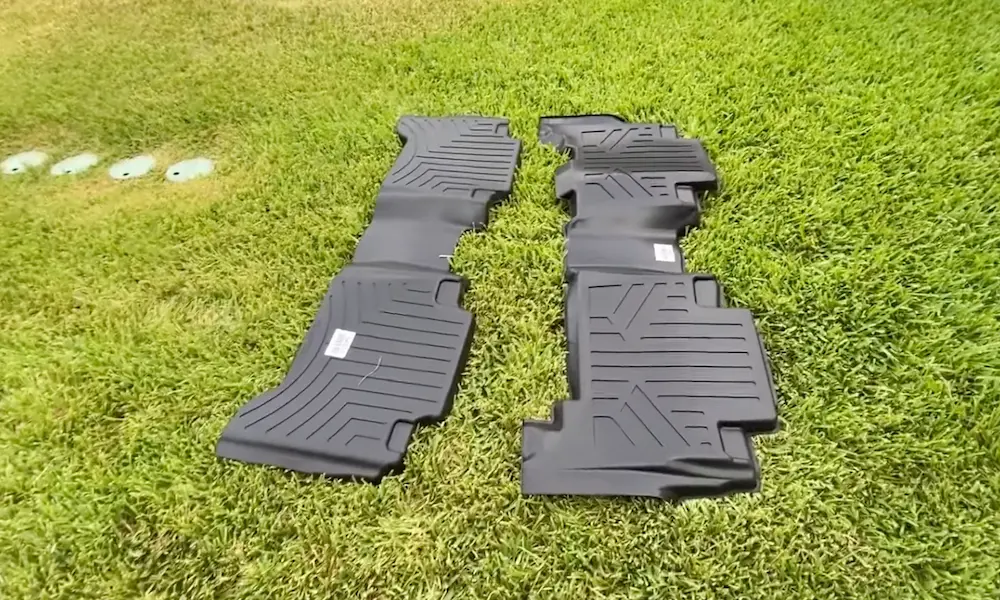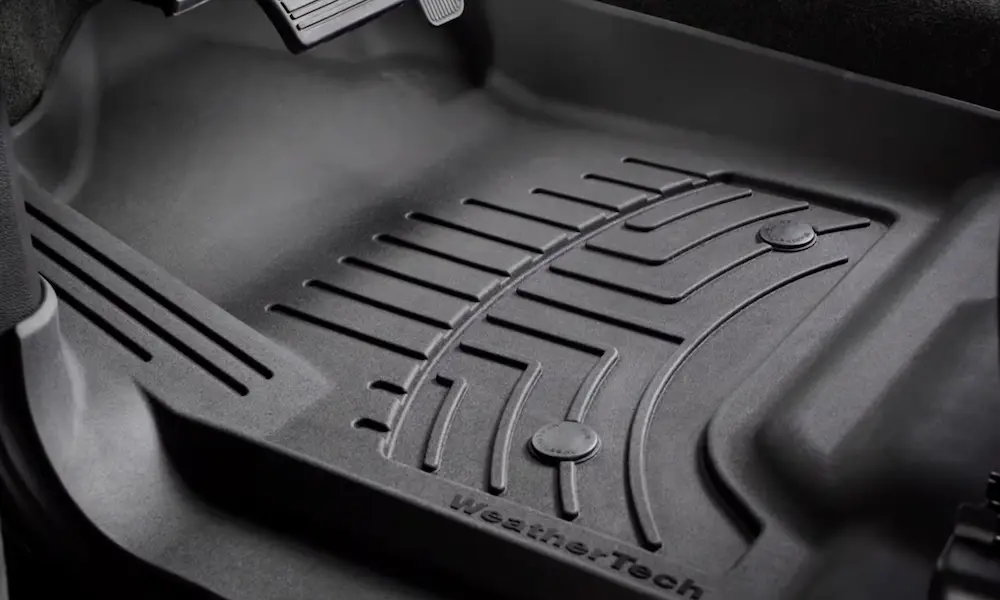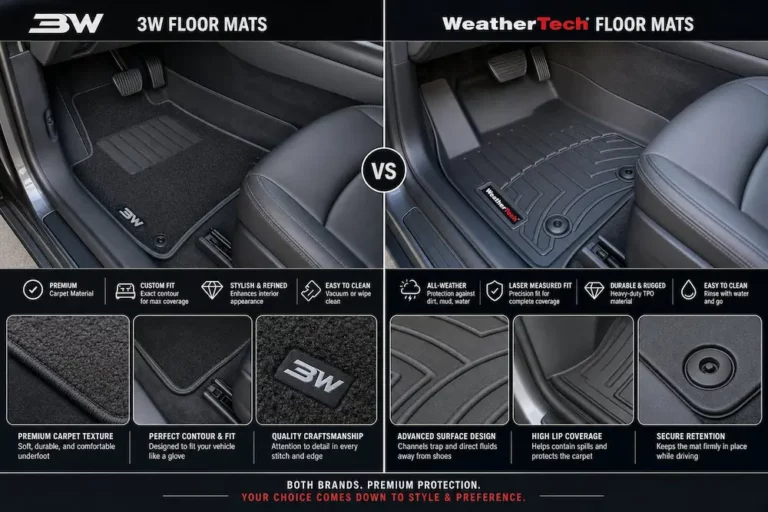
Picking between 3W floor mats vs WeatherTech feels harder than it should be. Both brands promise perfect fit, total protection, and lifetime durability. But they’re built differently, priced differently, and designed for different kinds of buyers. This post breaks down exactly what separates them — so you can stop guessing and just buy the right one.
What You’re Actually Comparing
These aren’t just two versions of the same product. WeatherTech is the long-standing market leader — the brand plastered on NFL game commercials and pushed by dealerships everywhere. 3W is the newer challenger that’s quietly racking up MotorTrend recognition, 30+ design awards, and OEM supplier status with Ford and Honda.
The real difference lives in three areas: how they’re made, what they’re made from, and what you pay.
How They’re Made: Two Very Different Processes
WeatherTech Uses Vacuum Thermoforming
WeatherTech heats a flat sheet of plastic and stretches it over a mold. It’s fast, cost-effective, and lets them support an enormous catalog of vehicles — including ones from 20 years ago.
The catch? Stretching plastic thins it out. The deepest corners of your floor mat — exactly where heavy boots grind the hardest — end up with the least material. That’s also why WeatherTech mats can develop that frustrating edge-curl over time, pulling away from the trim and letting dirt sneak underneath.
3W Uses High-Pressure Injection Molding
3W injects molten thermoplastic directly into a sealed steel mold under high pressure. The material fills every corner evenly — no stretching, no thinning.
This means 3W can engineer thicker material exactly where your heel pivots on the pedals, while keeping edges flexible for easy removal. It also allows for sharp, deep anti-slip textures and drainage grooves that thermoforming simply can’t replicate cleanly.
Injection molding costs more upfront. But the finished product is denser, more precise, and built to hold its shape for years.
| Manufacturing Variable | WeatherTech (Thermoforming) | 3W (Injection Molding) |
|---|---|---|
| Material thickness | Uneven — thins at corners | Consistent throughout |
| Surface detailing | Soft, broad shapes | Sharp, deep micro-textures |
| Edge behavior | Can curl and warp over time | Holds original geometry |
| Tooling cost | Low — supports huge catalog | High — focused on modern vehicles |
Materials: Plastic vs. Thermoplastic Elastomer
WeatherTech Standard FloorLiner
The standard FloorLiner uses a rigid High-Density Tri-Extruded plastic. It’s stiff, holds a firm bucket shape, and does a solid job containing liquid.
The downsides are real though. That hard plastic surface gets slippery when wet. After years of summer heat and repeated flexing during cleaning, the edges tend to permanently warp. And the surface can oxidize over time, turning chalky — requiring special chemical restorers to bring back that black finish.
WeatherTech FloorLiner HP
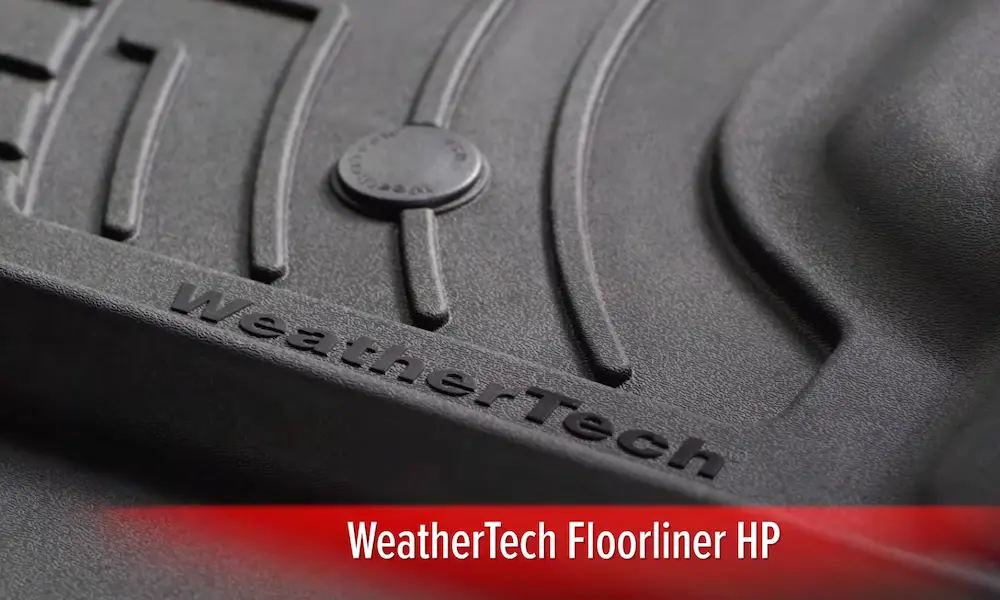
WeatherTech listened to complaints. Their FloorLiner HP switches to a thermoplastic elastomer, which is softer, more flexible, and far less prone to warping. You can fold it nearly in half without damage. It’s also latex-free and 100% recyclable.
It’s a meaningful improvement over the standard liner. But it costs more.
3W Thorex Material
3W’s proprietary Thorex material is a high-performance thermoplastic elastomer engineered to perform from -4°F to 167°F without warping, cracking, or releasing any odors. Zero. Not even when baked in a hot car all summer.
The material is certified BPA-free and non-toxic — tested to the same safety standard used for infant pacifiers and medical tubing. Independent reviewers confirmed no off-gassing even under extreme heat conditions.
Thorex also contains a minimum of 50% verified recycled content, certified under the Global Recycled Standard — which earned 3W the prestigious Red Dot Award for eco-sustainability.
| Material Metric | WeatherTech Standard | WeatherTech HP | 3W Thorex |
|---|---|---|---|
| Feel underfoot | Hard plastic | Soft, rubber-like | Soft, premium elastic |
| Wet traction | Can slip when wet | High friction | High friction |
| Temperature stability | Prone to warping | Stable and flexible | Stable from -4°F to 167°F |
| Off-gassing/odor | Mild odor when new | Odor-free | Zero off-gassing verified |
| Eco certification | Recyclable (HP line) | Recyclable | Global Recycled Standard certified |
Design and Coverage: What Actually Protects Your Carpet
WeatherTech’s Reservoir System
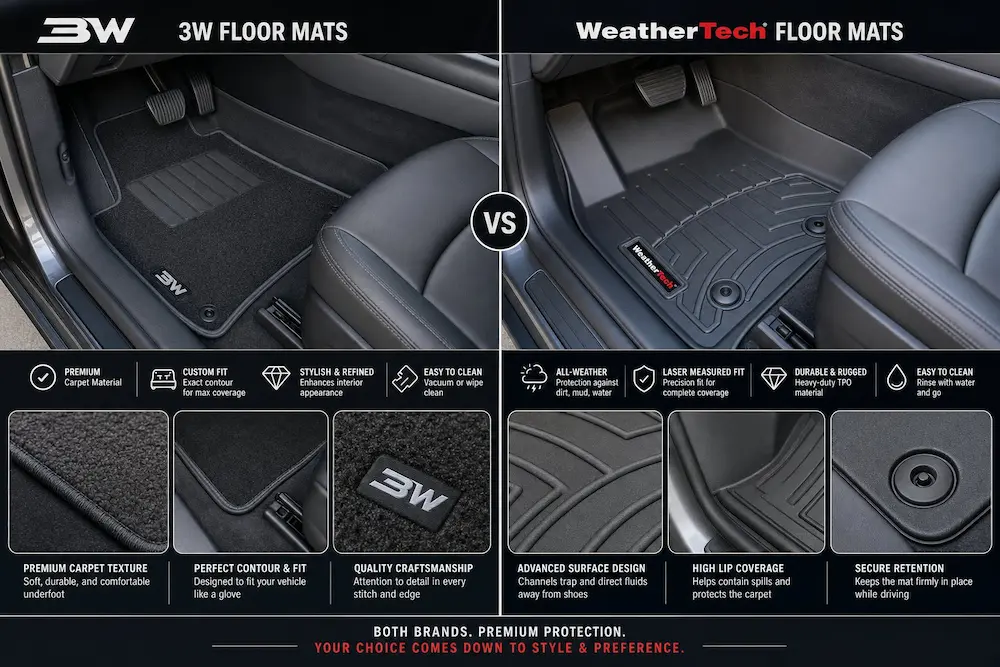
WeatherTech’s design centers on a bucket-style reservoir concept — high sidewalls, laser-measured fit, and channels that funnel liquid down and away from your shoes. It works well. The HP variant adds anti-skid nibs on the underside to prevent sliding.
3W’s Edge-to-Edge Glove Fit
3W also uses laser scanning, but injection molding gives their edges a sharper, more defined finish that sits flush against interior trim panels. Reviewers describe it as factory-installed looking, not aftermarket.
To keep mats locked in place — a real NHTSA-recognized safety concern when mats slide into pedal travel — 3W uses aggressive anti-slip studs across the entire underside plus dual rear mechanical fasteners that clip into your factory floor anchors.
The Double-Layer System: 3W’s Big Innovation
This is where 3W genuinely does something WeatherTech doesn’t. Their Double-Layer Carpeted Car Mat system stacks a premium carpet layer on top of a waterproof thermoplastic base.
The carpet clips magnetically into the base. Heading somewhere muddy? Unclip the carpet, toss it in the trunk, and drive on the waterproof liner. Back to office use? Clip the carpet back in.
It’s a practical solution for people who want a luxury feel Monday through Friday and real protection on weekends. Particularly popular with Tesla Model Y, Lexus GX, and premium SUV owners.
For EV owners specifically: 3W engineers folding seams into Tesla cargo liners so you can lift the mat and access the sub-trunk without removing the entire liner. It’s a small detail that makes a real difference daily.
Real-World Performance by Vehicle Type
Trucks (F-150, Ram 1500)
F-150 owners consistently report that 3W mats provide better underfoot grip than rigid WeatherTech liners. The softer Thorex surface grips boots more naturally. Professional detailers flag WeatherTech standard liners in trucks for high rates of permanent edge warping that won’t lay flat.
3W also molds distinct versions for F-150 configurations with and without under-seat storage — a detail that matters when you’re paying for exact fit.
Family SUVs and Minivans (Toyota Sienna, Grand Highlander)
Multi-row installs show 3W’s biggest advantage over OEM mats. The coverage improvement is dramatic — full edge-to-edge protection versus large exposed carpet patches. 3W even molds small placement diagrams on the underside of each mat segment to simplify the complex installation in three-row vehicles.
Electric Vehicles and Luxury SUVs (Tesla Model Y, Lexus GX460)
Six-month Tesla Model Y reviews confirm the mats hold up through mud, spills, and heavy cargo loading without permanent wear. The complete 10-piece Tesla set — covering cabin, frunk, cargo, and sub-trunks — gives EV owners a unified protection system that WeatherTech’s catalog doesn’t fully match for newer platforms.
Price, Warranty, and What You Actually Get
Cost Comparison
WeatherTech’s standard FloorLiner sets run $200–$270 for front and second-row coverage. The FloorLiner HP regularly pushes $300+ for larger SUVs.
A comparable 3W three-piece set runs $130–$180. Even the double-layer carpet system or full cargo packages typically stay under what a basic WeatherTech setup costs.
3W also ships free on US orders over $90.
Warranty Fine Print That Actually Matters
Both brands advertise a lifetime warranty. But the details are different.
WeatherTech’s warranty is limited to the original purchaser and original vehicle only. If you sell your car with the mats included — which genuinely adds resale value — the warranty dies with that sale. You’ll also need your original proof of purchase.
3W’s lifetime warranty covers natural wear and tear with no owner transfer or vehicle restrictions. That’s a direct signal of confidence in their material’s long-term durability.
| Metric | WeatherTech | 3W |
|---|---|---|
| 3-piece set price | $200–$270 | $130–$180 |
| Premium line price | $300+ | $200–$270 |
| Free US shipping | Varies by retailer | Orders over $90 |
| Warranty type | Limited Lifetime | Comprehensive Lifetime |
| Warranty transfers? | No — original owner/vehicle only | Yes — no restrictions |
Where WeatherTech Still Wins
It’s not a clean sweep. WeatherTech still has real advantages worth acknowledging.
Older vehicle coverage: Their thermoforming process lets them tool molds cheaply and quickly. If you drive a 2003 Tahoe or a niche discontinued model, WeatherTech likely has a fit for you. 3W focuses on modern, high-volume platforms and currently covers 500+ vehicle models across 20 brands — but older vehicles may not be in the catalog.
Immediate availability: WeatherTech sells through dealerships, auto parts chains, and major retailers nationwide. If you need mats today and want to walk out with them, WeatherTech is easier to grab locally.
Domestic manufacturing: For buyers who specifically want US-made products, WeatherTech’s Illinois manufacturing facility is a genuine differentiator that 3W’s global production model can’t match.
Which One Should You Buy?
Here’s the honest answer:
Buy WeatherTech if you drive an older or niche vehicle that 3W doesn’t yet cover, you want to walk into a store today, or domestic manufacturing is a real priority for you.
Buy 3W if you drive a late-model truck, SUV, or EV and want injection-molded precision, superior material safety, the double-layer carpet system, a better warranty structure, and meaningful savings — without giving up any protection quality. Check your vehicle fit at 3wliners.com first to confirm coverage before ordering.
The 3W floor mats vs WeatherTech debate ultimately comes down to this: WeatherTech built the category. 3W improved it.