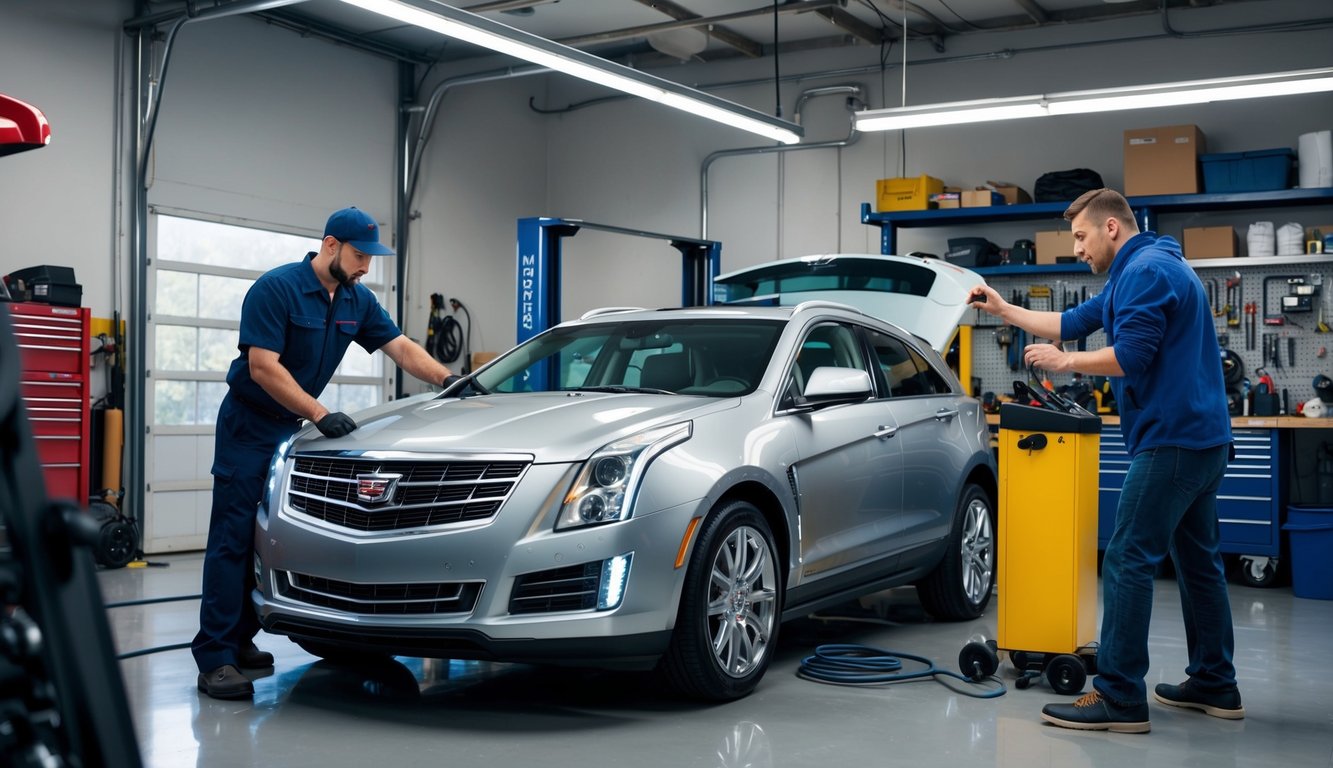
Is your Cadillac XTS riding lower than usual or displaying warning lights about the suspension system? You might need to reset your air suspension system. This common issue affects many XTS owners, but the good news is you can often fix it yourself without an expensive trip to the dealer.
What Is the Cadillac XTS Air Suspension System?
The Cadillac XTS features an Automatic Level Control Rear Air Springs system that maintains optimal ride height and comfort. Unlike traditional suspensions, this system uses air-filled components to adjust your car’s height automatically based on load, speed, and road conditions.
The system consists of:
- Air springs that replace traditional coil springs
- A compressor that generates air pressure
- Height sensors that monitor the vehicle’s position
- An electronic control module that manages the entire system
This technology lowers your vehicle at highway speeds for better aerodynamics and raises it when you need extra clearance on rough roads.
Signs You Need to Reset Your XTS Air Suspension
Your suspension might need a reset if you notice:
- Your car sitting noticeably lower on one side
- The entire vehicle riding lower than normal
- A “Service Suspension System” warning light
- Unusually firm or soft ride quality
- Compressor running longer or more frequently than usual
These symptoms often indicate a calibration issue rather than a mechanical failure – perfect candidates for a reset procedure.
Method 1: Battery Disconnection Reset
This is the simplest method but affects all vehicle systems. Here’s how to do it:
- Park on level ground and turn the ignition off
- Pop the hood and locate the battery
- Disconnect the negative terminal (the black cable with a minus sign)
- Wait 3-5 minutes for the system to fully discharge
- Reconnect the battery securely
- Start the vehicle and let it idle for 1-2 minutes
- Take a test drive at speeds under 30 mph
This approach resets not just the suspension but other electronic systems too. You might need to reprogram your radio presets and other personalized settings afterward.
Method 2: Using the Air Suspension Reset Switch
This more targeted approach only affects the suspension system:
- Find the suspension switch – typically located in one of two places:
- In the trunk on the driver’s side near the fuel pump reset
- In the passenger side footwell
- Turn the ignition off
- Switch the suspension system to “Off”
- You’ll hear air escaping from the springs as the car lowers
- Wait 1-2 minutes for the system to fully depressurize
- Turn the switch back to “On”
- Start the vehicle
- Listen for the compressor activating to refill the air springs
- Drive for 10-15 minutes to let the system recalibrate
If you can’t find the switch (particularly in 2014-2016 models), you might need to use the battery disconnection method instead.
Troubleshooting: When the Reset Doesn’t Work
If your suspension still has problems after a reset, you might be facing more serious issues:
Check for Air Leaks
- Park your car overnight on level ground
- Mark the height of each corner of your vehicle
- Check the heights again in the morning
- If one corner is significantly lower, you likely have a leak in that air spring
Air springs can develop tiny cracks that slowly leak air. Inspecting for visible damage can help identify these issues.
Listen to the Compressor
A properly functioning compressor should:
- Run quietly
- Operate for short periods (30-60 seconds)
- Activate only when necessary
If your compressor is noisy, runs constantly, or doesn’t run at all, it may need repair or replacement.
Cost Comparison: DIY Reset vs. Professional Service
| Approach | Typical Cost | Time Required | Skill Level |
|---|---|---|---|
| DIY Battery Reset | $0 | 15 minutes | Beginner |
| DIY Switch Reset | $0 | 20 minutes | Beginner |
| Dealer Diagnostic | $150-$250 | 1-2 hours | N/A |
| Full System Repair | $1,000-$3,500 | 2-8 hours | Professional |
As you can see, trying a reset yourself first makes financial sense. Many suspension issues are resolved with these simple procedures.
Advanced Diagnostics for Persistent Problems
If resets don’t solve your problem, consider these deeper diagnostic steps:
1. Check for Error Codes
Use an OBD-II scanner to check for specific suspension-related error codes. Codes starting with “C” often relate to chassis systems including suspension.
2. Inspect the Air Lines
Look for:
- Pinched or crimped air hoses
- Disconnected air lines
- Damaged connections
The air lines connect the compressor to the air springs—any disruption in this pathway affects system performance.
3. Test the Height Sensors
Height sensors can become misaligned or damaged. With the engine running, gently push down on each corner of the vehicle. The suspension should respond by raising that corner back to normal height within seconds.
The Best Time to Try a Reset
The ideal time to reset your air suspension is:
- When the issue first appears (before any permanent damage)
- After replacing suspension components
- When the vehicle has been stored for an extended period
- After a battery replacement or electrical work
Early intervention with these reset procedures can prevent more expensive repairs down the road.
Maintaining Your XTS Air Suspension System
To keep your system working properly:
- Keep it clean: Road salt and debris can damage components
- Drive regularly: Extended periods without use can stress the system
- Listen for changes: Pay attention to unusual noises or ride quality shifts
- Check ride height periodically: Uneven stance often indicates developing problems
Regular maintenance helps extend the life of your air suspension system and prevents unexpected failures.
Converting to Traditional Suspension: Is It Worth It?
Some owners consider converting to traditional coil springs. Here’s what you should know:
Conversion Kit Benefits:
- Generally less expensive than OEM replacement parts
- No risk of future air leaks
- Eliminates compressor noise and electrical issues
Conversion Kit Drawbacks:
- Loss of automatic leveling features
- Potentially firmer ride
- May affect vehicle value
A quality conversion kit costs around $700-$900, while replacement OEM air springs can cost $500-$1,200 each. For many owners with older vehicles, conversion becomes financially sensible.
Cadillac XTS Air Suspension Components by Model Year
| Model Year | Air Spring Type | Compressor Location | Reset Switch Location |
|---|---|---|---|
| 2013-2014 | Rear only | Trunk, driver side | Passenger footwell |
| 2015-2016 | Rear only | Trunk, driver side | Often hidden/inaccessible |
| 2017-2019 | Rear only | Trunk, driver side | Trunk, near compressor |
Understanding your specific model helps locate components more quickly when troubleshooting.
Real-World Success Stories
Many XTS owners have successfully reset their air suspension systems. After disconnecting the battery for five minutes, one owner reported that their 2013 model “leveled out perfectly and has maintained proper height for over six months.”
Another owner found the reset switch in their 2018 XTS and reported: “Flipping the switch off for a minute and then back on fixed my uneven stance issue completely—saved me a $200 diagnostic fee at the dealership.”
These DIY approaches don’t always work, but they’re absolutely worth trying before investing in expensive repairs.
By following these steps and understanding how your Cadillac XTS air suspension system works, you’ll be better equipped to maintain this sophisticated feature of your luxury vehicle. Remember that early intervention with these reset procedures often prevents more serious issues down the road.