You’ve got a nail in your tire and you’re wondering if Walmart can fix it. Good news — they can. But there are rules, costs, and a few “sorry, we can’t help you” situations you should know before you pull in. Read this to the end so you don’t waste a trip.
Yes, Walmart Does Patch Tires
Walmart’s Auto Care Centers patch tires at over 2,500 locations across the U.S. But they don’t just slap a plug in and send you on your way. They use a proper internal patch-plug combo — the same method the Tire Industry Association recommends.
Here’s the short version of what that means for you:
- They remove your tire from the wheel completely
- They inspect the inside for hidden damage
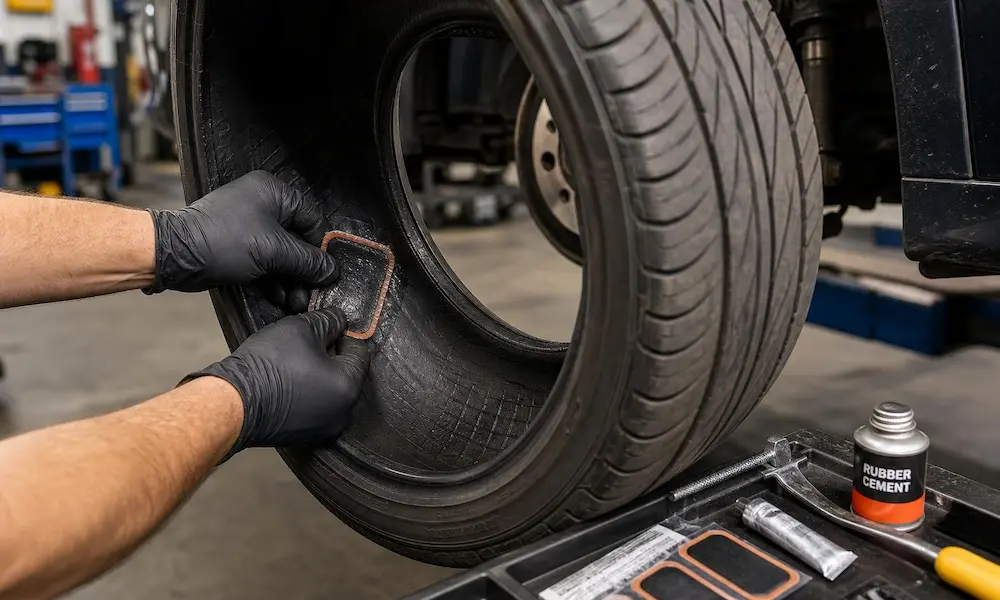
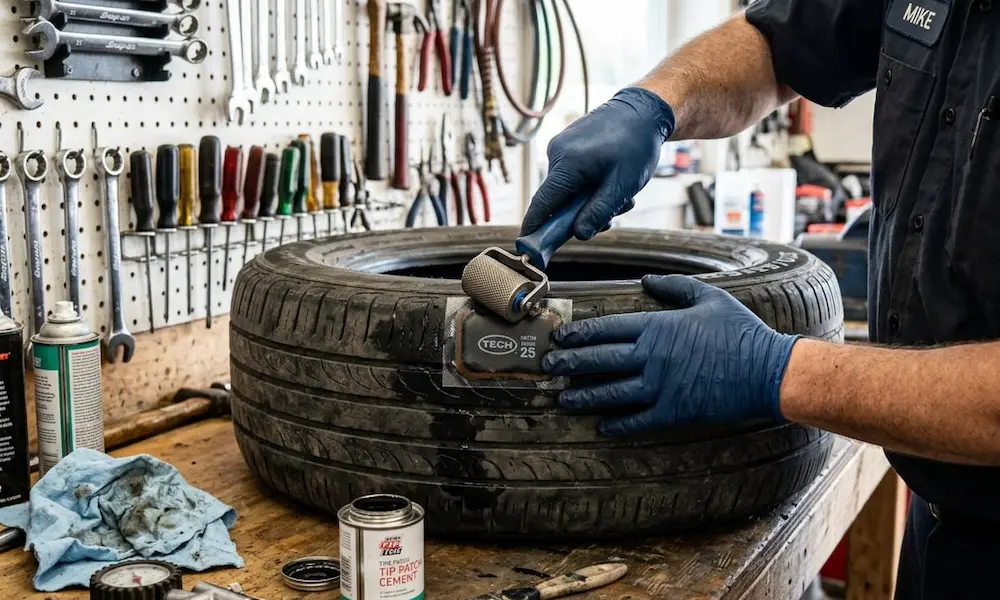
- They buff the area, apply vulcanizing cement, and seal it with a patch-plug unit
- They remount, balance, and inflate the tire
This isn’t the quick roadside string plug you might have seen at a gas station. AAA’s automotive experts confirm that external-only plugs aren’t a permanent fix. Walmart’s internal method is the real deal.
How Much Does Walmart Charge to Patch a Tire?
A flat tire repair at Walmart costs $15 per tire. That covers labor, materials, and remounting. Pretty reasonable compared to most shops.
But if you’re a Walmart+ member, that price drops to $0.
| Service | Standard Price | Walmart+ Member Price |
|---|---|---|
| Flat Tire Repair (Tubeless) | $15.00 | Free |
| Tire Rotation (Per Tire) | $5.00 | $5.00 |
| Tire Balancing (Per Tire) | $15.00 | $15.00 |
| Lifetime Balance & Rotation | $15.00 | $15.00 |
| Valve Stem / TPMS Service | $3.00 | $3.00 |
The Walmart+ auto care benefit covers free flat repairs on passenger cars, light trucks, minivans, crossovers, and small RVs — even if you didn’t buy the tires from Walmart. That’s a solid perk a lot of people don’t know about.
What About the Road Hazard Warranty?
Walmart sells an Optional Road Hazard Warranty for $10 per tire. If your tire gets a puncture that can’t be fixed, you get a pro-rated replacement instead of paying full price.
Here’s how the coverage works:
| Tread Wear Stage | What You Get |
|---|---|
| First year or first 25% of tread used | Free tire replacement (you pay install + taxes) |
| After year one or 25% tread worn | Pro-rated credit based on remaining tread |
| Below 2/32″ tread depth | No coverage — time to buy a new tire |
One catch: New York residents can’t buy the Road Hazard Warranty due to state insurance regulations. You can still get repairs there, but the warranty protection isn’t available.
What Tires Can Walmart Actually Patch?
Not every puncture gets fixed. Walmart follows strict safety guidelines, and so does every reputable tire shop. Here’s what decides whether your tire gets patched or replaced.
The Repair Zone Rule
The puncture has to sit in the central tread area — roughly a thumb’s width away from the shoulder of the tire. The shoulder flexes a lot during cornering. A patch there would peel apart fast. Discount Tire’s repair guidelines and Walmart’s own technicians follow the same boundary.
Sidewall damage? That’s an automatic no. The sidewall moves too much for any patch to hold safely.
Size and Condition Limits
Walmart technicians check a few things before they agree to patch your tire:
| What They Check | The Limit | Why It Matters |
|---|---|---|
| Puncture size | Max ¼ inch (6mm) | Larger holes weaken the steel belts |
| Tread depth | Must be above 2/32″ | Legal minimum for safe traction |
| Number of existing patches | Max 3 per tire | More than that creates structural weak spots |
| Spacing between patches | Min 6 inches apart | Overlapping repairs cause balancing issues |
If your tire has a long slice instead of a round hole, Walmart will likely tell you to replace it. Tire Outlet’s repair guide explains why irregular cuts are much harder to seal permanently.
Old and Worn Tires Don’t Qualify
Even a tiny, perfectly placed nail doesn’t guarantee a repair. If your tire is showing its age, Walmart won’t patch it.
What they look for:
- Tread depth at or below 2/32″ — the tire is at the legal wear limit
- Visible cracking in the sidewall or tread grooves (dry rot)
- Rubber dust or a heat ring inside — signs you drove on a flat, which can destroy the internal cords
- Previous repairs that overlap or cluster in one area
Tires older than six to ten years often show rubber degradation even if the tread looks okay. Oxygen and UV exposure break down the rubber over time, which makes it harder for any patch to bond properly.
What Happens During the Repair — Step by Step
Understanding the process helps you know what you’re paying for. Here’s what a Walmart technician actually does:
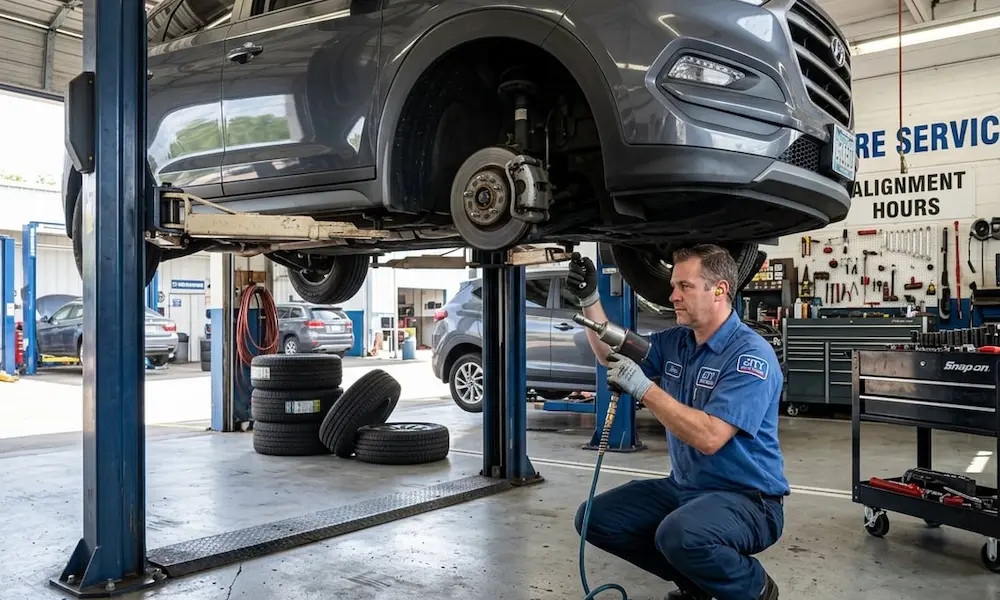
- Removes the tire from the wheel — skipping this step is what separates a proper repair from a sketchy one
- Inspects the inside for heat rings, cord damage, or previous bad repairs
- Buffs the puncture area with a low-speed buffer to clean and roughen the inner liner
- Applies vulcanizing cement to chemically bond the patch to the rubber
- Installs the patch-plug unit — the plug fills the hole channel, the patch seals the liner
- Remounts and balances the tire, then inflates to spec
This process follows industry standards that treat a repair as a structural restoration — not just a quick seal.
Don’t Skip the 50-Mile Re-Torque
Here’s something most people ignore after a tire repair: the free 50-mile re-torque service.
When a wheel gets removed and remounted, the lug nuts are torqued to your vehicle’s spec. But as the wheel settles against the hub during the first few miles, those nuts can loosen slightly. Walmart offers a free re-torque check within 50 miles of your service.
It takes five minutes. Skip it and you risk vibrations or, in rare cases, a loose wheel. Don’t skip it.
Walk-In or Appointment?
Walmart accepts walk-ins for tire repairs, but don’t count on a quick turnaround. Peak hours — weekends especially — can mean waits of several hours. Your best move is to book through the Walmart app or call your local store before heading over.
An appointment gives you a priority slot, but it doesn’t guarantee instant service if the shop is slammed or dealing with a complex job ahead of you.
How Does Walmart Compare to Other Shops?
If you’re shopping around, here’s a quick look at how Walmart stacks up:
| Provider | Flat Repair Cost | Included with Purchase? | Availability |
|---|---|---|---|
| Walmart | $15 (free for Walmart+) | Optional ($10 warranty) | 2,500+ locations |
| Sam’s Club | Varies | Included in install package | Members only |
| Costco | Varies | Included in install package | Members only |
| Discount Tire | Varies | Free for many customers | Regional |
| Jiffy Lube | Varies | One-off fee | Limited tire focus |
Walmart’s biggest advantage is access. Cheapism’s comparison of tire installation chains points out that Walmart’s sheer number of locations beats almost every competitor. And the ability to grab groceries while you wait? No other tire shop does that.
Track Your Tire’s History With the Virtual Garage
Walmart’s mobile app has a Virtual Garage feature that tracks your tire installation date, tread depth at each service, and maintenance reminders. It’s worth setting up — especially if you have the Road Hazard Warranty. You’ll need your purchase records to make a claim, and the app keeps everything in one place.
Quick Summary: Will Walmart Patch Your Tire?
Walmart patches tires if:
- ✅ The puncture is in the central tread area
- ✅ The hole is ¼ inch or smaller
- ✅ Your tread depth is above 2/32″
- ✅ The tire has fewer than 3 existing patches
- ✅ There’s no internal structural damage
Walmart won’t patch your tire if:
- ❌ The damage is on the sidewall or shoulder
- ❌ The hole is larger than ¼ inch
- ❌ The tire shows dry rot, cracking, or heat damage
- ❌ You drove on it flat (internal cords may be toast)
- ❌ The tread is at or below the wear limit
At $15 a fix — or free with Walmart+ — it’s one of the most affordable professional tire repairs available. Just get there before the weekend rush, book an appointment if you can, and remember to come back for that re-torque.