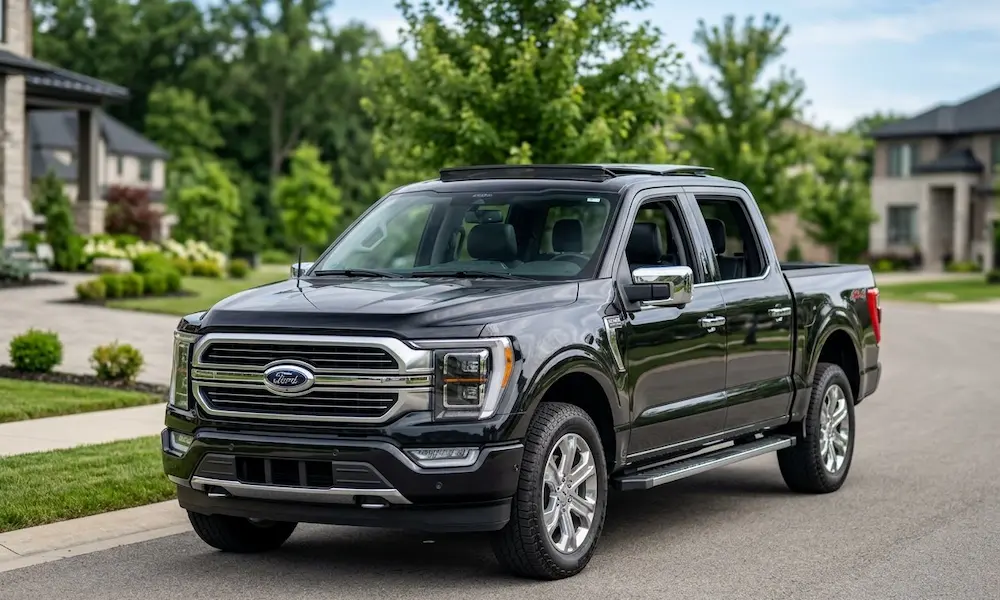
Your F-150’s cabin air filter works harder than you think. A clogged one doesn’t just make the air smell weird — it can fry your blower motor, freeze your evaporator core, and drain your Lightning’s battery range. This guide covers everything: filter types, replacement intervals, step-by-step instructions, and the brands worth buying. Stick around — the cost comparison alone might surprise you.
Why Your F-150’s Cabin Air Filter Actually Matters
Most truck owners treat the cabin air filter like a suggestion. It’s not.
This small rectangular component sits between the outside world and your dashboard’s entire climate control system. Every breath of air that enters your cab — whether you’re crawling through LA traffic or cutting through a Kansas wheat field — passes through this filter first.
It protects two things simultaneously:
- You — by blocking pollen, dust, exhaust fumes, mold spores, and bacteria
- Your truck — by keeping debris off the blower motor, evaporator core, and resistor pack
Ignore it long enough, and a $15–$40 filter becomes a $1,000+ repair bill. That’s not hyperbole — that’s thermodynamics.
What Happens When You Skip This Maintenance
Here’s what a clogged filter actually does to your truck’s systems:
Your Blower Motor Works Overtime
When airflow drops, your blower motor pulls more electrical current to maintain fan speed against the resistance. That extra amperage overheats the blower resistor — the component controlling your fan speeds. When it fails, your fan either stops working or gets stuck on max. Replacing it runs well over $100 in parts alone.
Your AC Evaporator Core Freezes
Less airflow means the refrigerant inside your evaporator core can’t absorb enough heat. The fins drop below freezing, ice builds up, and your AC quits cooling entirely. Worse — un-evaporated liquid refrigerant can slam back into the compressor. Liquid doesn’t compress. That destroys the compressor internally, and those repairs routinely exceed $1,000.
Your F-150 Lightning Loses Range
In gas-powered trucks, waste engine heat warms the cabin for free. In the F-150 Lightning, a high-voltage heater or heat pump does that job — drawing directly from the traction battery. A clogged filter forces that system to run longer and harder. You’ll feel it in your range, especially in winter.
Your Cabin Starts Smelling Like a Gym Bag
Dust, moisture, and organic debris build up on the filter and surrounding housing. That creates a warm, damp environment where mold and mildew thrive. The result? A musty “dirty sock” smell every time you flip on the AC. That smell isn’t cosmetic — it means biological growth is circulating through your vents.
Filter Types: Which One Does Your F-150 Actually Need?
Not all cabin air filters are equal. Here’s what’s available and what each one does.
Standard Particulate Filters
These use pleated synthetic or cellulose fibers to trap physical debris — road dust, pollen, soot, and mold spores. The pleating increases surface area so the filter catches more without choking airflow. Basic, effective, and budget-friendly. Good for most highway and suburban drivers.
Activated Carbon Filters
Carbon filters add a dark layer of activated charcoal to the physical filtration layer. That carbon traps gaseous pollutants — exhaust fumes, nitrogen oxides, and agricultural odors — through a process called adsorption. Gas molecules stick to the carbon’s microscopic pores instead of flowing into your cab.
If you drive in heavy traffic, near farms, or through industrial zones, an activated carbon filter is worth the upgrade. Just know the carbon layer has a finite lifespan — once those pores fill up, it stops blocking smells even if it still catches dust.
High-Efficiency (HEPA-Rated) Filters
These catch up to 99.97% of particles at 0.3 microns — that includes ultra-fine exhaust particles, allergens, and bacteria. Premium brands like Bosch and PureFlow build multi-stage versions that stack particulate filtration, activated carbon, odor treatment, and an antimicrobial layer into one unit.
If you or your passengers have asthma, severe allergies, or chronic respiratory issues, this tier is worth considering.
Washable and Reusable Filters
Brands like K&N use layered synthetic fabric in a rigid polyurethane frame. You wash them with a cleaning solution, let them dry, and reinstall. The K&N VF2049 costs around $50 upfront, but you’ll never buy another cabin filter for that truck. Great for high-mileage drivers and fleet operators.
How Often Should You Replace It?
Ford’s baseline recommendation is every 15,000–20,000 miles — roughly once a year for the average driver. But your environment matters far more than the calendar.
Replace sooner if you:
- Drive in dusty, arid regions (Arizona, Nevada, West Texas) — filters can clog in under 10,000 miles
- Work on construction sites, farms, or dirt roads
- Frequently drive in stop-and-go urban traffic
- Take the truck off-road regularly
- Have allergy or asthma sufferers in the vehicle
- Smoke or vape inside the cab
Quick inspection test: Pull the filter out and hold it up to light. If you can’t see through it, replace it. If you find leaves, insect debris, or nest material — replace it immediately and inspect the housing for rodent activity.
Which F-150 Models Use This Filter?
Ford’s modular engineering philosophy means one filter fits a massive range of trucks and SUVs. The filter housing dimensions stayed identical through the 2015–2026 model transition, covering every engine variant — including the PowerBoost hybrid and F-150 Lightning.
| Vehicle Model | Compatible Model Years | Powertrains Covered |
|---|---|---|
| Ford F-150 (13th & 14th Gen) | 2015–2026 | 2.7L, 3.0L Diesel, 3.3L, 3.5L, 3.5L Hybrid, 5.0L, 5.2L Raptor R |
| Ford F-150 Lightning (EV) | 2022–2026 | Dual Motor Standard and Extended Range |
| Ford F-250 / F-350 Super Duty | 2017–2026 | 6.2L, 6.7L Diesel, 7.3L Gas |
| Ford F-450 / F-550 Super Duty | 2017–2026 | 6.2L, 6.7L Diesel, 6.8L V10, 7.3L |
| Ford Expedition | 2018–2026 | 3.5L EcoBoost (All Trims) |
| Lincoln Navigator | 2018–2026 | 3.5L EcoBoost (Standard and Extended Wheelbase) |
The OEM part numbers to know: FL3Z-19N619-A (original) superseded by KL3Z-19N619-AA (current). At the dealership parts counter, ask for FP-92 (standard) or FP-79 / FP-131 (activated carbon).
Brand Comparison: What’s Actually Worth Buying?
| Brand | Segment | Price Range | What Makes It Different |
|---|---|---|---|
| Motorcraft (OEM) | Factory Standard | $20–$35 | Perfect fitment, matches factory specs |
| API / PTC / Pronto | Economy | $6–$15 | Basic cellulose, lower pleat count, shorter lifespan |
| PurolatorONE / WIX | Premium Particulate | $21–$30 | Electrostatically charged fibers, high durability |
| Bosch / Fram Titanium | High Efficiency | $14–$40 | 99.97% filtration efficiency, limits fine allergens |
| PureFlow | Scented / Carbon | $20–$35 | 4-stage filtration with active odor neutralization |
| K&N / AFE | Reusable | $34–$50 | Washable synthetic fabric, eliminates recurring cost |
The Real Cost of Letting a Dealership Do This
Dealerships charge $80–$100+ to replace a cabin air filter on an F-150. The filter itself costs $15–$40. You’re paying the rest in pure labor.
Ford designed this housing to be accessible with minimal tools — it takes an experienced person under 10 minutes. A first-timer doing it carefully takes under 45 minutes. That’s one of the highest-value maintenance tasks you can learn.
Step-by-Step: Ford F-150 Cabin Air Filter Replacement (2015–2026)
Tools You Need
- 7mm socket
- ¼-inch drive ratchet with short extension
- Plastic trim removal tool (not a screwdriver — it will gouge the dash)
- Pick tool or small hook (required for higher trims with ambient lighting or USB ports)
Phase 1: Drop the Glove Box
Empty everything out of the lower glove box first. Push firmly inward on both sides simultaneously — the rubber tension tabs will clear the frame stops and the box drops down. This exposes the inner dashboard structure.
Phase 2: Remove the Upper Trim Panel
Above the glove box opening sits a decorative upper panel — sometimes with a small storage cubby. Insert your plastic trim tool along its perimeter and pry horizontally to release the pressure clips. Go slowly in cold weather — the plastic gets brittle and cracks under force.
Don’t yank the panel off. Higher trims (Lariat, King Ranch, Platinum, Limited) have electrical connectors for ambient lighting or USB ports. Use your pick tool to depress the locking tab on each connector before pulling the panel free.
Phase 3: Access and Open the Filter Housing
With the trim panel removed, you’ll see the black plastic HVAC housing. The rectangular filter access door sits prominently in the structure. Remove the two 7mm bolts above its left and right corners using your socket and extension, then release the side retention clips and pull the door straight back.
Phase 4: Remove the Old Filter Carefully
Pull the old filter straight out slowly. Don’t tip or shake it — accumulated debris (leaves, dust, insect carcasses) will fall directly into the blower motor cavity below. If material falls in, it’ll rattle and vibrate the next time you run the fan.
Phase 5: Install the New Filter Correctly
Check the arrow printed on the new filter’s edge. That arrow must point downward toward the passenger floorboard. Air flows down from the cowl intake. Installing it backward forces air against the structural bias of the pleats — you’ll hear whistling, lose airflow, and risk collapsing the media under high fan speeds.
Seat the filter evenly so no edges fold or crush against the housing walls.
Phase 6: Reassemble in Reverse Order
| Step | Action | Tool | Watch Out For |
|---|---|---|---|
| 1 | Snap access door back into place | Hands | Ensure side clips fully engage — vacuum leaks cause hissing |
| 2 | Thread 7mm bolts back in | 7mm socket | Hand-tighten only — over-torquing strips the plastic anchors |
| 3 | Reconnect electrical harnesses | Pick tool | Listen for the click confirming a secure connection |
| 4 | Press upper trim panel back on | Hands | Align before pressing — clips need to seat flush |
| 5 | Raise glove box back into tracks | Hands | Push sides inward to re-engage the rubber tabs |
Power the truck on and test all fan speeds. Airflow should be noticeably stronger if the old filter was clogged.
Frequently Asked Questions
Does using an aftermarket cabin filter void my F-150’s warranty?
No. The federal Magnuson-Moss Warranty Act prevents Ford from voiding your warranty simply because you used an aftermarket part. They’d have to prove the specific aftermarket filter directly caused the damage — a high legal bar.
Do my ventilated seats have their own filter?
Yes. Trucks with ventilated or cooled seats — particularly Platinum and King Ranch trims — have separate small circular filters under the seat frames. Those catch floor debris and pet hair before it reaches the seat fans. They operate completely independently from the dash cabin filter and need their own maintenance schedule.
Can rodents nest in the cabin air filter housing?
Absolutely — and it’s more common than you’d think, especially in rural areas. Mice travel down the cowl intake and nest directly on top of the filter using insulation and other material. When you run the HVAC, aerosolized droppings and urine get pushed into the cab. If you find a nest, sanitize the entire housing with an enzymatic cleaner before installing a new filter. Don’t skip that step.
Does recirculation mode bypass the cabin air filter?
No. When you hit the recirculation button, a blend door closes the external cowl intake and draws air from the passenger footwell instead. But that air still passes through the cabin filter before reaching the blower motor. The filter scrubs the air continuously in recirculation mode — which is exactly why it clears smoke or odors from the cabin faster in that setting.
Is the filter more important in the F-150 Lightning than in gas models?
In terms of air quality — equally important. In terms of energy efficiency — more important in the Lightning. Gas trucks get cabin heat for free from engine waste heat. The Lightning generates heat from the high-voltage battery. A clogged filter forces the thermal system to work harder and longer, which measurably cuts your driving range, especially in winter.
Does smoking inside the cab shorten filter life?
Significantly. Tobacco tar and vape residue — particularly the sticky glycerin in e-cigarette vapor — coat the filter fibers and act as an adhesive that traps dust much faster than a clean, dry filter would. Vehicles where smoking happens regularly need filter replacements at dramatically shorter intervals. The smell also bakes into the media permanently, so you’ll get that stale smoke blast every time the fan kicks on.