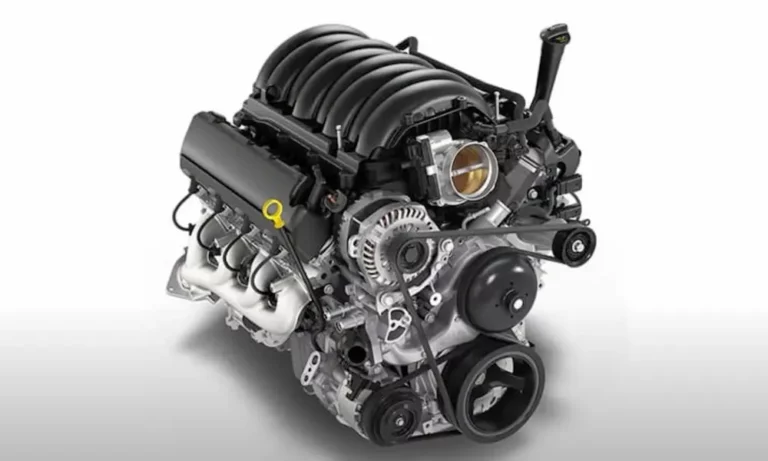
If you own a Chevy Silverado, GMC Sierra, or any GM truck with a 5.3L engine, you’ve probably heard the horror stories. That innocent ticking sound at startup could be the beginning of a $7,000 nightmare. Don’t panic yet—understanding what’s happening inside your engine can save you thousands and help you make smarter decisions about prevention and repair.
What Causes GM 5.3 Engine Lifter Problems?
The root of GM 5.3 engine lifter problems lies in the Active Fuel Management (AFM) and Dynamic Fuel Management (DFM) systems. These cylinder deactivation technologies were designed to save fuel, but they’ve created a reliability disaster.
Here’s what happens: Your engine uses specialized two-stage hydraulic lifters with spring-loaded locking pins. When AFM or DFM activates, pressurized oil pushes these pins inward, decoupling the lifter’s inner and outer components. This allows certain cylinders to “shut off” while you’re cruising.
The problem? This constant switching puts enormous stress on these components. If the oil gets aerated—from low levels, infrequent changes, or simply the high-volume nature of the system—those locking pins can’t move properly. They get stuck halfway, bend, or shear under pressure.
According to GM’s technical documentation, the timing window for deactivation is measured in milliseconds. If those pins move while the lifter isn’t on the base circle of the camshaft, the valve spring force will destroy them.
Which GM 5.3 Engines Are Affected?
Not all 5.3L engines have lifter issues. The problems started when GM introduced cylinder deactivation.
Generation III (1999-2007): These are the reliable Vortec 5300 engines. No AFM means no lifter headaches. Many of these powerplants exceed 200,000 miles with routine maintenance.
Generation IV (2007-2014): AFM arrived with models like the LY5, LMG, and LC9. This is when lifter failures became common. The LC9 aluminum-block engine was particularly problematic, leading to a class-action lawsuit over excessive oil consumption and premature failure.
Generation V (2014-Present): The EcoTec3 platform brought the L83 and L84 engines with direct injection. In 2019, GM switched from AFM to the even more complex DFM system. Instead of deactivating four fixed cylinders, DFM can shut off any of the eight cylinders in 17 different patterns.
| Engine Generation | Years | Common Codes | Deactivation System | Lifter Risk |
|---|---|---|---|---|
| Gen III | 1999-2007 | LM7, L59, L33 | None | Minimal |
| Gen IV | 2007-2014 | LY5, LMG, LC9 | AFM (4 cylinders) | High |
| Gen V | 2014-Present | L83, L84 | AFM/DFM (8 cylinders) | Very High |
Early Warning Signs of Lifter Failure
Catching GM 5.3 engine lifter problems early can prevent catastrophic damage. Here’s what to watch for:
Ticking or Tapping Noise: This is the classic symptom. You’ll hear it most clearly during cold starts, and it may last 5-7 minutes before quieting down. According to GM Technical Service Bulletin 19-NA-218, this persistent cold-start noise is the primary diagnostic indicator.
Check Engine Light: Your dashboard will light up with specific codes. P0300 indicates random misfires, while P0301 through P0308 pinpoint which cylinder is affected. More telling are the deactivation-specific codes like P3401, P3425, P3441, or P3449—these directly indicate AFM/DFM circuit problems.
Rough Idle: When a lifter collapses, that cylinder stops contributing power. You’ll feel a noticeable shake, especially at idle or low speeds.
Decreased Performance: A failed lifter means at least one cylinder isn’t working properly. You’ll notice sluggish acceleration and reduced towing capacity.
Excessive Oil Consumption: If you’re adding a quart between oil changes, your lifters might be leaking oil past the piston rings during deactivation cycles.
How Lifter Failure Destroys Your Engine
A collapsed lifter isn’t just annoying—it’s destructive. When the locking pins fail, the lifter stops tracking the camshaft lobe correctly. Metal grinds on metal, scarring the camshaft in a process mechanics call “eating the cam.”
That metal debris circulates through your oil system, potentially damaging main bearings, rod bearings, and your oil pump. The domino effect continues: excessive lash in the valvetrain can bend pushrods, and if pieces break loose, you’re looking at complete engine failure.
GM’s repair procedures require technicians to inspect camshaft lobes through the lifter bores using a borescope. Even microscopic scarring means the camshaft must be replaced—and that’s where costs skyrocket.
Repair Costs and What to Expect
Let’s talk money. GM 5.3 engine lifter problems aren’t cheap to fix.
Single Bank Lifter Replacement: Expect $2,000-$5,000 depending on your location and whether you use a dealer or independent shop. GM’s labor operations estimate 9-15 hours just for labor.
Camshaft Replacement: If the cam is damaged, add another $3,000-$5,000. Total repair: $7,000+.
Complete Engine Replacement: For severe damage, you’re looking at $8,000-$16,000 depending on whether you choose remanufactured or new.
Here’s the painful part: GM’s class-action settlement for Generation IV engines paid out an average of $3,300 per vehicle—nowhere near the actual repair costs many owners faced.
The AFM vs. DFM Difference
Understanding the difference between these systems helps you assess your risk level.
Active Fuel Management (AFM): This older system has two modes—V8 or V4. It always deactivates the same four cylinders (1, 4, 6, and 7). The Valve Lifter Oil Manifold (VLOM) controls everything using four solenoids under the intake manifold.
Dynamic Fuel Management (DFM): Introduced in 2019, DFM is far more complex. It uses eight individual solenoids and can create 17 different firing patterns. The system recalculates 80 times per second, potentially running on as few as one cylinder.
| Feature | AFM (2007-2018) | DFM (2019+) |
|---|---|---|
| Firing Patterns | 2 (V8 or V4) | 17 (V8 to V1) |
| Affected Cylinders | 4 fixed cylinders | All 8 cylinders |
| Solenoid Count | 4 in VLOM | 8 in block valley |
| Activation Frequency | Moderate | Constant |
The increased complexity of DFM means more frequent activation cycles—and more opportunities for failure.
Prevention: Can You Stop GM 5.3 Engine Lifter Problems?
Yes, but it requires diligence. Here’s what actually works:
Aggressive Oil Changes: Forget GM’s Oil Life Monitor. Change your oil every 3,000-5,000 miles with high-quality synthetic. Community consensus points to this as the single most effective preventive measure.
Use Premium Filters: OEM or equivalent filters protect the sensitive VLOM and lifter galleries from debris.
Oil Analysis: Services like Blackstone Laboratories can detect early metal wear before catastrophic failure. It’s a $30 test that can save you $7,000.
Avoid Short Trips: These systems need fully warmed oil to function properly. Constant cold starts accelerate wear.
Electronic Disablers: Do They Work?
Yes—with caveats. Electronic disablers from companies like Range Technology and Boost plug into your OBD-II port and prevent the ECM from activating AFM or DFM.
The benefit? Your engine stays in V8 mode constantly, eliminating the switching that causes failures. Many owners report no lifter issues after installation.
The limitation? If your lifters are already damaged, a disabler won’t fix them. It’s preventive, not corrective. Also, expect a 1-2 MPG fuel economy hit.
Cost: $150-$300. Compare that to a $7,000 repair.
The Complete Delete: Hardware Replacement
For a permanent solution, hardware delete kits replace AFM/DFM lifters with standard hydraulic roller lifters. This requires removing the cylinder heads and often replacing the camshaft since deactivation cylinders use different cam lobe profiles.
Basic Delete Kit: $350-$600 for parts (lifters, gaskets, valley cover)
Complete Cam Delete: $800-$1,500+ (includes non-AFM camshaft and tuning)
Installation Labor: 15-25 hours at $100-150/hour
Many owners choose this route during a scheduled repair, essentially turning a problem into an upgrade. Remanufactured engines with DFM delete pre-installed are now available, acknowledging the widespread demand for reliability over fuel savings.
Legal Options: Class Actions and Lemon Laws
If you’re stuck with repeated failures, you have options beyond just paying for repairs.
Class Action Settlements: The $150 million settlement for Generation IV engines provided compensation for owners in California, North Carolina, and Idaho. Ongoing litigation targets Generation V L84 and L87 engines.
Lemon Law Claims: If your truck has been in the shop multiple times for the same issue under warranty, your state’s lemon law might apply. GM’s warranty extension for certain L87 engines acknowledges the problem but doesn’t cover everyone.
NHTSA Complaints: Filing a complaint with the National Highway Traffic Safety Administration creates a paper trail and contributes to potential recall investigations.
The 2026 Game-Changer: GM Deletes DFM
Here’s some good news. GM has quietly removed DFM from 2026 production engines. Owners scanning VIN codes discovered the 8th digit “E” designation corresponds to a “Redesigned EcoTec3 V8” with official documentation stating: “DFM Status: Removed from production.”
This represents a tacit admission that the fuel savings weren’t worth the reliability headaches. GM appears to be conducting a “quiet rollout” to avoid drawing attention to the issues or hurting 2025 inventory sales.
Looking forward, new patent filings suggest a redesigned system for Generation VI engines that operates at the rocker arm level rather than the lifter—potentially more reliable and easier to service.
Should You Buy a Used GM Truck with a 5.3?
Here’s the straight answer: Generation III engines (1999-2007) are safe bets. For Generation IV and V trucks, factor in either preventive costs (disabler or delete) or the risk of a major repair.
Ask sellers for oil change records. Trucks with documented 3,000-5,000 mile intervals are lower risk. Check for disablers already installed. Run the VIN through NHTSA’s database for open service bulletins.
For 2026 models, confirm the VIN shows an “E” engine code before buying—you’ll get the DFM-delete version that should prove more reliable long-term.
The Bottom Line on GM 5.3 Engine Lifter Problems
GM 5.3 engine lifter problems aren’t going away for 2014-2025 models. Aggressive maintenance helps, but it’s not foolproof. Electronic disablers work as prevention, and hardware deletes eliminate the problem permanently—but both cost money.
The silver lining? GM’s 2026 redesign acknowledges what owners have known for years: sometimes simple, proven technology beats complex fuel-saving systems. If you’re shopping new, wait for the 2026 models. If you own an AFM/DFM truck, stay vigilant, change your oil religiously, and consider preventive measures before you’re stranded with a $7,000 repair bill.
Your 5.3 can be reliable—it just needs help overcoming GM’s efficiency experiment gone wrong.