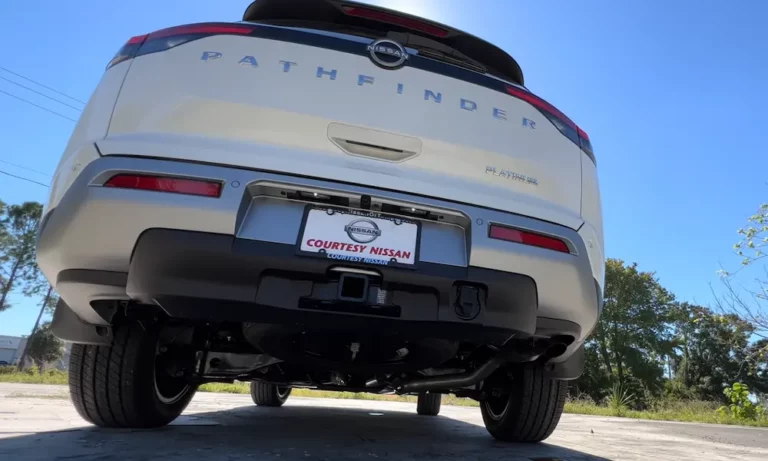
Thinking about buying a Nissan Pathfinder and wondering if it’ll go the distance? You’re asking the right question. While these three-row SUVs can surprise you with serious longevity, the answer depends heavily on which model year you pick and how well you treat it.
What’s the Average Lifespan of a Nissan Pathfinder?
Here’s the straight answer: Nissan Pathfinders typically last between 150,000 to 200,000 miles with proper maintenance. But that’s just the starting point.
According to iSeeCars’ analysis of over 300 million data points, the average Pathfinder hits about 148,195 miles or roughly 10.2 years. You’ve got an 18 percent chance of reaching 200,000 miles during the vehicle’s usable lifespan.
But here’s where it gets interesting. Many well-maintained Pathfinders sail past 250,000 miles, and some dedicated owners push them beyond 300,000 miles. One owner on Reddit reported their 2005 model hitting 310,000 miles before needing major work. Another clocked 295,000 miles while spending just $100 monthly on maintenance over a decade.
The gap between average and exceptional comes down to three things: which generation you buy, how religiously you maintain it, and avoiding the problem years entirely.
Reliability Ratings: How Does the Pathfinder Stack Up?
The Pathfinder earns middle-of-the-pack reliability scores, which tells only part of the story.
RepairPal gives it 3.5 out of 5.0, ranking it 17th out of 26 midsize SUVs. The average annual repair cost sits at $542—actually lower than the $573 average for the class. J.D. Power awarded it 82 out of 100, placing it 8th out of 10 models in its segment.
You’ll bring your Pathfinder to the shop about 0.4 times yearly for unscheduled repairs, matching both the midsize SUV and overall vehicle averages. The catch? When repairs go wrong, they go seriously wrong. The Pathfinder has a 15 percent probability of severe or major repairs compared to the 12 percent average for all vehicles.
This reflects the Pathfinder’s feast-or-famine reliability pattern. Pick the right year, and you’ll coast to 250,000 miles with routine maintenance. Choose poorly, and you’re facing $5,000+ transmission bills before 100,000 miles.
Generation-by-Generation Breakdown
| Generation | Years | Key Strengths | Major Issues | Verdict |
|---|---|---|---|---|
| Second | 1996-2004 | Body-on-frame durability, simple mechanics, proven 3.3L V6 | Dated technology, lower safety ratings | Excellent longevity potential |
| Third (Early) | 2005-2010 | More refinement, increased power | “Strawberry Milkshake of Death” transmission killer | Avoid completely |
| Third (Late) | 2011-2012 | Resolved coolant leak, proven platform | Aging design | Good reliability |
| Fourth (Early) | 2013-2015 | Modern features, better fuel economy | Severe CVT transmission problems | High risk |
| Fourth (Late) | 2016-2020 | Improved CVT reliability, comfortable interior | Some lingering CVT concerns through 2017 | 2018-2020 are solid choices |
| Fifth | 2022-Present | Conventional 9-speed auto (no CVT), proven V6 engine | Limited real-world data, minor tech glitches | Promising start |
The Nightmare Years You Must Avoid
Let’s talk about the elephants in the room—or rather, the years that’ll drain your bank account.
2005-2010: The Strawberry Milkshake of Death
These years, especially 2005-2007, earned their terrible reputation. The “Strawberry Milkshake of Death” happens when the radiator’s internal transmission fluid cooler ruptures, mixing coolant with transmission fluid. The resulting pink, milky fluid destroys your transmission.
This catastrophic failure typically strikes around 90,000 miles and costs $5,000 to $7,000 to fix—you’re replacing the transmission, radiator, and flushing the entire system. The 2005 model alone racked up over 1,050 NHTSA complaints, making it the single worst Pathfinder year ever built.
The problem persisted through 2010, though less frequently as Nissan made incremental changes. By 2011-2012, they’d finally resolved it.
2013-2015: CVT Transmission Nightmares
Nissan introduced its continuously variable transmission (CVT) with the fourth generation, and the early years were rough. Owners reported jerking and shaking during acceleration between 15-30 mph, transmission slippage, complete failure, and sluggish response when merging onto highways—a genuine safety hazard.
The 2013 model ranks as the second-worst Pathfinder year after 2005. While Nissan addressed these issues with recalls and extended warranties, why gamble on a problem child when better years exist?
The Sweet Spot Years Worth Buying
Now for the good news—several Pathfinder generations offer excellent longevity.
2000 (Second Generation Crown Jewel)
The 2000 Pathfinder stands out as the most reliable year ever made. It features a durable 3.3-liter V6 engine, robust body-on-frame construction, and actual 4-Low gearing for off-road capability. These models have proven their durability over two decades, with many still running strong past 200,000 miles.
You’re missing modern safety tech and conveniences, but you’re getting straightforward mechanics that any competent mechanic can fix.
2011-2012 (Third Generation Refined)
These represent the third generation’s peak after Nissan fixed the coolant leak disaster. They offer more modern amenities than the 2000 model while maintaining the truck-based platform’s proven durability.
2018-2020 (Fourth Generation Matured)
The 2018-2020 models earn the highest reliability scores of any Pathfinder generation, with FIXD reliability scores of 7-10 out of 10 and owner reliability scores of 8-10 out of 10. Nissan finally nailed the CVT by this point, and you’re getting modern safety features, better fuel economy, and comfortable interiors.
2022-2024 (Fifth Generation Fresh Start)
Early reports look promising. Nissan ditched the problematic CVT entirely, introducing a conventional 9-speed automatic transmission paired with the proven VQ 3.5-liter V6 engine. Some owners report minor electrical quirks and infotainment glitches, but nothing catastrophic.
The downside? We don’t have 200,000-mile examples yet to confirm long-term durability.
Common Problems That’ll Cost You
Beyond the generation-specific transmission disasters, several issues plague Pathfinders across multiple years.
Timing Chain Failures
Timing chain problems hit models with VQ35 and VQ40 engines, particularly 2005-2007 Pathfinders. You’ll hear rattling and tapping noises from the front of the engine during cold starts—sounds like marbles in a tin can.
The cause? Faulty timing chain guide rails and tensioners wear prematurely, letting the chain become loose. When these components fail, pieces break off and fall into the oil pan, potentially destroying your engine. Nissan settled a class action lawsuit over this defect in 2020, offering partial reimbursement.
Replacement costs run $2,000 to $5,000 depending on damage. One 2019 Pathfinder owner reported timing chain noise at just 103,000 miles despite religious oil changes every 3,000-3,500 miles.
Faulty Fuel Level Sensors
This seemingly minor issue affected over 16 different model years from 1994 to 2016. Your fuel gauge reads erratically or inaccurately, potentially leaving you stranded. The fix requires replacing the entire fuel pump assembly at $673-$833.
Climate System Failures
The 2015 models particularly struggle with air conditioning and heating systems that simply refuse to work. Given how much you’ve paid for a three-row SUV, this one stings.
Electrical Gremlins
Dashboard blackouts, premature component failures, and various sensor malfunctions pop up across generations. The 2017 models had frozen navigation controls, stuck backup cameras, and malfunctioning reverse assist displays. Even the new 2022-2023 models show CarPlay inconsistencies and camera malfunctions during parking.
Exploding Sunroofs
Some 2013-2014 models experienced sunroof glass shattering for no apparent reason, likely because Nissan used thinner glass. Nothing says “fun road trip” like glass raining on your kids.
Maintenance: The Make-or-Break Factor
Here’s the truth: proper maintenance separates 150,000-mile Pathfinders from 300,000-mile legends.
What You’ll Spend
A Nissan Pathfinder costs approximately $8,238 for maintenance and repairs during its first 10 years. That’s just $30 more than the industry average for popular SUVs.
The first five years are relatively cheap at $2,649. Years six through 10 jump to $5,589 as major components need replacement.
Annual costs escalate predictably: $354 in year one, climbing to $1,220 by year 10 and $1,416 by year 12.
Critical Maintenance Schedule
Oil and filter changes every 7,500 miles form your foundation. Don’t skip tire rotations at the same interval—uneven wear kills tires early.
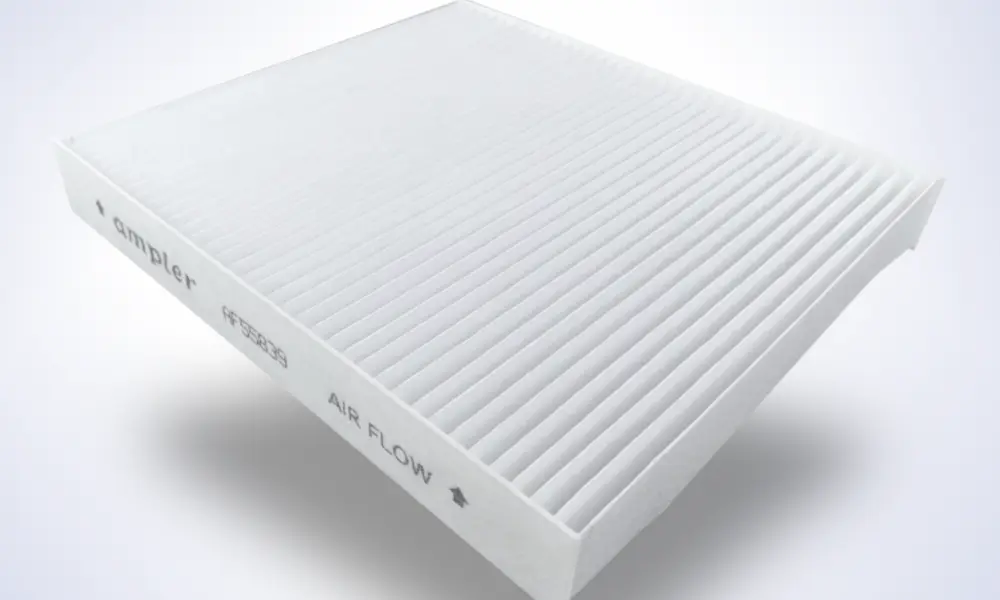
At 30,000 miles, you’re replacing the air filter, servicing wheel bearings, flushing the brake system, and lubricating the driveshaft. The 60,000-mile service adds cooling system flush and spark plug replacement.
The 105,000-mile service hits hardest, potentially requiring timing belt replacement (on older models) and water pump replacement.
CVT Fluid Changes: Non-Negotiable
If you own a 2013-2020 CVT-equipped Pathfinder, CVT fluid changes every 40,000-50,000 miles are absolutely essential. Standard service costs about $220, which beats a $5,000 transmission replacement.
Use only Nissan-specified CVT fluid. Wrong fluid causes severe damage. Some mechanics recommend adding an external transmission cooler to prevent overheating—one of the CVT’s primary failure modes.
When Major Repairs Hit
During the first five years, you’ve got only a 10.73 percent chance of major repairs. By year 10, that jumps to 22.95 percent. By year 12, it’s 42.82 percent.
The three most expensive repairs are head gasket replacement at $2,500, ABS control module replacement at $1,400, and heater core replacement at $1,250. Transmission replacement or rebuild runs $4,000 to $7,000.
What Actually Makes Pathfinders Last Longer
You can’t control what Nissan engineered poorly, but you control these four factors completely.
Maintenance Discipline
Multiple high-mileage owners emphasize following the manufacturer’s schedule religiously. That owner who hit 295,000 miles? They meticulously recorded every maintenance item and addressed issues quickly, averaging just $100 monthly over 10 years.
Change your oil using the correct specification. Service your transmission fluid, differential, and coolant system on schedule. Fix small issues before they become expensive disasters.
How You Drive Matters
Aggressive driving habits—rapid acceleration, hard braking, excessive high-speed driving—accelerate component wear. Your transmission, brakes, and suspension suffer unnecessary stress.
Smooth, steady driving with gradual acceleration substantially reduces wear. Anticipate traffic to avoid hard braking. Maintain reasonable speeds.
Short-distance driving where the engine never fully warms up causes incomplete fuel combustion and carbon buildup. Your Pathfinder benefits from regular highway runs that bring all systems to optimal operating temperature.
Don’t overload beyond the 6,000-pound towing capacity. Excessive strain causes overheating, reduced fuel efficiency, and compromised handling.
Environment and Climate
Vehicles in regions with extreme temperatures, heavy snow, or salted roads experience accelerated wear. Salt exposure leads to rust and corrosion, especially on older models.
Regularly wash the undercarriage and apply rust protection in harsh climates. Pathfinders in moderate climates generally last longer with fewer rust-related issues.
One Arizona owner’s 2012 Pathfinder reached 270,000 miles with only routine maintenance, though intense heat caused dry rot on certain components.
Picking the Right Model Year
This factor trumps everything else. Avoiding problem years—2005-2010 and 2013-2015—dramatically increases your odds of reaching high mileage without catastrophic repairs.
Choose from the proven years: 2000, 2011-2012, or 2018-2020. You’re starting with solid engineering rather than fighting known defects.
Buying a Used Pathfinder: Mileage Guidelines
Shopping for a used Pathfinder requires different strategies at different mileage points.
Under 50,000 Miles
You’re essentially buying a like-new vehicle, possibly still under warranty. Expect to pay near-new prices, but you’re getting a barely broken-in Pathfinder with most of its life ahead.
50,000 to 100,000 Miles
This mid-life range offers good value if maintenance history checks out. The warranty has likely expired, so consider an extended warranty for peace of mind.
Pay attention to wear items—brakes, tires, belts—that may need replacement soon. For CVT models, verify transmission fluid changes occurred on schedule.
100,000 to 150,000 Miles
Pathfinders in this range are bargains or money pits depending entirely on maintenance records and model year. A well-documented service history becomes absolutely essential.
Thoroughly inspect major components: engine, suspension, transmission. For models with timing chains, listen carefully for rattling noises indicating impending failure.
Over 150,000 Miles
High-mileage Pathfinders are gambles that can pay off spectacularly or fail miserably. Models from reliable years (2000, 2011-2012, 2018-2020) with complete maintenance records can deliver thousands more miles.
Be prepared for major repairs including timing chain replacement, suspension work, and potentially transmission issues. Budget accordingly or walk away.
The Bottom Line on Pathfinder Longevity
Can a Nissan Pathfinder last 200,000 to 300,000 miles? Absolutely—but it’s not guaranteed.
Choose the right model year (2000, 2011-2012, 2018-2020), maintain it religiously, and you’ve got an excellent shot at hitting 250,000 miles or beyond. One owner’s 310,000-mile 2005 Pathfinder proves what’s possible with dedication.
Pick a problem year (2005-2010, 2013-2015), skip maintenance, and you’ll be shopping for a new SUV before 150,000 miles.
The Pathfinder won’t match the legendary longevity of Toyota 4Runners or Honda Pilots, but a well-chosen example offers reliable family transportation at a lower purchase price than premium competitors.
Your homework matters here more than most vehicles. Do your research, avoid the nightmare years, demand complete maintenance records, and you’ll get a capable three-row SUV that serves your family well into six figures on the odometer.