If you’re eyeing a used Nissan Xterra, you’re probably wondering whether it’ll last or leave you stranded. The short answer: it depends heavily on which year you choose. Some Xterras can easily hit 200,000+ miles, while others come with expensive headaches. Let’s break down exactly what makes these rugged SUVs tick—and when they don’t.
The Two-Generation Story: Why Model Year Matters
First Generation (2000-2004): Simple and Tough
The original Xterra built its reputation on a truck-based platform shared with the Frontier pickup. Under the hood, you’ll find the VG33 3.3-liter V6 engine—a workhorse that owners regularly push past 250,000 miles. Sure, it only made 170-180 horsepower (pretty weak by today’s standards), but what it lacked in power, it made up for in durability.
These early models kept things simple, which worked in their favor. The 2003 and 2004 models showed improved reliability, with fewer recalls and solid performance when maintained properly. The 2001 version had some quirks—EGR system troubles, distributor issues, and fuel pump connector failures that could leave you dead on the road. But overall, first-gen Xterras earned their stripes as dependable trucks.
Second Generation (2005-2015): A Tale of Two Eras
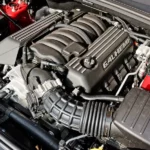
Here’s where things get interesting. The second-generation Xterra came with the beefier VQ40DE 4.0-liter V6, pumping out 261-265 horsepower. That’s a massive upgrade from the first gen. But early models (2005-2010) brought some serious problems that you absolutely need to know about.
The Infamous “Strawberry Milkshake of Death”
Let’s talk about the elephant in the room—or rather, the pink milkshake in the radiator. SMOD (Strawberry Milkshake of Death) affected 2005-2010 Xterras with automatic transmissions, and it’s exactly as bad as it sounds.
Here’s what happens: the factory Calsonic radiator has an internal transmission oil cooler tube that can rupture. When it does, coolant and transmission fluid mix together, creating a pink, strawberry milkshake-like substance. This mixture destroys your transmission from the inside out—eroding seals, ruining solenoid valves, and causing catastrophic damage.
Warning signs include:
- Transmission slipping while you’re driving
- Milky, pinkish coolant in your overflow tank
- Hard shifting or failure to shift gears
- Rumbling sensation when driving
Caught early, you might escape with a $500 repair—radiator replacement, fluid flushes, and an external cooler. Wait too long, and you’re looking at a complete transmission replacement costing several thousand dollars.
The good news? Manual transmission Xterras don’t have this problem at all since they skip the radiator-mounted cooler entirely. And if you’re buying a 2005-2010 automatic, make sure the previous owner replaced the radiator and added an external cooler.
Timing Chain Troubles in Early Second-Gen Models
Timing chain issues plagued 2005-2008 models due to manufacturing defects. The chains came with sharper edges that wore through plastic guides way too fast. You’ll hear it before it becomes catastrophic—a distinctive whining or rattling noise from the front of the engine, especially during cold starts.
Ignore it, and the chain can skip teeth, triggering cam and crank sensor codes, misfires, poor acceleration, and eventually complete engine failure with bent valves or rods. Repairs run $931-$1,364, making this a significant expense.
Many owners successfully replaced guides, tensioners, and chains as a complete assembly around 150,000-200,000 miles. It’s not cheap, but it’s way better than a destroyed engine.
The Turnaround: 2010-2015 Models Shine
Once Nissan fixed the major issues, late second-gen Xterras became rock-solid. The 2015 model earned a 79/100 reliability rating from J.D. Power and showed only a 20% chance of needing repairs. RepairPal’s database shows zero reported problems for that year.
The 2012-2014 models also proved dependable, with the 2013 showing just four NHTSA complaints. These years benefit from all the lessons Nissan learned fixing earlier problems.
Other Common Problems to Watch For
Fuel Level Sensor Failures
This one’s more annoying than dangerous. From 2001-2011, fuel level sensors regularly failed, giving you inaccurate fuel gauge readings. Your gauge might not reach full after filling up, or it’ll drop erratically while you’re driving. You’ll also see check engine code P0463.
The fix involves replacing the sensor or the entire fuel pump assembly. Not a safety issue, but definitely frustrating when you can’t trust your fuel gauge.
Radiator Leaks Beyond SMOD
Even aside from the transmission cooler problem, radiators in 2005 models leaked more than they should. Sometimes tightening the cap helped, but often you’d need to address the lower intake manifold. If you catch it early, repairs stay manageable. Let it go, and you’re back to SMOD territory.
Fuel Injector Issues
Multiple model years dealt with clogged or failed fuel injectors. Symptoms include misfires, power loss, hesitation when accelerating, excessive vibrations, and check engine lights. Not as severe as transmission or timing chain failures, but it’ll hurt your drivability and fuel economy until you replace the bad injectors.
How Long Do Nissan Xterras Actually Last?
With proper care, you’re looking at 200,000 miles minimum. But that’s just the baseline. Plenty of owners push these trucks to 225,000-300,000 miles with diligent maintenance.
The body-on-frame construction gives you a solid foundation. Reddit forums are full of owners bragging about their high-mileage Xterras. One owner detailed their 2000 model hitting 245,000 miles after multiple Burning Man trips, cross-country moves with trailers, and over a dozen Baja Mexico adventures. Sure, they replaced major components like the radiator, transmission, alternator, starter, and AC system—but the core engine and chassis kept going strong.
The secret to longevity?
- Follow Nissan’s maintenance schedule religiously
- Change oil on time with quality filters
- Address known issues before they become disasters (especially SMOD prevention on 2005-2010)
- Avoid rust-belt vehicles if possible
The VQ40DE Engine: Powerful but Requires Attention
The 4.0-liter VQ40DE V6 produces 261-275 horsepower and 281-288 lb-ft of torque. That’s serious power for both highway passing and off-road crawling. The engine’s fundamental design is robust—many exceed 200,000 miles with minimal drama.
Strengths:
- Uses a timing chain instead of belt (no scheduled replacement)
- Part of Nissan’s proven VQ engine family
- Capable of 300,000+ miles with proper maintenance
- Strong torque for towing up to 5,000 lbs
Weaknesses:
- Early versions (2005-2008) had those timing chain tensioner problems
- Requires manual valve adjustments every 60,000 miles (no hydraulic lifters)
- Some high-mileage engines burn oil between changes
- Ignition coil failures occasionally occur—and you need to replace all of them at once, not individually
Transmission Reliability: Manual Wins
Automatic Transmissions
First-gen automatics paired with the VG33 engine proved incredibly durable, often lasting 250,000+ miles. Second-gen automatics performed well in 2010-2015 models but suffered SMOD failures in earlier years.
Common automatic issues include delayed engagement from Park to Drive, whining or grinding during acceleration, and slipping on hills. The 2004 had particularly rough first-to-second gear transitions when cold.
Regular fluid changes using proper Nissan Matic-S fluid are critical. Don’t cheap out on generic transmission fluid.
Manual Transmissions
The six-speed manual is the reliability champion. It completely avoids SMOD, earns praise for smooth action and low effort, and feels engaging to drive. Paired with the VQ40DE, you’ll hit 0-60 mph in about 7.3 seconds—impressive for a truck-based SUV.
If you can find a manual Xterra in good shape, grab it. You’re dodging the biggest reliability headache these trucks face.
What You’ll Pay to Keep It Running
Here’s where the Xterra looks good compared to competitors. Annual maintenance averages $514 across all model years, well below the $652 average for all vehicles. The 2015 model drops even lower to $459 annually.
RepairPal gave the Xterra 3.9 out of 5.0 stars, ranking it 18th out of 26 compact SUVs. That’s above average, meaning repairs happen less frequently and tend to be less severe than segment competitors.
Common maintenance costs:
| Service | Price Range |
|---|---|
| Tire rotation | $49-72 |
| Suspension inspection | $98-143 |
| Engine oil light diagnosis | $122-179 |
| Fuel pump replacement | $780-1,156 |
| Alternator replacement | $559-983 |
| Timing chain tensioner | $931-1,364 |
Resale Value Holds Strong
The 2015 Xterra depreciated just 32% after five years—way better than the 45.5% average for all vehicles. People want these capable, affordable SUVs, especially since production ended in 2015. Limited supply keeps values steady.
Even older models hold value decently. A 2014 showed about 41% depreciation over three years, with resale values around $7,182 and trade-in near $5,395.
Off-Road Capability That Actually Works
The Xterra wasn’t built for mall cruising—it’s a legit off-roader. The body-on-frame construction, high ground clearance (up to 9.5 inches), and available four-wheel-drive handle serious terrain. Approach angles hit 33.2 degrees, letting you tackle steep obstacles.
Off-Road and Pro-4X trims add:
- Upgraded Bilstein shocks
- Electronic locking rear differential
- Heavy-duty skid plates
- Hill descent control and hill start assist
- Specialized off-road tires
The shared platform with the Frontier pickup makes modifications easy. The off-road community supports these trucks with tons of aftermarket parts and proven upgrade paths.
The interior matches the rugged exterior—durable hard plastics that clean easily but won’t win luxury awards. Rear seats fold completely flat, creating a level loading floor perfect for camping gear or mountain bikes. It’s practical, not pretty.
Fuel Economy: The Compromise
Let’s be honest—fuel economy stinks by modern standards. EPA ratings for 2013 4WD models show 15-16 mpg city and 20 mpg highway (17 combined). Two-wheel-drive versions do slightly better at 16 city, 22 highway, and 18 combined.
Real-world owners report 13-18 mpg in the city and 20-24 mpg on highways. The 4WD system adds about 265 pounds, cutting efficiency by roughly 8% in city driving and 5% on highways.
Given the powerful engine and 5,000-lb towing capacity, these numbers aren’t terrible for a truck-based SUV. But if you’re commuting 60 miles daily, you’ll feel it at the pump.
Best Years to Buy
Top Picks
2015: The absolute best choice. Zero reported problems in RepairPal’s database, a stellar J.D. Power rating, and modern features like NissanConnect infotainment. It’s the most refined Xterra ever built.
2012-2014: Excellent reliability after Nissan fixed earlier issues. The 2013 shows just four NHTSA complaints total. You’ll save money versus a 2015 without sacrificing much.
2010-2011: Transitional years where major problems got solved. More affordable than later models, still reliable when maintained.
2003-2004: Best first-gen options with fewer recalls and proven durability. You’ll sacrifice power for simplicity and lower prices.
Years to Skip
2005: The worst year with a 1 out of 10 FIXD reliability score. SMOD, timing chains, radiator leaks—it’s got them all.
2006-2008: Still plagued by SMOD and timing chain issues, though slightly better than 2005. If you’re considering these years, verify that previous owners addressed SMOD prevention with radiator replacement and an external cooler.
2002: Six recalls and three investigations make this first-gen year less appealing than other early models.
What Owners Actually Say
Owner satisfaction ratings hit 4.3 out of 5.0 stars, showing real-world happiness. People love the powerful, reliable engine, confident off-road performance, and practical cargo space. Many describe their Xterras as “unkillable” with proper maintenance.
Common praise includes:
- 100,000+ miles without major issues
- Durable interior that shrugs off abuse
- Flat-folding seats for maximum cargo flexibility
- Simple design with fewer things to break
The complaints are predictable:
- Poor fuel economy (16-19 mpg combined reality)
- Lack of luxury features
- Basic interior materials
- Limited rear seat comfort
- Truck-like ride quality
But here’s the thing—most owners acknowledge these aren’t flaws. They’re trade-offs for getting a capable, affordable off-roader. Multiple owners expressed regret after selling their Xterras, which tells you something about the emotional connection these trucks build.
So, Are Nissan Xterras Reliable?
Yes—but you need to be smart about which one you buy. Target 2010-2015 models, with 2015 being ideal if your budget allows. If you’re looking at 2005-2010, make absolutely certain the radiator was replaced and an external cooler added. Better yet, find a manual transmission and skip SMOD worries entirely.
First-gen models (2000-2004) offer solid basic transportation at bargain prices, though with less power and older tech. The VG33 engine’s proven durability makes these attractive for budget-conscious buyers who don’t need modern features.
Whatever you choose, commit to following Nissan’s maintenance schedule. These trucks reward diligent owners with 200,000-300,000 mile lifespans. Neglect them, and they’ll fail much sooner.
The Xterra delivers genuine off-road capability, low ownership costs, and straightforward mechanical design—all at prices well below competitors like the Toyota 4Runner. It’s not perfect, but for the right buyer, it’s exactly what you need.