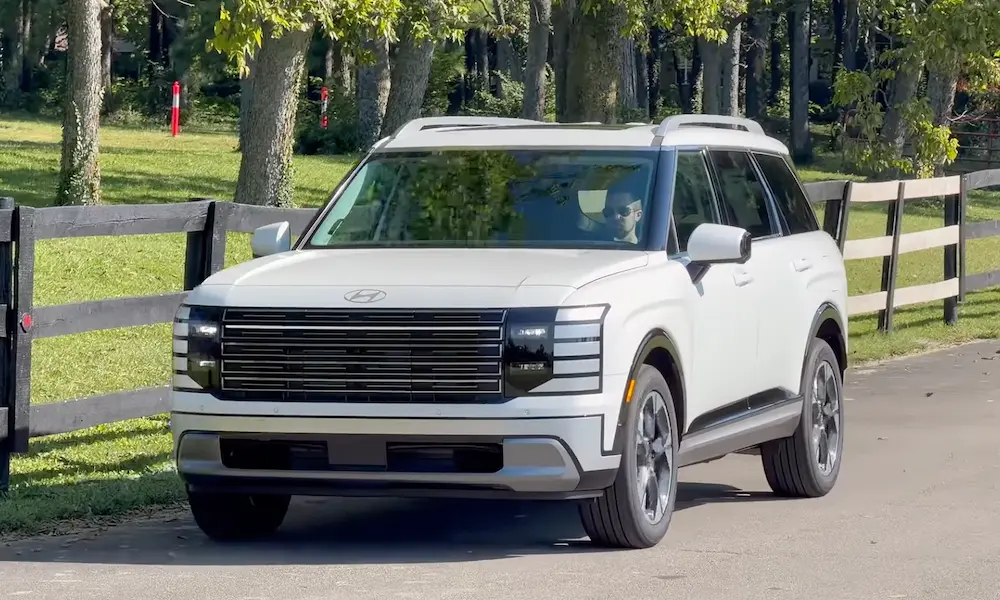
Shopping for a three-row family SUV and the Palisade keeps catching your eye? Good instinct. This guide covers everything — performance, safety scores, real ownership costs, and a few known quirks you’ll want to know before signing. Read to the end, because some of these details (especially the windshield issue) could save you a frustrating surprise down the road.
Why the Palisade Keeps Winning Over Families
The Hyundai Palisade launched for the 2020 model year and immediately disrupted the segment. J.D. Power scores it between 82 and 84 out of 100, placing it among the top competitors in its class. It consistently challenges the Honda Pilot, Toyota Highlander, and Ford Explorer — and usually beats them on value.
The 2026 redesign pushes things further. Hyundai added a hybrid powertrain option, a rugged XRT Pro trim, and a freshened interior. This vehicle isn’t coasting on its reputation.
V6 or Hybrid? Picking Your Powertrain
The 3.5-Liter V6: Reliable and Tow-Ready
The standard 2026 engine is a naturally aspirated 3.5-liter V6 producing 287 horsepower and 260 lb-ft of torque. That’s more than enough power for daily driving, highway merging, and hauling gear.
According to Car and Driver, properly equipped AWD models tow up to 5,000 pounds. A dedicated Tow Mode holds lower gears longer and adds engine braking on downhill grades — both essential when pulling a camper through mountain passes.
Fuel economy comes in at 19 mpg city and 25–26 mpg highway for front-wheel-drive models. Add AWD and you lose roughly 1 mpg across all cycles.
One genuine gripe: the shift-by-wire transmission can deliver choppy downshifts during sudden throttle inputs, particularly in wet weather. Some owners also notice a slight lunge when the stop-start system re-engages at traffic lights. Neither issue is a dealbreaker, but both are worth knowing.
The 2026 Hybrid: More Power, Much Less Fuel
The hybrid system pairs a turbocharged 2.5-liter four-cylinder engine with an electric motor and a 1.65-kWh battery. Combined output hits 329 horsepower and 339 lb-ft of torque — actually stronger than the V6.
The EPA estimates 34 mpg city, 33 mpg highway, and 33 mpg combined for front-wheel-drive hybrid models. That’s a massive efficiency leap. The tradeoff is a lower 4,000-pound tow rating and a higher purchase price.
No plug required. The system recharges through regenerative braking and excess engine output. No home charger, no special parking spot needed.
| Powertrain | Horsepower | Towing Capacity | Combined MPG |
|---|---|---|---|
| 3.5L V6 (FWD) | 287 hp | 5,000 lbs | 21 mpg |
| 3.5L V6 (AWD) | 287 hp | 5,000 lbs | ~20 mpg |
| 2.5L Hybrid (FWD) | 329 hp | 4,000 lbs | 33 mpg |
How Does the Palisade Handle Snow and Ice?
HTRAC AWD: Proactive, Not Reactive
The optional HTRAC all-wheel-drive system continuously monitors steering angle, throttle position, and individual wheel speeds. It shifts torque to the rear wheels before traction loss occurs — not after.
Engage Snow Mode and the behavior changes noticeably. Throttle response softens, the transmission starts in second gear from a standstill, and the HTRAC coupling locks for even torque distribution across all four wheels before you even start moving.
Owners in high-snowfall regions consistently report strong confidence on unplowed roads and icy intersections. The system feels predictable and maintains momentum well. That said, winter tires still matter. A Palisade on dedicated winter tires will out-brake an AWD model on all-season tires every single time. Physics wins.
The XRT Pro: Off-Road Credentials
The new XRT Pro trim adds a factory suspension lift, raising ground clearance to 8.4 inches. It also includes all-terrain tires, an electronic locking rear differential, and rugged recovery hooks. If your family adventures involve muddy campgrounds, deep snow, or forest service roads, the XRT Pro is purpose-built for it.
Interior: The Palisade’s Strongest Card
The cabin earns consistent praise as one of the best in the segment. Hyundai used acoustic-laminated windshield and front window glass along with extensive sound deadening to keep road and wind noise genuinely low — a quality you’d expect from a luxury vehicle.
Seating flexibility is excellent. Base trims seat eight with a second-row bench. Mid and upper trims offer captain’s chairs for seven, with a center aisle to the third row. Third-row space accommodates adults comfortably for shorter trips, and higher trims add power folding and reclining.
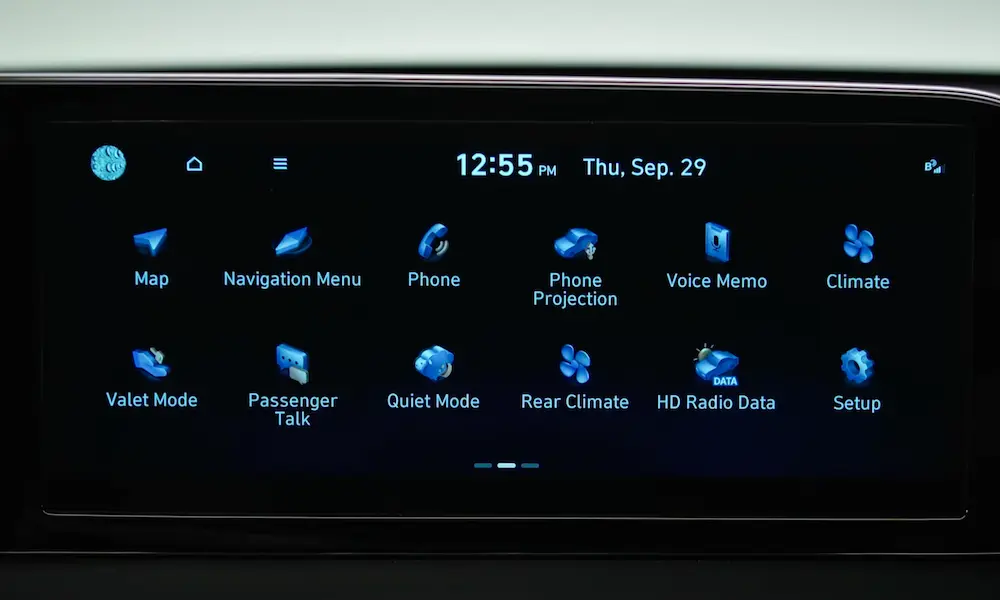
Parents will appreciate the Passenger Talk intercom system. It broadcasts the driver’s voice through the rear speakers so you can talk to third-row kids without turning around or shouting. Rear climate control gives back-seat passengers their own temperature settings, though parents can lock those controls from the front display.
Cargo Capacity at a Glance
| Configuration | Cargo Volume |
|---|---|
| Behind 3rd Row | 19.1 cubic feet |
| Behind 2nd Row | 46.3 cubic feet |
| Max (all seats folded) | 86.7 cubic feet |
That 86.7-cubic-foot maximum beats most direct competitors. Bikes, furniture, camping gear — it fits.
Safety Ratings: Near the Top of the Class
IIHS: Top Safety Pick+
The 2026 Palisade earned the IIHS Top Safety Pick+ — the organization’s highest honor. Earning it required a “Good” rating in a newly updated rear-passenger crash test with stricter 2026 criteria.
Earlier models built before August 2024 had a real problem. The rear shoulder belt moved too far toward the crash dummy’s neck during impact, earning a “Poor” rating and indicating meaningful injury risk to rear passengers. Hyundai acted fast. For 2026 models built after November 2025, redesigned rear seat belt buckles and restraint geometry resolved the issue and secured the “Good” rating.
Structural performance in that same test was impressive. Maximum lower hinge pillar intrusion measured just 7 centimeters. Steering column movement registered at essentially zero. The driver’s Head Injury Criterion score came in at 99 — well below the threshold for serious trauma.
NHTSA Crash Test Results
The NHTSA safety ratings tell a similarly strong story. The Palisade earned a perfect five-star score in side-impact crash testing. In the full-overlap frontal test, it earned four stars overall — with five stars for the driver and four stars for the front passenger. Rollover resistance also returned four stars, resulting in an overall four-star NHTSA rating.
SmartSense Driver Assistance: What’s Included
- Forward Collision-Avoidance Assist — detects vehicles and pedestrians, auto-brakes when needed
- Blind-Spot Collision Warning — alerts you if a vehicle sits in your blind spot during a lane change
- Safe Exit Assist — temporarily locks rear doors when it detects approaching traffic from behind
- Rear Occupant Alert — honks the horn and sends a BlueLink notification if movement appears in locked rear seats
- Highway Driving Assist 2 (HDA 2) — handles adaptive cruise, lane centering, and assisted lane changes on divided highways
Trim Levels: Which One Makes Sense for You?
| Trim | Starting MSRP | Seating | Highlights |
|---|---|---|---|
| SE | $41,035 | 8 | 12.3″ touchscreen, SmartSense, dual-zone climate |
| SEL | $43,540 | 8 | Heated front seats, power liftgate, wireless charging |
| SEL Convenience | $44,970 | 7 | Captain’s chairs, sunroof, digital key |
| SEL Premium | $46,900 | 7 | Ventilated seats, 360° camera, heated/ventilated 2nd-row seats |
| XRT Pro | $51,470 | 7 | Standard AWD, all-terrain tires, locking rear diff |
| Limited | $51,370 | 7 | Leather, panoramic sunroof, head-up display |
| Calligraphy | $56,160 | 7 | Nappa leather, massage seat, remote parking assist |
The SEL Premium delivers the best value for most buyers. You get ventilated seats, a 360-degree parking camera, and heated rear captain’s chairs — all under $47,000. The SE gives you the same powerful engine, spacious interior, and full safety suite at the most accessible price. The Calligraphy targets luxury intenders who want near-premium finishes without paying European luxury prices. Hybrid powertrains are available on SEL, SEL Premium, Limited, and Calligraphy trims at an additional premium.
What Does It Actually Cost to Own?
Depreciation, Fuel, and Insurance
Over five years, a Palisade loses roughly $19,552 to $27,776 in value depending on trim. That sounds steep, but the Palisade’s retained value benchmarks well for its class — J.D. Power assigns it a resale score of 85 out of 100.
Fuel costs for V6 models run about $19,409 over five years at 15,000 miles annually. Hybrid buyers pay more upfront but recover that gap through lower fuel bills — especially meaningful for high-mileage drivers. Insurance runs approximately $6,800–$6,859 total over five years for a driver with a clean record.
Maintenance Costs and Warranty
Scheduled maintenance over five years costs around $4,929, below the segment average. The probability of a major mechanical repair in that window sits at just 11.58%.
The warranty package is genuinely class-leading:
- 10-year / 100,000-mile powertrain warranty (original owner)
- 5-year / 60,000-mile bumper-to-bumper warranty
- 7-year / unlimited-mile anti-perforation warranty
- 10-year / 100,000-mile hybrid battery warranty
That powertrain coverage alone adds real financial value over a five-year ownership window.
Known Issues You Should Know About
The Palisade has real-world quirks worth understanding before you buy:
Windshield cracking: This is the biggest one. Early models from 2020 through 2024 carry a well-documented windshield defect. A flaw in the windshield molding places stress on the acoustic glass, causing cracks from minor rock chips or even thermal changes. Average repair costs run about $1,690, often at low mileage. A class-action lawsuit covers this issue. Used buyers should check production dates carefully.
Transmission shifts: Abrupt downshifts under hard throttle are reported occasionally, particularly in rain.
Stop-start lunge: The engine stop-start system can cause a slight jolt when it re-engages. Common in modern vehicles, but some drivers find it persistent.
Infotainment quirks: The system occasionally needs over-the-air updates, and the voice assistant struggles with complex navigation requests.
Adaptive cruise control: Some drivers find the system brakes too abruptly when vehicles merge nearby. It can also feel jerky during passing maneuvers.
The core mechanical reliability of the V6 engine, AWD system, and transmission has proven durable across hundreds of thousands of accumulated owner miles.
Palisade vs. Genesis GV80: Which Makes More Sense?
This comparison comes up constantly for buyers in the $55K–$60K range.
The GV80 starts just under $60,000 on a rear-wheel-drive chassis with engines up to 375 horsepower. Materials are more opulent — open-pore wood trim, a 27-inch OLED display, and an optional Bang & Olufsen audio system. It also requires premium fuel.
The Palisade Calligraphy at $56,160 runs on regular unleaded, seats eight comfortably, and offers 46.3 cubic feet behind the second row vs. the GV80’s 38.7 cubic feet. Features like ventilated second-row seats and the Passenger Talk system would push a comparably equipped GV80 beyond $75,000.
If space, value, and practicality drive your decision, the Palisade wins. If you prioritize rear-wheel-drive dynamics, brand prestige, and a more intimate luxury cabin, the GV80 earns its price.
Frequently Asked Questions
Where is the Hyundai Palisade built?
Hyundai assembles every Palisade destined for the U.S. market at its Ulsan, South Korea plant. The vehicles ship to American coastal ports before reaching dealerships.
What’s the turning radius on the Palisade?
The Palisade requires 39.2 feet to complete a full U-turn. Its long wheelbase means multi-point turns are often necessary in tight parking garages or narrow driveways.
Does the Palisade need premium fuel?
No. Both the 3.5-liter V6 and the 2.5-liter hybrid run at peak efficiency on regular 87-octane gasoline. That saves you roughly 85 cents per gallon compared to vehicles requiring premium.
Does the Palisade include a spare tire?
Yes. It comes with a temporary compact spare mounted underneath the rear exterior — not inside the cargo area. That’s a meaningful advantage over models that only include an inflation kit.
Does the Palisade Hybrid qualify for federal EV tax credits?
No. The hybrid system charges exclusively through regenerative braking and excess engine power. It has no plug-in port and no battery large enough for extended electric-only range, so it doesn’t qualify for federal EV credits.
What’s the fuel tank size on the standard V6?
The V6 Palisade carries an 18.8-gallon tank. Combined with its highway fuel economy, that gives you a cruising range of roughly 470 miles on a full tank under ideal highway conditions.
Do most trims include roof rails?
Yes. The SEL and above come standard with integrated side roof rails. The XRT Pro adds heavy-duty black cross rails specifically designed for cargo baskets, ski racks, or lightweight rooftop tents.