Trying to figure out if Hyundai Blue Link is worth it before your free trial ends? Good timing. The answer isn’t a simple yes or no — it depends on what you drive, when you bought it, and how much your privacy matters to you. Stick around, because some of what you’re about to read might genuinely surprise you.
What Is Hyundai Blue Link, Exactly?
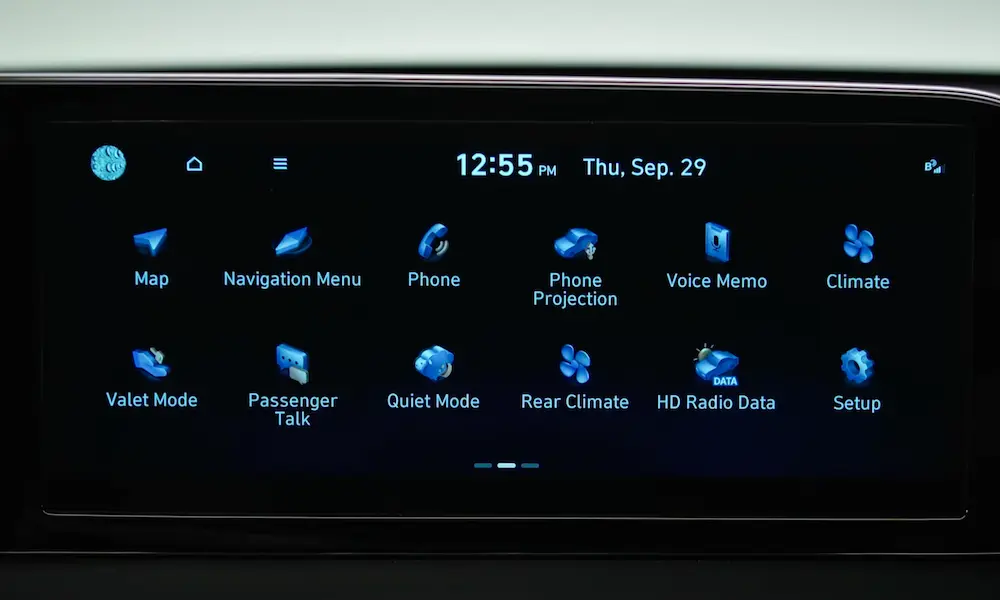
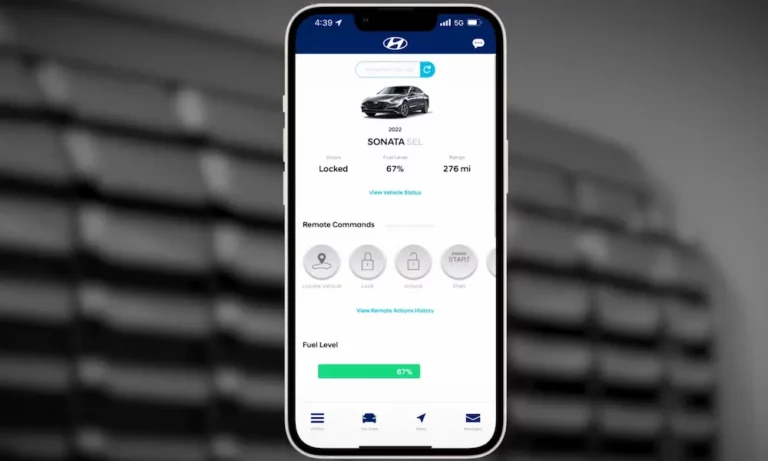
Blue Link is Hyundai’s connected car platform. It uses an embedded cellular modem in your vehicle to talk to Hyundai’s servers, which then talk to an app on your phone.
Think of it as your car’s internet connection. It powers everything from remote engine start to emergency SOS calls to EV charging schedules.
But here’s the thing — that cellular connection isn’t permanent. Hyundai’s own service terms confirm that if the network your car runs on gets discontinued, your connected features disappear with it. That already happened once.
The 3G Sunset: A Warning Shot
In January 2023, Verizon killed its legacy 3G network. Overnight, Hyundai vehicles from model years 2012 through 2019 lost their Blue Link connection entirely — including automatic crash notification and SOS emergency services.
That triggered a federal class-action lawsuit, with plaintiffs arguing Hyundai sold cars with safety systems that were guaranteed to expire prematurely.
Current Blue Link hardware runs on 4G LTE. That’s fine for now — but the same terms still apply. When 4G eventually winds down, your features go with it.
Blue Link vs. Blue Link+: What’s the Difference?
This is where most people get confused. There are two completely different systems depending on your model year.
| Feature | Legacy Blue Link (2023 and older) | Blue Link+ (2024 and newer, plus 2023 IONIQ 6) |
|---|---|---|
| Remote start & locks | Paid subscription | Free for life (original owner) |
| Emergency SOS | Paid subscription | Free for life of the network |
| EV charge scheduling | Paid subscription | Free for life (original owner) |
| OTA map updates | Paid after trial | Free for 3 years from first use |
| Cost for original owner | ~$198+/year | $0 |
Hyundai launched Blue Link+ as a major pivot away from the subscription model. For original buyers of 2024 and newer models, the value is genuinely excellent — Hyundai estimates it saves owners over $350 a year compared to the old structure.
The Legacy Pricing Problem: Forced Bundling
If you drive a 2023 or older model, the pricing structure is where things get frustrating.
Legacy Blue Link splits features into three tiers:
- Connected Care (~$9.90/month): Emergency SOS, diagnostics, roadside assistance
- Remote (~$9.90/month): Remote start, lock/unlock, stolen vehicle recovery, safeguard alerts
- Guidance (~$9.90/month): Cloud-enhanced navigation
Here’s the catch: you can’t subscribe to the Remote package alone. Connected Care is mandatory first. So if you just want remote start, you’re paying for two packages — roughly $198 per year minimum.
This forced bundling frustrates a huge chunk of owners who only want remote start and door locks. They end up subsidizing an emergency call center they never use.
The Discount Code Trick
One way around the full retail price: promotional codes. Owners actively share codes like BLUELINK50 on forums, which can cut your monthly fees by 50% — bringing two packages down to about $9.90/month. That’s actually reasonable.
The downside? These codes expire without warning, and you have to actively hunt for new ones to avoid reverting to full price.
What About Buying a Used Hyundai?
The used market is where Blue Link+ loses a lot of its shine.
The lifetime free access doesn’t transfer. Here’s exactly what you get:
| Buyer Type | Blue Link+ Basic (Safety/SOS) | Blue Link+ Advanced (Remote Start, EV Tools) |
|---|---|---|
| New original owner | Free for life of network | Free for life of network |
| Certified Pre-Owned buyer | Free for life of network | 1-year free trial, then ~$12.99/month |
| Standard used car buyer | Free for life of network | 3-month free trial, then ~$12.99/month |
So if you bought a used 2024 Hyundai expecting lifetime free connected services, you’ve got three months before the paywall hits. The basic safety features stay free, but remote start and EV scheduling don’t.
Does the App Actually Work?
This is the part the marketing brochures skip over.
The good news: Hyundai’s app ranks highest among mass-market brands in the J.D. Power 2025 OEM EV App Report. For internal combustion vehicles, it scored 798 points — just behind sister brand Kia Access at 805 in J.D. Power’s ICE App rankings.
The bad news: “best in class” still isn’t great. Here’s what real owners regularly report:
- Latency issues: Commands take 10–15 seconds in ideal conditions. In weak signal areas, delays stretch to several minutes
- Failed remote starts: The “no response to remote start” error is a common complaint
- Ghost notifications: False alerts claiming your doors are unlocked when they’re not
- Sleep mode: Leave your car parked for 4–7 days and the modem enters a power-saving sleep. All remote commands stop working until you physically start the car
- Server outages: When Hyundai’s backend goes down, the app is completely dead
Standing in the rain waiting five minutes for your door to unlock isn’t the convenience the commercials promise.
The Privacy Issue Nobody Talks About Enough
This is where things get serious. And potentially expensive in ways you don’t expect.
Your Driving Score Could Be Costing You Money
Blue Link includes a feature called the “Driving Score.” It tracks your hard braking, rapid acceleration, late-night driving, and speed. Hyundai marketed this as a way to unlock insurance discounts through Usage-Based Insurance partners.
What actually happened? Hyundai shared that behavioral data with Verisk and LexisNexis — two massive insurance data brokers — often without clear, informed consent from owners.
Drivers who thought they’d opted out discovered their data was already compiled. And instead of discounts, many saw insurance premiums jump 20–50%. Some went from $1,600 to $2,300 a year — solely based on telematics data.
Think about that math: paying $100/year for remote start convenience while unknowingly triggering a $700 insurance increase is a terrible deal.
Class-Action Lawsuits Are Already Filed
Plaintiffs argue this violates state privacy laws and the Fair Credit Reporting Act. Keller Rohrback is currently investigating Honda, Hyundai, and Kia for unauthorized data sharing. General Motors already pulled the plug on their version of this program entirely.
How to Protect Yourself Right Now
If you use Blue Link, do these four things:
- Disable Driving Score in the app — dig into settings and turn it off
- Opt out directly with LexisNexis at their opt-out portal — be aware they’ll ask for personal info to locate your file
- Request your data file — under the Fair Credit Reporting Act, you can demand a copy of your consumer disclosure to see exactly what’s been shared
- Check Verisk — submit an opt-out request there too
The Aftermarket Alternative: Skip the Subscription Entirely
Here’s something worth knowing: your car already has all the physical hardware needed for remote start. The cellular subscription is essentially a software gatekeeper on features you already paid for.
Does Your Key Fob Already Do Remote Start?
Some Hyundai models support fob-based remote start without any Blue Link subscription. Try pressing Lock, waiting one second, then holding the remote start button. It works on select trims entirely independent of cellular networks.
Plug-and-Play Bypass Modules
For cars without fob remote start, aftermarket modules like MyKeyPremium offer a compelling one-time-cost alternative. They connect directly to your car’s CAN bus using factory-style T-harness connectors — no wire cutting required.
You activate them using your existing fob (usually: Lock → pause 1 second → Lock again). The climate control resumes exactly as you left it. The engine runs for 15 minutes then shuts off automatically.
Cost: $150–$300 once. No subscriptions. No latency. No data brokers. No 4G sunset risk.
Compare that to legacy Blue Link subscription costs over a 5-year ownership period:
| Solution | 5-Year Cost | Data Privacy Risk | Cellular Dependency |
|---|---|---|---|
| Blue Link legacy (2 packages) | ~$990 at full price | High | Yes |
| Blue Link+ (used car buyer) | ~$779 after trial | High | Yes |
| MyKeyPremium module | ~$150–$300 once | Zero | None |
| Factory fob remote start | $0 | Zero | None |
The only real limitation of fob-based systems is range. If you park underground or in a massive apartment complex, the radio frequency signal might not reach your car. In that case, a traditional aftermarket system with a stronger transmitter (like Viper or Compustar) is worth exploring, though installation requires a professional.
Map Updates: The Hidden Third-Year Cliff
Blue Link also handles over-the-air map and software updates. Map accuracy degrades roughly 15% per year, so keeping navigation current matters — especially if you rely on the built-in system.
Good news: OTA map updates are free for 3 years from your first use date. After that, they cost extra — even if you’re a Bluelink+ owner who gets remote features free for life.
The Free Manual Workaround
Don’t want to pay for OTA delivery after year three? Hyundai’s Navigation Updater tool lets you download updates to a USB drive and install them yourself. The maps are free — you’re just avoiding the cellular delivery fee.
Fair warning: the download files regularly exceed 80GB. If your internet connection is slow or your laptop storage is tight, it’s a real headache. In that case, pre-loaded USB drives are available from Mapnsoft for around $25.
So, Is Hyundai Blue Link Worth It?
Here’s the straightforward breakdown:
Yes, it’s worth it if:
- You’re the original owner of a 2024 or newer Hyundai (it’s free — take it)
- You live somewhere with brutal winters or summers and use remote climate control daily
- You can lock in a 50% promo code for the legacy system and keep costs around $10/month
- You immediately disable Driving Score and opt out of data brokers
No, it’s not worth it if:
- You bought your Hyundai used and face $12.99/month after a short trial
- You’re on legacy Blue Link and paying full price for forced bundle packages
- Privacy matters to you and you’d rather not have your braking habits sold to insurance companies
- You only want remote start — a one-time $150–$300 aftermarket module does the same job without the ongoing fees or data exposure
The platform itself is genuinely capable. For first owners with free access, it’s a solid perk. But for everyone else weighing subscription costs against real privacy risks, a simple fob-based or plug-and-play aftermarket solution often delivers better value with far less baggage.