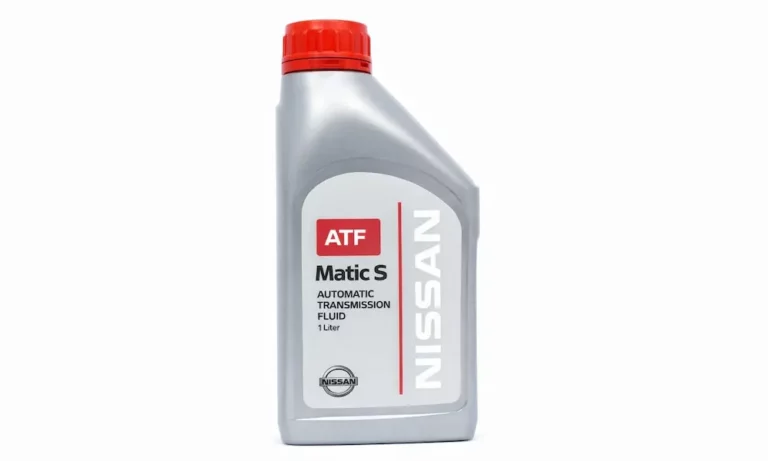
Finding the right Nissan Matic S equivalent feels harder than it should be. The wrong fluid can quietly destroy a transmission worth thousands of dollars. This guide breaks down exactly what Matic S is, which alternatives actually work, and which combinations you must never mix. Read to the end — the CVT section alone could save your gearbox.
What Is Nissan Matic S and Why Does It Matter?
Nissan Matic S is a fully synthetic, low-viscosity automatic transmission fluid built specifically for modern Nissan and Infiniti automatics. It replaced the older Matic J specification as JATCO gearboxes evolved into five, six, and seven-speed units.
These newer transmissions run tighter tolerances, generate more heat, and shift more frequently than older four-speed units. They need a fluid that does three jobs at once:
- Acts as a hydraulic medium to move clutch packs
- Works as a coolant to pull heat away from gears
- Provides friction-modified surface protection to prevent clutch shudder
Generic or outdated fluid can’t reliably do all three. That’s why picking the right Nissan Matic S equivalent matters so much.
Matic S Physical Specs You Need to Know
Before you buy any alternative, you should understand what you’re trying to match. The key properties of Matic S set a clear technical benchmark.
Kinematic viscosity at 100°C sits between 5.2 and 5.7 centistokes (cSt). That’s deliberately low — it reduces internal drag, which helps fuel economy. Older fluids used to hover around 7.5 cSt. The difference sounds small, but it’s significant inside a tight modern gearbox.
Viscosity index (VI) ranges from 153 to 170. A high VI means the fluid stays stable whether it’s -40°C outside or the transmission is cooking at operating temperature. Synthetic base stocks achieve this because their molecular structure is more uniform than mineral oil.
Pour point drops as low as -60°C in premium formulations like Red Line D6. This matters for cold starts — thick fluid in a cold transmission causes delayed engagement and can damage the pump.
Here’s how the major formulations compare across these critical specs:
| Property | Nissan/Idemitsu Type S | Midland (Oel-Brack) | Ardeca Matic S-41 | Red Line D6 ATF | Valvoline MaxLife |
|---|---|---|---|---|---|
| KV @ 100°C (cSt) | 5.2 | 5.7 | 6.2 | 6.3 | 5.91 |
| Viscosity Index | N/A | 170 | 153 | 163 | 156 |
| Flash Point (°C) | N/A | 180 | 210 | 220 (est) | 214 (est) |
| Pour Point (°C) | -15 | -46 | -48 | -60 | -48 |
| Brookfield @ -40°C (mPa.s) | 10,900 | 10,000 | 9,500 | 4,500 | 10,200 |
| Color | Red | Red | Amber | Red | Red |
Matic D vs Matic J vs Matic S: Understanding the Family Tree
These three fluids confuse people constantly. They’re not interchangeable.
Nissan’s fluid progression follows a clear line:
| Fluid Type | Typical Application | Backwards Compatible? |
|---|---|---|
| Matic D | Older 3/4-speed automatics; power steering | No |
| Matic J | Early 5-speed automatics; many 4WD transfer cases | Partial |
| Matic S | Modern 5/6/7-speed automatics; universal replacement for J | Yes (transmissions only) |
The critical point: Matic S supersedes Matic J in transmission applications. You can use Matic S to top off or replace Matic J. But it doesn’t work the other way around — Matic J is not an acceptable substitute in a Matic S transmission.
The Transfer Case Exception You Can’t Ignore
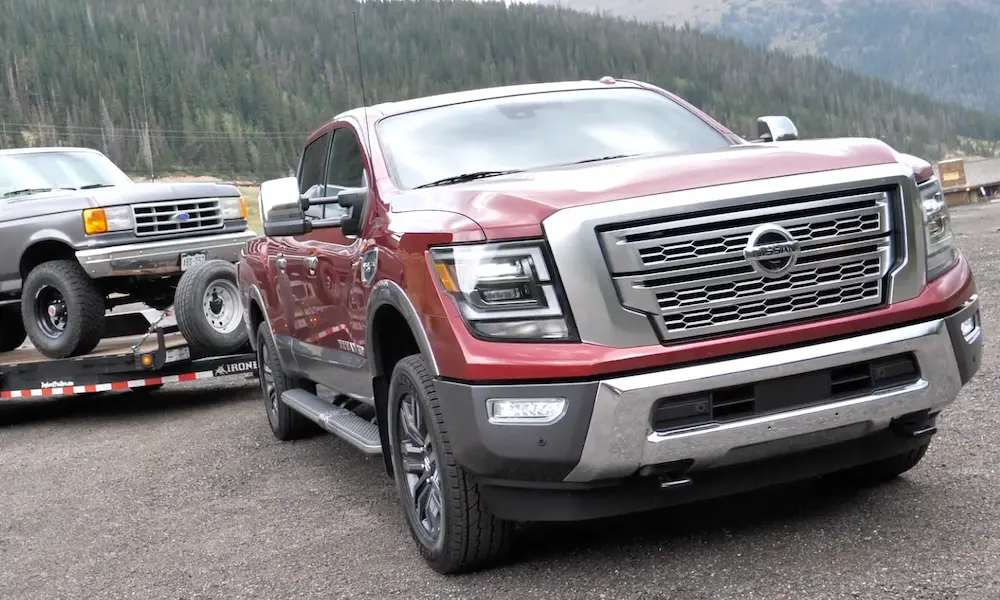
Here’s where owners get into real trouble. Technical Service Bulletin 08-049 makes this clear: in many 4WD and AWD Nissan models — including the Frontier, Titan, and Xterra — the transmission uses Matic S while the transfer case still requires Matic J or even Matic D.
The transfer case uses different friction materials. Its clutch packs need a different friction coefficient. Pour Matic S into a transfer case that requires Matic J, and you risk improper torque distribution and accelerated wear of the friction discs.
Always check the Electronic Service Manual (ESM) for your specific model before assuming one fluid covers the whole drivetrain.
The Best Nissan Matic S Equivalents on the Market
You’ve got several solid options depending on your budget, vehicle use, and how much peace of mind you want.
Idemitsu ATF Type S — The Closest OEM Match
Idemitsu ATF Type S is the safest choice for most owners. Idemitsu is a primary global supplier of factory-fill fluids for Japanese automakers, including Nissan. This means their Type S is engineered to match the exact frictional and chemical benchmarks set during the transmission’s development.
It’s specifically compatible with Matic D, Matic J, and Matic S applications. If you want the closest thing to pouring in factory fluid, this is it.
Valvoline MaxLife Multi-Vehicle ATF — The High-Mileage Pick
Valvoline MaxLife explicitly covers Matic D, J, K, S, and W applications. It adds cleaning agents to tackle existing varnish buildup and seal conditioners to address the leaks that appear in higher-mileage transmissions.
Its viscosity profile sits slightly higher than some ultra-low-viscosity fluids. For a transmission with some wear-related internal clearances, that extra film thickness can help. It’s also widely available and competitively priced — an important real-world advantage.
Amsoil Signature Series — The Severe-Duty Standard
Amsoil Signature Series targets vehicles in tough conditions: towing, hauling, extreme heat. The technical proof backs it up.
In the FZG Gear Wear Test, it achieved a “Pass” at stage 12 — the highest possible rating. A 180,000-mile severe-service taxi test showed the fluid retained more than 80% of its original oxidation inhibitors. For Titan or Frontier owners who actually work their trucks, this is the upgrade worth considering.
Red Line D6 ATF — The Shear-Stability Champion
Red Line D6 uses polyol ester base stocks, which are more heat-resistant than standard polyalphaolefin (PAO) synthetics. The key advantage here is shear stability.
Most Dexron VI-style fluids shear from 6.0 cSt down to 5.5 cSt during their service life. Red Line D6 holds at no lower than 6.1 cSt throughout — meaning your protection doesn’t quietly degrade between changes. For performance-focused Nissan owners or anyone running hard, D6 holds its spec longer than most.
Can You Use Dexron VI or Mercon LV Instead?
Lots of owners ask this. The short answer: it depends on the specific product.
Dexron VI and Mercon LV are both low-viscosity synthetic specifications developed around the same time as Matic S. Many aftermarket fluids list all three specs on a single datasheet. There’s real overlap.
But friction modification is where the difference matters. Dexron VI tunes its friction modifiers for GM’s Hydra-Matic clutch materials. Matic S tunes for Nissan’s JATCO units. The base viscosity might match. The friction behavior might not.
The safer option: look for fluids labeled JASO 1A-LV. This Japanese standard is specifically built to cover Matic S, Toyota WS, and Honda DW-1 in one specification — meaning its friction profile is tuned for Japanese transmissions, not American ones.
| Specification | Primary Use | Key Strength |
|---|---|---|
| Nissan Matic S | Nissan/Infiniti | Anti-shudder, high thermal stability |
| Dexron VI | General Motors | Shear stability, backwards compatibility |
| Mercon LV | Ford | Fuel efficiency, low-temp fluidity |
| Toyota WS | Toyota/Lexus | Parasitic loss reduction |
| JASO 1A-LV | Japanese OEMs | Friction requirements for Japanese gearboxes |
The Matic S vs CVT Fluid Mistake That Wrecks Transmissions
This is the most dangerous mix-up in Nissan maintenance. Get this wrong and you’re looking at catastrophic mechanical failure — not a rough shift, total failure.
Nissan uses traditional planetary automatics in models like the Titan, Frontier, and 370Z. It uses CVTs in the Altima, Maxima, Sentra, and Rogue. These two transmission types are fundamentally different, and their fluids are not interchangeable.
A CVT uses a steel belt running between variable-diameter pulleys. It needs high metal-to-metal friction to keep the belt from slipping. Matic S is designed for friction-and-release clutch packs — it deliberately reduces metal friction. It has no business going into a CVT.
If you put Matic S in a CVT that requires NS-2 or NS-3 fluid:
- The belt slips on the pulleys
- Localized overheating starts immediately
- Pulley surface damage follows quickly
- Total transmission failure isn’t far behind
Going the other direction — CVT fluid in a planetary automatic — causes clutch glazing because the friction profile is too aggressive for the paper or semi-metallic clutch materials.
Before you buy any fluid, confirm whether your Nissan has a traditional automatic or a CVT. Check the owner’s manual. This single step prevents the most expensive mistake in Nissan maintenance.
How Often Should You Change Nissan Matic S?
The “lifetime fluid” label is marketing fiction. Modern synthetic fluids last longer than mineral oils, but they do degrade. Here’s a practical maintenance hierarchy:
- Level 1 — Basic: Check fluid level and inspect for leaks at every oil change
- Level 2 — Standard: Single drain-and-fill every 30,000 miles
- Level 3 — Comprehensive: Full fluid exchange every 60,000 to 100,000 miles, including filter replacement where accessible
- Level 4 — Severe Service: High-performance synthetics like Amsoil Signature Series or Red Line D6 for towing, hauling, or high-heat driving
Drain-and-Fill vs Machine Flush
A basic drain-and-fill only removes about 3 to 4 quarts from a 10 to 12-quart system — the rest stays in the torque converter and cooler lines. The 3x drain-and-fill method (drain, refill, drive briefly, repeat three times) replaces roughly 90% of the fluid without specialized equipment.
A machine flush replaces nearly 100% in one session. It’s effective, but use caution on high-mileage vehicles that haven’t been serviced regularly. Fresh, high-detergency fluid can loosen accumulated varnish and send it straight into the valve body — which creates new problems faster than it solves old ones.
Warning Signs Your Transmission Fluid Needs Attention
Your transmission will tell you when it’s struggling. Watch for these signals:
- Shift hunting or delayed cold-start engagement — fluid has thickened or viscosity index improvers have sheared down
- Torque converter shudder (a vibration at steady cruise speed) — anti-shudder friction modifiers are depleted; a full fluid exchange with a quality Matic S equivalent often resolves this without mechanical repairs
- Harsh shifts or hunting between gears — additive package is exhausted
- Dark brown or burnt-smelling fluid — oxidation has progressed; change immediately
For transmissions you want to keep running past 150,000 miles, fluid analysis is worth the investment. Labs test for wear metals like iron (gears and bearings), copper, and lead (bushings). They also measure Total Acid Number (TAN) — when acidity climbs too high, the fluid starts corroding solenoids and valve body surfaces rather than protecting them.
The Bottom Line on Nissan Matic S Equivalents
The right Nissan Matic S equivalent depends on your specific situation:
- Stock vehicle, normal driving: Idemitsu ATF Type S is the closest match to factory fill
- High-mileage vehicle: Valvoline MaxLife adds seal conditioners and cleaning agents that help aging transmissions
- Towing or severe duty: Amsoil Signature Series delivers tested wear protection beyond factory spec
- Performance or maximum protection: Red Line D6 holds its viscosity throughout the service interval
What you absolutely don’t do: guess, mix random fluids, or assume one bottle covers the entire drivetrain. Check your ESM, confirm your transmission type, and verify the JASO 1A-LV rating on any aftermarket fluid. Your transmission will last longer — and so will your wallet.