Got a check engine light and a Nissan P1273 code staring back at you? You’re probably wondering if it’s a quick fix or a wallet-draining repair. The good news is that this code is very diagnosable. Stick around, because this guide walks you through exactly what’s happening, why it happens, and how to fix it the right way.
What Is the Nissan P1273 Code?
The Nissan P1273 code means Air Fuel Ratio Sensor 1, Bank 1 – Lean Shift Monitoring. In plain English, your car’s computer (the ECM) has detected too much oxygen in the exhaust on the Bank 1 side of the engine.
Here’s what that means:
- Bank 1 = the side of the engine with cylinder number one
- Sensor 1 = the upstream sensor, sitting before the catalytic converter
- Lean shift = the ECM sees more oxygen than it expects based on how much fuel it’s sending
This isn’t the same as a generic lean code like P0171. The P1273 is a Nissan-specific code that monitors the baseline calibration and gradual drift of the primary air-fuel ratio (AFR) sensor. It’s a more precise alarm system.
| Code | What It Means | Primary Focus |
|---|---|---|
| P1273 | AFR Sensor 1, Bank 1 – Lean Shift | Sensor drift and baseline calibration |
| P0171 | System Too Lean (Bank 1) | Overall fuel trim compensation |
| P1283 | AFR Sensor 1, Bank 2 – Lean Shift | Same as P1273 but on Bank 2 |
| P0420 | Catalyst Efficiency Below Threshold | Downstream sensor and converter health |
How the Air-Fuel Ratio Sensor Actually Works
Your Nissan uses a wideband AFR sensor, not the older on/off style oxygen sensor. This sensor gives the ECM a continuous, precise reading of the exhaust gas mixture — not just “rich” or “lean.”
Inside the sensor, there are two cells: a concentration cell and an oxygen pump cell. They’re separated by a tiny diffusion gap. The ECM pushes electrical current through the pump cell to move oxygen ions in or out of that gap until the concentration cell hits its target voltage. The amount of current needed tells the ECM the exact air-fuel ratio.
For all this to work, the ceramic element — made of zirconium dioxide — must reach between 700°C and 800°C. An integrated heater handles that job. If the heater fails, or if the ceramic gets contaminated by oil or silicone, the sensor drifts and P1273 shows up.
Common Causes of the Nissan P1273 Code
There’s no single cause. P1273 can come from three different systems. Here’s a breakdown.
Vacuum Leaks and Unmetered Air
Air that sneaks into the engine past the mass airflow (MAF) sensor is called unmetered air. The ECM doesn’t know it’s there, so it doesn’t add extra fuel. The result? A lean condition.
Common sources include:
- Cracked vacuum hoses (especially the PCV line and brake booster hose)
- Torn air intake boots between the MAF sensor and throttle body
- Leaking intake manifold gaskets
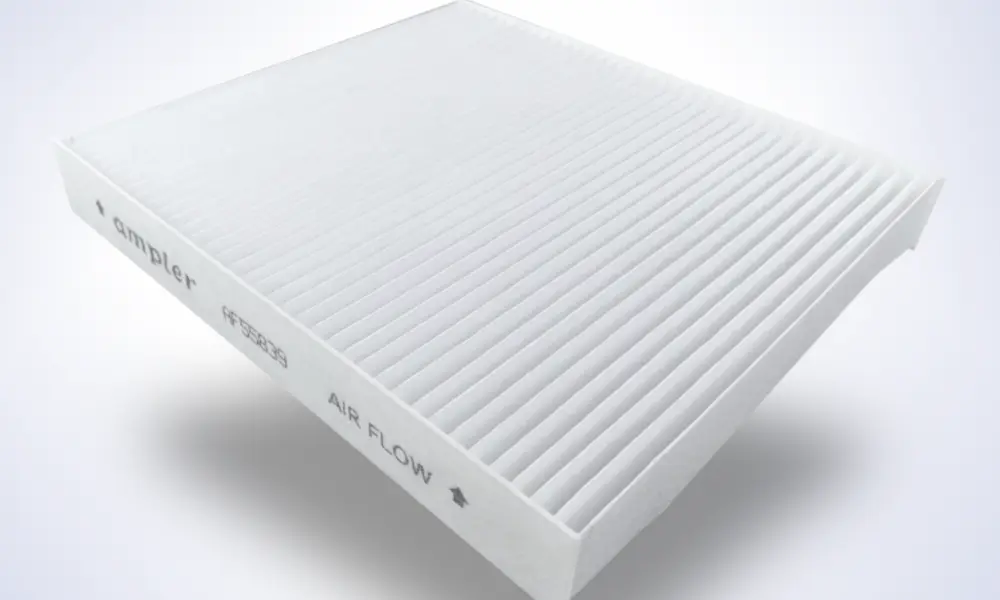
- A cracked or damaged air filter housing
On QR25-equipped cars (Altima, Sentra, Rogue), the plastic intake manifold gaskets are especially prone to failure in cold climates. Thermal expansion and contraction make them brittle over time.
Fuel System Problems
If fuel delivery is weak, the engine goes lean even with a perfect intake system. Watch for these:
- Weak fuel pump — pressure should be around 51–55 psi during operation
- Clogged fuel filter — restricts flow under load
- Dirty fuel injectors — carbon deposits disrupt the spray pattern, so less fuel reaches the cylinder
- Bad fuel pump check valve — lets fuel drain back to the tank when the engine is off, causing pressure drop
Newer models like the Rogue and Pathfinder use both an in-tank low-pressure pump and a high-pressure pump on the engine. If the high-pressure pump fails, you’ll get a lean shift under load, often paired with a P0087 code.
Exhaust Leaks Near the Sensor
This one tricks a lot of people. An exhaust leak before the AFR sensor lets outside air sneak in during those brief vacuum pulses between exhaust bursts. The sensor picks up that oxygen and reports lean — even if the engine is actually running fine.
The ECM then adds fuel to compensate, making the engine run rich. Meanwhile, the code keeps coming back because the physical leak is still there. Look for:
- Cracked exhaust manifolds (very common on VQ35 and VQ40 engines)
- Blown manifold gaskets
- Hairline cracks in the front exhaust tube, especially on QR25 engines
- Failed or fraying flex pipes
On VQ35 and VQ40 engines (Maxima, Pathfinder, Xterra, Frontier), the exhaust manifolds crack from thermal stress. The leaks are often worse when the engine is cold and can partially seal as the metal expands with heat — making them maddeningly intermittent.
The Rear Oxygen Sensor Twist You Need to Know
Here’s something that catches even experienced technicians off guard. The P1273 code points to the front AFR sensor, but the rear oxygen sensor can actually cause the code.
Nissan’s ECM uses the downstream (rear) sensor as a cross-check to verify the front sensor’s data. If the rear sensor drifts in calibration or responds slowly, it gives the ECM conflicting data. In certain logic configurations, the ECM trusts the rear sensor and flags the front sensor for a lean shift.
Nissan Technical Service Bulletin NTB06-039a addresses this directly for 2004–2005 Altima models with the 2.5L engine. The fix? Verify there are no leaks, confirm the front sensor is functional, then replace the rear oxygen sensor and reset the ECM’s self-learning memory.
A similar bulletin, NTB04-025, covers the 2004 Maxima and Quest. Always check for active TSBs before replacing parts.
How to Diagnose Nissan P1273 the Right Way
Throwing parts at P1273 without a process wastes money. Here’s a logical sequence.
Step 1: Visual Inspection First
Check everything you can see:
- Look for disconnected, cracked, or collapsed vacuum hoses
- Inspect the air intake boot for tears or loose clamps
- Check the AFR sensor connector for corrosion or pushed-out pins
- Look for black soot near exhaust joints — that’s a leak marker
Step 2: Smoke Test the Intake and Exhaust
A smoke machine is the fastest way to find leaks. Pump smoke into the intake with the engine off and watch where it escapes. Do the same for the exhaust by sealing the tailpipe and pressurizing from the manifold side. Even a tiny exhaust leak near the sensor can trigger P1273.
Step 3: Check the MAF Sensor
Connect a scan tool and watch the MAF reading at idle. A healthy four-cylinder should show a specific grams-per-second reading at warm idle. If it’s low, clean the sensor with MAF-specific cleaner. If cleaning doesn’t fix the reading, the sensor needs replacement.
Avoid oil-soaked performance air filters — the oil migrates to the MAF wire and creates exactly this problem.
Step 4: Test Fuel Pressure
Connect a gauge to the fuel rail. Check pressure at idle, under load simulation, and after shutdown. A rapid pressure drop after the pump shuts off points to a failing check valve or leaking injector. Sustained low pressure under load points to a weak pump or clogged filter.
Step 5: Monitor Live Data with a Scan Tool
Watch these values in real time:
| Data Point | What to Look For |
|---|---|
| Short-term fuel trim | High positive values mean lean correction |
| Long-term fuel trim | Anything above +10% signals a persistent lean issue |
| AFR sensor voltage | Should respond quickly and stay near target |
| Rear O2 sensor | Sluggish or flat response suggests drift |
A healthy fuel trim hovers near zero. If both short-term and long-term trims are running high positive, the engine is genuinely lean and compensating hard.
Diagnostic Tools You’ll Need
| Tool | What It Does |
|---|---|
| OBD2 Scan Tool (with live data) | Reads fuel trims and sensor signals in real time |
| Smoke Machine | Locates intake and exhaust leaks precisely |
| Fuel Pressure Gauge | Confirms pump output meets spec |
| Digital Multimeter | Tests sensor heater resistance and circuit voltage |
| MAF Cleaner Spray | Removes contamination from the MAF filament |
Resetting the ECM After Repairs
This step is non-negotiable. When the ECM learns to compensate for a failing part, that “learned” data stays in memory even after you replace the part. If you skip the reset, the car may still run poorly or the light may return immediately.
The process is called Mixture Ratio Self-Learning, and it wipes the ECM’s adaptive fuel maps so it can recalibrate from a clean baseline with the new hardware.
A professional scan tool does this in seconds. But you can also do it manually with the “pedal dance” procedure.
The Nissan Pedal Dance (Manual ECM Reset)
This is a timing-sensitive sequence, so follow it exactly. The full Nissan relearn procedure covers throttle position and idle air volume learning. Here’s the idle air volume reset specifically:
- Make sure the engine is fully warmed up
- Turn the ignition ON (engine off) and wait exactly 3 seconds
- Press and release the accelerator pedal 5 times in 5 seconds
- Wait 7 seconds
- Hold the pedal down for about 20 seconds — until the check engine light blinks
- Release the pedal within 3 seconds of the light stopping its blink
- Start the engine and let it idle for several minutes
The blinking light confirms the ECM entered reset mode. Once it stops blinking, the adaptive memory is cleared. Let the engine idle so it can re-learn the air-fuel requirements for a stable idle.
You should also complete the accelerator pedal position learning and throttle valve closed position learning before running the idle air volume procedure — especially if you’ve disconnected any electrical connectors. The full Nissan throttle body relearn sequence covers all three steps in order.
What Happens If You Ignore P1273?
Ignoring this code costs you money in two ways.
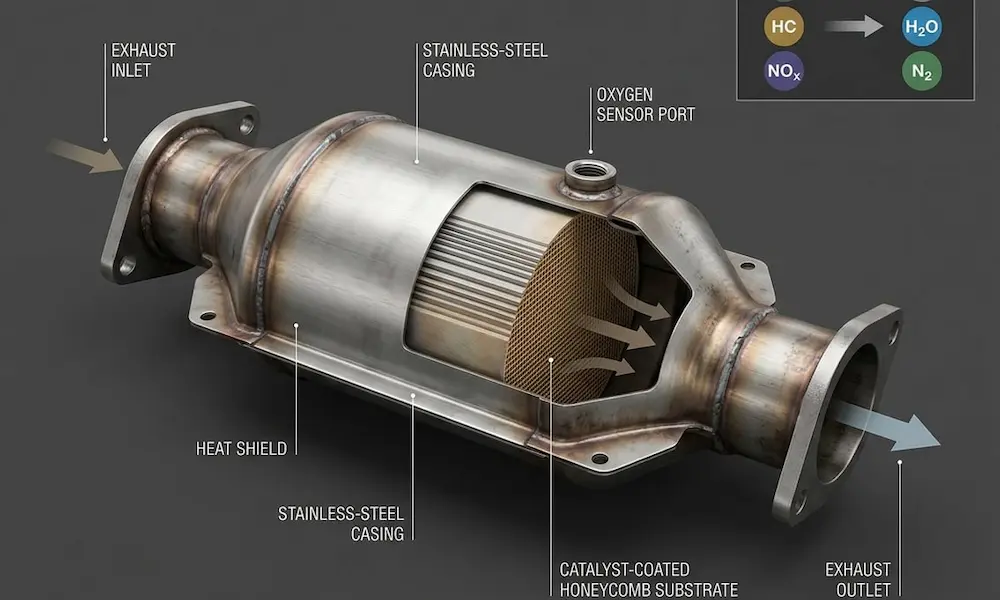
Catalytic converter damage is the big one. A lean condition raises combustion temperatures dramatically. That extra heat can melt or crack the converter’s ceramic substrate. If the ECM compensates by over-fueling (because it thinks the engine is lean), unburnt fuel can ignite inside the converter — destroying it fast. Converter replacement runs $400–$1,500 depending on the model.
Failed emissions test is the other consequence. An active P1273 means the engine is producing excess nitrogen oxides and other pollutants. You won’t pass a state emissions inspection with this code present.
Reduced fuel economy is a constant drain. The ECM in compensation mode runs richer or pulls timing, both of which cost you fuel on every trip.
Preventive Maintenance That Keeps P1273 Away
Staying ahead of this code isn’t complicated. Here’s what actually helps:
| Task | Interval | Why It Matters |
|---|---|---|
| Air filter replacement | 15,000–30,000 miles | Prevents MAF contamination |
| MAF sensor cleaning | 30,000 miles | Keeps air mass readings accurate |
| Fuel system cleaning | 30,000 miles | Maintains injector spray pattern |
| Exhaust leak inspection | Every oil change | Catches manifold cracks early |
| ECM self-learn reset | After any sensor or fuel system work | Syncs software with new hardware |
One specific tip: skip the oil-soaked performance air filters. The oil migrates to the MAF’s heated wire and creates a sticky film that traps dust — directly causing the inaccurate air readings that trigger lean codes.
Also, inspect the flex pipe in your exhaust at every oil change. Black soot marks on the outside of the pipe? That’s an exhaust leak in progress. Catch it early and you’re looking at a minor repair, not a sensor replacement chased by a catalyst replacement.
The Nissan P1273 code is fixable. Work through the diagnosis in order, don’t skip the ECM reset after repairs, and check those TSBs before assuming the front sensor is the problem. A methodical approach saves you from replacing parts that aren’t broken.