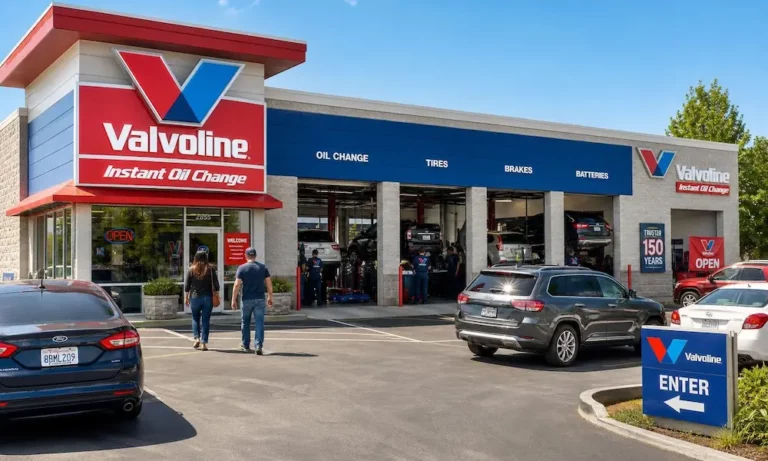
Thinking about using Valvoline for your next oil change? Smart move to research first. The reviews tell two very different stories depending on where you look. This post breaks down what real customers say, what you’ll actually pay, and what happens inside that bay — so you can decide with your eyes open.
What Do Valvoline Oil Change Reviews Actually Say?
Here’s where things get interesting. Valvoline’s internal data shows a 4.7 out of 5-star rating collected through their own customer feedback system. Forbes ranked them 18th for customer service out of 300 national brands.
Then you check independent platforms and the picture shifts dramatically.
| Review Platform | Rating | Number of Reviews |
|---|---|---|
| Internal/Carfax | 4.7/5 | Thousands |
| Better Business Bureau | 1.14/5 | Hundreds |
| Trustpilot | 1.8/5 | Hundreds |
| PissedConsumer | 1.6/5 | 300+ |
Why the gap? Simple human psychology. If your oil change takes 12 minutes and goes perfectly, you don’t rush home to write a BBB review. If a technician forgets to put your oil cap back on and your engine starts smoking on the highway, you absolutely do.
The BBB gives Valvoline an A+ accreditation — but that grade reflects how well they respond to complaints, not how satisfied customers are. Those are two very different things.
The Good Stuff: Why People Love It
Positive Valvoline oil change reviews consistently praise the same things:
- Speed. Most services finish in 15 minutes or less.
- Transparency. You stay in your car the whole time. No mysterious back rooms.
- Courtesy checks. Tire pressure, exterior lights, and fluid top-offs are included at no extra charge.
- Comfort for solo drivers. Female customers specifically mention that the stay-in-your-car model removes the intimidation factor that traditional garages can carry.
The Carfax Top-Rated Service Center designation covers 97% of Valvoline locations, which is genuinely impressive for a network this large.
The Not-So-Good Stuff: Real Complaints You Should Know
Consumer Affairs reviews and Trustpilot feedback point to three recurring problem areas.
Mechanical Errors That Cause Real Damage
The most serious complaints involve mistakes that destroy engines. Common reported issues include:
- Drain plugs not tightened correctly, causing major oil leaks
- Leaving the old filter gasket on (the “double gasket” issue), which causes oil to drain fast
- Installing the wrong oil filter, triggering check-engine lights and poor performance
- Forgetting to replace the oil cap entirely
- Draining the wrong fluid entirely
These aren’t minor inconveniences. Some of these mistakes lead to total engine failure. The BBB customer reviews include one case where a technician used a power drill at the wrong angle to remove a skid plate, stripping the hardware and leaving the undercarriage damaged.
High-Pressure Upselling Tactics
Quick-lube profit margins on basic oil changes are thin. So technicians push hard on extras. Reviewers on PissedConsumer describe aggressive pitches for differential flushes, radiator flushes, and engine treatments.
One widely shared Reddit account from Albany, NY describes a customer who overheard employees running an internal competition to sell the most A/C services. The customer’s working air conditioner stopped working after the “service,” and they left with a $400 invoice.
Claims Denied After Damage
This is where frustration really escalates. When consumers report engine damage shortly after a Valvoline service, managers often deny responsibility. Sometimes Valvoline refunds the oil change cost — which customers reasonably read as an admission of fault — but won’t cover towing, rentals, or independent mechanic bills.
What Actually Happens Inside the Bay
Understanding the service process helps you spot shortcuts and ask the right questions.
Valvoline uses a two-technician system: one on top interacting with you, one in the underground pit beneath your car. They go through 270 hours of training before working independently.
The system uses strict verbal call-and-response protocols. Before your car moves forward, the top technician must shout something like “Clear for guest, Bay One!” and wait for explicit verbal confirmation from below. This applies to every critical step — confirming the drain plug is in, the new filter is seated, and fluid levels check out.
Some locations use coded language for safety. A technician might shout “Zoom” instead of “Start” when checking oil pressure, so a driver in the next bay doesn’t accidentally turn their ignition and injure someone.
The 18-Point Inspection: What They’re Checking
Every standard Valvoline service includes an 18-point check. Here’s what that covers:
- Fluids: Transmission, power steering, brake, coolant, and washer fluid
- Filters: Engine air filter (physically shown to you) and cabin filter on request
- Safety: Wiper blades, headlights, taillights, and turn signals tested with you in the car
- Chassis: Under-vehicle visual inspection and chassis lubrication
- Tires: Inflated or deflated to the exact spec on your door jamb placard
- Battery: Tested with a handheld diagnostic tool that reads cold-cranking amps
What You’ll Pay: Valvoline Pricing Breakdown
Prices vary by location since many Valvoline centers are independently owned franchises. But here’s a reliable national baseline:
| Service Tier | Estimated Price Range | Best For |
|---|---|---|
| Conventional Oil Change | $39.99 – $49.99 | Older vehicles, budget drivers |
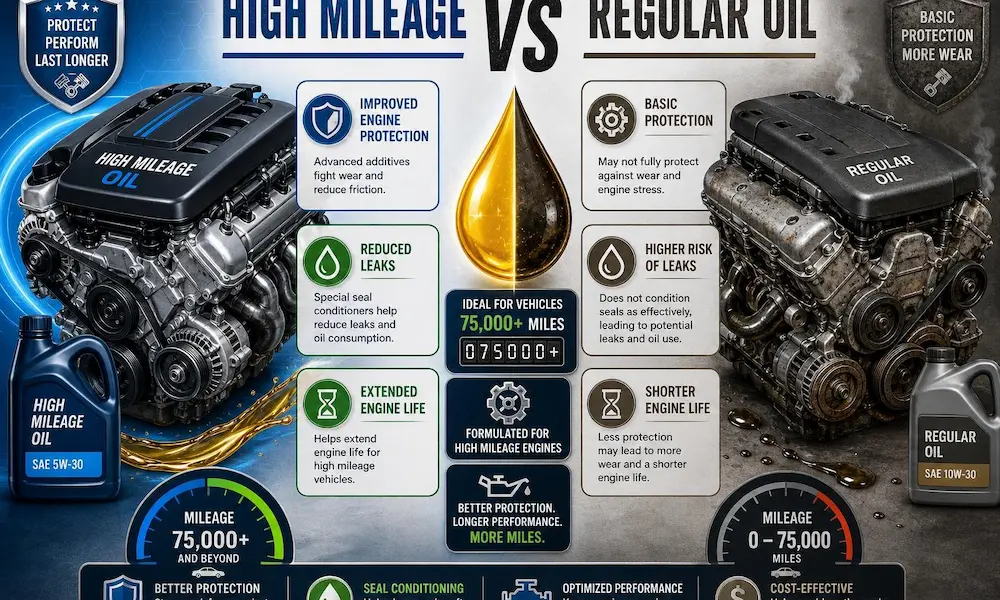
| Synthetic Blend / High Mileage | $59.99 – $69.99 | Vehicles over 75,000 miles |
| Full Synthetic | $74.99 – $89.99 | Modern engines, performance cars |
Prices include up to five quarts of oil. Larger trucks, SUVs, and European or diesel vehicles pay more. Location-specific pricing can vary significantly from these ranges.
How Valvoline Compares to Competitors
- Walmart Auto Care starts around $28.88 for conventional oil changes — but expect to wait over an hour and leave your car behind
- Jiffy Lube and Take 5 land in similar territory to Valvoline’s pricing
- Dealerships often charge $60–$100 for synthetics, but may bundle in tire rotations or car washes
Bring Your Own Oil and Save
You can bring your own oil and filter to Valvoline. They’ll charge a labor fee that typically runs $15–$30. This makes sense if you’ve bought a specific oil in bulk or want a premium filter they don’t stock.
How to Save Money at Valvoline
Most people don’t pay full price. Valvoline runs aggressive coupon programs that take real money off.
- Standard digital coupons regularly offer $10 off conventional and $15 off synthetic services
- Valvoline Drives — a text-message game where you can win a free full synthetic oil change or discounts
- Groupon sometimes offers prepaid vouchers at 50% off retail price
- VPERKS loyalty program gives you 500 points just for joining, 250 points per receipt uploaded, redeemable for merchandise or experiences
Check vioc.com/oil-change-coupons before every visit. Paying full price here is genuinely optional.
Will Valvoline Void Your Warranty? The Law Says No.
This is a myth that dealerships love to repeat. The Magnuson-Moss Warranty Act of 1975 makes it illegal for manufacturers to void your warranty just because you used an independent service center or aftermarket oil. They can’t force you to use their brand unless they provide the service for free.
As long as the oil meets your manufacturer’s viscosity and API specification, your warranty stays intact. The burden of proof falls on the manufacturer — they have to prove the independent service caused the failure, not just point at a non-OEM filter.
Your one job: keep your service records. Documented proof that you changed the oil on schedule protects you legally regardless of where the service happened.
The Carfax Integration: Actually Useful
Every Valvoline service automatically syncs to your Carfax vehicle history report. That’s useful in two ways:
- It builds a documented maintenance history that helps at resale time
- Valvoline’s system checks your VIN against the national recall database at each visit — and nearly 1 in 4 vehicles has an open recall. If yours does, they’ll email you automatically.
That recall alert system is a genuinely useful public safety feature that most people don’t know exists.
The Oil and Filter Quality: What You’re Actually Getting
Valvoline uses the same oil formulations sold in retail stores — it comes from bulk tanks at the service center. Their flagship product, Restore and Protect Full Synthetic, claims to remove up to 100% of piston deposits over four consecutive oil change intervals.
Real-world mechanic and enthusiast feedback suggests the oil genuinely reduces valve tick in high-mileage engines like the Ford F-150 Gen 3 Coyote V8 and helps free stuck piston rings. The detergent package is notably strong.
The filters are manufactured by Champion Laboratories. Standard units use a plastic cage design (“E-Core”) instead of a metal center tube — which keeps costs down but raises some questions about structural integrity under extreme pressure. Filtration efficiency is adequate for standard driving intervals; these filters prioritize oil flow over ultra-fine particle capture, which is an acceptable trade-off for most drivers.
Corporate vs. Franchise: Why Your Experience Varies
Valvoline operates around 2,400 locations, but a large portion are independently owned franchises. This means:
- Prices can differ significantly between locations just miles apart
- Training and quality enforcement depends heavily on local management
- Some locations run flawlessly; others generate most of the horror stories
Before choosing a location, check that specific store’s Google or Carfax reviews rather than judging the brand as a whole.
Frequently Asked Questions
Does Valvoline offer fleet maintenance programs for commercial vehicles?
Yes. Valvoline offers dedicated commercial fleet programs with consolidated monthly billing, customized maintenance tracking, and volume pricing. Many locations offer extended hours to fit fleet schedules and minimize business vehicle downtime.
How does Valvoline dispose of used oil and filters?
Used oil goes into regulated bulk storage tanks. Licensed environmental contractors pump these out regularly and transport the oil to re-refining facilities, where it becomes new base oil or industrial fuel. Used filters are crushed to extract remaining fluid, and the metal is recycled.
Can you ask technicians to skip the multi-point inspection?
Absolutely. Tell the top-side technician you only want the oil and filter changed. They’ll typically note on your invoice that you declined the inspection, which releases the shop from liability for anything the inspection might have caught.
How do technicians reset your oil life monitor?
Modern vehicles use algorithms — not just mileage counters — to track oil life. Technicians carry digital databases with reset procedures for virtually every vehicle make and model. Resetting the monitor is a required final step before your car leaves the bay.
What happens if a technician finds damage before starting?
If the bottom technician spots a cross-threaded drain plug or active oil leak before touching anything, they stop immediately. They’ll show you the damage (sometimes via a camera feed) and decline to proceed. You’ll be directed to a full-service shop capable of repairing the oil pan. This protects both you and the shop from disputed liability.