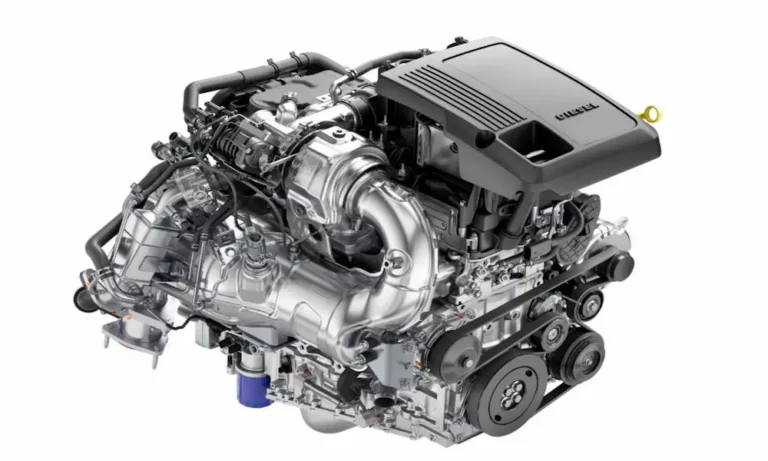
Ever looked at a Chevy Silverado or GMC Sierra and wondered if that 3.0 Duramax diesel option is worth your attention? You’re not wrong to be curious. This inline-six turbodiesel has become GM’s crown jewel in the light-duty truck market, delivering remarkable torque while sipping fuel at rates that’ll make you do a double-take at the pump.
Let’s dive into everything about the 3.0 Duramax specs – from its Italian-engineered origins to the nuts and bolts that make it tick.
The Birth of the 3.0 Duramax: Engineering Marvel
GM didn’t just stumble into the light-duty diesel market. They strategically developed the 3.0 Duramax in Turin, Italy, with significant help from Opel engineers who knew a thing or two about efficient diesel engines.
Unlike Ford and Ram with their V6 diesel offerings, GM went with an inline-six configuration. Why? The I6 layout naturally balances better and creates less friction. It’s the same reason BMW has stuck with straight-sixes for decades – they’re inherently smooth.
The engine debuted in the 2019 Silverado and Sierra, marking GM’s return to light-duty diesels after focusing solely on heavy-duty applications for years. The timing was perfect as competitors were struggling with reliability issues in their light-duty diesel offerings.
Under the Hood: Technical Specs Breakdown
Block and Head Construction
The 3.0 Duramax uses an aluminum block – a bold choice for a diesel engine. This aluminum construction:
- Reduces weight by about 25% compared to iron blocks
- Features a deep-skirt design extending below the crankshaft
- Uses iron cylinder sleeves for durability
- Incorporates seven nodular iron main bearing caps
The cylinder head is equally impressive with:
- Dual overhead camshafts (DOHC)
- Four valves per cylinder
- 1.12-inch intake valves and 0.97-inch exhaust valves
- Cross-flow design with exhaust ports on the passenger side
Power Evolution: LM2 vs LZ0
The 3.0 Duramax has seen significant improvements across two generations:
| Feature | LM2 (2020-2022) | LZ0 (2023-Present) | Improvement |
|---|---|---|---|
| Horsepower | 277 hp @ 3,750 RPM | 305 hp @ 3,750 RPM | +10% |
| Torque | 460 lb-ft @ 1,500 RPM | 495 lb-ft @ 2,750 RPM | +7.6% |
| Highway MPG (2WD) | 33 mpg | 29 mpg | -12% |
| Piston Material | Aluminum | Steel | Enhanced durability |
| Combustion Bowl | Standard | Stepped design | Better mixing |
| Towing Capacity | Up to 9,500 lbs | Up to 13,300 lbs | +40% |
These improvements didn’t come by accident. GM engineers made specific changes to the LZ0, including:
- Switching to steel pistons with redesigned combustion bowls
- Upgrading fuel injectors for better spray patterns
- Retuning the turbocharger compressor
- Lengthening intake valves from 95.17mm to 96.8mm
Fuel System: High-Pressure Precision
The 3.0 Duramax uses a sophisticated Denso common rail system capable of jaw-dropping 36,250 psi (2,500 bar) injection pressures. For perspective, that’s about 1,000 times your home’s water pressure!
This system features:
- Nine-hole nozzle injectors for optimal fuel atomization
- Up to ten separate injection events per combustion cycle
- Chain-driven twin-piston Denso HP5 high-pressure pump
- B20 biodiesel compatibility
The injection system’s precision is key to the engine’s efficiency. By breaking each injection into multiple events, the system can create the ideal burn pattern for any condition – whether you’re idling in traffic or towing a heavy trailer uphill.
Turbocharging: Variable Geometry Magic
A variable geometry turbocharger from Garrett gives the 3.0 Duramax its responsive power delivery. Unlike fixed turbos, this VGT design uses movable vanes to effectively change the turbo’s size depending on engine speed.
The benefits include:
- Quick boost response at low RPM
- Sustained efficiency at high RPM
- Mounted directly to the exhaust manifold for minimal lag
- Liquid-to-air intercooling for denser air charge
The intake system adds another clever feature: variable-length runner technology. Computer-controlled flaps change the airflow path for each cylinder, optimizing intake tract tuning across the entire RPM range.
The Controversial Timing System
Here’s where the 3.0 Duramax gets interesting – and controversial. Unlike most engines with front-mounted timing systems, the Duramax positions its timing chains at the rear of the engine, between the block and transmission.
This European-influenced design:
- Contributes to the engine’s compact dimensions
- Creates a maintenance nightmare requiring transmission removal
- Led to reliability concerns in early 2020 models
GM addressed timing chain issues by:
- Implementing an updated chain design in 2021
- Adding improved lubrication channels within chain links
- Including oil passage holes for better cooling
- Extending warranty coverage for affected vehicles
Thermal Management: Staying Cool Under Pressure
The 3.0 Duramax employs GM’s sophisticated Active Thermal Management (ATM) system, which controls coolant flow with electronic precision. Rather than the simple thermostats of yesteryear, this system uses:
- Electronically controlled valves directing coolant where needed
- Multiple temperature sensors throughout the system
- Dedicated sensors for block, head, inlet, outlet temperatures
- Additional monitoring for oil and transmission fluid temps
This advanced system helps the engine warm up faster in cold weather while maintaining optimal temperatures under load. The result? Better fuel efficiency and reduced emissions during cold starts – a critical factor for modern diesel engines.
Vehicle Applications: Where You’ll Find the 3.0 Duramax
Pickup Trucks
The 3.0 Duramax serves as the flagship diesel option in GM’s light-duty trucks:
- Chevrolet Silverado 1500
- GMC Sierra 1500
In these applications, it delivers:
- Maximum towing up to 13,300 pounds with the Max Trailering Package
- Typical towing between 8,800-11,900 pounds in standard configurations
- Payload capacities from 1,720-1,880 pounds
SUV Applications
Starting in 2021, GM expanded the 3.0 Duramax to their full-size SUV lineup:
- Chevrolet Tahoe and Suburban
- GMC Yukon and Yukon XL
- Cadillac Escalade and Escalade ESV
SUV applications see slightly reduced power in some models (277hp vs 305hp) and typically tow between 8,200-8,400 pounds.
Known Issues: What to Watch For
Like any complex modern engine, the 3.0 Duramax has experienced some growing pains:
Early Production Challenges
2020 model year LM2 engines faced several reliability concerns:
- Timing chain stretch and failure, particularly in cold weather
- Oil consumption from defective camshaft covers
- Rear main seal failures in lower-mileage vehicles
GM addressed many of these issues through service bulletins and design updates. The updated timing chains with improved lubrication features introduced in 2021 were particularly important for long-term reliability.
Maintenance Requirements: Keeping It Running
Owning a 3.0 Duramax means following some specific maintenance procedures:
- Oil changes every 7,500-10,000 miles using diesel-specific oil
- 8.5-quart oil capacity
- Rear-mounted oil pump belt service at 200,000 miles for LZ0 engines (150,000 for LM2)
- Diesel exhaust fluid (DEF) monitoring and refills
- Fuel filter replacement every 15,000-22,500 miles
The good news? With proper maintenance, these engines are designed for long service life, taking advantage of the inherent durability diesel powerplants are known for.
Fuel Economy: The Diesel Advantage
The 3.0 Duramax makes its strongest case at the fuel pump. Consider these EPA ratings:
- LM2 (2020-2022): Up to 33 mpg highway (2WD), 29 mpg highway (4WD), 23 mpg city
- LZ0 (2023-Present): Up to 29 mpg highway (2WD), 27 mpg highway (4WD), 23 mpg city
These numbers might seem ordinary for a compact car, but they’re revolutionary for a full-size truck or SUV. The fuel economy advantage becomes even more apparent when towing, where the diesel’s low-end torque allows it to maintain efficiency under load far better than gasoline engines.
The Future of the 3.0 Duramax
As competitors Ford and Ram have discontinued their light-duty diesel offerings, GM now stands alone with the 3.0 Duramax in the half-ton pickup segment. This gives them a significant competitive advantage for customers who prioritize fuel efficiency and towing capability.
GM continues refining the platform while investigating alternative fuel possibilities, including hydrogen conversions for the Duramax engine family.
Is the 3.0 Duramax Right for You?
The 3.0 Duramax makes the most sense if you:
- Regularly tow trailers in the 5,000-10,000 pound range
- Drive significant highway miles
- Want to maximize fuel economy without sacrificing capability
- Appreciate low-end torque for responsive driving
It might not be ideal if you:
- Rarely tow or haul heavy loads
- Drive primarily short trips in cold climates
- Are uncomfortable with diesel maintenance requirements
- Need maximum payload capacity (diesel adds weight)
The 3.0 Duramax represents a compelling blend of efficiency and capability that’s hard to match with any gasoline engine. While early production challenges highlighted some design complexities, continuous improvements have addressed many initial concerns.
For the right buyer, the combination of 495 pound-feet of torque, highway fuel economy approaching 30 mpg, and towing capacity exceeding 13,000 pounds creates a unique value proposition in today’s truck market.