Your 6.7 Powerstroke is already a capable beast. But if you’re towing hard, racking up miles, or just tired of watching the factory fuel pump tick like a time bomb, the right upgrades make a massive difference. This guide breaks down every major 6.7 Powerstroke upgrade — from fuel system fixes to tuning — so you know exactly what to buy, why it matters, and what it’ll cost you.
Why the 6.7 Powerstroke Needs Upgrades in the First Place
Ford built the 6.7 Powerstroke entirely in-house starting in 2011. It’s powerful, it tows like a champ, and it’s genuinely well-engineered. But hard use exposes real weak spots.
The biggest culprits? A high-pressure fuel pump that destroys itself on American diesel fuel. A plastic charge pipe that splits under towing loads. And an emissions system that turns intake passages into carbon-coated tunnels over time.
The good news: every one of these problems has a fix.
Know Your Generation Before You Buy Anything
Not all 6.7 Powerstroke upgrades fit every truck. The engine changed significantly across model years, and what works on a 2014 doesn’t always bolt onto a 2021.
| Generation | Model Years | Key Changes | Upgrade Complexity |
|---|---|---|---|
| First Gen | 2011–2014 | Original release, early turbo and radiator issues | Most upgrades needed, lowest cost |
| Refined First Gen | 2015–2016 | Updated turbocharger, fuel pump concerns remain | Great platform for airflow upgrades |
| Second Gen | 2017–2019 | 500+ revised parts, Garrett ball-bearing turbo, 10-speed trans, 935 lb-ft torque | Highly reliable, moderate upgrade cost |
| Third Gen | 2020–2022 | 475 hp, complex emissions telemetry | Strong reliability, harder to tune |
| Fourth Gen / High Output | 2023–2026 | 500 hp, 1,200 lb-ft, military-grade ECM encryption | Excellent power, expensive to modify |
Reliability data and year-by-year breakdowns show the 2017–2019 generation sits in the sweet spot — strong factory reliability with reasonable upgrade costs.
The Fuel System: Your Highest Priority Upgrade
Why the CP4 Pump Is a Ticking Clock
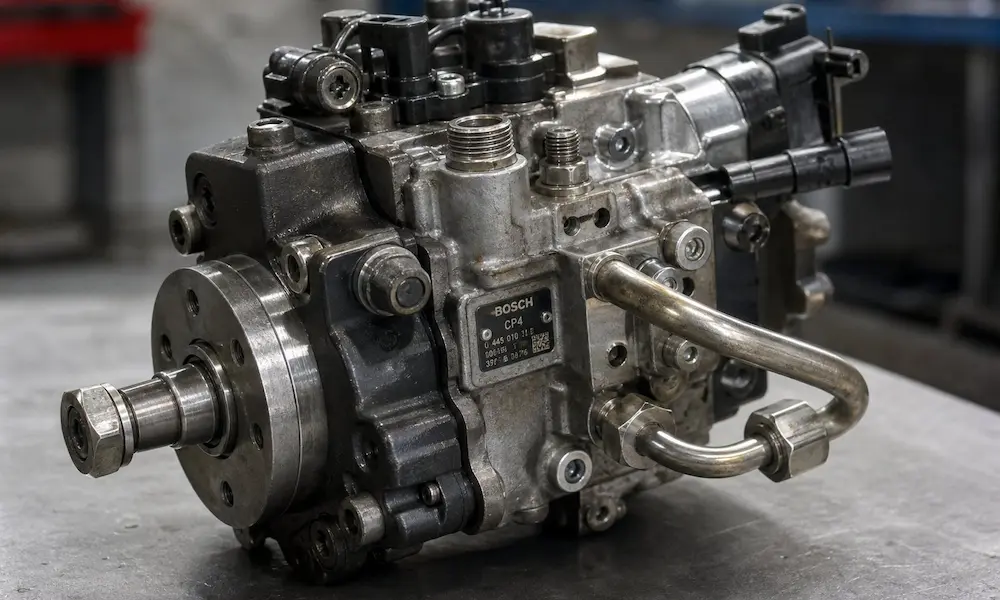
The factory Bosch CP4 and CP4.2 high-pressure fuel pumps are the most serious vulnerability across the entire 6.7 Powerstroke lineup. These pumps generate up to 39,000 PSI of fuel pressure and rely entirely on diesel fuel for internal lubrication — no dedicated oil supply, no margin for error.
American diesel fuel runs on the low end of the lubricity scale. Add any air intrusion or water contamination, and the internal roller tappets stop rolling and start grinding. Metal debris spreads through your entire fuel system — injectors, rails, lines, and back into the tank.
The CP4 failure isn’t just a pump replacement. It’s a full system teardown that typically runs $10,000–$15,000 to repair correctly.
Option 1: Disaster Prevention Kits (The Insurance Policy)
A Disaster Prevention Kit doesn’t fix the pump’s internal design flaws. It contains the damage if the pump fails, keeping metal debris out of your injectors and rails.
The kit reroutes fuel so only clean, filtered fuel reaches the high-pressure pumping heads. If the pump sheds debris, it exits through a safe return path instead of blasting through your injectors.
Top options include:
- SPE Motorsport Gen 2 — Features an ExoFilter with a washable stainless steel screen you can inspect visually without pulling fuel lines. Built-in contamination sensor triggers an alert through your factory wiring if debris appears.
- DFUSER Gen III — Uses a 74-micron screen filter inside the bypass block, capturing 99% of debris immediately at the pump exit.
- No Limit Fabrication / S&S Diesel Motorsport — Precision-machined adapter blocks with braided hydraulic hoses for a leak-free, durable installation.
Cost: $300–$400. Fifty-state emissions compliant. It’s cheap insurance against a five-figure repair bill.
Option 2: Drop-In Pump Replacements
If you want to replace the pump itself without changing the entire architecture, two strong options exist.
The CPX Pump from River City Diesel physically pins the lifter buckets so they can’t rotate in their bores — directly correcting the failure mechanism that kills the factory unit. It also includes a built-in disaster prevention feed port and maintains the factory 4x-per-revolution pumping cycle for stable fuel pressure.
The Improved Stock CP4.2 from Exergy Performance uses the modern Bosch Scorpion architecture with an upgraded pressure relief valve screen and tighter internal tolerances. It’s a refined version of the factory design rather than a complete rethink.
Option 3: Total Pump Architecture Conversions (The Permanent Fix)
For maximum reliability, ditch the CP4 architecture entirely.
The DCR Pump Conversion (developed by S&S Diesel Motorsport and PurePower Technologies) replaces the roller-tappet design with a robust two-piston eccentric drive mechanism. The forged-steel case handles poor lubricity fuel without degrading. It flows 1,250cc per revolution versus the factory’s 995cc maximum — a 25% increase in fuel capacity — while matching the factory output curve exactly. No tuning required. Cost: approximately $2,400.
The SPE CP3 Conversion takes a different approach entirely. It relocates the fuel pump out of the engine valley and mounts a proven heavy-duty CP3 pump at the front of the engine, driven by an 8-rib serpentine belt off the crankshaft snout. This eliminates the timing gear slippage risk that can cause catastrophic internal engine damage under extreme load. If the belt fails, the engine stalls safely instead of grenading internally. Service time drops from hours to minutes.
Don’t Forget the Lift Pump
Your high-pressure pump is only as good as the fuel supply feeding it. Upgrading the low-pressure lift pump with a FASS Titanium or AirDog system pulls microscopic air bubbles and emulsified water out of your fuel before it reaches the engine bay. Dense, air-free diesel dramatically extends the life of whatever high-pressure pump you’re running.
Airflow Upgrades: Cold-Side Pipe and Intake Systems
Replace the Plastic Charge Pipe First
On 2011–2016 trucks, Ford used a composite plastic cold-side charge pipe to route pressurized air from the intercooler to the intake manifold. Under sustained towing on steep grades, turbo boost pressure holds at maximum for extended periods. That plastic pipe cracks — or ruptures outright — leaving you with zero boost mid-climb.
Replacing it with a mandrel-bent aluminum charge pipe is a mandatory reliability upgrade for any early-generation truck. Aluminum doesn’t care how hard you tow or how aggressively you tune. Pair it with reinforced silicone couplers and T-bolt clamps for a leak-proof seal.
Cold Air Intake Systems
A quality cold air intake does two things: it increases the volume of air reaching the turbocharger compressor wheel, and it lowers intake air temperatures to improve air density.
The factory airbox uses restrictive baffling to suppress induction noise. Aftermarket intakes use 4-inch mandrel-bent aluminum tubing to maximize flow.
You’ve got two design choices:
- Open intakes (like those from Boosted Performance) expose a large conical filter directly to the engine bay. Maximum airflow, most noticeable turbo spool sound, biggest power gains.
- Closed intakes (like S&B Filters designs) seal the filter in a composite box drawing air from exterior fender ducts. Cooler intake temps, slightly more restriction than open designs, better for dusty environments.
On a stock engine, intake upgrades typically add 5–10 hp and 20–30 lb-ft of torque. The real payoff comes when you pair the intake with ECM tuning — that’s where the engine can actually use the added airflow. Steady-state highway cruising can also yield 1–2 MPG improvement, though heavy towing and winter fuel blends will eat into those gains quickly.
One warning: if you run your truck on a ranch, construction site, or through any standing water, a low-mounted open filter is a serious liability. Water ingestion destroys engines. Pick your design based on your actual environment.
Emissions Systems: What They Do and Why They Fail
The 6.7 Powerstroke runs three interconnected emissions systems — EGR, DPF, and DEF. Under normal driving, they work. Under heavy sustained loads, they become the leading source of expensive failures.
EGR System Failures
The Exhaust Gas Recirculation system routes hot exhaust gas back through a liquid-cooled heat exchanger and into the intake manifold to reduce nitrogen oxide formation.
The problem: exhaust gas carries soot and carbon. Mixed with crankcase vapors, it bakes into thick carbon deposits on intake valves, manifold runners, and variable geometry turbo vanes. Over time, restricted airflow forces the turbo to over-spin, driving exhaust gas temperatures dangerously high.
The EGR cooler itself fails through thermal cycling fatigue. When the internal brazing cracks, coolant leaks directly into the intake. Minor leaks cause white smoke and mystery coolant loss. Severe failures introduce enough fluid to hydrolock the engine — a catastrophic and terminal failure mode.
DPF and Active Regeneration
The Diesel Particulate Filter physically traps soot before it exits the tailpipe. When it fills up, the ECM initiates active regeneration — injecting raw fuel into the exhaust stream to burn off accumulated soot at extreme temperatures.
The hazard during towing: active regeneration mid-climb stacks intense regeneration heat on top of already-elevated towing temperatures. This thermal overload degrades engine oil rapidly, accelerates turbocharger wear, and tanks fuel economy at the worst possible moment.
DEF System and the 2026 Rule Changes
The DEF system injects urea-based fluid into the exhaust stream to chemically neutralize nitrogen oxides. When the system faults or the tank runs dry, the ECM enforces derate penalties.
In August 2025, the EPA issued new guidance softening derate schedules for heavy-duty on-road trucks. Under the updated rules, a DEF fault now triggers a warning phase — 650 miles or 10 operating hours with zero power restriction. After that, a mild derate phase allows normal highway speeds for up to 4,200 miles before severe speed caps kick in. For agricultural nonroad equipment, a 36-hour grace period applies before any torque reduction occurs.
Off-Road Emissions Hardware Removal: What It Involves
For vehicles used strictly in off-road competition, closed-course racing, or agricultural applications, aftermarket hardware conversion kits physically remove the DPF, EGR, and DEF systems. The DPF and catalysts are replaced with a continuous 4-inch or 5-inch stainless steel pipe. Cab and Chassis configurations require specifically engineered extension pipes due to their unique exhaust routing.
EGR removal uses precision-machined CNC block-off plates over the exhaust and intake manifold ports, combined with coolant bypass hoses to keep the primary cooling circuit pressurized and functional.
The result for off-road use: unrestricted exhaust flow, eliminated active regeneration cycles, no carbon fouling in the intake, and dramatically reduced thermal loads during sustained hard work.
Critical legal note: These modifications are strictly illegal on any vehicle operated on public roads under the federal Clean Air Act. The EPA can levy civil penalties up to $45,268 per noncompliant vehicle and up to $4,527 per individual tampering event. The EPA has actively pursued enforcement actions against major aftermarket manufacturers and distributors. Emissions deletes also void your powertrain warranty, guarantee emissions inspection failures in regulated states, and make your truck nearly impossible to trade into a franchise dealership.
ECM Tuning: The Upgrade That Unlocks Everything Else
Why Software Matters as Much as Hardware
Physical modifications without software recalibration actively hurt performance. The ECM monitors pressure differentials across the DPF and EGR flow rates constantly. Remove that hardware without recalibrating the software, and the truck immediately enters limp mode — fuel and boost cut to protect what it thinks is a failing system.
Proper calibration rewrites the operating logic to account for hardware changes, advance fuel timing, increase rail pressure, and raise boost targets. For off-road conversions, this unlocks 50–150+ additional horsepower while improving steady-state fuel economy by 2–5 MPG by eliminating fuel-wasting regeneration cycles.
Emissions-Compliant Tuning
Not every tuning application involves removing hardware. Skilled calibrators can remap fuel delivery and boost curves to extract significant power gains while keeping all factory emissions hardware fully intact and functional. Many platforms offer selectable power levels — from mild towing maps that prioritize transmission protection all the way up to aggressive performance tunes exceeding 500 rear-wheel horsepower.
For owners who don’t want to flash the ECM at all, standalone throttle sensitivity boosters like the Banks PedalMonster or BD V3.0 Throttle Sensitivity Booster intercept the pedal signal and sharpen throttle response dramatically without touching fuel or boost mapping. Both carry CARB approval for on-road use.
Transmission recalibration matters too. Increasing hydraulic line pressure and adjusting torque converter lockup strategy protects the clutch packs from slipping under the increased torque loads of a modified engine.
2023+ ECM Encryption: The New Obstacle
The 2023–2026 Ford Super Duty generation uses military-grade cybersecurity encryption on its engine control modules. Standard diagnostic port flashing gets rejected outright. Penetrating these systems requires advanced hardware tools like HP Tuners’ RTD or MPVI4 devices — and in many cases, physically removing the ECM and mailing it to a specialist facility for a hardware-level unlock before any calibration work can begin. This is why tuning costs on 2023+ trucks run $4,000–$6,600 compared to $1,500–$2,000 on 2011–2016 trucks.
What Does a Full Upgrade Package Actually Cost?
| Vehicle Generation | ECM Status | Full Off-Road Bundle (Hardware + Tune) |
|---|---|---|
| 2011–2014 | Unlocked | $1,500 – $2,000 |
| 2015–2016 | Unlocked | $1,500 – $2,500 |
| 2017–2019 | Unlocked | $1,700 – $3,000 |
| 2020–2022 | Partially Locked | $2,500 – $3,500 |
| 2023–2026 | Military-Grade Encrypted | $4,000 – $6,600 |
Add the DCR pump conversion ($2,400), a FASS lift pump (~$800), and an aluminum charge pipe (~$300), and a fully bulletproofed 6.7 Powerstroke clears the $8,000 threshold before labor. That sounds steep until you remember that a single CP4 catastrophic failure costs $10,000–$15,000 to fix correctly — and it doesn’t come with any of the performance benefits.
A DIY-capable owner can complete the hardware installation in 6–10 hours. Professional shop labor adds $400–$1,200 depending on the model year. Either way, you’re investing in a truck that won’t strand you — and will actually perform when you need it most.