You’re staring at a tire quote that makes your wallet weep. Someone mentions Arroyo—dirt cheap, surprisingly decent reviews. But can a budget tire actually be safe? Here’s what you need to know before you buy.
The Short Answer: It Depends Which Arroyo You’re Buying
Here’s the thing about Arroyo: it’s not really one brand. It’s more like a tire store that slaps the same logo on completely different products from different factories.
Think of it like this: you wouldn’t expect the same quality from every item at a discount store just because they share a label. Same deal here.
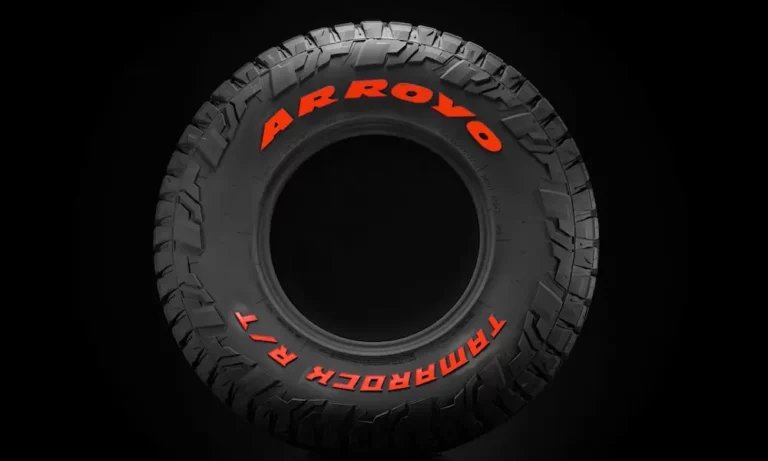
Arroyo’s light truck tires (the Tamarock line) are legitimately good. Their passenger car tires? That’s where things get dicey.
What Is Arroyo, Anyway?
Arroyo Tire Co. started around 2012 in California. They don’t actually make tires—they’re what’s called a private-label brand. Wholesale Tire Distributors designs and markets them, then sources production from factories in Thailand, Turkey, and the U.S.
This matters because different Arroyo models come from completely different manufacturers. The Tamarock A/T from Thailand and the Grand Sport 2 from Turkey aren’t just different tires. They’re built by different companies with different engineering standards, just wearing the same brand name.
You’re not buying Arroyo’s engineering. You’re buying their sourcing skills.
Breaking Down the Arroyo Lineup
Passenger Car Tires
Eco Pro Series: Built for daily driving, touring comfort, and fuel efficiency. Targets your average sedan or crossover.
Grand Sport Series: The “performance” line for sportier cars. Ultra-high performance all-season tires aimed at responsive handling.
Light Truck Tires
Tamarock Series: All-Terrain (A/T), Mud-Terrain (M/T), and Rugged-Terrain (R/T) options for SUVs and trucks. Built for durability and off-road capability.
They also make commercial and trailer tires, but we’re focusing on what most drivers actually buy.
The Specs That Matter
| Model | Type | Warranty | UTQG Rating | Winter-Rated (3PMSF) |
|---|---|---|---|---|
| Eco Pro A/S | Touring | 50,000 miles | 500 A A | No |
| Grand Sport A/S | Performance | 40,000 miles | 500 A A | No |
| Grand Sport 2 | All-Season | 50,000 miles | 400 A A | No |
| Tamarock A/T | Light Truck | 50,000 miles | 500 A A | Yes |
See that pattern? Only the truck tire has the Three-Peak Mountain Snowflake certification, which means it’s actually tested for severe snow.
The Eco Pro: Good Until It Rains
The Eco Pro A/S looks solid on paper. 50,000-mile warranty. UTQG rating of 500 A A. Four wide grooves for water evacuation. Silica compound for fuel efficiency.
In dry weather, it actually delivers. Owners report smooth rides and low noise. One driver logged 1,700 miles on a road trip with zero complaints. Another called them “one of the best tires my Camry has ever seen” for the price.
Then Comes the Rain
This is where everything falls apart. Multiple owners report genuinely scary wet performance.
One Tacoma owner put it bluntly: “With dry roads they perform ok, but under wet road conditions they are scary, there’s hardly any grip.”
Another noted the rubber “already feels very hard and smooth” before hitting the warranty mileage—a classic sign the compound is degrading.
The tire carries an “A” traction grade from UTQG testing, but here’s the catch: that test only measures straight-line braking on wet pavement. It doesn’t test cornering grip, hydroplaning resistance, or how the rubber actually behaves in real-world rain.
Winter? Forget About It
The Eco Pro isn’t Three-Peak Mountain Snowflake certified. Reviews confirm it “lags even in light snow conditions.” You might get through a light dusting, but anything serious? You’re risking it.
This isn’t an all-season tire. It’s a dry-weather tire with marketing that says “all-season.”
The Grand Sport: Great Value With a Giant Asterisk
The Grand Sport A/S targets performance car owners—think Tesla Model 3, BMW 3-Series, used Lexus sedans. People facing $475-per-tire replacement costs who need something cheaper.
For dry performance, it actually rocks. Professional reviews rate the handling as “great” with crisp cornering and responsive steering. 87% of users praised its high-speed stability.
It’s also surprisingly refined. 82% reported smooth, quiet rides—impressive for a budget performance tire.
The Tesla Owner Effect
Here’s where the Grand Sport finds its niche. Used luxury and performance car owners love these things. One Tesla owner with 5,500 miles said they’d “definitely buy these again.”
Why? Because the alternative is dropping two grand on Michelins. The Grand Sport delivers satisfactory daily driving at a fraction of the cost.
The Problems Surface
Road noise is inconsistent. Some swear it’s quiet. Others complain about “excessive noise on some pavement surfaces.” One Tesla driver noted they could “hear every bump and crack on the road.”
Wet performance? Same story as the Eco Pro. A Mercedes E350 owner reported traction control “kicks in way too many times when accelerating after a stop” in rain.
And winter? It’s “not designed for extreme winter conditions.” Light to moderate snow only. No 3PMSF certification.
The Grand Sport works brilliantly—if you live in Southern California. Anywhere with real weather? You’re gambling.
The Tamarock: The Exception That Proves the Rule
This is where Arroyo completely flips the script. The Tamarock line isn’t just good for the price. It’s legitimately good, period.
What Makes It Different
It’s actually winter-rated. The Tamarock A/T carries the Three-Peak Mountain Snowflake symbol, meaning it passed standardized severe snow testing. This alone separates it from the entire passenger car lineup.
It’s shockingly quiet. All-terrain tires are notoriously loud. The Tamarock breaks that rule. Owners repeatedly praise how quiet it runs. One Rivian R1T owner ran a sound meter test and found them “essentially identical to stock” for cabin noise.
It handles off-road. One reviewer who’d previously run mud-terrains was shocked the Tamarock A/T “was able to perform pretty great” even in deep mud, extracting the vehicle without recovery gear.
It actually lasts. Durability reports are consistently positive. One owner projected 50,000-60,000 miles from their set after already logging 25,000 with minimal wear. Another noted their 33-inch mud-terrain variant lasted “much longer than any other M/T tire.”
Real Owner Experiences
| Model | What Works | What Doesn’t | Bottom Line |
|---|---|---|---|
| Eco Pro A/S | Smooth, quiet in dry conditions | Scary wet grip, hard compound | Safety risk in rain |
| Grand Sport A/S | Great dry handling, quiet ride | Poor rain traction, inconsistent noise | Only for dry climates |
| Tamarock A/T | Low noise, winter-rated, durable | Firm ride with F-load rating | The brand’s best product |
The M+S vs. 3PMSF Confusion
You’ll see M+S (Mud and Snow) stamped on the Eco Pro and Grand Sport. Don’t let that fool you.
M+S is just a manufacturer’s claim based on tread pattern geometry. It’s not performance-tested. Any tire with enough grooves can wear that stamp.
The Three-Peak Mountain Snowflake is different. It’s regulated by the U.S. Tire Manufacturers Association. Tires must pass actual snow traction testing to earn it.
Arroyo’s entire passenger lineup is M+S only. The Tamarock line earned the 3PMSF. That’s the difference between marketing and proven capability.
The Durability Question
Here’s where things get messy. The warranties look good—40,000 to 50,000 miles. The UTQG treadwear ratings (400-500) are respectable.
Some owners report great longevity, even claiming Arroyos “outperformed premium brands.”
But just as many report rapid, uneven wear. One Lexus owner hit the wear bars at just 32,000 miles—18,000 short of the warranty.
Why the Contradiction?
Two factors explain this:
Your vehicle matters. Modern EVs and heavy luxury sedans murder tire compounds. A Tesla eating tires at 32,000 miles might actually be normal for budget rubber. A lightweight Civic hitting 50,000? Also normal.
Compound degradation. Budget tires often use compounds that harden with age and heat cycles. The tread might physically remain, but the rubber loses grip long before it looks worn. That report of Eco Pro rubber feeling “very hard and smooth” at 70% tread? Classic compound failure.
The usable safe life might end way before the physical tread life. Your warranty won’t save you from that.
How Arroyo Stacks Up Against Competitors
Arroyo lives at the bottom of the pricing ladder. A 175/65R14 Eco Pro runs about $68. A comparable Nexen N’Priz AH5 (a tier-two brand) costs around $98. That’s $120 saved per set.
The Tire Market Tiers
Tier 1: Michelin, Continental, Goodyear. Premium pricing, 80,000-mile warranties, heavy R&D investment.
Tier 2: Kumho, Nexen, General, Cooper, Falken. Solid manufacturers with their own engineering. Good performance at fair prices.
Tier 3: Arroyo, Ironman, Laufenn, Mastercraft. Private-label brands focused almost exclusively on price.
Within Tier 3, Arroyo sits at the top. Owners consistently rate them above Ironman and Mastercraft, with one noting the wet traction is “night and day better than Ironman/Mastercraft.”
The Tamarock A/T, though? It punches up to Tier 2. With its 3PMSF rating and refinement, it competes directly with more expensive all-terrains from established brands.
Who Should Buy Arroyo Tires?
Daily Commuter (Sedan/CUV)
Tires: Eco Pro A/S, Grand Sport A/S
Verdict: Skip them.
The $120 savings isn’t worth the wet-weather safety risk. Those “scary” grip reports are too consistent to ignore. Unless you live in Phoenix or San Diego and genuinely never see rain, choose a proven Tier 2 brand like Nexen or Kumho.
Performance Car Owner on a Budget
Tire: Grand Sport A/S
Verdict: Maybe—if you live in a dry climate.
Got a used Tesla, BMW, or Lexus? Facing absurd replacement costs? The Grand Sport delivers impressive dry handling and comfort for the money. But this only works if you’re in Southern California, Arizona, or similar climates. Real rain or any snow? Don’t risk it.
Truck/SUV Owner
Tire: Tamarock A/T, M/T, or R/T
Verdict: Buy them.
This is the brand’s home run. The Tamarock A/T especially delivers serious value—3PMSF winter rating, low noise, solid durability, and good off-road capability at a budget price. It’s not just good for the money. It’s good, period.
The Final Word on Arroyo Quality
Are Arroyo tires good? It depends which one you’re asking about.
The passenger car lines are cheap. They’re also compromised where it matters most—all-weather safety. The pattern of poor wet grip is too consistent to dismiss. These tires are “just cheap,” not “cheap and good.”
The Tamarock truck line is the opposite. It’s everything a budget tire should be: well-engineered, capable, refined, and safe in all conditions. It’s the best-case scenario for what a private-label brand can deliver.
If you’re shopping for truck tires, Arroyo’s Tamarock line deserves serious consideration. It’s a smart buy.
If you’re shopping for passenger car tires, spend the extra $120 and buy something proven—unless you genuinely never drive in rain or snow. Your safety isn’t worth the gamble.