You’re staring at worn tires on your SUV and wondering if Pirelli Scorpion is worth the investment. Here’s the deal: the answer isn’t simple. Some Scorpion models are class-leading champions. Others have documented defects that’ll leave you stranded with no warranty coverage. This post cuts through the confusion to help you make the right call.
The Tale of Two Scorpions: Why This Question Is Complicated
Here’s what makes answering “are Pirelli Scorpion tires good” so tricky—you’re not asking about one tire. You’re asking about an entire family with wildly different performance levels.
The Scorpion name covers everything from premium aftermarket replacements to factory-installed tires with serious problems. Think of it like asking “are Ford trucks good?” without specifying whether you mean a basic F-150 or a high-performance Raptor.
The Aftermarket Winners
When you walk into a tire shop to buy replacements, you’ll encounter Pirelli’s best work. The Scorpion AS Plus 3 and Scorpion WeatherActive consistently rank among the top performers in their categories. Professional testers at Tire Rack call the AS Plus 3 their “favorite on-road” tire, praising its quiet, plush ride and confident handling.
These aren’t just marketing claims. Real owners back it up with overwhelmingly positive reviews.
The OEM Problem Children
But here’s where it gets messy. The factory-installed Scorpion Verde and Scorpion Zero that come on new Volvos, Audis, and Rivians? They’re plagued by documented tread chunking issues and rapid wear problems.
Even worse? Those 70,000-mile warranties you see advertised? They don’t apply to these OEM versions. Pirelli’s policy explicitly states that factory-installed tires carry no treadwear warranty, leaving new car buyers with zero recourse when their tires fail prematurely.
Breaking Down the Scorpion Family: What You’re Actually Buying
Pirelli’s product naming is a confusing mess. You’ll see Scorpion Verde, Scorpion Verde All Season, Scorpion Verde All Season Plus, Scorpion Verde All Season Plus II, and on and on.
Let’s cut through the noise. Here are the models that actually matter:
| Model | Best For | Warranty | Snow Rating |
|---|---|---|---|
| Scorpion AS Plus 3 | On-road comfort & quiet | 70,000 miles | No |
| Scorpion WeatherActive | Year-round use with winter capability | 60,000 miles | Yes (3PMSF) |
| Scorpion All Terrain Plus | Light off-road with on-road focus | 50,000 miles | Yes (3PMSF) |
| Scorpion Winter 2 | Maximum winter traction | None | Yes (3PMSF) |
| Scorpion Verde (OEM) | Factory eco-touring | NONE | No |
| Scorpion Zero (OEM) | Factory performance touring | NONE | No |
The pattern is clear: the “good” tires come with strong warranties. The problematic ones don’t.
The Comfort King: Scorpion AS Plus 3 Deep Dive
If you drive mostly on highways and city streets, the AS Plus 3 is where Pirelli shows what it can do.
Ride Quality That Stands Out
This tire’s defining trait is comfort. In head-to-head testing against the Continental CrossContact LX25, the AS Plus 3 won on noise and ride plushness. Testers described it as “composed” with an “enjoyable, comfortable experience.”
Real owners confirm this. Tesla Model X and Cadillac XT4 drivers cite a “super quiet” ride and “big improvement in road noise.” When you’re logging highway miles, this matters.
Wet and Dry Performance
Don’t mistake comfort for compromised safety. Tire Rack’s consumer surveys give it excellent ratings: 9.2 out of 10 for wet traction and 9.5 for dry traction.
Analysis of over 1,800 customer reviews shows 858 positive mentions of wet traction versus only 30 negative ones. This tire grips in the rain.
Winter Limitations You Need to Know
Here’s the trade-off: the AS Plus 3 is not rated for severe winter use. It lacks the Three-Peak Mountain Snowflake (3PMSF) certification.
While owners describe winter grip as “capable” and “good,” the ice traction score of 7.9 out of 10 tells you it’s not a substitute for dedicated winter rubber in harsh climates. If you live where winter is serious, look elsewhere.
The EV Range Penalty
EV and hybrid owners need to pay attention here. The AS Plus 3’s comfort comes from a softer, heavier construction that increases rolling resistance.
One RAV4 Prime owner saw energy efficiency drop from 3.7 to 3.3 miles per kWh and bluntly stated: “God damn, talk about killing energy efficiency.”
A Tesla owner noted a “0-5% reduction in range” but accepted it for the “fantastic” grip and “smoother” ride. This is a real cost to consider.
Longevity and Value
The 70,000-mile limited treadwear warranty puts the AS Plus 3 at the top of its class. SimpleTire rates it 9.8 out of 10 for longevity. One Honda Pilot owner reported “minimal tread wear” after 31,500 miles.
If you want a tire that’ll last, this delivers.
The Year-Round Champion: Scorpion WeatherActive Analysis
This is Pirelli’s answer to the question: “Can one tire handle all four seasons?”
What Makes It Different
The WeatherActive carries the 3PMSF symbol, meaning it’s legally certified for severe winter conditions. This isn’t a standard all-season tire pretending to handle snow—it’s an “all-weather” tire engineered for year-round use.
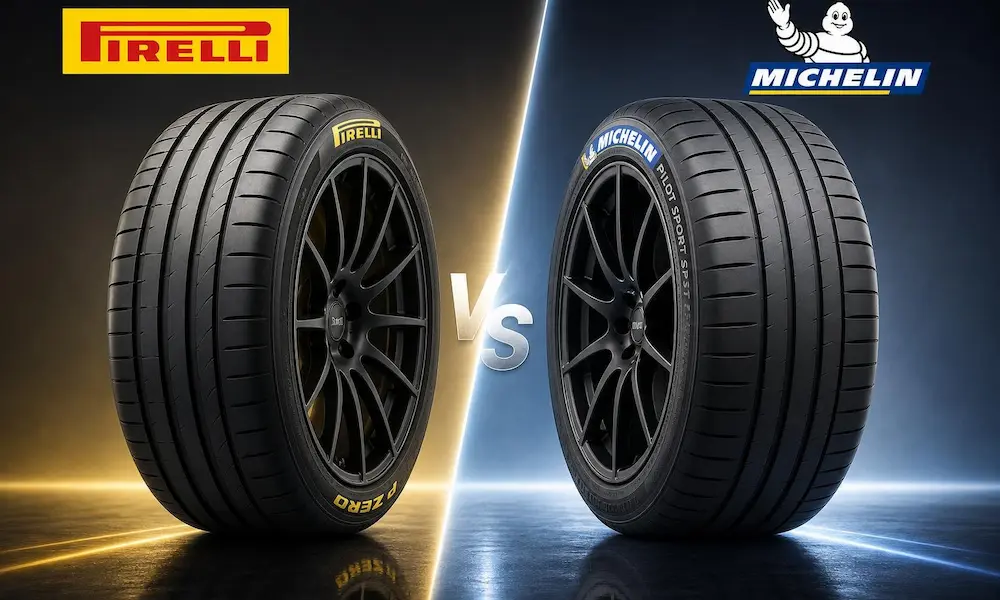
It competes directly with the Michelin CrossClimate 2, and head-to-head testing reveals fascinating trade-offs.
Comfort vs. Extreme Weather Performance
In direct comparison with the CrossClimate 2:
Pirelli wins on comfort and price. The WeatherActive is significantly quieter (1.7 dB lower exterior noise) and scores 5-10% better in subjective comfort tests. It’s also consistently cheaper.
Michelin wins on extreme conditions and efficiency. The CrossClimate 2 shows 2% better snow braking, 4% better deep-water resistance, and critically, 9% lower rolling resistance for better fuel economy.
Real-World Winter Performance
Consumer surveys are outstanding: 9.4 out of 10 for wet traction, 9.6 for dry, and 8.8 for winter conditions. One user in Deadwood, SD, drove through 8 inches of snow and reported it “handled freaking awesome” on snow, slush, and ice.
Users describe it as “very close to a dedicated winter tire,” which is high praise for an all-weather design.
The Bottom Line Choice
This isn’t about which is better—it’s about which matches your priorities.
Choose the WeatherActive if you value on-road quiet and comfort, want 3PMSF winter peace of mind, and prefer saving money upfront.
Choose the CrossClimate 2 if you face extreme weather regularly (heavy snow, deep standing water) and want maximum fuel economy over the tire’s life.
The All-Terrain Pretender: Scorpion All Terrain Plus Reality Check
This tire tries to be everything to everyone. It mostly fails.
The 95/5 Design Philosophy
Pirelli’s own representative revealed that, according to their research, all-terrain tires are used on-road 95% of the time. This “95/5” philosophy dictates every trade-off the All Terrain Plus makes.
It’s designed to be an on-road tire first, off-road tire second.
On-Road Success
In its primary mission, it succeeds. An Autoweek review noted the “expected roar was nowhere to be found.” Tire Rack’s test praised its “smooth ride” and “minimal” tread noise.
If you want the aggressive look of an AT tire without the typical noise penalty, this delivers.
Off-Road and Winter Failures
Here’s where it falls apart. SimpleTire’s analysis notes its performance in “deep mud and rocky conditions isn’t as promising as its peers.” Users describe trail performance as merely “ok.”
The winter performance is worse—and contradictory. Despite carrying the 3PMSF rating, a winter tire test called it “one of the lower performing AT tires in snow/ice,” noting it performed “worse than some non-snow rated AT tires.”
Users confirm ice grip is “ok (just ok)” and “not nearly as good as Blizzaks or Hakkas.” The 3PMSF rating here appears to mean “technically passed the test” rather than “truly excellent in winter.”
Wear and Durability Issues
The 50,000-mile warranty sounds decent until you read user complaints about rapid wear: “didn’t wear all that well,” “wear out so quickly.”
Against true all-terrain competitors like the BFGoodrich KO2 or Toyo Open Country A/T III, the Scorpion AT Plus simply isn’t in the same durability league.
Who Should Buy This?
Only buy the All Terrain Plus if you want the aggressive AT aesthetic for your daily driver and will do at most light-duty off-roading. Don’t buy it for serious trails, and definitely don’t rely on it for winter safety despite the 3PMSF badge.
The Winter Specialist: Scorpion Winter 2 Examined
This is Pirelli’s dedicated snow and ice tire, designed for maximum winter control.
Performance Winter vs. Maximum Grip
Here’s the key insight: the Scorpion Winter 2 is consistently categorized as a “high-performance winter tire” rather than a “maximum winter tire.”
Comparison analysis reveals a fundamental difference from competitors like the Bridgestone Blizzak DM-V2:
Blizzak’s approach: A softer, porous compound that “packs snow much better” for superior traction. The trade-off is a “mushy” feel on dry roads and more noise.
Pirelli’s approach: A stiffer compound that maintains steering response, dry-road handling, and high-speed stability while still providing excellent snow and ice grip.
Snow and Ice Capability
The Winter 2 is 3PMSF-certified with dense 3D sipes and “snow edges” engineered for snow-on-snow traction. Consumer surveys for its predecessor show excellent ratings: 9.2 out of 10 for light snow, 8.6 for deep snow, and 8.3 for ice.
Technical reviews praise its “dependable and consistent traction” and “accurate and predictable” handling.
Who It’s For
The Scorpion Winter 2 is the right choice if you drive a premium or performance SUV (Porsche Macan, BMW X5, Audi Q7) and don’t want your vehicle to feel unresponsive in winter.
If you drive a family SUV (Honda Pilot, Toyota Highlander) and prioritize absolute maximum safety in blizzard conditions above all else, the Bridgestone Blizzak DM-V2 offers superior ice grip.
Critical Safety Warning: The OEM Tire Problem
This section is crucial if you own a new Volvo, Rivian, or Audi with factory Pirelli tires.
The Recall Clarification
In November 2024, NHTSA issued Recall No. 24T011 for a “Pirelli Scorpion” tire citing tread separation risks.
Critical clarification: this recall is for the Pirelli Scorpion Trail II motorcycle tire, not SUV/CUV tires. There are currently no active NHTSA safety recalls for the Scorpion SUV tire lines.
The Tread Chunking Defect Pattern
There’s a widespread, documented pattern of tread blocks “chunking,” “tearing,” “chipping,” or “splitting” from Pirelli Scorpion OEM tires.
Vehicles affected: Primarily new Volvo models (XC60, XC90, V60) and Rivian models (R1T, R1S).
Tires affected: Factory-installed Scorpion Verde and Scorpion Zero OEM versions.
This isn’t just forum complaints. A Volvo dealer acknowledged “there was an issue with the Pirellis made between 2021 and 2022.” An Audi Technical Service Bulletin (TSB) was issued for “tearing of tread” on OEM Scorpion Verde tires, instructing dealers on warranty claims.
This points to a documented manufacturing or material defect related to tread block adhesion on specific OEM models.
Critically: this defect is not associated with aftermarket “Plus” or “WeatherActive” lines. Some Volvo owners replaced their chunked OEM Verdes with aftermarket AS Plus 3 tires and reported being extremely satisfied.
The Rivian Rapid Wear Crisis
Separate from chunking is catastrophic wear on Rivian EVs. Owners report “chewed up” front tires and complete wear-out in 6,000 to 12,000 miles.
This is a perfect storm of physics and vehicle integration failure:
Mass: Rivian’s ~7,000-pound weight.
Torque: 835-horsepower EV motors generating instant, massive torque that flexes tread blocks backward.
Drive mode: Rivian’s “Conserve” mode makes the vehicle front-wheel-drive only, routing 100% of propulsion and regenerative braking torque through the front wheels.
Alignment: Poor factory alignment exacerbates wear.
The OEM Pirelli Scorpion tires weren’t robust enough to handle the Rivian’s unique physics, particularly “Conserve” mode. This is a powerful lesson in EV-specific tire design, though the Pirellis are the component that failed.
The Warranty Trap Exposed
Here’s the financial gut-punch that connects everything.
You see your OEM Scorpion Verde tires chunking at 15,000 miles or worn at 25,000 miles. You see the advertised 70,000-mile warranty for “Scorpion AS Plus 3” and try to file a claim. It’ll be denied.
As documented in Better Business Bureau complaints, Pirelli’s policy is explicit:
No treadwear warranty on OEM tires. Factory-installed tires don’t come with a manufacturer’s treadwear warranty from Pirelli.
OEMs are built for “performance,” not “longevity.” Pirelli states OEM tires are built to car manufacturer specifications (e.g., low rolling resistance), which may “offer a shorter tread life.”
The warranty only applies to “Plus” tires. Treadwear warranties only cover aftermarket replacement tires purchased separately from tire dealers.
This creates a two-tiered system. The tires with documented defects (OEM Verde, Zero) carry no warranty. The “good” tires (aftermarket AS Plus 3, WeatherActive) come with strong warranties.
Your Buying Decision: Which Scorpion Is Right for You?
Let’s cut to actionable recommendations based on real driving scenarios.
For Daily Commuters (Honda Pilot, Toyota Highlander, Lexus RX)
Buy: Pirelli Scorpion AS Plus 3
This is one of the best touring tires on the market if your priority is a supremely comfortable, quiet, refined ride with excellent wet and dry traction. The 70,000-mile warranty provides excellent long-term value.
Caveat: EV and hybrid owners will see a 5-10% drop in range/efficiency. The comfort comes from higher rolling resistance.
For Year-Round Drivers in Variable Climates (Subaru Outback in Chicago, BMW X3 in NYC)
Buy: Pirelli Scorpion WeatherActive
This is the ideal “one tire to do it all.” It provides 3PMSF-certified snow grip for true winter confidence while being demonstrably quieter and more comfortable than the Michelin CrossClimate 2. For a slightly lower price, it’s the perfect “set it and forget it” tire.
For Off-Road and Truck Enthusiasts (Ford F-150, Toyota 4Runner)
Don’t buy: Pirelli Scorpion All Terrain Plus
This tire is an “AT-lite” that fails to deliver on its core promises. It’s only a good choice if you want the look of an AT tire without the on-road noise.
Buy instead: Its off-road and winter performance are poor for its class. You’re far better served by a true all-terrain tire like the BFGoodrich KO2 or Toyo Open Country A/T III.
For Drivers in Severe Winter Climates (Canada, Michigan, Upstate NY)
Buy (with nuance): Pirelli Scorpion Winter 2
This is an excellent performance winter tire. If you drive a Porsche Macan or BMW X5 and value crisp steering response, this is the correct tire for your vehicle.
Buy instead (for most people): For the vast majority of drivers in non-performance family SUVs, the Bridgestone Blizzak DM-V2 offers superior, “unbeatable” ice and deep-snow traction. It’s the safer choice when maximum grip is the only priority.
Critical Advisory for New Vehicle Owners with OEM Pirelli Scorpions (Volvo, Rivian, Audi)
Action required: Inspect and beware.
The factory-installed tires on your new vehicle may be problematic in ways that affect your safety and finances.
Inspect now: Physically inspect your tire tread, especially front wheels, for signs of chunking, tearing, or splitting.
Understand your warranty: You don’t have a treadwear warranty from Pirelli. If your tires are defective, your only recourse is through your car dealership under the vehicle’s limited warranty.
When replacing: Don’t replace defective OEM tires with the same OEM-spec tire. Purchase the aftermarket Scorpion AS Plus 3 or Scorpion WeatherActive instead. This ensures you get the superior-quality product that includes the full mileage warranty, turning a negative experience into a significant upgrade.
The Final Verdict on Pirelli Scorpion Tires
So, are Pirelli Scorpion tires good? The answer is yes—but only if you know exactly which one you’re buying.
The aftermarket Scorpion AS Plus 3 and WeatherActive are excellent tires that compete with and often beat segment leaders. They’re quiet, comfortable, grippy, and backed by strong warranties.
The OEM Scorpion Verde and Zero that come on new vehicles are a different story. They’re plagued by documented defects, rapid wear on EVs, and a warranty policy that leaves owners stranded.
Pirelli has created a confusing, two-tiered system where their best work is hidden behind the same brand name as their worst. Your job as a buyer is to see through the naming confusion and choose the right tire for your specific needs.
If you’re replacing worn tires, the aftermarket Scorpions deserve serious consideration. If you’re driving off the lot in a new Volvo or Rivian with OEM Pirellis, start planning your replacement strategy now.