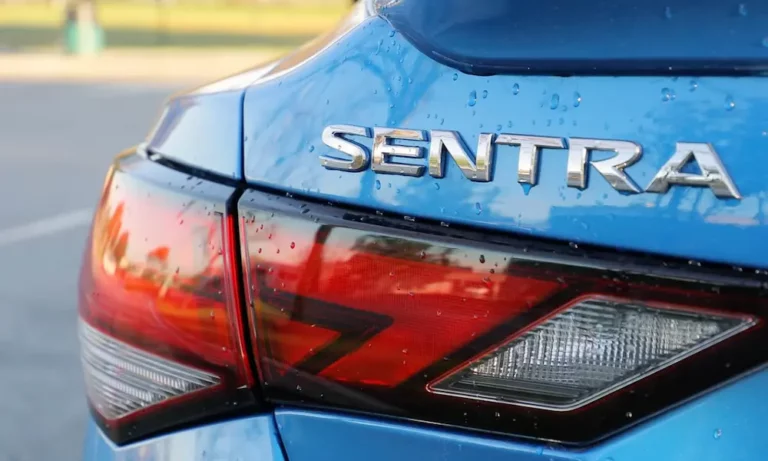
Thinking about getting a Nissan Sentra but wondering if it’ll leave you stranded? You’re right to question its reliability—the Sentra has a complicated reputation. In this post, I’ll break down exactly which Sentra years are solid bets and which might have you on a first-name basis with your mechanic.
The Overall Reliability Picture for Nissan Sentras
The Nissan Sentra currently holds a reliability rating of 4.0 out of 5.0, ranking 14th out of 36 compact cars in its class. That’s not bad at all. According to J.D. Power, the Sentra falls into the “Great” category with a reliability score between 81-90.
But here’s where it gets interesting:
- Consumer Reports gives more conservative ratings of only 3 out of 5 for predicted reliability
- The average Sentra lasts about 120,387 miles (or 8.4 years)
- Only 2.9% of Sentras reach the coveted 200,000-mile mark
This paints a picture of a car that’s generally reliable but not exceptional when it comes to longevity. But the devil’s in the details—some model years are significantly better than others.
The CVT Transmission: The Sentra’s Achilles’ Heel
If there’s one thing that’s damaged the Sentra’s reliability reputation, it’s the problematic Continuously Variable Transmission (CVT). This is particularly true for models from 2013-2017, which experienced widespread transmission failures.
The CVT problems include:
- Engine stalling at highway speeds (terrifying!)
- Transmission jerking or shuddering during acceleration
- Complete transmission failure requiring replacement ($3,500-$3,600)
- “CVT belt slip condition” causing power loss
The 2014 and 2015 models are the worst offenders, with transmission failures typically occurring around 85,000 miles. These issues were so widespread that multiple class-action lawsuits were filed regarding the 2012-2016 Sentras.
Recent Models Show Promise (2020 and Newer)
Nissan completely redesigned the Sentra for the 2020 model year, and the early signs are positive. Consumer Reports actually recommended the 2020 Nissan Sentra, calling it “one of the best compact sedans” with strong ratings for:
- Braking performance
- Fuel economy
- Transmission performance (finally!)
- Ride comfort and handling
The publication praised its “capable ride and handling, good fuel economy, relatively roomy interior, and intuitive controls.”
Real-world feedback from 2020-2023 Sentra owners shows mostly positive experiences, though some still note the transmission can be “clunky” at slower speeds. Many owners emphasize the importance of regular CVT fluid changes every 30,000 miles as critical preventative maintenance.
Most Reliable vs. Least Reliable Sentra Years
Most Reliable Sentra Years
- 2000-2004 (Fifth Generation)
These older models are widely considered reliable workhorses, despite their age. - 2007-2010
Generally solid options with fewer reported issues across the board. - 2020 and newer
The complete redesign shows promise, though long-term data is still developing.
Sentra Years to Avoid
- 2013-2017
High risk of CVT transmission failure makes these years a gamble. - 2014-2015
These are the absolute worst years, with the 2014 model having the highest complaint rate.
Beyond Transmission: Other Common Sentra Problems
While the CVT issues get most of the attention, Sentras have faced other reliability challenges:
- Paint and body problems: Lower scores for paint quality and body integrity in consumer testing
- Brake system issues: Problems with components and performance
- Climate control malfunctions: Particularly with air conditioning systems
- Electrical gremlins: Including headlights randomly turning off and infotainment system glitches
Recent Recalls Worth Noting
Nissan has issued several recalls for the Sentra in recent years:
| Years Affected | Problem | Vehicles Affected |
|---|---|---|
| 2020-2021 | Bent tie rods affecting steering | 138,736 vehicles |
| 2024 | Driveshaft separation from transmission | 10,533 vehicles |
| 2016-2019 | Brake light switch issues | 800,000+ vehicles |
These recalls highlight ongoing quality control challenges, even in newer models.
How Does the Sentra Compare to Competitors?
The Sentra generally ranks lower in reliability than key competitors:
| Model | Reliability Rating | Notes |
|---|---|---|
| Honda Civic | 8.8/10 | Significantly more reliable |
| Toyota Corolla | 9.1/10 | Class-leading reliability |
| Nissan Sentra | 7.9/10 | Lower but improving |
| Hyundai Elantra | 7.5/10 | Slightly less reliable |
Many experts recommend that if you’re set on a Sentra, look for models with manual transmissions to avoid CVT-related issues (though these are increasingly rare).
Cost of Ownership: The Good News
The Sentra does offer relatively low maintenance costs, with average annual repair costs of $491—below average for its class. However, this figure doesn’t account for potential CVT transmission replacements in problematic model years, which can cost $3,500+.
What Warranty Coverage Do You Get?
Nissan provides standard warranty coverage for new Sentras:
- Basic coverage: 3 years or 36,000 miles
- Powertrain coverage: 5 years or 60,000 miles
- Corrosion warranty: 5 years with unlimited mileage
This is typical for the industry but doesn’t stand out as particularly generous.
Maximizing Your Sentra’s Reliability
If you already own a Sentra or are set on buying one, here are some tips to maximize reliability:
- Follow the maintenance schedule religiously
- Change the CVT fluid every 30,000 miles (even if Nissan says it’s “lifetime fluid”)
- Address unusual noises or vibrations immediately
- Consider extended warranty coverage for 2013-2017 models
- Stay on top of recall notices and get issues fixed promptly
Is a Nissan Sentra Right for You?
The Sentra can be a reliable vehicle, but your experience will largely depend on which model year you choose. The 2013-2017 generation should be avoided unless you’re prepared for potential transmission headaches.
Your safest bets are either:
- Older models (2000-2004, 2007-2010) if you want proven reliability
- The newest generation (2020+) if you want modern features with improved reliability
However, if maximum reliability is your top priority in a compact sedan, competitors like the Toyota Corolla and Honda Civic generally offer better long-term dependability.
The Sentra remains a good value with attractive styling and features, but its reliability story is one of highs and lows—choose wisely based on your risk tolerance and how long you plan to keep the vehicle.