Shopping for tires on a budget? You’ve probably stumbled across Sailun and wondered if they’re worth your money. The short answer: yes, but it depends on what you’re buying. Let’s dig into the real performance data, safety records, and where these tires shine (and where they don’t).
What You Need to Know About Sailun
Sailun isn’t some sketchy no-name brand. It’s a massive, publicly traded company that ranks among the top 10 global tire manufacturers. They’ve got over 21,000 employees and modern plants in China, Vietnam, and Thailand.
Here’s the thing: Sailun’s strategy is brilliant. They use their massive scale and low-cost manufacturing to invest heavily in R&D. Then they price their tires way below premium brands. You’re not getting a “cheap” tire—you’re getting a good tire at a cheap price.
But quality varies dramatically by model. Some compete head-to-head with Michelin. Others? Not so much.
The Flagship: Sailun Inspire Performance
The Inspire is Sailun’s crown jewel, and it’s legit impressive.
How It Stacks Up Against Premium Brands
An independent blind test compared the Inspire to a pricier competitor. The results shocked testers:
Noise and comfort: The Inspire won. It was noticeably quieter at normal speeds—the kind of difference you’d actually feel on your daily commute.
Wet performance: Basically identical in real-world driving. The premium tire had slightly more grip at extreme cornering limits, but we’re talking about conditions 99% of drivers will never experience.
Dry performance: Dead even. Both stopped well without squealing.
The SimpleScore system gives the Inspire an 8.3 overall, but here’s what matters: it scores a 9.3 out of 10 for longevity. That’s backed by a 520 treadwear rating and a 70,000-mile warranty.
What Real Owners Say
One commuter driving 110 miles daily (that’s 20,000 miles yearly) bought a second set of Inspires, calling them “just as good or better than your average name brand tire.” Another owner put 25,000 kilometers on them and said they’d definitely buy again.
The pattern is clear: Sailun engineered the Inspire for what commuters actually need—quiet rides, long tread life, and reliable all-season grip. They sacrificed that last 1% of extreme performance to nail the metrics that matter for daily driving.
Winter Tires: A Surprising Strength
Sailun’s Ice Blazer line punches way above its weight class.
Ice Blazer WSTX and WSL2 Performance
A 10,000-kilometer winter test of the Ice Blazer WSL2 found “excellent grip and traction in snow, slush, and icy conditions.” The tire’s compound stays flexible in brutal cold, and the high-density siping bites into ice.
The newer Ice Blazer WSTX delivers “comparable performance in heavy, wintery conditions compared to pricier tires.” It’s also noticeably quieter than older Sailun winter models.
In a head-to-head with Firestone Winterforce, the WSTX provided more initial grip on both FWD and AWD vehicles.
Here’s why this matters: Winter tire performance comes down to compound science and tread design—engineering challenges Sailun has clearly solved. They’re competing directly with premium brands on the most critical metric: keeping you safe when roads turn deadly.
High-Performance Tires: Know the Trade-offs
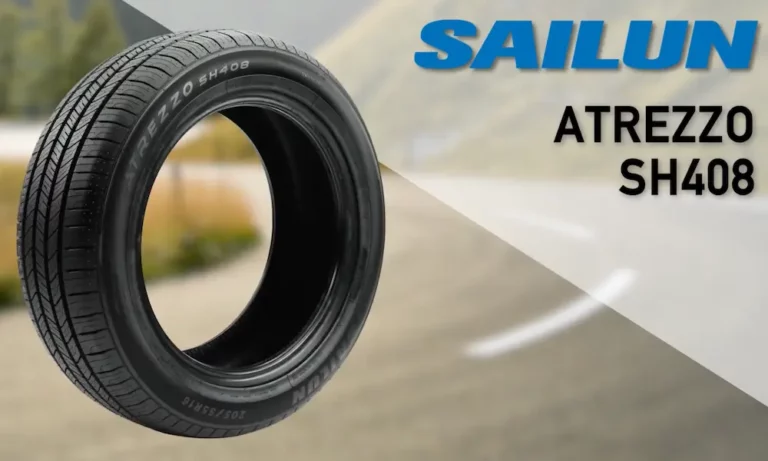
The Atrezzo line shows both Sailun’s value proposition and its current limits.
Atrezzo SH406: The Budget Touring Winner
This all-season touring tire scores 8.2 overall with an 8.4 for longevity. One owner nailed it: “90% of a Michelin for 50% of the price.” After 40,000 miles, they praised its quiet comfort, good wet traction, and even wear.
It’s got a 45,000-mile warranty and handles light snow just fine. The “squishy” handling some mention is typical of comfort-focused touring tires.
Atrezzo ZSR2: The Performance Compromise
This ultra-high-performance summer tire is where things get complicated.
In a 2024 European test, it placed 10th and beat several pricier brands. Drivers praise its dry grip and steering feedback. But there’s a catch—actually, two catches.
First: Wear is high. One owner doubts they’ll last 20,000 kilometers.
Second (the big one): It ranked 10th in emergency wet braking. That’s a safety issue. As one forum user bluntly put it: “don’t sacrifice safety for money.”
If you drive mostly in dry conditions and understand the trade-off, it’s decent value. But wet-weather performance separates premium brands from the rest, and Sailun hasn’t cracked that code in the UHP category yet.
Truck and SUV Options
Terramax RT: The Value Champ
This rugged-terrain tire is generating serious buzz. Jeep owners cite prices like $177 per tire versus $460 for comparable Nitto Ridge Grapplers—that’s less than 40% of the cost.
Early reviews praise it as “surprisingly quiet on the road.” It’s got a solid 600 treadwear rating and a 45,000-mile warranty. For a daily-driven truck that occasionally hits trails, it’s an excellent-value choice.
Terramax A/T 4S: Mixed Results
This all-terrain/all-weather tire (Three-Peak Mountain Snowflake certified) gets mediocre scores: 7.5 for longevity and 7.7 for traction. Consumer feedback on wet and snow performance is inconsistent. It’s not bad, but it’s not a standout either.
The EV Tire Strategy: Smart Market Targeting
Sailun spotted a gap and filled it brilliantly.
ERange EV: The Budget Alternative
Tesla and Bolt owners face brutal OEM replacement costs—one Tesla owner got quoted $2,400 for Michelin Pilot Sport AS 4’s. Sailun’s ERange line offers a warrantied alternative for roughly half that.
The compromise? It’s “not quite as smooth and quiet as the continentals” because it lacks the foam inserts premium brands use. But owners are “pleasantly surprised” by the performance.
A Bolt owner in Chicago found them better in wet conditions than the OEM tires and adequate in snow. For $1,285 installed versus $2,400+, that’s a smart financial decision.
The Safety Question: What About That Recall?
Let’s address the elephant in the room.
The 2021 NHTSA Recall: Critical Context
In 2021, Sailun recalled approximately 84,000 tires for tread belt separation—a dangerous defect that can cause blowouts. This was serious.
Here’s what matters: The recall was exclusively for Specialty Trailer (ST) tires in sizes ST235/80R16 and ST235/85R16. These go on RVs and towable trailers, not passenger cars.
The defect traced back to a manufacturing quality-control lapse at their Vietnam plant during a specific five-month window in 2020. It doesn’t affect the Inspire, Atrezzo, Ice Blazer, or other passenger lines.
If you own an RV or trailer, this is relevant. For passenger car buyers? It’s a red flag about brand-wide quality control, but the direct risk to you is low.
Safety Ratings: The Good News
Sailun’s mainstream passenger models consistently earn strong UTQG safety ratings:
Traction: Grade ‘A’ (AA is highest)—strong wet-braking ability
Temperature: Grade ‘A’ (the highest)—excellent heat resistance at high speeds
Treadwear: The Inspire’s 520 and Terramax RT’s 600 are both solid numbers
Understanding the Warranty (Read This First)
Sailun’s “Total Coverage Warranty” looks fantastic on paper:
- 60-month defect warranty
- Free replacement for defects in the first 12 months or first 25% of tread wear
- Road hazard protection for the first 3/32″ or two years
- Mileage warranties (70,000 miles on the Inspire)
The Fine Print That Voids Everything
Here’s the catch: You must provide documented proof of tire rotations every 10,000 km (about 6,200 miles). Failure to rotate voids the tread wear protection.
That Reddit user who claimed Sailun “doesn’t stand by their warranty”? They probably didn’t keep rotation records.
If you’re organized and keep service receipts, this is one of the best warranties in the value tier. If you’re not? It’s worthless.
Who Should Buy Sailun Tires?
Daily Commuters: Absolutely
The Sailun Inspire is purpose-built for you. It won a blind test on quietness, has proven long-term durability, and costs half what premium brands charge. EV owners facing unsustainable OEM costs should seriously consider the ERange.
Winter Drivers: Highly Recommended
The Ice Blazer WSTX and WSL2 deliver comparable performance to pricier winter tires in heavy snow and ice. They’re safe, effective, and economical.
Performance Enthusiasts: Be Selective
The Atrezzo ZSR2 offers great dry grip for the money, but its weak emergency wet braking is a deal-breaker if all-weather safety matters to you. Don’t compromise on wet performance.
Truck Owners: Good Value
The Terramax RT delivers aggressive looks, a 600 treadwear rating, and a quiet ride for a fraction of premium prices. It’s a smart buy for daily-driven trucks.
RV/Trailer Owners: Look Elsewhere
Given the 2021 recall for tread separation specifically on ST trailer tires, the risk outweighs the savings. Choose a brand with a proven track record in this category.
The Bottom Line on Sailun Quality
So, are Sailun tires good? For most drivers, yes—sometimes surprisingly good.
The Inspire and Ice Blazer lines prove Sailun can compete with premium brands on the metrics that actually matter: comfort, noise, tread life, and winter safety. They’re not cutting corners. They’re making smart engineering trade-offs and using their massive scale to undercut competitors on price.
But quality varies by model. The UHP summer category shows they haven’t mastered every aspect of tire science yet, particularly advanced wet-weather compounds.
Think of Sailun this way: They’re a major global manufacturer selling at budget prices to gain market share. That’s a fundamentally different proposition than a genuinely cheap, low-quality tire.
If you choose the right model for your needs, maintain proper documentation for the warranty, and understand the specific trade-offs, you’ll likely get 90% of a premium tire’s performance for half the cost. That’s not marketing hype—it’s what the independent testing data shows.
Just don’t expect miracles in every category, and for the love of all that’s safe, keep those rotation receipts.