Streaky wipers in a rainstorm are more than annoying — they’re dangerous. If you’re eyeing Trico blades and wondering whether they’re worth your money, you’re asking the right question. This post breaks down exactly what Trico offers, where they shine, and where they fall short. Stick around — the answer might surprise you.
Trico’s History Actually Matters Here
Trico didn’t just enter the wiper market — they invented it.
In 1917, founder John Oishei rear-ended a cyclist in a Buffalo rainstorm because he couldn’t see through his windshield. That near-disaster led him to create the world’s first commercially mass-produced wiper blade. By 1921, Trico introduced the first automatic vacuum wiper motor. By 1953, they built the first winter blade with an ice-repellent hood.
Why does this matter? Because Trico spent decades as a Tier 1 OEM supplier — meaning automakers trusted them to install wiper systems straight from the factory. In the mid-1990s, roughly 7 out of every 10 cars made in North America rolled off the line with Trico equipment.
That’s not a marketing claim. That’s engineering credibility.
What Makes Trico Wiper Blades Actually Work
The Materials Behind the Wipe
Trico doesn’t use the same rubber compound across every blade. They match materials to specific problems:
- Teflon-infused rubber (NeoForm, Trico Flex) — reduces friction and eliminates that annoying chattering squeak
- Z7 Synthetic Rubber (Trico Titan) — resists environmental wear up to 3x longer than standard rubber
- Silicone Ceramic — survives extreme heat, won’t crack, and deposits a water-beading layer on your glass as it wipes
Each material targets a real failure point. That’s smart engineering, not just branding.
Three Blade Structures — One for Each Driver
| Structure | How It Works | Best For |
|---|---|---|
| Conventional | Metal frame with multiple pressure claws | Older vehicles with flatter windshields |
| Beam | Single tensioned steel beam (Memory Curve Steel) | Modern curved windshields; winter driving |
| Hybrid | Beam core inside a polymer shell | All-season driving; style-conscious buyers |
The beam design is the real star here. Trico’s Memory Curve Steel eliminates the exposed joints that trap ice in cold weather. No joints, no ice pack, no failure at 6 AM on a February morning.
The VorTec Aerofoil: Wind Lift Is a Real Problem
At highway speeds, airflow creates a low-pressure zone over your windshield. That literally lifts your wiper blade off the glass — right when you need it most.
Trico’s VorTec aerofoil design uses the wind as a tool instead of a threat. The wedge-shaped spoiler pushes the blade down against the glass. Independent testing shows it handles turbulence beyond 135 mph. That’s serious margin for highway driving.
Breaking Down the Trico Product Lineup
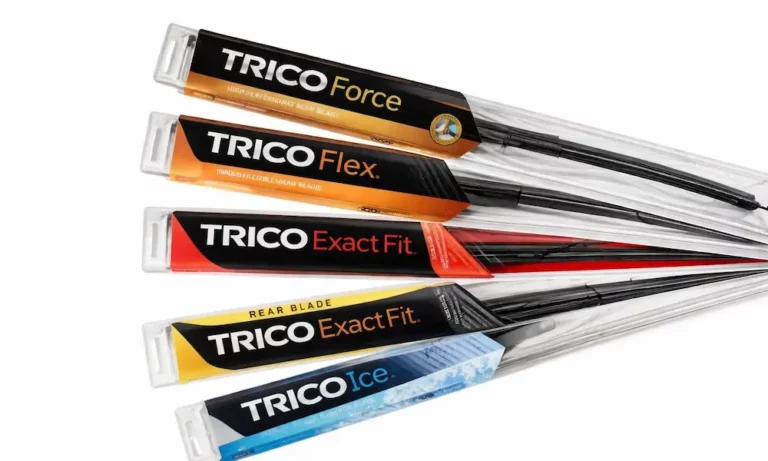
Trico Titan — For Drivers Who Hate Replacing Wipers
The Titan uses Z7 synthetic rubber and a laser-precision twin-rail beam. It’s manufactured in the United States and comes with a 1-year warranty. If you want to set it and forget it, this is your blade.
The twin-coupler distributes pressure from the wiper arm evenly across the entire blade. No hot spots, no uneven wear, no early failure.
Trico Force — Built for Speed
The Force line prioritizes aerodynamic stability over everything else. The VorTec aerofoil is most aggressive here, making it a strong pick for modern SUVs and sports cars. Professional mechanics consistently rank it above competitor flagship models for contact quality during heavy storms.
It also features HighGlide treated rubber — a proprietary coating designed for silent wiping at speed.
Trico Onyx — The Long-Haul Wiper
You’ll find the Onyx at professional shops and retailers like Advance Auto Parts. Many users report these blades staying effective for up to two years — well past the typical 6-month replacement cycle. Its closed beam design prevents snow packing, making it a solid year-round option.
Trico Sentry — The Hybrid Choice
The Sentry uses Dual-Shield technology: a high-strength polymer shell over a beam-style core. The shell pivots to maintain aerodynamic profile while protecting the internal spring steel from UV damage and road salt.
Its side-mount design lowers the wiper arm profile on the windshield, further reducing wind lift. It’s one of the cleaner-looking options on the market.
Trico Silicone Ceramic — The Southwest Specialist
Heat destroys rubber wipers. In places like Texas, Arizona, and Nevada, standard blades can fail within three months. The Silicone Ceramic line solves this with a material that doesn’t harden or crack under intense UV exposure.
The ceramic coating acts as a dry lubricant, eliminating judder. And as the blade moves, it deposits a micro-layer of water-beading material directly onto your windshield. Trico engineers designed it to be residue-free, so you won’t get that hazy film some silicone blades leave behind.
How Trico Handles Installation
SWIFT Easy Connection
Nobody wants to dig through a bag of plastic adapters at 7 AM in a parking lot. Trico’s SWIFT system comes pre-attached with the right connector for standard J-hook arms — which covers roughly 95% of American vehicles.
For Ford, VW, and Audi owners with push-button arms, Trico includes a modular adapter. Identifying your arm type is easy: if a standard US penny fits into the arm end, it’s a wide (22mm) arm. If not, it’s narrow (19mm). Swap the clip by pressing the release tab, sliding it off, and clicking the new adapter in.
Trico Exact Fit — Zero Guesswork
The Exact Fit line is pre-assembled for your specific year, make, and model. No adapters. No configuration. Just click it in.
This is especially useful for rear wipers, which often use proprietary arm designs that universal blades can’t match. Subaru owners, for example, frequently report that Exact Fit is the only non-dealership option that installs without adapters.
Trico in Extreme Weather: Winter and Summer
Winter: Trico Ice vs. Trico Chill
| Blade | Key Feature | Best Temperature Range |
|---|---|---|
| Trico Ice | Heavy-duty armor boot; stays flexible at -20°F | Severe winters; freezing rain; heavy snow |
| Trico Chill | Rubber boot over high-grade steel frame | Moderate winter climates; wet heavy snow |
The Trico Ice consistently ranks among the top performers in extreme cold weather evaluations. One specific advantage: its rubber compound stays supple when silicone-based competitors sometimes become too soft and prone to tearing on jagged ice.
Summer: UV and Heat Resistance
In high-heat regions, users report Trico Titan and Silicone Ceramic blades maintaining flexibility and clean wiping for a full year. Budget blades in the same conditions often fail in three months. The difference is the compound — synthetic and silicone-based materials simply don’t bake out the way natural rubber does.
Trico vs. Bosch vs. Rain-X
| Metric | Trico (Premium) | Bosch Icon | Rain-X Latitude |
|---|---|---|---|
| Durability | High — Z7 & Silicone Ceramic options | Exceptional — longevity leader | Moderate to High |
| Wipe Quality | Streak-free; aerofoil prevents lift | Very smooth; quiet operation | Excellent in heavy rain |
| Installation | High — SWIFT & Exact Fit | High — locking clasp | Moderate — connectors can be bulky |
| Value | Best for OE-matching & specialized use | High upfront cost, long payoff | Good initial performance |
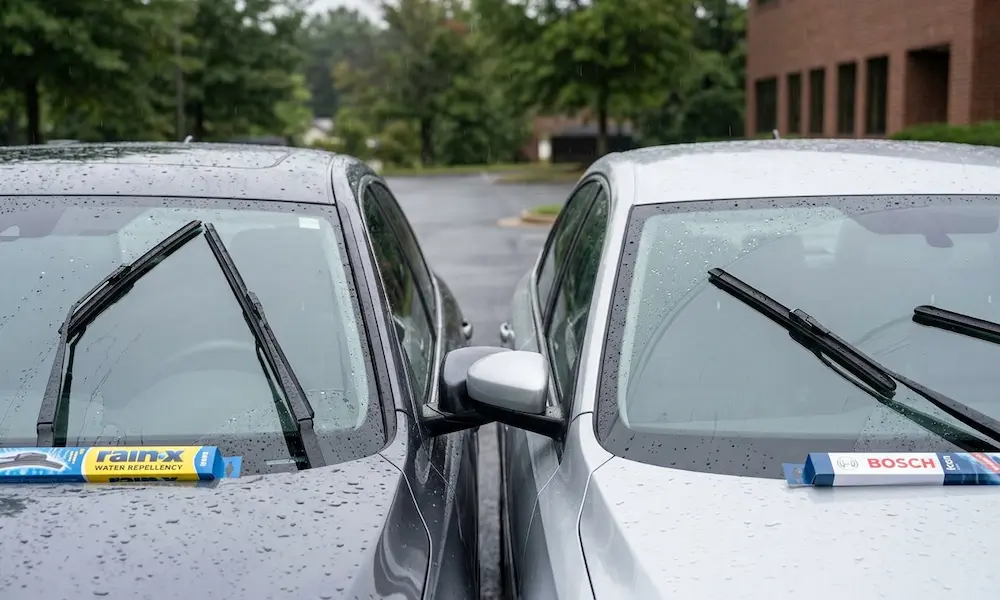
Bosch Icon is widely considered the gold standard for all-season performance. But Trico’s wider range of specialized blades gives it an edge in specific scenarios — winter driving, high-speed stability, and rear wiper fitment.
Rain-X’s hydrophobic coating is genuinely effective, but it can leave a hazy residue over time. Trico’s Silicone Ceramic delivers a similar water-beading benefit with a cleaner result, and Trico’s OEM heritage means more precise mounting data — less wind noise, more secure attachment.
Trico’s Quality Standards: The Numbers
Trico’s manufacturing follows Tier 1 automotive supplier standards. Here’s what that looks like in practice:
- Parts Per Million (PPM) defect rate: under 20 — among the lowest in the wiper industry
- Warranty monitoring cycles: 3, 6, 12, and 36 months, with rapid design changes triggered by field data
- Lab testing: each blade runs through over 1.5 million wipe cycles before hitting shelves
That’s not typical for aftermarket parts. That’s OEM-grade quality control applied to replacement blades.
It’s also worth noting that impaired visibility is a documented factor in thousands of annual crashes. A wiper blade that fails at highway speed isn’t just inconvenient — it’s a genuine safety risk. Trico’s testing standards exist precisely because they understand that.
So, Are Trico Wiper Blades Good?
Yes — but only if you pick the right one.
Here’s a quick guide to match the blade to your situation:
- You want to replace them once a year: Go with the Trico Titan
- You drive at highway speeds daily: Choose the Trico Force or Onyx
- You’re in the Midwest or Northeast with brutal winters: Buy the Trico Ice
- You’re in Arizona, Nevada, or Texas: The Silicone Ceramic is your answer
- You just want an easy swap with no adapters: Grab Trico Exact Fit
Trico isn’t the cheapest option on the shelf. They’re not trying to be. What they offer is a specialized tool for every visibility challenge, built by the company that invented the category — and that’s a genuinely compelling reason to trust them on your windshield.