Tired of streaky wipers ruining your rainy commute? The answer might come down to one simple choice: silicone vs rubber wiper blades. Both clean your windshield, but they don’t do it equally well. This post breaks down the real differences — performance, cost, climate, and more — so you can pick the right blade and stop replacing them every few months.
What’s Actually Inside Your Wiper Blade?
The material inside your wiper blade determines everything — how long it lasts, how well it wipes, and how it handles heat or freezing cold.
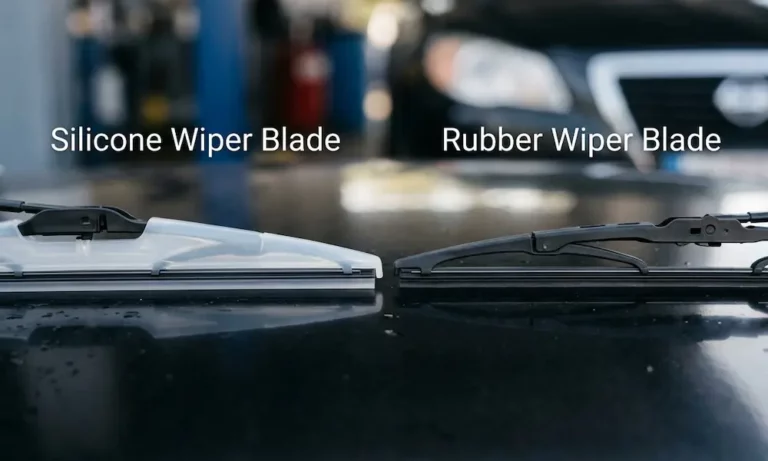
Rubber blades use natural rubber or synthetic blends like EPDM (ethylene propylene diene monomer). These are carbon-based materials. They’re flexible and wipe well when new. The problem? Carbon bonds break down fast when exposed to UV rays, ozone, and temperature swings.
Silicone blades use a synthetic polymer called polysiloxane. Instead of carbon, its backbone runs on alternating silicon and oxygen atoms. That structure is far more stable. It resists heat, cold, UV radiation, and ozone — the four things that destroy rubber blades fastest.
| Structural Property | Rubber | Silicone |
|---|---|---|
| Molecular backbone | Carbon-based | Silicon-oxygen chain |
| Porosity | Porous (traps debris) | Non-porous (stays clean) |
| UV resistance | Weak | Strong |
| Natural lubricity | Low | High |
| Oxidation resistance | Poor | Excellent |
That non-porous surface matters more than you’d think. Rubber traps microscopic dirt particles, which grind against your glass over time. Silicone doesn’t. It stays smoother longer, which means quieter, cleaner wipes throughout its lifespan.
How They Handle Extreme Weather
Your wiper blades don’t get to pick their climate. They deal with whatever nature throws at them.
Cold Weather Performance
Rubber stiffens below -20°C. When that happens, it loses contact with your windshield. The result? Chattering, skipping, and big patches of uncleared water right in your line of sight. That’s not just annoying — according to the NHTSA, poor visibility is a leading factor in weather-related crashes.
Silicone stays pliable down to -50°C. It doesn’t freeze to the glass overnight. It doesn’t crack when you first flip it on in January. If you live somewhere that gets real winters, this alone justifies the price difference.
Hot Weather Performance
Heat is equally brutal on rubber. Temperatures on your windshield surface can hit 70°C on a sunny day. Rubber softens, warps, and loses its sharp wiping edge. Silicone holds its shape through all of it — up to 200°C.
| Environmental Factor | Rubber Performance | Silicone Performance |
|---|---|---|
| Below -20°C | Stiffens, chatters, poor contact | Stays soft and flexible |
| Above 40°C | Softens, warps, streaks | Maintains shape and edge |
| UV radiation | Dries out and cracks | Resists aging exceptionally well |
| Ozone exposure | Surface cracking | Holds up for 7x longer in testing |
| Year-round consistency | Degrades seasonally | Stable across seasons |
Studies show silicone retains over 90% of its original flexibility after UV testing that would completely destroy rubber. That’s not a minor upgrade — it’s a fundamentally different material.
The Hydrophobic Effect: Silicone’s Secret Weapon
Here’s where silicone wiper blades pull ahead in an unexpected way. They don’t just clear water — they change how your windshield interacts with it.
As silicone blades operate, they deposit a thin layer of silicone oil onto your glass. This creates a hydrophobic (water-repelling) surface. When rain hits that treated glass, it beads up into tiny spheres instead of spreading into a flat sheet.
At highway speeds, aerodynamic pressure pushes those beads right off the glass. You can actually drive through light rain without even running your wipers. Night visibility improves noticeably too, since the beading effect reduces how headlights scatter across wet glass.
How to Apply the Silicone Break-In Correctly
Silicone blades need a short setup period to build that hydrophobic layer. Here’s the recommended dry-wipe break-in process:
- Clean the windshield thoroughly — remove all dirt, wax residue, and oils
- Dry the glass completely with a clean microfiber towel
- Run the wipers on dry glass for three to five minutes — this transfers the silicone film
- Check for beading by running water over the glass — droplets should bead and roll off
Skip this step and your silicone blades won’t perform the way they should. Don’t worry — you only need to do it once per installation.
Durability and Real-World Cost Comparison
The price tag on silicone blades looks higher at first. But run the numbers over time, and the math flips.
Rubber blades last six to twelve months under ideal conditions. In hot or sunny climates, many drivers replace them every three to four months. Silicone blades routinely last 18 to 36 months, with some premium versions staying effective for five years.
| Economic Metric | Rubber Blades | Silicone Blades |
|---|---|---|
| Unit cost (pair) | $5 – $20 | $20 – $40 |
| Average lifespan | 6 – 12 months | 24 – 36 months |
| Estimated annual cost | $10 – $30 | $7 – $15 |
| Replacements per year | 1 – 2 times | Once every 2 – 3 years |
| Long-term value | Lower | Higher |
A $30 set of silicone blades lasting three years beats two $15 rubber sets you replace every year. You also save time. For fleet managers running hundreds of vehicles, this math scales up quickly into real labor and logistics savings.
The Downsides of Silicone Blades (Yes, There Are Some)
Silicone blades aren’t perfect. A few quirks can catch first-time users off guard.
The hazing effect. That hydrophobic film is great for rain resistance, but under the glare of oncoming headlights at night, it can create a brief cloudy appearance. The glass is technically clear, but some drivers find it unsettling. This is the most common silicone complaint.
Surface sensitivity. Silicone blades need a clean windshield. If your glass has built-up wax from a drive-through car wash or road grease contamination, the silicone blade may chatter or squeak. Rubber is more forgiving on contaminated glass — at least early in its life.
Stubborn debris. Silicone’s smooth, lubricious surface sometimes glides over dried insects or thick mud rather than cutting through them. For drivers in agricultural or dusty environments, rubber’s slightly higher friction can scrape away heavy debris more effectively.
| Issue | Rubber Context | Silicone Context |
|---|---|---|
| Chattering | Hardened or aged rubber | Contaminated or waxy glass |
| Streaking | Nicks in the wiping edge | Uneven film distribution |
| Squeaking | Near end of blade life | On very dry or clean glass |
| Hazing | Extremely rare | Possible from hydrophobic film |
| Stubborn debris removal | Handles it better | May glide over rather than scrape |
Why Car Manufacturers Still Install Rubber Blades
You’d think automakers would install the better material. They don’t — and the reason makes sense when you follow the money.
Rubber blades are cheaper. When you’re building millions of cars a year, the price gap between a $5 rubber blade and a $15 silicone blade adds up to tens of millions of dollars. Rubber works fine for the first few months of ownership, which is all manufacturers need it to do before you take ownership.
The rubber supply chain is also deeply established. Natural rubber and EPDM compounds are available from hundreds of global suppliers. Silicone production is more specialized and subject to greater price swings.
There’s also a technical reason. Modern vehicles use rain sensors and camera-based driver assistance systems calibrated for a clean, untreated windshield. The silicone coating can occasionally alter light refraction in a way that affects sensor accuracy. Rubber keeps things neutral.
Which Climate Should Drive Your Choice?
Where you live should influence your decision as much as budget does.
Hot, sunny climates (Middle East, Australian Outback, Southern US): Rubber can fail within three months just from sitting in the sun. Silicone is the only practical long-term option here.
Cold climates (Northern Canada, Scandinavia, Mountain regions): Rubber stiffens and loses contact with the glass when you need it most. Silicone stays flexible at -40°C without question.
Tropical and monsoon regions (Southeast Asia, Florida): High humidity and heavy rainfall favor silicone’s hydrophobic performance. The beading effect reduces strain on your wiper motor during heavy downpours.
Temperate climates (Western Europe, Pacific Northwest): Rubber actually performs well here. It won’t get cooked by the sun or frozen stiff. In these regions, it’s a genuine value-based choice rather than a compromise.
Keeping Your Blades Alive Longer: Maintenance Tips
Both materials last longer with basic care.
For rubber blades:
- Wipe the edge with an alcohol pad regularly to remove oxidation buildup
- Clean off road grime before running the wipers — grit acts like sandpaper on the rubber edge
- Lift the blades off the glass when parked in direct sun for long periods
For silicone blades:
- Avoid de-icer sprays and harsh washer fluids — they strip the silicone coating
- If chattering starts, clean the windshield thoroughly and repeat the dry-wipe break-in
- Check wiper arm pressure — a bent arm prevents even glass contact, causing streaks regardless of blade material
| Maintenance Action | Rubber Benefit | Silicone Benefit |
|---|---|---|
| Soft cloth cleaning | Removes abrasive grit | Protects hydrophobic film |
| Alcohol wipe | Removes oxidation | Avoid — strips coating |
| Windshield polishing | Prevents sticking | Ensures even film coverage |
| Wiper arm adjustment | Improves contact | Ensures even film deposit |
| Quality washer fluid | Prevents freezing | Protects silicone coating |
The Hybrid Future: What’s Coming Next
The silicone vs rubber wiper blades debate is already starting to evolve. Manufacturers are experimenting with ceramic-infused silicone compounds that resist abrasion even better, and “smart” blades that adjust pressure based on real-time rain sensor data.
There’s also a sustainability angle. Rubber blades replace 1-2 times a year per vehicle. That’s a lot of waste across millions of cars. Longer-lasting silicone reduces that footprint significantly. Refillable wiper systems — where you replace only the rubber or silicone insert while reusing the frame — are gaining traction in fleet management as both a cost-saving and waste-reduction strategy.
As autonomous vehicles and advanced driver assistance systems become standard, wiper technology will need to keep up. The industry is moving toward silicone as the default for safety-critical applications. The question isn’t really if silicone takes over — it’s when.
The Bottom Line on Silicone vs Rubber Wiper Blades
Here’s the short version: rubber blades are cheaper upfront and work fine in mild climates. Silicone blades cost more initially but last two to three times longer, actively improve wet-weather visibility, and handle extreme temperatures without flinching.
If you park outdoors in a hot or cold climate, silicone pays for itself within the first year. If you’re in a mild climate and replace your blades on schedule, rubber remains a perfectly reasonable choice. Either way, now you know exactly what you’re choosing — and why.