Is your BMW X3 leaving mysterious puddles? That sweet smell coming from your engine bay might be more than just a minor nuisance—it could be a coolant leak that puts your luxury vehicle at risk. From oil cooler housing failures to expansion tank cracks, coolant leaks in BMW X3s are surprisingly common, especially in 2018-2019 models. Let’s dive into what’s causing these issues, how to spot them, and what you need to do to protect your investment.
Most Common Causes of BMW X3 Coolant Leaks
Oil Cooler Housing Failures
The oil cooler housing is probably the #1 culprit behind coolant leaks in BMW X3 models. This plastic component sits under the intake manifold and connects to the engine block. Over time, it develops cracks due to constant heat cycles and pressure.
The design flaw is particularly notorious in 2018-2019 models with the B46 engine. Owners report significant coolant loss and expensive repair bills reaching $3,000 when this part fails. According to numerous owner reports, the plastic housing simply can’t handle the thermal stress of everyday driving.
Expansion Tank Issues
Your expansion tank (also called the coolant reservoir) is another weak point. These issues typically show up as:
- Hairline cracks in the plastic tank
- Failed expansion tank caps that don’t maintain pressure
- Deteriorated O-rings at connection points
- Leaking bleeder screws, especially in cold weather
Many X3 owners have reported expansion tank failures on the X3 owners forums, with some experiencing complete failure as early as 40,000 miles.
Coolant Hose Deterioration
The various hoses carrying coolant throughout your BMW X3 aren’t immune to problems either. Common issues include:
- Age-related rubber deterioration
- Cracks from heat exposure
- Loose hose clamps
- Failed quick-connect fittings
The quick-connect fittings are especially problematic in cold weather. In fact, BMW issued Technical Service Bulletin 17 03 20 specifically addressing coolant line quick disconnects that leak in temperatures below 5°F (-15°C).
Radiator Problems
While less common than the issues above, radiator leaks do occur in BMW X3s. These typically appear as:
- Corrosion in metal components
- Cracks in plastic end tanks
- Damaged cooling fins from road debris
- Manufacturing defects
A failed radiator itself can cost $600-$1,200 to replace when you factor in parts and labor.
Warning Signs of a BMW X3 Coolant Leak
Visual Clues You Shouldn’t Ignore
The most obvious sign is finding puddles under your parked vehicle. BMW coolant is typically bright blue or green with a slippery texture. Check for:
- Puddles under the front of your vehicle after parking overnight
- White crystalline residue on engine components (dried coolant)
- Wet spots around hoses, connections, or the expansion tank
During your regular maintenance, pop the hood and inspect for any visible coolant trails or damp areas.
Dashboard Warning Signs
Your BMW is trying to tell you something when these lights appear:
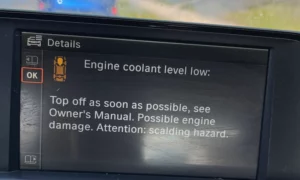
- Low coolant warning light (looks like a thermometer in liquid)
- Engine temperature gauge reading higher than normal
- Check engine light in severe cases
Don’t ignore these warnings! A coolant leak can quickly escalate from a minor issue to catastrophic engine damage.
Unusual Sensory Signals
Your senses can alert you to coolant leaks before dashboard warnings:
- Sweet, syrupy smell from the engine bay (coolant has a distinctive odor)
- Steam rising from under the hood
- White smoke from the exhaust (could indicate a head gasket failure)
According to coolant leak experts, that sweet smell is ethylene glycol—a key component in coolant—and it’s a clear warning sign you shouldn’t ignore.
DIY Diagnosis of Coolant Leaks
Visual Inspection Steps
Start with a basic visual inspection while the engine is cool:
- Check the coolant level in the expansion tank
- Look for wet spots or dried coolant residue on engine components
- Inspect all visible hoses for cracks, swelling, or hardening
- Check underneath the vehicle for drips or puddles
Pay special attention to areas around the oil cooler housing and expansion tank, as these are the most common leak points.
Pressure Testing at Home
While professional diagnosis is recommended, you can perform a basic pressure test:
- Ensure the engine is cool
- Remove the expansion tank cap
- Using a cooling system pressure tester (rentable from auto parts stores), pressurize the system to the manufacturer’s specifications (typically 15-20 PSI)
- Watch for pressure drops or visible leaks
BMW technicians perform pressure testing as their primary diagnostic method for finding elusive leaks.
Advanced Diagnostic Methods
For harder-to-find leaks, consider:
- UV dye testing (add UV dye to the coolant and use a blacklight to spot leaks)
- Engine cooling performance tests
- Cylinder compression testing (for potential head gasket issues)
Repair Costs: What to Expect
Parts Breakdown and Labor Costs
Cooling system repairs for BMW X3 models vary widely in cost. Here’s what to expect:
| Component | Parts Cost | Labor Cost | Total Repair Cost |
|---|---|---|---|
| Oil Cooler Housing | $150-$400 | $2,000-$2,500 | $2,500-$3,000 |
| Expansion Tank | $100-$200 | $200-$400 | $300-$600 |
| Coolant Hoses | $50-$150 | $200-$400 | $250-$550 |
| Radiator | $300-$500 | $300-$500 | $600-$1,200 |
| Water Pump | $200-$500 | $400-$800 | $600-$1,300 |
The oil cooler housing is particularly expensive to repair because it’s located deep in the engine bay, requiring significant disassembly. Many owners have reported repair quotes over $2,500 for this component alone.
Dealership vs. Independent Shop Costs
Expect significant price differences between repair options:
- BMW dealerships typically charge $150-200 per hour for labor
- Independent BMW specialists average $100-150 per hour
- General repair shops may charge $80-120 per hour
While dealerships use genuine BMW parts, independent specialists often offer OEM parts at lower prices with comparable quality.
DIY Repairs vs. Professional Service
What You Can Fix Yourself
Some coolant system repairs are DIY-friendly for moderately skilled home mechanics:
- Expansion tank replacement
- Basic hose replacements
- Coolant flushes and fills
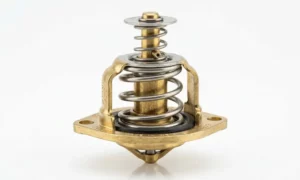
- Thermostat replacement
These jobs typically require basic hand tools and a few hours of work. Always use the correct BMW-approved coolant (typically blue HT-12 specification).
Repairs Best Left to Professionals
Some repairs are best handled by professionals:
- Oil cooler housing replacement
- Water pump replacement
- Radiator replacement
- Head gasket repairs
These jobs require specialized tools, expertise, and in some cases, proprietary BMW diagnostic equipment. The complexity of these repairs often makes DIY attempts more costly in the long run.
Preventative Maintenance to Avoid Coolant Leaks
Regular Inspection Schedule
Prevent coolant leaks with these maintenance intervals:
- Check coolant level monthly
- Inspect hoses and connections every 10,000 miles
- Perform cooling system pressure tests annually
- Flush coolant every 4 years or 60,000 miles (whichever comes first)
BMW’s maintenance schedule recommends cooling system inspections at every service interval.
Using the Right Coolant
BMW engines require specific coolant formulations:
- Use only BMW-approved coolant (typically blue HT-12 specification)
- Never mix coolant types or colors
- Pre-mix with distilled water at the correct ratio
- Keep coolant fresh with regular flushes
Using the wrong coolant can accelerate corrosion and lead to premature component failure.
Model Years Most Affected by Coolant Leaks
Known Problem Years
Based on owner reports and technical service bulletins, these X3 model years have the highest incidence of coolant leaks:
- 2018-2019 X3 (G01) with B46 engine (most problematic)
- 2011-2013 X3 (E83) with N52 engine
- 2015-2017 X3 (F25) with N20 engine
The 2018-2019 models are particularly prone to oil cooler housing failures and coolant line issues, as mentioned in Technical Service Bulletin 17 03 20.
Specific Recalls and Technical Service Bulletins
BMW has issued several TSBs related to coolant leaks:
- TSB 17 03 20: Addresses coolant line quick disconnects that leak in cold temperatures
- TSB 17 03 19: Coolant loss with no visible leaks
- TSB 11 01 13: Coolant loss due to expansion tank cap issues
These TSBs may provide warranty coverage for affected vehicles, so check with your dealer if you believe your vehicle is covered.
Real Owner Experiences with BMW X3 Coolant Leaks
Common Owner Frustrations
Across various owner forums, X3 drivers report:
- Repeated coolant leaks even after repairs
- High repair costs, especially for oil cooler housing issues
- Difficulty pinpointing leak sources
- Dealerships not acknowledging known issues
One owner described spending over $4,000 on various cooling system repairs within a 12-month period.
Successful Resolution Stories
Not all experiences are negative. Some owners have found lasting solutions:
- Proactive replacement of plastic components with updated parts
- Using independent BMW specialists for more affordable repairs
- Learning to perform basic cooling system maintenance themselves
- Trading up to newer models with improved cooling system designs
Is Your BMW X3 Still Under Warranty?
Factory Warranty Coverage for Cooling Systems
New BMW X3s come with:
- 4-year/50,000-mile Limited Warranty covering factory defects
- 12-year/unlimited-mile Rust Perforation Limited Warranty
- Various BMW Maintenance Programs for the first several years
Cooling system components are generally covered under the basic warranty unless damage resulted from owner neglect or modification.
Extended Warranty Options
For out-of-warranty vehicles, consider:
- BMW Extended Vehicle Protection (available for purchase before original warranty expires)
- Third-party extended warranties from companies like Endurance or CarShield
- Specialized BMW repair facilities that offer their own warranty programs
An extended warranty can be particularly valuable for 2018-2019 models known for coolant leak issues.
Improved Cooling System in Newer BMW X3 Models
Design Changes in Recent Years
BMW has made several improvements to address coolant leak issues in newer X3s:
- Redesigned oil cooler housing with improved materials
- Updated coolant hose quick-connect fittings
- More durable expansion tank design
- Improved water pump reliability
The 2022+ X3 models show significantly fewer coolant leak complaints according to owner forums and reliability data.
Dealing with Dealerships and Service Centers
Getting Fair Treatment
When dealing with service departments:
- Document all symptoms thoroughly
- Reference specific Technical Service Bulletins when applicable
- Get multiple quotes for major repairs
- Ask for detailed explanations of the diagnosis
- Request to see failed parts after repair
If your vehicle is experiencing a known issue, mentioning the relevant TSB can sometimes lead to goodwill coverage even outside warranty.
Seeking Second Opinions
Before authorizing expensive repairs:
- Consult independent BMW specialists for their assessment
- Join X3 owner forums to compare experiences
- Consider using mobile mechanics for preliminary diagnosis
- Get written estimates from multiple sources
A second opinion could save you thousands on misdiagnosed cooling system issues.
The Bottom Line on BMW X3 Coolant Leaks
BMW X3 coolant leaks, particularly in 2018-2019 models, are a serious issue that requires attention. The oil cooler housing is the most frequent culprit, with repair costs often exceeding $2,500. Other common leak sources include the expansion tank, hoses, and quick-connect fittings.
Regular maintenance and prompt attention to warning signs can prevent catastrophic engine damage. Always use BMW-approved coolant and consider proactive replacement of known problem components if you own a high-risk model year.
While repair costs can be substantial, addressing leaks early prevents more expensive engine damage down the road. Remember that some issues may be covered under Technical Service Bulletins, so check with your dealer if you suspect your vehicle has a known problem.